Mental Health & Therapy Therapy & Counseling
Harm Reduction Worksheets
Key Takeaways Most clinics treating substance use disorders face a critical chal...

April 14, 2026


Buy now, pay later is now available in Pabau

Harm reduction worksheets are evidence-based tools that support gradual behaviour change without requiring abstinence as a precondition.
These worksheets help clinicians structure assessments of risk, identify triggers, and develop practical safety strategies tailored to each client.
Harm reduction worksheets integrate motivational interviewing and CBT/DBT techniques to support clients with substance use and co-occurring mental health disorders.
Pabau’s digital forms feature lets clinicians embed harm reduction worksheets directly into client records for seamless documentation and workflow integration.
Most clinics treating substance use disorders face a critical challenge: how to meet clients where they are, not where clinicians wish they were. Traditional abstinence-only approaches often alienate patients early in the engagement process. Harm reduction worksheets offer a clinical alternative grounded in evidence and compassion, providing structured tools to assess risk, identify triggers, and support incremental progress toward safer patterns of use.
According to SAMHSA (Substance Abuse and Mental Health Services Administration), harm reduction is an evidence-based public health approach that accepts that some people will continue using substances and focuses on minimising the harms associated with that use. These worksheets translate that framework into practical clinical tools. This guide covers what harm reduction worksheets are, how to use them in your practice, and which industries benefit most from integrating them into client workflows.
A harm reduction worksheet is a clinical assessment and planning tool that helps therapists, counsellors, and addiction specialists document substance use patterns, identify high-risk situations, and co-create safer strategies with clients. Unlike abstinence-focused protocols, harm reduction worksheets acknowledge that behaviour change is incremental and that risk reduction itself represents legitimate clinical progress.
The clinical purpose is three-fold: (1) to establish baseline understanding of the client’s substance use spectrum (from abstinence through various patterns of use), (2) to map specific triggers and coping gaps, and (3) to develop concrete alternatives and safety plans that the client feels motivated to implement. Legally, these worksheets document informed consent, risk awareness, and the client’s autonomous decision-making capacity, protecting both the therapeutic relationship and the practice.
Harm reduction worksheets are particularly valuable in UK and international private practice settings where documentation clarity and compliance audit-readiness are essential. They create a written trail showing that clinicians have assessed risk comprehensively and involved clients in collaborative care planning.
Implementing harm reduction worksheets effectively requires a structured workflow. The following five operational steps mirror how practitioners actually use these tools in individual and group settings.
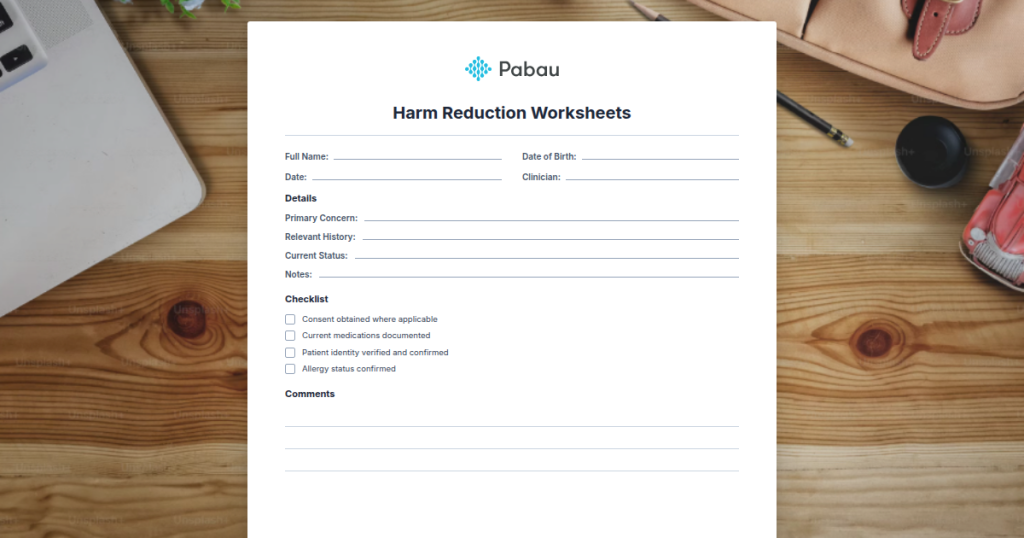
A comprehensive set of evidence-based worksheets covering substance use assessment, trigger identification, safety planning, and motivational frameworks for individual and group therapy sessions.
Download templateHarm reduction worksheets serve multiple healthcare professionals and clinical settings across addiction treatment, mental health, and integrated care:
Compliance and Documentation Clarity: Harm reduction worksheets create a detailed written record showing that clinicians have screened for risk, involved clients in shared decision-making, and documented consent. This audit-readiness is essential for practices undergoing CQC inspections or regulatory reviews.
Workflow Efficiency: Structured worksheets reduce time spent on unguided conversations. Clinicians know which assessment areas to cover, clients complete sections between sessions, and the worksheet becomes the foundation for follow-up notes. When stored in AI-assisted clinical documentation systems, worksheets can auto-populate progress notes, saving administrative time.
Patient Safety and Engagement: Harm reduction worksheets signal respect for client autonomy and readiness. Clients are more likely to engage when they sense that clinicians accept their current reality rather than immediately demanding change. This foundation improves therapeutic alliance and increases attendance and follow-through.
Integrated Mental Health Screening: Many harm reduction worksheet templates include sections for assessing co-occurring anxiety, depression, self-harm urges, and suicidal ideation. This prevents siloed treatment of substance use without addressing underlying mental health drivers.
Audit your current harm reduction worksheets against your client population. If most clients present with alcohol-related harm, prioritise alcohol-specific worksheets (cost-benefit analysis, drinking charts, risk tracking). If opioid use is prevalent, include sections on overdose recognition and naloxone access. Customisation signals that your clinic understands the specific risks clients face, improving both engagement and clinical relevance.
Modern harm reduction worksheets integrate three key clinical frameworks that research has validated for substance use treatment:
Motivational Interviewing (MI): MI techniques underpin effective harm reduction by helping clients explore their own ambivalence about change rather than clinicians imposing goals. Harm reduction worksheets that include reflective questions (“What would make this strategy feel doable for you?”) versus directive prompts (“You must do X”) align with MI principles and improve outcomes.
Cognitive Behavioural Therapy (CBT): CBT components in harm reduction worksheets focus on identifying triggers (external and internal), examining thoughts and beliefs about substance use, and practising alternative coping behaviours. Trigger identification and behavioural alternatives are CBT in practice.
Dialectical Behaviour Therapy (DBT) Distress Tolerance Skills: DBT distress tolerance handouts, such as urge surfing, TIPP skills (Temperature, Intense exercise, Paced breathing, Paired muscle relaxation), and self-soothing, are increasingly embedded in harm reduction worksheets to give clients immediate coping tools for acute cravings or emotional dysregulation.
Harm reduction worksheets designed for clinical practice must address the reality that substance use rarely exists in isolation. Clients often present with anxiety, depression, self-harm urges, or trauma histories that drive or are driven by substance use patterns.
Evidence-based harm reduction worksheets include dedicated sections for assessing psychiatric symptoms, documenting medication history, and identifying links between emotional states and use episodes. This integrated approach prevents the common clinical error of treating substance use behaviorally without addressing the emotional regulation deficits that fuel it. Mental health practice management systems that support custom worksheets allow clinicians to seamlessly link substance use assessments to mental health screening tools (PHQ-9 for depression, GAD-7 for anxiety) in the same client record.

Need a structured approach to mental health intake? Psychiatric Evaluation Template provides a comprehensive assessment framework for documenting mental health history alongside substance use screening.
Looking to streamline clinical documentation? Capture Forms enables clinicians to deploy custom worksheets (including harm reduction worksheets) directly in sessions and auto-sync completed data into progress notes.
Want to track client progress over time? Client Record Management stores all completed worksheets in a timestamped audit trail, showing clinicians exactly when each assessment was completed and what changes the client reported.
Harm reduction worksheets represent a paradigm shift in how clinics approach substance use: from confrontation to collaboration, from abstinence-or-nothing to incremental progress. They provide the structure clinicians need to assess risk comprehensively and the documentation practices need to demonstrate safety and compliance.
Whether you’re a mental health therapist, addiction specialist, or integrated healthcare provider, implementing harm reduction worksheets signals that your practice meets clients with dignity and evidence-based care. Pabau’s digital forms and client record features ensure these worksheets are stored securely, accessible during sessions, and automatically linked to clinical notes for seamless workflow integration. Book a demo to see how Pabau can help you embed harm reduction worksheets and other evidence-based tools into your daily practice.
Abstinence-based treatment requires clients to stop all substance use immediately as a precondition for care engagement. Harm reduction accepts that some clients will continue using and focuses on reducing associated harms. Research shows harm reduction achieves higher client engagement and retention, particularly in early treatment phases.
Yes. Harm reduction worksheets are excellent group tools. Trigger identification and safety strategy worksheets spark peer discussion, normalize shared experiences, and allow group members to learn from each other’s strategies. Group facilitators often introduce a worksheet topic, have members complete relevant sections, then facilitate group discussion of findings.
Comprehensive harm reduction worksheets include sections on overdose recognition, naloxone access, safe injection practices (where relevant), and emergency response procedures. These sections provide practical information and ensure clinicians and clients discuss overdose as a realistic risk requiring active planning.
Harm reduction is endorsed by the NHS as an evidence-based public health approach. Worksheets that document informed consent, risk assessment, and shared decision-making meet CQC compliance expectations for documentation clarity and patient safety.
Overdose disclosure requires immediate safety assessment and planning. Use the worksheet as a springboard to discuss naloxone access, emergency contact procedures, and whether the client wants to involve emergency services or trusted others. Document the disclosure, your assessment, and the safety plan in the client record.