Mental Health & Therapy Psychology
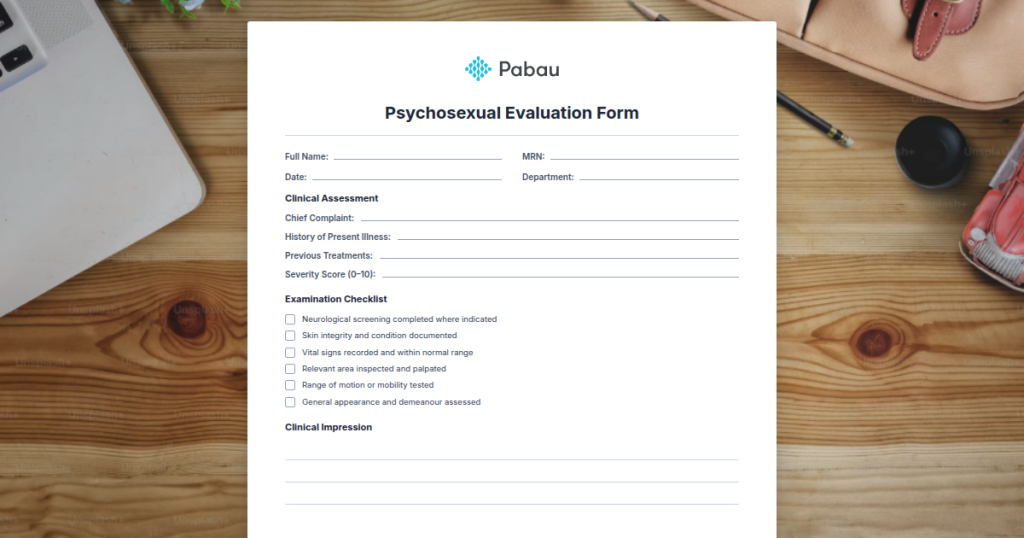
Psychosexual Evaluation Form
What is a Psychosexual Evaluation Form? A psychosexual evaluation form is a stan...

April 22, 2026


Buy now, pay later is now available in Pabau

The Dissociative Experiences Scale Template (DES-II) is a validated 28-item screening tool used by mental health professionals to assess dissociative symptoms and disorders
DES-II scores above 30 indicate possible Dissociative Identity Disorder, while scores 10-20 suggest mild dissociative experiences
The scale takes 10-15 minutes to complete and can be integrated directly into practice management software for streamlined clinical documentation
The Dissociative Experiences Scale Template (DES-II) is an essential clinical assessment tool that mental health professionals use to evaluate dissociative symptoms in patients. Whether you’re screening for Dissociative Identity Disorder (DID), Post-Traumatic Stress Disorder (PTSD), or other dissociative conditions, this evidence-based instrument provides reliable quantitative data to support your clinical decision-making.
If you work in psychology, psychiatry, counseling, or trauma therapy, having an accessible Dissociative Experiences Scale Template in your assessment toolkit can significantly improve diagnostic accuracy and treatment planning. This guide covers everything you need to know about administering, scoring, and interpreting the DES-II, plus how to download and integrate a ready-to-use template into your practice.
The Dissociative Experiences Scale Template, or DES-II, is the second generation of a widely-used self-report questionnaire developed to measure both normal and pathological dissociation. The scale contains 28 items that assess various dissociative experiences, from daydreaming and memory lapses to more severe phenomena like depersonalization and derealization.
Dissociation exists on a spectrum. Most people experience mild dissociative moments like highway hypnosis or becoming absorbed in a book. However, individuals with dissociative disorders experience more frequent and distressing dissociative episodes that interfere with daily functioning. The Dissociative Experiences Scale Template helps clinicians distinguish between normal dissociative experiences and clinically significant symptoms requiring intervention.
The DES-II improves upon the original DES by using a simpler percentage-based response format (% to 100%) that makes scoring more straightforward while maintaining full clinical validity. According to the International Society for the Study of Trauma and Dissociation, only 1% of people with Dissociative Identity Disorder score below 30 on the DES, making it a highly sensitive screening instrument for this population.
Accessing a professional Dissociative Experiences Scale Template is straightforward. The template below is fully formatted as a ready-to-print PDF that includes all 28 assessment items with standardized response options and scoring guidance.
This template features:
Validated 28-item self-report questionnaire for measuring dissociative symptoms. Includes percentage-based response scales, scoring instructions, and clinical interpretation guidelines.
Download templateIntegration with electronic health record (EHR) systems and practice management platforms allows you to digitize this assessment, reducing paperwork and streamlining clinical documentation workflows.
Proper administration of the Dissociative Experiences Scale Template ensures reliable and valid results. The scale is designed as a self-report measure, meaning patients complete it independently, which takes 10-15 minutes on average.
Administration best practices include:
The DES-II works best as part of a comprehensive assessment that includes clinical interviewing, trauma history, and observation of dissociative symptoms during sessions. It should not serve as the sole diagnostic tool.
Scoring the Dissociative Experiences Scale Template is straightforward once you understand the calculation method. Unlike the original DES, the DES-II uses a simplified approach that reduces scoring errors.
Follow these steps to score the DES-II:
For example, if total responses sum to 840, dividing by 28 yields a score of 30. This indicates a moderate level of dissociative symptoms.
Many clinicians now use the Dissociative Experiences Scale Template within digital assessment platforms that calculate scores automatically, reducing manual calculation and human error.
Understanding what DES-II scores mean is critical for clinical interpretation and treatment planning. The scale measures frequency of dissociative experiences, and higher scores correlate with more frequent dissociative episodes.
General DES-II score ranges:
However, scores must be contextualized within the full clinical picture. Cultural background, trauma history, medications, and current life stressors all influence dissociative symptom expression. Refer to mental health assessment resources for comprehensive evaluation frameworks.
If a patient scores above 20, conduct a thorough clinical interview exploring dissociative experiences, trauma history, and functional impairment. Consider referral to a trauma specialist or dissociative disorders expert for comprehensive assessment.
The Dissociative Experiences Scale Template serves multiple clinical purposes across various mental health settings:
Screening for Dissociative Identity Disorder (DID): The DES-II is a primary screening tool for DID, with research showing exceptional sensitivity in clinical populations. Its brevity and ease of administration make it ideal for initial assessment.
PTSD and trauma assessment: Many trauma survivors experience dissociative symptoms as part of their post-traumatic response. Using the Dissociative Experiences Scale Template alongside PTSD measures provides comprehensive trauma symptom evaluation.
Treatment planning and monitoring: Administer the DES-II at baseline, midpoint, and completion of trauma therapy to track changes in dissociative symptom frequency over time.
Mental health professionals treating patients with complex trauma, PTSD, or other dissociative conditions benefit from systematic screening using validated tools like the DES-II. This data supports evidence-based treatment planning and helps measure therapeutic progress.
To streamline your assessment workflow, consider digital form capture tools that enable patients to complete the Dissociative Experiences Scale Template directly in your practice management system.
Most people in the general population score below 10 on the DES-II. Scores between 10-20 may indicate mild dissociative experiences. Clinical populations with dissociative disorders typically score higher, with scores above 30 suggesting possible Dissociative Identity Disorder (DID). Research shows that only 1% of people with DID score below 30.
While the DES-II is a self-report measure that individuals can complete, professional interpretation by a qualified mental health professional is essential. Self-assessment can provide insights into dissociative experiences, but proper diagnosis requires clinical evaluation by a trained clinician who can integrate results with other clinical information and observations.
The DES-II is the second version and is easier to score than the original version. Both contain 28 items and measure dissociative experiences with equal clinical validity. The primary difference is that DES-II uses a simpler percentage-based response format (0-100%) that makes calculation more straightforward compared to the original DES format.
The DES-II typically takes 10-15 minutes to complete. Patients respond to 28 questions about their dissociative experiences, rating how often each experience occurs on a scale from 0% to 100%. This brief administration time makes it practical for routine clinical screening and research purposes.
By integrating the Dissociative Experiences Scale Template into your assessment toolkit, you enhance diagnostic accuracy and provide data-driven treatment planning that better serves your patients experiencing dissociative symptoms. Download your template today and begin systematically screening for dissociative disorders in your practice.