

Primary & Preventive Care
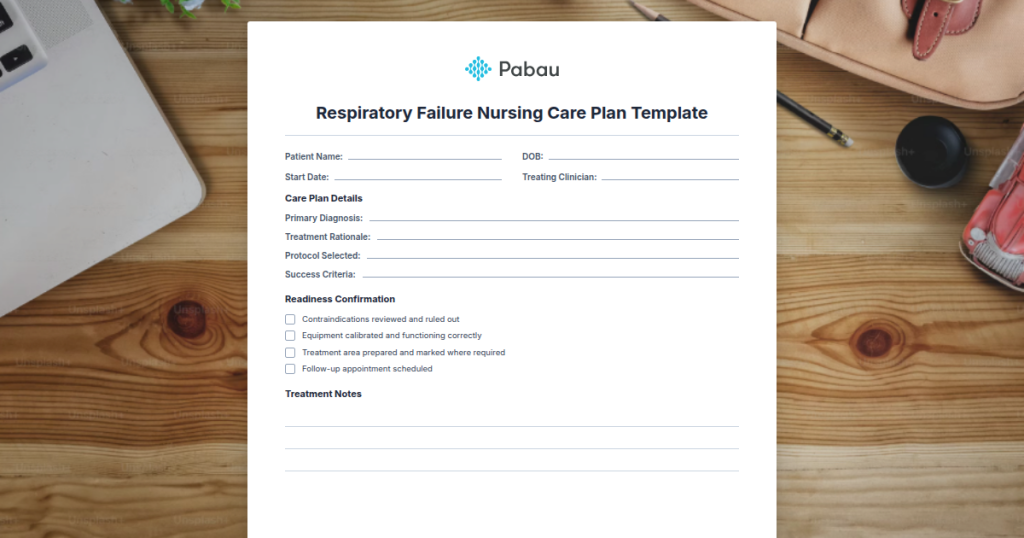
Respiratory Failure Nursing Care Plan Template
A Respiratory Failure Nursing Care Plan Template provides clinicians with a syst...

March 17, 2026


Buy now, pay later is now available in Pabau

Structured intake captures medical history, goals, and treatment preferences upfront
HIPAA-compliant form protects patient data while establishing informed consent
Pre-consultation documentation reduces appointment time and improves care planning
Weight loss forms integrate seamlessly with digital practice management systems
A weight loss intake form is a clinical assessment tool that gathers essential patient information at the start of a weight management programme. Weight loss clinics rely on comprehensive intake forms to document medical history, identify health risks, understand treatment goals, and establish informed consent before beginning intervention.
Effective weight loss intake forms capture multiple dimensions of patient health: current weight and height (for BMI calculation), previous weight loss attempts, bariatric surgery history, medication use (including GLP-1 agents and weight loss supplements), comorbidities like diabetes and hypertension, dietary patterns, exercise history, and psychological readiness for change. This structured data enables clinicians to personalise treatment plans and track progress across the care continuum.
This guide explores the key sections of a weight loss intake form, explains how clinical teams implement it during initial consultations, and shows how digital intake workflows reduce administrative burden while improving documentation quality and patient safety.
A ready-to-use intake form covering patient demographics, medical history, bariatric surgery screening, medication inventory (including weight loss drugs), dietary and exercise assessment, weight loss goals, comorbidity screening (diabetes, hypertension, sleep apnea, thyroid disorders), and informed consent declarations.
Download templateA weight loss intake form is a structured clinical document that captures comprehensive health and lifestyle information from patients beginning weight management treatment. Unlike generic health questionnaires, weight loss intake forms are designed specifically to identify barriers to weight loss, assess metabolic risk factors, and document baseline measurements needed for safe, effective intervention.
The form serves multiple clinical purposes. It establishes a baseline understanding of each patient’s weight history, including previous dieting attempts, weight cycling patterns, and factors that triggered current weight gain. It inventories current medications, flagging those that may affect weight or interact with weight loss treatments.
Comprehensive digital intake forms screen for medical comorbidities-diabetes, hypertension, obstructive sleep apnea, thyroid dysfunction, metabolic syndrome-that influence treatment selection and require specialist referral or monitoring. According to the CDC Obesity Prevention, screening for metabolic comorbidities helps identify which patients are at highest risk and may benefit from intensive clinical intervention.
From a legal and regulatory perspective, weight loss intake forms document informed consent. Patients must understand the risks, benefits, and realistic expectations of weight loss treatment. Documentation shows the practitioner explained these elements and obtained patient agreement, protecting both patient safety and clinic liability.
Implementing a weight loss intake form successfully requires integrating it into your clinic workflow at the point of first contact. The form bridges the gap between referral and first consultation, ensuring clinical teams have essential information before the patient arrives.
After completion, the clinician discusses findings during consultation, clarifying responses and exploring areas of particular clinical concern. The documented intake becomes part of the permanent medical record, supporting ongoing treatment decisions.

See how digital forms automate data collection and reduce administrative time while improving documentation quality for weight loss clinics.

Weight loss intake forms are essential for any clinical setting that delivers weight management services. Private weight loss clinics are the primary user, employing clinicians focused exclusively on weight management and managing high patient volumes.
Metabolic health and longevity clinics increasingly incorporate weight loss as a core service, offering GLP-1 medication programmes alongside lifestyle coaching. Functional medicine and integrative medicine practices integrate weight management into their holistic assessment, using intake forms to explore dietary triggers, gut health, hormonal balance, and environmental stressors.
Primary care clinics, GP practices managing weight loss in their general population, and bariatric surgery centres-which use weight loss intake forms as part of pre-operative evaluation-also benefit from structured intake workflows.
Safety and risk identification. Comprehensive intake forms flag medical contraindications before treatment begins. Screening for uncontrolled diabetes, active cardiac disease, or concurrent use of contraindicated medications prevents adverse events. Documentation of informed consent creates a clinical record demonstrating the clinic explained risks to the patient.
Personalised treatment planning. Detailed baseline information-medical history, previous attempts, lifestyle patterns, motivation level-enables clinicians to tailor interventions. Patients with emotional eating patterns may benefit from cognitive-behavioural support. Those with limited exercise capacity need graduated activity prescriptions.
Improved workflow efficiency. When patients complete pre-appointment intake forms, clinicians spend less appointment time gathering information and more time on clinical assessment and discussion. This improves patient experience and increases clinic throughput without sacrificing quality.
Compliance and documentation clarity. Standardised intake forms ensure consistent documentation across all patients. This satisfies CQC compliance requirements and provides auditable evidence of informed consent and clinical decision-making.
Create tiered intake forms by risk level. Use a brief screening form for low-risk patients (BMI 25-29, no comorbidities), a standard form for moderate-risk patients (BMI 30-34, one comorbidity), and an extended form for high-risk patients (BMI ≥35, multiple comorbidities). This maintains safety while reducing form burden for lower-risk patients, improving completion rates.
A comprehensive weight loss intake form covers multiple clinical domains. Using a dedicated weight loss clinic software platform ensures all sections are captured consistently across your practice.
Anthropometric measurements and BMI. Height, current weight, and goal weight are documented at baseline. BMI is calculated. Waist circumference is often recorded as a marker of visceral adiposity.
Weight history and comorbidities. Patients describe weight trajectory, precipitating events, and prior weight loss attempts. Comorbidities-diabetes (type, HbA1c if known), hypertension, sleep apnea, thyroid disorders, PCOS, depression-are screened for and recorded, guiding treatment safety and specialist referral decisions.
Dietary and physical activity assessment. Patients describe typical daily food intake, eating patterns, preferred foods, food triggers, dining out frequency, baseline activity level, exercise enjoyment, barriers to activity, and willingness to increase activity. This informs whether the treatment plan should include primary activity prescription.
Implementing weight loss intake forms digitally-via patient portal, email link, or SMS-transforms clinic workflow efficiency. Digital forms reduce paper handling, enable real-time data capture, and integrate directly with electronic health record systems, eliminating manual re-entry.
Clinic staff review completed digital forms before the patient arrives, flagging red flags or requiring clarification. Forms can be configured to trigger conditional logic workflows-for example, if a patient indicates diabetes, additional diabetes-specific questions automatically appear. This adaptive design reduces form length while ensuring comprehensive data capture.
Once submitted, digital form data auto-populates the patient’s medical record, reducing clinician documentation time during consultation. Clinicians can focus on discussing findings and collaboratively developing treatment plans rather than transcribing information. Some EHR systems generate automatic progress reports via measurement tracking tools, providing both patient and clinician with clear evidence of treatment effectiveness.
For clinics managing large patient volumes-particularly those prescribing GLP-1 medications or running structured weight loss programmes-standardised digital intake is essential for maintaining safety, consistency, and regulatory compliance while maximising clinical team productivity.

Need to automate patient data collection? Digital Forms enable weight loss clinics to deploy conditional logic, auto-populate EHR records, and reduce administrative burden during intake.
Looking to streamline clinical documentation after intake? Echo AI uses intake form data to generate structured clinical notes, freeing clinicians to focus on patient consultation rather than documentation.
Want to scale weight loss services across multiple locations? Weight Loss Clinic Software provides unified intake workflows, treatment planning tools, and outcome tracking for multi-site weight management programmes.
A well-designed weight loss intake form is foundational to safe, effective, personalised weight management care. It establishes baseline health status, identifies contraindications and comorbidities, documents informed consent, and captures the lifestyle and psychological context that shapes treatment strategy.
Digital implementation-sending forms via patient portal or email before the first visit-removes administrative friction and enables clinicians to review data in advance. Whether you are launching a new weight loss clinic or scaling services across multiple locations, a structured digital-first approach ensures consistency, safety, and compliance while freeing your clinical team to deliver high-quality, personalised care.
Reviewed against current Obesity Medicine Association screening guidelines and CDC weight management protocols.
A comprehensive form typically spans 4-8 pages in PDF format, capturing demographics, medical history, medications, lifestyle factors, and consent. Consider tiered forms (brief, standard, extended) based on patient risk level, or use digital conditional logic that only shows relevant questions to each patient.
Yes. If your clinic prescribes GLP-1 agonists or other weight loss medications, the intake form should include dedicated screening for contraindications: medullary thyroid carcinoma, multiple endocrine neoplasia type 2, acute pancreatitis, and severe renal impairment. Document whether the patient is already on GLP-1 therapy and their tolerance.
Use HIPAA-compliant patient portals or form platforms. Encrypt data in transit and at rest, limit access to authorised clinic staff only, maintain audit logs of who accessed data and when, and obtain explicit patient consent for data collection. Store completed forms in your secure EHR; never leave them in unencrypted email.
Flag these findings for immediate review by the supervising physician or medical director before consultation. Patients with uncontrolled diabetes or active cardiac symptoms may require specialist assessment or optimisation of existing treatments before starting weight loss intervention. Document this clinical decision and any referrals made in the medical record.
Conduct a focused re-intake at 6-12 month intervals or whenever clinical circumstances change significantly. Full re-intake is unnecessary at every visit; instead, track changes in weight, comorbidity status, and medication during routine follow-up, updating the medical record progressively.