ADHD Assessment Mental Health & Therapy
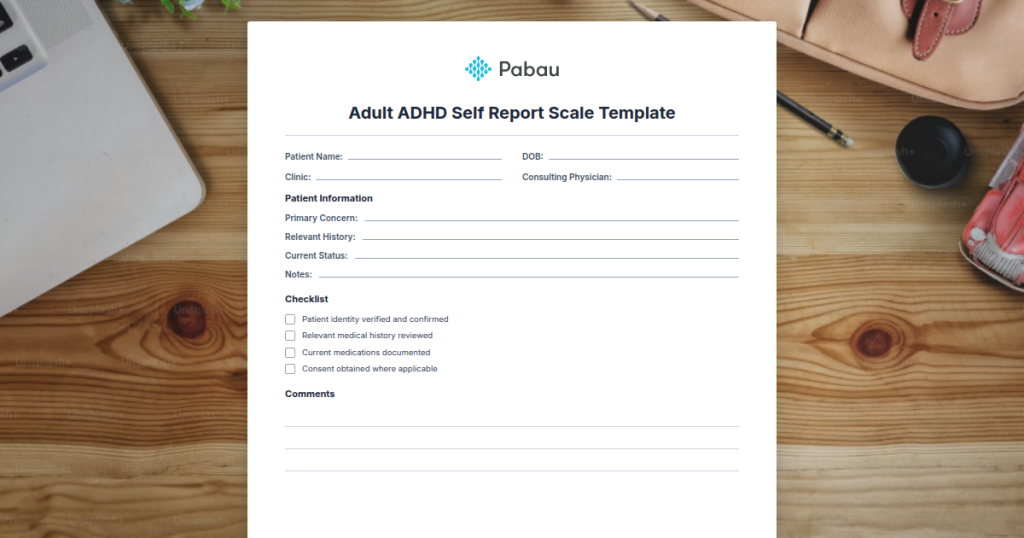
Adult ADHD Self Report Scale Template
The Adult ADHD Self Report Scale (ASRS) has become a cornerstone screening tool ...

March 16, 2026


Buy now, pay later is now available in Pabau

Therapy activities help ADHD clients strengthen attention, regulation, and executive skills.
Combining CBT, OT, and movement-based approaches enhances engagement and outcomes.
Practical repetition and sensory input are key to real-world ADHD skill building.
Clinicians can adapt these evidence-informed tools across age groups for sustained progress.
Supporting clients with ADHD in therapy means moving beyond conversation — toward structured, sensory-rich, and skill-building experiences that strengthen focus, regulation, and self-control.
Moreover, these activities create an active, engaging environment that helps clients learn by doing rather than only talking.
In this guide, you’ll discover more than 25 practical, evidence-informed ADHD therapy activities designed specifically for clinicians working with children, teens, and adults.
Furthermore, each activity is grounded in research-backed methods that blend CBT, behavior therapy, occupational therapy (OT), and exercise-based interventions.
Together, these approaches empower clients to develop better self-regulation, sustained attention, and executive-functioning skills that last beyond the session.
In many cases, therapeutic activities turn abstract goals—like “better focus” or “less impulsivity”—into tangible, repeatable actions.
Through consistent repetition, clients begin to internalize coping and regulation strategies that improve real-world performance.

For individuals with ADHD, the combination of structure, movement, and feedback activates neural learning systems that traditional talk therapy often overlooks.
Therefore, effective planning in therapy should center around five interconnected domains:
Regulation: calming the nervous system and preparing the body for focus
Attention: strengthening sustained and selective focus across activities
Impulse control: learning to pause, reflect, and choose intentional responses
Executive function: building routines for planning, prioritizing, and following through
Emotional regulation: identifying and managing strong feelings in real time
Additionally, consistency between sessions is vital. Repetition and practice—what some clinicians call “therapy homework”—help cement these new neural pathways.
To streamline this process, many therapists use follow-up tasks or secure digital tools such as Pabau’s patient management software to share activity plans and document follow-through securely.

Cognitive Behavioral Therapy (CBT) helps ADHD clients reframe unhelpful thoughts (for example, “I can’t focus”) into realistic, actionable beliefs (“I can use a five-minute start rule”).
In doing so, CBT bridges the gap between awareness and action, allowing clients to build self-efficacy through structured, repeated practice.

Moreover, it equips both therapists and clients with practical tools that turn cognitive insight into measurable progress.
Below are several practical CBT exercises for ADHD that clinicians can use during sessions and assign as follow-up activities:
Thought reframing cards: Write down common ADHD-related thoughts (for instance, “I’ll never finish this”) and generate balanced alternatives. This exercise helps clients recognize distorted thinking patterns and replace them with more adaptive ones.
Goal breakdown practice: Turn broad or overwhelming goals into smaller, timed actions using SMART (Specific, Measurable, Achievable, Relevant, Time-bound) planning. Consequently, clients gain a clearer path to success and experience less task paralysis.
5-minute rule: Encourage clients to start a task for just five minutes. Often, this small commitment reduces avoidance and helps build initiation momentum—an essential executive function skill.
Focus plan worksheet: Define one concrete goal, break it into 3–5 manageable steps, schedule completion times, and visualize the benefits of follow-through. As a result, clients learn how planning directly supports focus and emotional regulation.
Additionally, pairing CBT structure with visual supports and scheduling aids can strengthen consistency between sessions.
In particular, digital clinics can use Pabau’s Calendar to schedule follow-ups around CBT activities. Automated reminders help clients complete assigned exercises between sessions.

Regulation must come before reasoning. Begin sessions with simple, body-based resets:
Pabau’s Care Plus allows therapists to document preferred regulation strategies using structured forms and reusable macros.
Keeping those details in the client record makes it easier to apply the same calming techniques consistently during sessions.

Clients with ADHD benefit from progressive focus practice that scales with their tolerance. Start small, build success, and stretch attention gradually.
Integrating these exercises into a digital client pathway using the Pabau Go mobile app allows therapists to share at-home attention drills and receive client-reported updates securely.
Impulse control games offer playful yet powerful opportunities to build “pause” skills:
Documenting progress in the client record encourages reflection and parent participation.
Through the client portal, caregivers can share updates or upload short video clips from home practice.

Social functioning is often a challenge in ADHD, especially in younger clients. Group or dyadic play therapy can target communication, turn-taking, and frustration tolerance.
Documenting and sharing these sessions digitally through Pabau enhances communication among multidisciplinary teams—psychologists, OTs, and speech therapists—ensuring consistent care across disciplines.
Occupational therapy activities for ADHD target sensory regulation and body awareness.

These support the nervous system and improve self-regulation readiness for cognitive work.
Exercise is one of the most evidence-backed supports for ADHD symptom management. It boosts dopamine, norepinephrine, and serotonin—neurotransmitters essential for focus and mood.
Tracking attendance and session participation through online booking systems supports accountability and links activity plans to follow-up reviews.
Nature immersion provides a unique cognitive “reset.” For ADHD clients, even 20 minutes outdoors improves attention span and mood regulation. Therapists can structure nature walks around small sensory tasks:
Nature therapy pairs well with digital scheduling and consent workflows, all securely managed within Pabau’s HIPAA-compliant platform, which ensures that data from documentation or telehealth sessions remains secure.

ADHD therapy activities work best when they merge structure, sensory engagement, and real-life relevance.
From cognitive reframing and movement circuits to calming exercises and OT-informed sensory diets, these interventions transform therapy from talking into doing.
Clinicians who digitize and document their workflow—using Pabau’s integrated tools—gain the advantage of consistency, compliance, and better client outcomes.