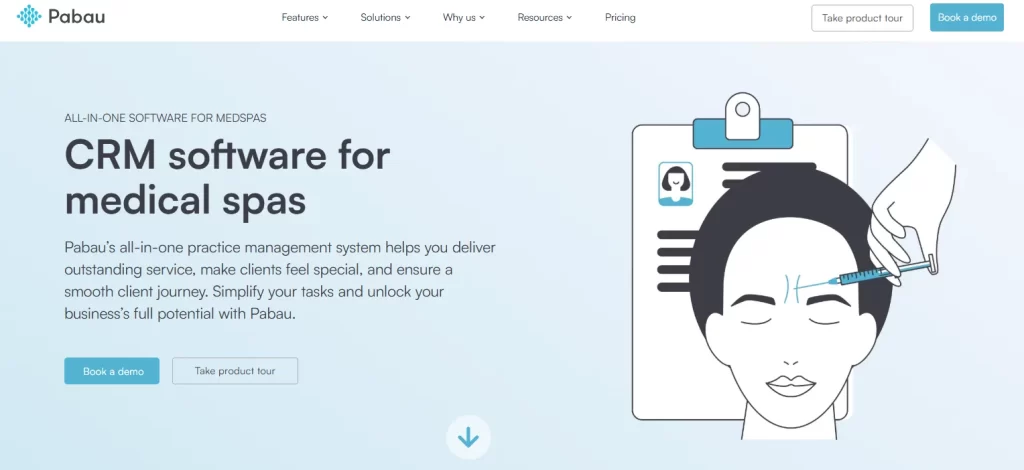
Pabau leads with multi-specialty support across aesthetic, wellness, and medical practices
Accuro EMR offers nationwide provincial billing with PrescribeIT e-prescribing integration
Jane App leads allied health software in Canada with a 4.8/5 rating from 5,500+ reviews
OSCAR EMR provides a free open-source option for practices with technical resources
TELUS Health serves 40,000+ physicians across multiple EMR products nationwide
Top 6 EHR Systems in Canada (2026 Guide)
According to a Canada Health Infoway and Canadian Medical Association survey, 95% of Canadian physicians now use electronic tools in clinical practice. That adoption rate masks significant variation: urban clinics in Toronto and Vancouver run fully integrated platforms, while rural practices in Northern Ontario and the Prairies still rely on fragmented systems with limited provincial connectivity. Electronic health record selection has become a defining operational decision for Canadian practices navigating provincial billing, PIPEDA compliance, and increasingly complex documentation standards.
The Canadian EHR market differs fundamentally from the United States. Provincial health ministries maintain separate billing systems. Quebec requires bilingual interfaces. PIPEDA establishes federal privacy baselines that provinces supplement with their own health information acts. A system that works seamlessly in Ontario may lack critical integrations for British Columbia practices.
This guide evaluates six electronic health record systems available to Canadian clinics in 2026. Each platform receives a standardized assessment covering clinical documentation, provincial billing integration, PIPEDA compliance frameworks, and operational workflows specific to Canadian healthcare delivery. The analysis prioritizes platforms with verified Canadian deployments, not theoretical capability claims.
Compare Top 6 EHR Systems Canada at a Glance
Six platforms serve the Canadian clinic software market across different specialties and practice sizes. The comparison matrix below provides snapshot data for quick evaluation before detailed product reviews.
Name
Best For
Standout Feature
Starting Price
Rating
Pabau
Multi-specialty clinics needing global compliance with Canadian operations
AI-powered clinical documentation with Echo AI
$62 per user/month
4.5/5 (370+)
Accuro EMR
Primary care and multi-specialty practices nationwide
PrescribeIT e-prescribing and provincial billing
Contact for pricing
4.6/5 (10+)
Jane App
Allied health and wellness clinics
Canadian-built online booking and charting
CAD $54/month
4.8/5 (5,500+)
Juno EMR
Small primary care clinics in Ontario
OHIP billing integration
Contact for pricing
N/A
OSCAR EMR
Budget-conscious practices with technical resources
Open-source and free
Free (open-source)
3.5/5 (8)
TELUS Health
Large clinics, group practices, and hospital networks
National health information exchange with 40,000+ physicians
Contact for pricing
3.8/5 (est.)
Pabau: Best Multi-Industry Clinic Operating System for Canadian Practices
Pabau positions itself as a flexible clinic management platform supporting aesthetic medicine, wellness clinics, private GP practices, and multi-specialty operations. Unlike traditional Canadian EMRs built specifically for family medicine or hospital-affiliated clinics, Pabau serves practices that combine medical aesthetics, functional medicine, longevity care, and wellness services under one operational system. The platform provides comprehensive PIPEDA compliance frameworks while supporting clinics with international patient bases or multiple jurisdiction operations.
Canadian deployments include aesthetic clinics in Toronto, wellness practices in Vancouver, and multi-location medical spas across Alberta. The system’s cloud-based architecture eliminates server maintenance requirements common with legacy Canadian EMRs. According to Capterra reviewers, Pabau receives a 4.5 out of 5 rating based on over 370 verified reviews, with users highlighting the platform’s modern interface and comprehensive feature set.
The platform supports clinics operating across provincial boundaries through unified patient records and standardized documentation workflows. While Pabau does not offer direct provincial billing submission like TELUS Health or Accuro EMR, it provides robust claims management capabilities for private practice billing, insurance claim preparation, and financial reporting aligned with Canadian accounting standards.
Key Features
Echo AI Clinical Documentation: AI-powered voice-to-text transcription that automatically structures clinical notes from verbal dictation, reducing documentation time by up to 70%
Multi-Location Management: Centralized dashboard for practices operating across multiple cities or provinces with unified reporting and cross-location patient records
Digital Forms with E-Signatures: Customizable intake forms, consent documents, and medical questionnaires that comply with PIPEDA electronic consent requirements
Before & After Photo Management: Secure PIPEDA-compliant photo storage with facial mapping tools, comparison views, and patient portal access controls
Integrated Payment Processing:Card terminal support, online payment collection, and deposit management with automated receipt generation
Automated Client Communications: SMS and email appointment reminders, recall campaigns, and post-treatment follow-ups with customizable templates
Online Booking with Client Portal:Self-service scheduling that integrates with practice websites, allowing patients to book appointments, complete forms, and access their records
Inventory Management:Real-time stock tracking for medical supplies, injectables, and retail products with automated reorder alerts
Pricing
Plan
Price
Who It’s For
Key Features
Essential
$62 per user/month
Solo practitioners and small clinics
Core scheduling, patient records, online booking, digital forms
Plus
$93 per user/month
Growing practices needing marketing and engagement tools
Essential features + SMS campaigns, loyalty programs, gift vouchers, advanced reporting
Enterprise
Custom pricing
Multi-location clinics and specialty networks
Plus features + multi-location management, API access, dedicated support
Where Pabau Shines
Multi-Industry Flexibility: Supports aesthetic clinics, wellness centres, functional medicine, and hybrid multi-specialty operations within one unified system.
Modern Cloud Architecture: No local server installation required. Browser and mobile access with automatic updates and 99.9% uptime SLA.
Global Compliance: PIPEDA, GDPR, HIPAA, and CQC frameworks built in for practices with international patient bases or multi-jurisdiction operations.
AI-Powered Documentation:Echo AI reduces documentation time from 15-20 minutes per patient to 3-5 minutes through voice-to-text transcription and automatic SOAP note structuring.
Client Engagement: Automated recall campaigns, loyalty programs, and branded mobile app access for patient retention.
Where Pabau Falls Short
No Direct Provincial Billing Submission: Practices relying on OHIP, MSP, or other provincial health insurance billing must export claims data for submission through separate channels. Traditional Canadian EMRs like TELUS Health and Accuro EMR offer native provincial billing integration.
Learning Curve for Complex Workflows: The platform’s depth requires structured onboarding. Practices transitioning from paper-based systems or basic scheduling software report 2-3 week adjustment periods before staff achieve full proficiency.
Limited Traditional Medical Billing: While strong for private pay aesthetics and wellness, Pabau lacks the insurance claim workflow depth of platforms purpose-built for traditional medical billing scenarios involving multiple insurance carriers and complex fee schedules.
Customer Reviews
“We switched from a legacy Canadian EMR after expanding into medical aesthetics. The old system couldn’t handle injection plotting or before/after photos properly. Pabau gave us clinical documentation that actually fits our hybrid GP plus aesthetics model.” (Practice Manager, Capterra)
“Echo AI changed how I document treatments. I used to spend 20 minutes per patient on notes. Now I dictate while treating and the system structures everything automatically. My documentation is more thorough and takes a third of the time.” (Medical Director, Capterra)
Who Pabau Is Best For
Multi-specialty clinics combining medical aesthetics, wellness, and functional medicine services under one operational system
Private practice groups requiring sophisticated patient engagement and marketing automation beyond basic appointment reminders
Aesthetic medical clinics, medical spas, and dermatology practices needing PIPEDA-compliant photo management and treatment documentation
Practices operating across multiple locations or provinces that need centralized management with location-specific reporting
Accuro EMR: Canada’s Largest Single-Platform EMR for Primary and Specialty Care
Accuro EMR, built by QHR Technologies, positions itself as Canada’s largest single-platform EMR with deployments across all provinces and territories. The platform serves family medicine, specialist practices, walk-in clinics, and multi-physician groups through direct provincial billing integration, electronic lab ordering, and structured clinical documentation. According to Capterra reviewers, Accuro receives a 4.6 out of 5 rating, with users highlighting reliable provincial billing and responsive support.
In August 2025, Accuro completed its integration with PrescribeIT, Canada Health Infoway’s national e-prescribing service. This enables direct electronic prescription transmission to pharmacies across participating provinces, replacing fax-based workflows. Accuro has also partnered with Heidi Health to offer AI-powered clinical documentation (Heidi AI Scribe) that generates structured notes from voice dictation during patient encounters.
Key Features
Provincial Billing Integration: Direct claim submission to OHIP, MSP, Alberta Health, and other provincial health insurance plans with automated fee schedule updates and real-time claim status tracking
PrescribeIT E-Prescribing: National electronic prescribing through Canada Health Infoway’s PrescribeIT network, replacing fax-based prescription workflows with direct pharmacy transmission
Heidi AI Scribe: AI-powered voice-to-text clinical documentation that generates structured encounter notes from provider dictation during patient visits
Electronic Lab Ordering: Integration with provincial laboratory networks for electronic requisitions and automatic result imports into patient charts
Clinical Documentation Templates: Pre-built templates for family medicine encounters, specialist consultations, chronic disease management, and preventive care
Pricing
Plan
Price
Who It’s For
Key Features
Custom Pricing
Contact QHR Technologies for rates
All practice sizes
Full EMR suite with provincial billing, PrescribeIT, AI scribe
Where Accuro EMR Shines
National Coverage: Deployments across all Canadian provinces and territories with province-specific billing configurations, unlike regional EMRs limited to one or two provinces
PrescribeIT Integration: Direct e-prescribing through Canada Health Infoway’s national network eliminates fax workflows and improves medication safety
AI Documentation: Heidi AI Scribe partnership adds voice-to-text note generation, reducing documentation burden for busy primary care providers
Where Accuro EMR Falls Short
Limited Multi-Specialty Support: Practices offering aesthetic medicine, functional wellness, or services beyond traditional primary and specialist care find the system lacks appropriate documentation templates
No Patient Engagement Tools: Lacks marketing automation, loyalty programs, and branded patient apps that modern private practice clinics expect
Customer Reviews
Accuro EMR holds a 4.6 out of 5 rating on Capterra based on verified reviews. Users praise the platform’s provincial billing reliability and responsive Canadian-based support team. Common criticism includes the learning curve for new staff and limited customization of clinical templates.
Who Accuro EMR Is Best For
Primary care and family medicine practices requiring direct provincial billing across any Canadian province
Multi-physician group practices and walk-in clinics needing provincial laboratory and diagnostic imaging connectivity
Practices adopting e-prescribing through PrescribeIT for medication safety compliance
Jane App: Best for Allied Health and Wellness Clinics
Jane App is a Canadian-built practice management platform founded in North Vancouver, British Columbia. The platform serves physiotherapy clinics, chiropractors, naturopaths, massage therapists, counsellors, and other allied health practitioners across Canada. According to Capterra reviewers, Jane App holds a 4.8 out of 5 rating based on over 5,500 verified reviews, making it one of the highest-rated clinic software platforms in Canada.
Jane App handles online booking, charting, scheduling, billing (including direct insurance claims for some provinces), and PIPEDA-compliant patient records. The platform’s telehealth module supports video consultations for practices offering virtual care alongside in-person appointments. Canadian data residency ensures patient information remains stored within Canada.
Key Features
Online Booking: Patient-facing scheduling with real-time availability, waitlists, and automated appointment reminders via email and SMS
Clinical Charting: Customizable chart templates for allied health disciplines with SOAP notes, body diagrams, and outcome tracking
Insurance Billing: Direct billing to select provincial and private insurance carriers with automated claim submission and tracking
Telehealth: Built-in video consultations integrated with scheduling and charting workflows
Patient Portal: Self-service access for patients to book appointments, complete intake forms, and view visit history
Base features + direct insurance billing and claims
Corporate
CAD $99/month
Multi-location and larger clinics
Insurance features + multi-location, advanced reporting
Where Jane App Shines
Allied Health Focus: Purpose-built templates and workflows for physiotherapy, chiropractic, naturopathy, massage therapy, and counselling practices
Canadian-Built: Founded in North Vancouver with Canadian data residency, PIPEDA compliance, and Canadian dollar pricing
Exceptional User Ratings: 4.8/5 on Capterra with over 5,500 reviews reflects strong user satisfaction across allied health disciplines
Where Jane App Falls Short
Limited Medical Specialty Depth: Practices requiring advanced medical documentation (injection plotting, before/after photos, complex treatment protocols) find the platform oriented toward allied health rather than medical aesthetics or specialty medicine
No Provincial Health Billing: Direct submission to OHIP, MSP, or other provincial health insurance plans is not supported – practices must handle provincial billing separately
Customer Reviews
Jane App holds a 4.8 out of 5 rating on Capterra based on over 5,500 verified reviews. Users consistently praise the intuitive interface, responsive Canadian support team, and seamless online booking experience. Common feedback notes that advanced reporting and multi-location features require the higher-tier Corporate plan.
Who Jane App Is Best For
Physiotherapy, chiropractic, naturopathy, massage therapy, and counselling practices across Canada
Allied health clinics wanting transparent Canadian dollar pricing without enterprise sales processes
Practices prioritizing patient self-service booking and a modern, intuitive interface
See How Pabau Supports Canadian Multi-Specialty Clinics
Discover how Pabau's PIPEDA-compliant platform manages aesthetic, wellness, and medical services in one unified system with AI-powered documentation and patient engagement tools.
Juno EMR: Best for Small Primary Care Clinics in Ontario
Juno EMR targets solo practitioners and small group practices in Ontario through OHIP-focused billing workflows and streamlined clinical documentation. The platform emphasizes simplicity over comprehensive feature sets, appealing to practices transitioning from paper records or basic scheduling systems. Ontario-specific configurations include OHIP fee code integration, provincial laboratory connectivity, and documentation templates aligned with Ontario College of Physicians and Surgeons standards.
The system’s Ontario focus limits applicability for practices operating in other provinces. The platform serves practices requiring straightforward EMR functionality without extensive customization or multi-specialty workflows. Bilingual interface support for Quebec practices should be verified directly with the vendor.
Key Features
OHIP Billing Integration: Direct fee code entry and claim submission aligned with Ontario Medical Association billing standards
Clinical Templates: Pre-configured documentation templates for common primary care encounters and chronic disease management
E-Prescribing: Electronic prescription transmission to Ontario pharmacies with provincial formulary reference
Appointment Scheduling: Basic calendar management with patient reminder capabilities
Pricing
Plan
Price
Who It’s For
Key Features
Custom Pricing
Contact Juno EMR for rates
All practices
Basic EMR with OHIP billing
Where Juno EMR Shines
Ontario-Specific Optimization: OHIP billing workflows and documentation standards receive dedicated focus without attempting to serve all provinces equally
Simplified Interface: Streamlined functionality reduces training requirements for practices transitioning from paper-based systems
Where Juno EMR Falls Short
Geographic Limitation: Practices outside Ontario or those expanding to other provinces require alternative solutions
Public review data for Juno EMR is limited. The platform operates primarily within Ontario primary care networks.
Who Juno EMR Is Best For
Solo practitioners and small group practices in Ontario requiring basic EMR functionality with OHIP billing
Clinics prioritising simplicity over comprehensive feature sets and advanced patient engagement tools
OSCAR EMR: Best for Budget-Conscious Practices with Technical Resources
OSCAR EMR operates as an open-source electronic medical record system developed through the OSCAR McMaster project. The platform provides core EMR functionality without licensing fees, making it attractive to practices prioritising cost containment over comprehensive vendor support. Canadian practices with technical staff capable of managing server infrastructure and software updates find OSCAR EMR eliminates ongoing subscription costs common with commercial systems.
The open-source model requires practices to handle system hosting, security updates, and technical troubleshooting internally or through third-party IT support contracts. Unlike cloud-based commercial EMRs, OSCAR EMR demands local server management and backup procedures. Research confirms the platform operates as free open-source software, though implementation costs for server infrastructure and technical support vary by practice configuration.
Key Features
Open-Source Licensing: Free software distribution eliminates monthly subscription fees, though implementation and support costs remain
Clinical Documentation: Standard EMR functionality including encounter notes, prescription management, and laboratory result tracking
Provincial Billing Support: Billing modules for various provincial health insurance plans with customizable fee schedules
Community Development: Active developer community provides ongoing feature enhancements and bug fixes through collaborative development
Pricing
Plan
Price
Who It’s For
Key Features
Open Source
Free (open-source)
All practices with technical resources
Core EMR functionality
Where OSCAR EMR Shines
Zero Licensing Costs: Open-source model eliminates monthly subscription fees, reducing long-term software costs for practices willing to manage technical infrastructure
Customisation Potential: Access to source code allows practices with development resources to modify functionality for specific workflow requirements
Where OSCAR EMR Falls Short
Technical Resource Requirements: Practices must manage server infrastructure, security updates, backup procedures, and troubleshooting without vendor support
Implementation Complexity: Initial setup requires technical expertise beyond what most medical practices maintain in-house, necessitating third-party implementation support
Limited User Experience: Interface design reflects community-driven development rather than professional user experience design, resulting in steeper learning curves
Customer Reviews
Public review data for OSCAR EMR is limited. The platform operates primarily within academic medical centres and community health organizations with technical support infrastructure.
Who OSCAR EMR Is Best For
Practices with technical staff capable of managing server infrastructure and software troubleshooting
Budget-conscious clinics prioritising cost containment over comprehensive vendor support and modern user experience
TELUS Health: Best for Large Clinics, Group Practices, and Hospital Networks
TELUS Health operates as Canada’s largest healthcare IT provider, with over 40,000 physicians and approximately 110,000 clinicians using its EMR platforms. The company’s portfolio includes multiple EMR products acquired over the past decade: Med Access (acquired 2014), PS Suite, and CHR (Collaborative Health Record). These platforms serve different practice sizes and specialties under the TELUS Health umbrella, giving the company broad coverage across family medicine, specialist practices, hospital-affiliated clinics, and multi-location networks.
TELUS Health provides connectivity to Canada Health Infoway initiatives, provincial laboratory networks, and diagnostic imaging systems across all provinces. The company’s national health information exchange infrastructure enables patient data sharing across healthcare organizations and care settings. Med Access, the most widely deployed product in the portfolio, serves multi-physician group practices with scheduling coordination, provincial billing, and clinical documentation.
Key Features
Multiple EMR Products: Med Access for group practices, PS Suite for family medicine, and CHR for hospital-affiliated clinics – each tailored to different practice types
National Health Information Exchange: Connectivity to provincial health networks enabling patient data sharing across organizations, provinces, and care settings
Provincial Billing Integration: Direct billing submission across all provinces through platform-specific configurations
Diagnostic Integration: Electronic lab ordering and result retrieval from provincial laboratory systems and diagnostic imaging networks
Multi-Province Support: Operational infrastructure supporting practices with locations across multiple provinces with unified patient records
Pricing
Plan
Price
Who It’s For
Key Features
Enterprise Pricing
Contact TELUS Health for rates
Group practices, hospitals, and large networks
Enterprise EMR suite (Med Access, PS Suite, or CHR)
Where TELUS Health Shines
Scale and Market Penetration: Over 40,000 physicians on TELUS Health EMR platforms makes it the largest healthcare IT provider in Canada by user base
Health Information Exchange: National connectivity enables patient data sharing across hospital systems, specialty clinics, and provincial health networks
Product Portfolio Breadth: Multiple EMR products (Med Access, PS Suite, CHR) address different practice types without forcing one-size-fits-all architecture
Where TELUS Health Falls Short
Fragmented Product Portfolio: Multiple acquired EMR products create confusion for practices evaluating which TELUS Health system fits their needs – Med Access, PS Suite, and CHR have different interfaces, features, and migration paths
Complexity for Small Practices: Enterprise sales processes and deployment timelines align with hospital systems rather than solo practitioners or small clinics
Limited Modern Features: Patient engagement tools, marketing automation, and modern cloud-native interfaces lag behind newer platforms built from the ground up
Customer Reviews
Public review data for TELUS Health EMR products is limited on consumer platforms. The company operates primarily through enterprise sales to healthcare organizations. Med Access and PS Suite users in Canadian physician forums report reliable provincial billing but note dated interfaces compared to modern cloud-based alternatives.
Who TELUS Health Is Best For
Hospital-affiliated clinics requiring integration with hospital EMR systems and diagnostic networks
Multi-physician group practices (Med Access) needing centralized scheduling and provincial billing
Large physician groups and specialty networks prioritizing health information exchange over modern patient engagement features
How to Choose the Right EHR System for Your Canadian Practice
Selecting electronic health record systems for Canadian clinics requires evaluating five core criteria: provincial billing requirements, practice specialty alignment, compliance frameworks, implementation complexity, and total cost of ownership. A system optimized for Ontario family medicine performs poorly for British Columbia aesthetic practices. The decision framework below guides evaluation based on operational reality rather than marketing claims.
Provincial Billing Integration Depth: Practices relying primarily on provincial health insurance billing require native OHIP, MSP, or other provincial fee submission. TELUS Health, Accuro EMR, and Juno EMR prioritise provincial billing workflows. Private practice models or hybrid clinics offering aesthetic and wellness services find this less critical and benefit from flexible payment processing like Pabau’s integrated card terminals and online payment collection.
Practice Specialty and Service Mix: Traditional family medicine aligns with TELUS Health or Accuro EMR. Multi-specialty practices combining medical aesthetics, functional medicine, wellness, and traditional services require flexible documentation like Pabau’s customizable forms, injection plotting, and before/after photo management. Specialty-specific templates and workflows matter more than generic EMR functionality.
Technical Resource Availability: Cloud-based systems like Pabau and Jane App eliminate server management. OSCAR EMR demands dedicated IT staff. Practices without technical resources avoid open-source platforms regardless of cost savings. Implementation complexity scales with system depth – enterprise platforms like TELUS Health require months of deployment versus weeks for practice-focused systems.
Compliance and Data Residency: All Canadian platforms must meet PIPEDA requirements, but provincial health information acts add jurisdiction-specific obligations. Practices with international patient bases or multi-jurisdiction operations benefit from platforms like Pabau that support PIPEDA, GDPR, HIPAA, and other frameworks simultaneously. Data residency requirements vary-verify whether patient data must remain in Canada or if cloud hosting in international data centres meets practice obligations.
Growth Trajectory and Scalability: Solo practitioners prioritizing simplicity over features find Juno EMR sufficient. Practices planning multi-location expansion, service line additions, or specialty integration require scalable platforms like Pabau that support multi-location management, customizable workflows, and API integrations. The platform chosen today must accommodate operations three years forward, not just current state.
Pabau stands out for practices operating across multiple specialties, jurisdictions, or service models. The platform’s cloud architecture eliminates server management while supporting aesthetic clinics, wellness centres, functional medicine practices, and hybrid operations through unified documentation and patient engagement tools. Provincial billing-dependent practices find traditional Canadian EMRs like TELUS Health and Accuro EMR better aligned with government health insurance workflows.
Expert Picks
Evaluating multi-specialty practice software?Medical Spa Software Guide explains how Pabau supports aesthetic and wellness operations alongside traditional medical services.
Need secure patient data management?HIPAA Compliance Overview details Pabau’s privacy frameworks covering PIPEDA, GDPR, and HIPAA requirements.
Planning multi-location clinic expansion?Multi-Location Management Feature demonstrates centralized operations across provinces and cities.
Conclusion
Canadian practices face EHR selection challenges distinct from American healthcare markets. Provincial billing systems, PIPEDA compliance requirements, and French language mandates for Quebec operations create decision complexity absent in unified systems. The six platforms evaluated represent fundamentally different approaches: enterprise health information exchange (TELUS Health), provincial billing-focused EMRs (Accuro, Juno), allied health practice management (Jane App), open-source alternatives (OSCAR), and multi-specialty clinic operations (Pabau).
Pabau serves practices requiring operational flexibility beyond traditional family medicine EMRs. Multi-industry support, AI-powered documentation through Echo AI, and comprehensive patient engagement tools address aesthetic clinics, wellness centres, functional medicine practices, and hybrid multi-specialty operations. Provincial billing integration gaps limit suitability for practices dependent on OHIP or MSP direct submission, but private practice models and mixed-payer operations find the trade-off acceptable for superior clinical documentation and patient experience capabilities.
Traditional Canadian EMRs like TELUS Health and Accuro EMR remain optimal for hospital-affiliated clinics and family medicine practices requiring deep provincial health system integration. Jane App serves allied health and wellness practices with strong Canadian-built scheduling and charting. OSCAR EMR serves budget-conscious organizations with technical resources. The right choice depends on practice specialty, billing model, technical capability, and growth trajectory rather than universal “best” rankings. Canadian clinics evaluating options should prioritize operational alignment over feature checklists and verify provincial-specific capabilities through direct platform demonstrations.
Frequently Asked Questions
What is the difference between EMR and EHR in Canada?
Electronic Medical Records (EMR) contain patient data within a single clinic or practice. Electronic Health Records (EHR) enable data sharing across healthcare organizations, provinces, and care settings. Canadian usage often treats the terms interchangeably, though technically EHR implies health information exchange capabilities like those provided by TELUS Health’s national connectivity. Most Canadian practice-focused systems function as EMRs despite marketing as EHRs.
Do all Canadian EHR systems support provincial billing?
No. Traditional Canadian EMRs like TELUS Health, Accuro EMR, and Juno EMR offer direct provincial health insurance billing integration. Platforms like Pabau and Jane App focus on private practice billing, payment processing, and insurance claim preparation without native provincial health insurance submission. Practices dependent on OHIP, MSP, or other provincial fee-for-service billing require systems with verified provincial integration for their specific province.
Is PIPEDA compliance mandatory for all Canadian healthcare software?
Yes. The Personal Information Protection and Electronic Documents Act establishes federal privacy requirements for healthcare organizations handling personal health information. Provincial health information acts like Ontario’s PHIPA or British Columbia’s FHIPA add jurisdiction-specific obligations. All Canadian EHR systems must meet PIPEDA baselines, though implementation depth varies. Verify specific provincial requirements with your College of Physicians and Surgeons.
Can I use American EHR systems in Canadian practices?
American platforms lack provincial billing integration, Canadian-specific compliance frameworks, and laboratory/diagnostic network connectivity required for traditional medical practices. Private practice models or aesthetic clinics find some American systems technically usable, but PIPEDA compliance verification and provincial regulatory approval remain practice responsibilities. Canadian-built platforms understand provincial healthcare workflows American vendors cannot replicate.
What is the typical cost of EHR systems in Canada?
Cloud-based practice management systems like Pabau start at $62 per user monthly. Jane App starts at CAD $54 per month. Traditional Canadian EMRs like TELUS Health and Accuro EMR provide custom enterprise pricing. OSCAR EMR offers free open-source software but requires implementation and technical support costs. Total cost of ownership includes software licensing, implementation, training, ongoing support, and infrastructure management. Practices should budget 12-18 months of operational costs for realistic comparison.
Does Quebec require bilingual EHR interfaces?
Quebec healthcare practices operating under provincial language laws must provide French-language service delivery. EHR systems serving Quebec practices should support bilingual interfaces, though specific requirements depend on clinic location and patient population. Bilingual support varies across platforms. Verify language capabilities directly with vendors before deployment in Quebec.