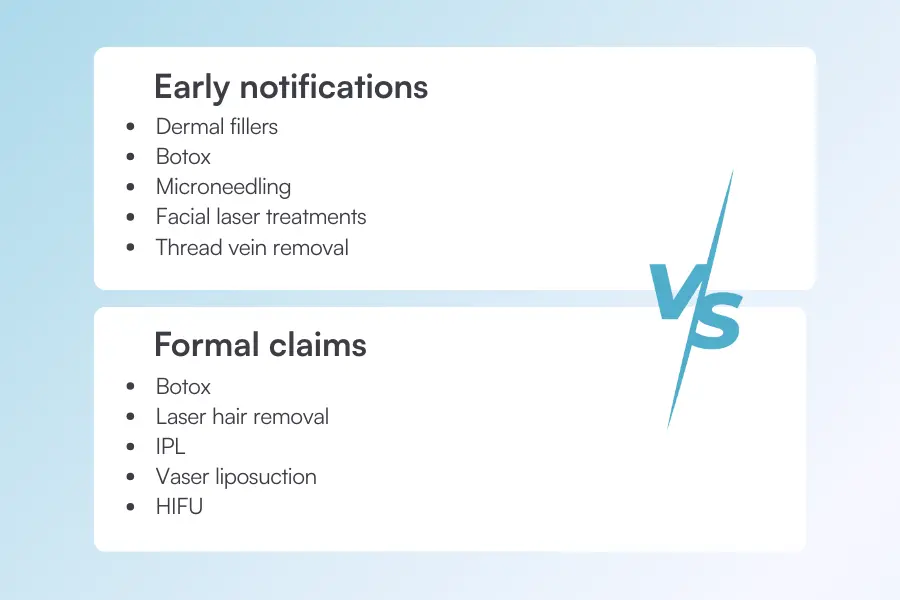
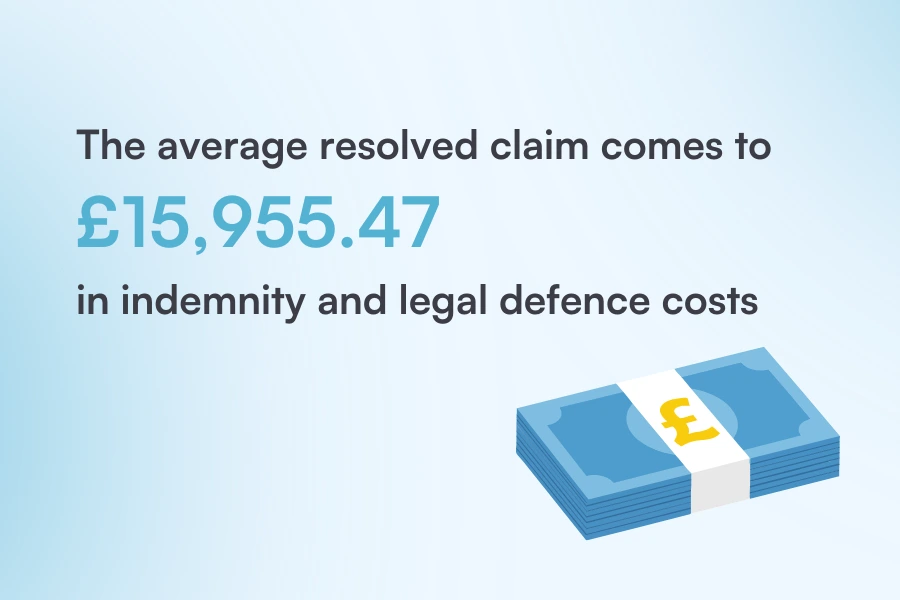
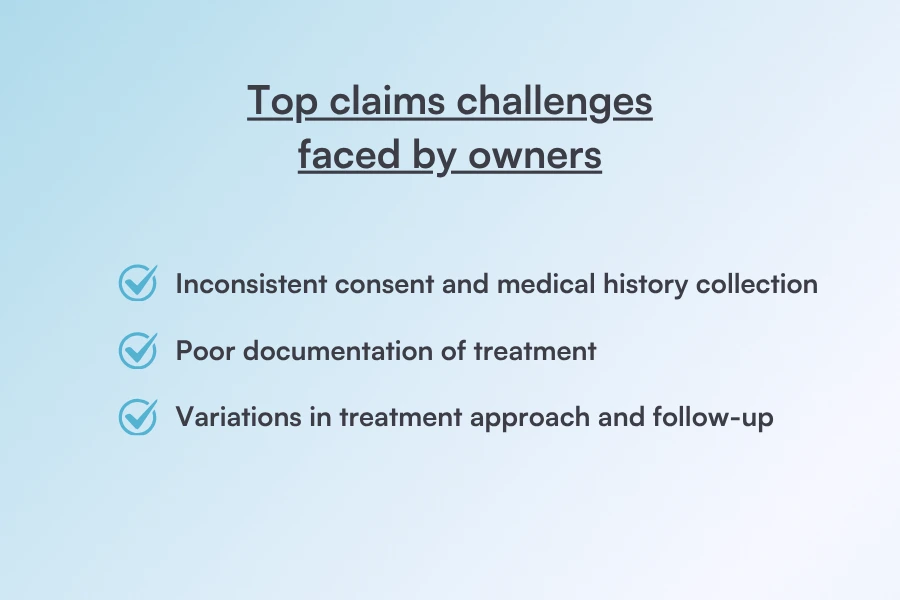
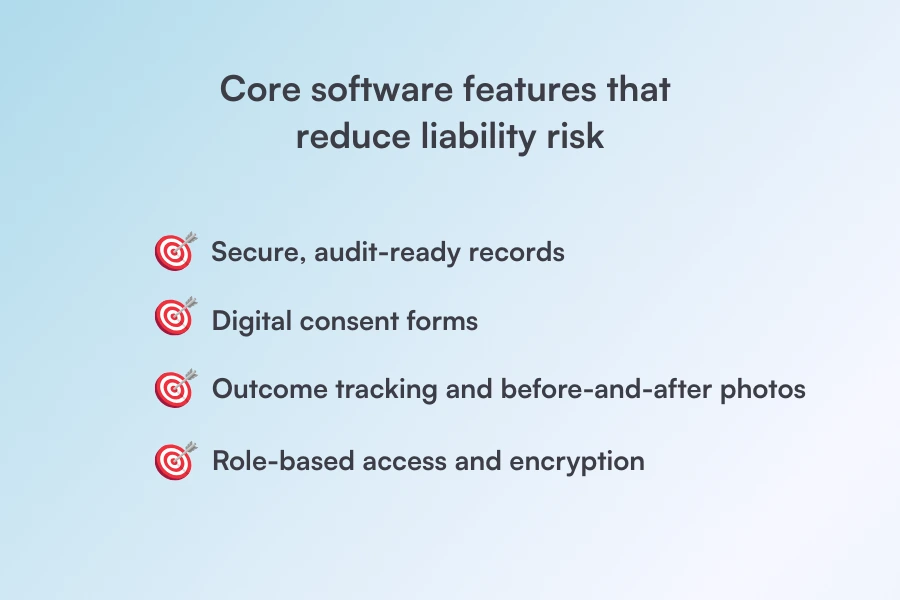
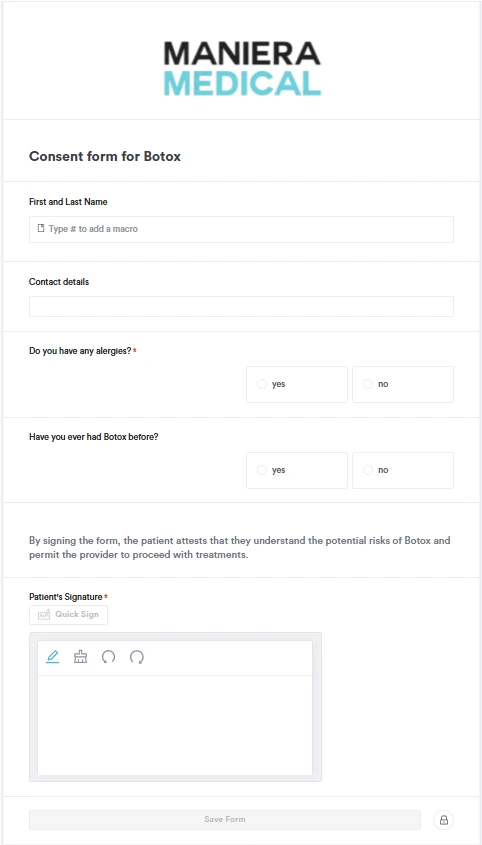
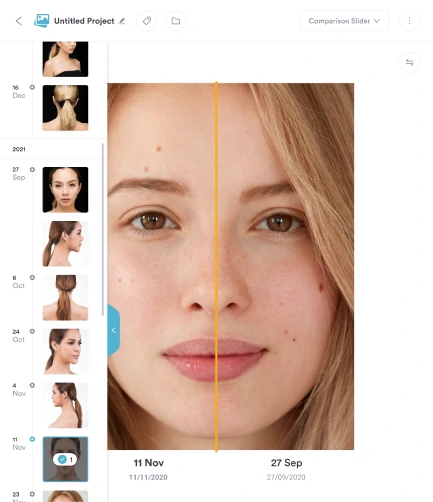
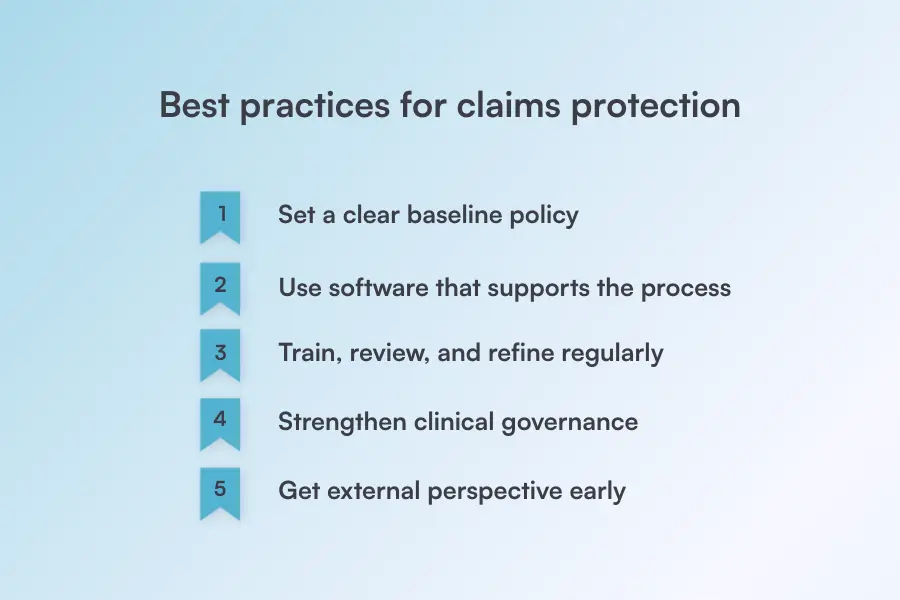
It doesn’t take a major mistake to trigger a claim in aesthetics.Often, it’s as simple as a missing detail in the notes or a consultation that wasn’t documented clearly enough to return to later.Clinics that stay protected have one thing in common: consistency. Consent, notes, photos, and follow-up are handled the same way, every time. With the right practice management software, that process becomes second nature, reducing risk, protecting your team, and making it easier to resolve concerns if they do arise.In this article, we’ll look at where risk tends to build and how to reinforce the everyday steps that prevent it. The current claims landscape in aesthetics Recent claims data from Cosmetic Insure, a leading provider of medical malpractice cover for aesthetic clinics, shows that most early notifications don’t come from unusual or complex procedures. They stem from the core treatments carried out every day, like:Dermal fillersBotoxMicroneedlingFacial laser treatmentsThread vein removalThese are familiar appointments, and familiarity is usually where small but important steps can be glossed over.When a notification progresses into a formal claim, the pattern shifts slightly. Cosmetic Insure’s data shows that the treatments most commonly involved at that stage are:BotoxLaser hair removalIPLVaser liposuctionHIFU Illustration: Pabau / Source: Cosmetic Insure The average resolved claim comes to £15,955.47 in indemnity and legal defence costs. That figure doesn’t include the time spent gathering notes, writing statements, or managing the pressure of a live claim alongside normal clinic responsibilities. Illustration: Pabau / Source: Cosmetic Insure Wider research reflects the same issues.A 2021 review in Dermatologic Surgery found that many malpractice disputes involving minimally invasive cosmetic procedures were most often linked to:Incomplete or unclear consentRisks not clearly explainedCommunication gaps during discussion or follow-upNo clear record of who carried out the treatmentMore recently, a 2025 review in Aesthetic Surgery Journal reported similar trends across more than ten countries. It found that claims in facial aesthetic surgery were most often linked to dissatisfaction with the cosmetic result, consent that didn’t fully reflect the risks, and inadequate postoperative follow-up.Put simply, when a treatment or decision is called into question months later, the record has to speak for itself. And this is where clinic owners feel the strain most clearly. Top claims challenges faced by owners When a claim is raised, the challenges usually show up in three parts of the clinic’s workflow: Source: Pabau Let’s take a closer look at each. Inconsistent consent and medical history collection Consent is where many disputes begin, especially when the pre-treatment conversation isn’t guided the same way every time. This shows up as:Different versions of the consent form in useMedical forms completed once and not reviewed againRisk explanations varying between practitionersVerbal details missing from the clinical recordCosmetic Insure highlights that one of the most preventable causes of claims is a lack of clear, complete consent and medical history documentation. Illustration: Pabau / Source: Cosmetic Insure When that isn’t captured, disputes take longer to resolve, and the owner ends up trying to reconstruct conversations that should already be documented. Poor documentation of treatment Treatment notes are the point of reference when a result is reviewed later.They’re used to provide context for side effects or when a client’s recollection differs from that of the practitioner. Poor documentation can look like:Treatment details added hours later, when recall isn’t as sharpMissing timestamps that make the treatment timeline unclearPhotos saved to a device or folder instead of linked to the client’s recordAftercare discussed verbally but not written downCosmetic Insure highlights that digital records and signed consent help show that risks were clearly explained and understood at the time of treatment. This strengthens the clinic’s position if the outcome is examined down the line. Illustration: Pabau / Source: Cosmetic Insure Without that clarity, the context behind the treatment is harder to demonstrate, and that’s when cases become more difficult to defend. Variations in treatment approach and follow-up The final risk point comes from the way work is carried out across the team. Treatments are often learned through observation, routine, and habit. Small differences build up over time.It shows up when:One practitioner completes a full set of pre-treatment checks, while another moves through them more quicklyTechniques are passed on informally instead of being written down as a shared referenceFollow-up advice and expectations vary depending on who’s on shift that dayNone of this suggests unsafe practice. The challenge is consistency. When routines differ from practitioner to practitioner, the clinic still has to show that a standard of care was applied. That responsibility sits with the owner, even if the variation developed naturally across the team. Case study: HIFU treatment claim Cosmetic Insure provided this case as part of their recent claims work.The situationA clinic was preparing to offer HIFU and, as a common practice within the business, trialled the treatment on an employee who volunteered as a model. Since this was something the team did regularly when introducing new treatments, the appointment felt informal and familiar rather than clinical and documented formally.During the session, the client sustained a burn. The practitioner supported them afterwards, checked in, and the client initially indicated that they understood the situation.The claimSome weeks later, the clinic received a letter of claim from the client’s solicitor. The claim stated that the risks had not been clearly explained and questioned whether the procedure had been carried out in line with professional standards.When the insurer reviewed the file, two requirements under the clinic’s policy were missing:A signed consent form confirming that the client had been advised of all possible side effectsTreatment records documenting what happened during the appointmentAlthough the client was an employee, the policy conditions still applied. Any treatment required the same standards of record-keeping and consent as if it were delivered to a paying patient.OutcomeBecause the clinic had not complied with the policy conditions, cover for the claim was withdrawn. The claim proceeded without insurer support.Why the record matteredThis situation wasn’t about negligence or poor clinical technique. It came down to familiarity. The team carried out something routine, but without the paperwork that normally supports it. Once the treatment was questioned, there was no written record to return to. How software directly reduces liability risk The software you use becomes part of your risk profile. It should support your processes, prove your decisions, and stand up under scrutiny. These are the features that help you do that: Source: Pabau We’ll go through them one by one. Secure, audit-ready records When a treatment is reviewed, insurers look to the record first. They expect a clear account of the assessment, the decisions made, the technique used, and what happened afterwards.Pabau is an all-in-one practice management software that keeps the full clinical picture in one place. Every part of the appointment is stored together and linked to the exact client and visit it relates to.That includes:Medical information such as health history, allergies, and medicationsConsultation and assessment notesSigned consent formsProcedure and treatment notesBefore-and-after photos tied to the appointmentClient communication, including messages, calls, and follow-ups Source: Pabau Cosmetic Insure’s own risk guidance highlights that well-kept documentation plays a decisive role in how claims are assessed. When the record clearly reflects the assessment and the treatment delivered, it becomes much easier to demonstrate that care was appropriate and informed.These records need to hold up over time, as a case may be revisited months or even years after the treatment. Retention periods vary between insurers and policy types, so always refer to your policy wording for the exact record-keeping requirement. Digital consent forms Digital forms reduce risk by standardizing the pre-treatment discussion.Conditional fields ensure the risks match the treatment selected, and the wording stays consistent across practitioners. The signature is linked to the appointment itself, which leaves far less room for confusion or “he said, she said” disputes later on. Source: Pabau A 2025 scoping review in BMC Health Services Research found that digital consent improves patient understanding of procedures and risks, and reports time savings for clinicians. This lands even better when forms are completed ahead of time. It gives practitioners more space for clinical judgment, face-to-face conversation, and focused decision-making, as the paperwork is already handled before the appointment begins. Outcome tracking and before-and-after photos Outcome tracking is most reliable when images sit alongside the rest of the treatment information. A baseline photo taken at the consultation shows where the client began, and follow-up images show how their skin or features changed over time. If a concern is raised later, that visual timeline becomes a reference point that’s far more difficult to dispute. Source: Pabau When a result is questioned, insurers compare these images just as closely as the written record. Photos show progression in a way notes can’t always illustrate. They help establish whether healing followed the expected course and whether the client was appropriately supported afterwards.For that record to hold weight, imaging needs to be controlled. Same lighting, same angle, same positioning, and stored within your clinical system rather than on personal devices or shared folders. Role-based access and encryption You work with information clients expect to stay private—medical history, photos, contact details, prescribing notes. The fewer people who can view everything, the lower your exposure. Role-based access ensures each team member sees only what supports their work. Source: Pabau Encryption protects the data behind those access controls.The ICO recognises encryption as an appropriate safeguard for personal information, whether stored or shared. If a device is lost or a file intercepted, encrypted data remains unreadable to anyone without authorised access.This matters when a claim is raised. Clear access controls and protected records make it easier to show that information is reliable, complete, and unchanged since it was recorded. Pro tip: Schedule permission reviews and note when changes are made. If a claim is ever reviewed, being able to show who had access at what time helps demonstrate control and accountability. Best practices for claims protection Claims are far easier to resolve when the clinic works to one shared approach. Source: Pabau The steps below help you shape that and keep it steady across the team. 1. Set the baseline policy Agree on what “good practice” looks like across the team.That includes how consultations are carried out, what is recorded every time, how photos are taken and stored, and when follow-ups are arranged. Keep this guidance practical and clear. If five different people give five different answers, it isn’t aligned yet. 2. Choose software that reinforces the process Then, choose software that supports the workflow you’ve set. Notes, consent forms, treatment charts, photos, and follow-up should all be linked to the same appointment. The system should prompt what needs to be captured so documentation is complete at the point of care. If the record is reviewed later, it should show what happened and why without anyone needing to explain it. 3. Train, run, adjust, repeat Bring the workflow into daily use gradually and watch how it holds in real appointments. If something slows the room or routinely gets skipped, refine that part before it becomes the workaround. The aim is a process that feels stable and intuitive, not something people have to remember. 4. Strengthen clinical governance Software helps maintain structure, but standards stay steady through practice. Short refreshers for treatments with higher risk, brief discussions about outcomes, clear SOPs for devices, and a simple way to record and review incidents all help prevent quiet variation from accumulating. 5. Bring in external perspective Insurance brokers like Cosmetic Insure see patterns across many clinics, including where documentation tends to thin out or be misinterpreted later. A periodic audit or record review can show where details need tightening long before a concern becomes a claim. Refinements made early are always easier than those made in response. Wrapping up Running an aesthetic clinic involves a steady stream of judgement calls across the day.The real pressure comes later, once someone asks to review what was discussed, agreed, or carried out in the roomStrong, consistent processes and audit-ready records make that moment far easier. Cosmetic Insure sees this in claims every week. We see it in daily workflows.If you’d like to understand how your setup holds under liability review, get in touch with Cosmetic Insure.Or book a demo, and we’ll walk you through how Pabau keeps everything connected to the appointment it belongs to, so the record is easy to follow if it’s ever revisited.
Compliance and security How practice management software reduces claims in aesthetics It doesn’t take a major mistake to trigger a claim in aesthetics. Often, it’... Maja Muzhdeka November 14, 2025
Compliance and security How to navigate CQC registration: A step-by-step approach If you’ve ever tried to find your way out of a maze, you’ll know how complex... Ivana Karafiloska November 12, 2025
Compliance and security The modern UK GDPR compliance checklist for business success There’s probably a form on your desktop right now that you meant to update thr... Maja Muzhdeka October 22, 2025
Compliance and security How to choose the right commission structure for your med spa Every owner wants their aesthetic business to be the talk of the town, and outst... Tijana Kargovska August 13, 2025