

Best Practice Management Software in Canada (2026 Guide)
Disclosure: Pabau is our product. We have included it alongside other platforms ...

March 16, 2026


Buy now, pay later is now available in Pabau

Read case studies from our satisfied clients

Compare Pabau with alternative systems
 Integrations
 Measure Pabau savings
  Our security commitment
  About us
Learn why this holistic care and aesthetic medicine clinic chose Pabau to power patient care and performance.
Read more

Pabau is the top choice for med spas needing a fully integrated EMR, booking, consent forms, and inventory system in one platform.
HIPAA compliance varies significantly between platforms – always verify your vendor’s Business Associate Agreement (BAA) before signing.
Clinical charting depth differs widely: purpose-built aesthetic EMRs offer injection plotting and before/after photos, while general EHR platforms require custom templates.
Pricing structures range from flat subscription models to per-provider fees – the right choice depends heavily on your team size and growth plans.
Med spas handling injectables, retail, and multi-location operations need software that unifies clinical and business workflows, not two separate tools.
Choosing the best EMR software for med spas is not simply a matter of picking the platform with the longest feature list. A med spa operates at the intersection of clinical care and hospitality – managing HIPAA-regulated patient records, injectable treatments, cosmetic consent, retail inventory, and commission-based staff, often across multiple locations. Generic healthcare EMRs miss the operational context. Pure booking tools miss the clinical documentation requirements. The right platform bridges both worlds.
This guide evaluates six leading platforms – Pabau, Zenoti, PatientNow, Aesthetic Record, DrChrono, and Mangomint – against the criteria that actually matter to med spa owners and practice managers: clinical charting quality, consent form automation, HIPAA compliance approach, scheduling flexibility, inventory management, and pricing transparency. Each platform has a different origin story, and that origin shapes what it does well and where it falls short.
The medical spa software market has expanded rapidly alongside the industry itself, making the selection process more complex – not less. Use this comparison to identify which platform matches your specific operational model, not just your wish list.
The platforms below are ranked by overall suitability for med spa operations, with Pabau leading based on its combination of clinical depth, operational breadth, and workflow integration. Each assessment is based on publicly available feature information and verified review data.
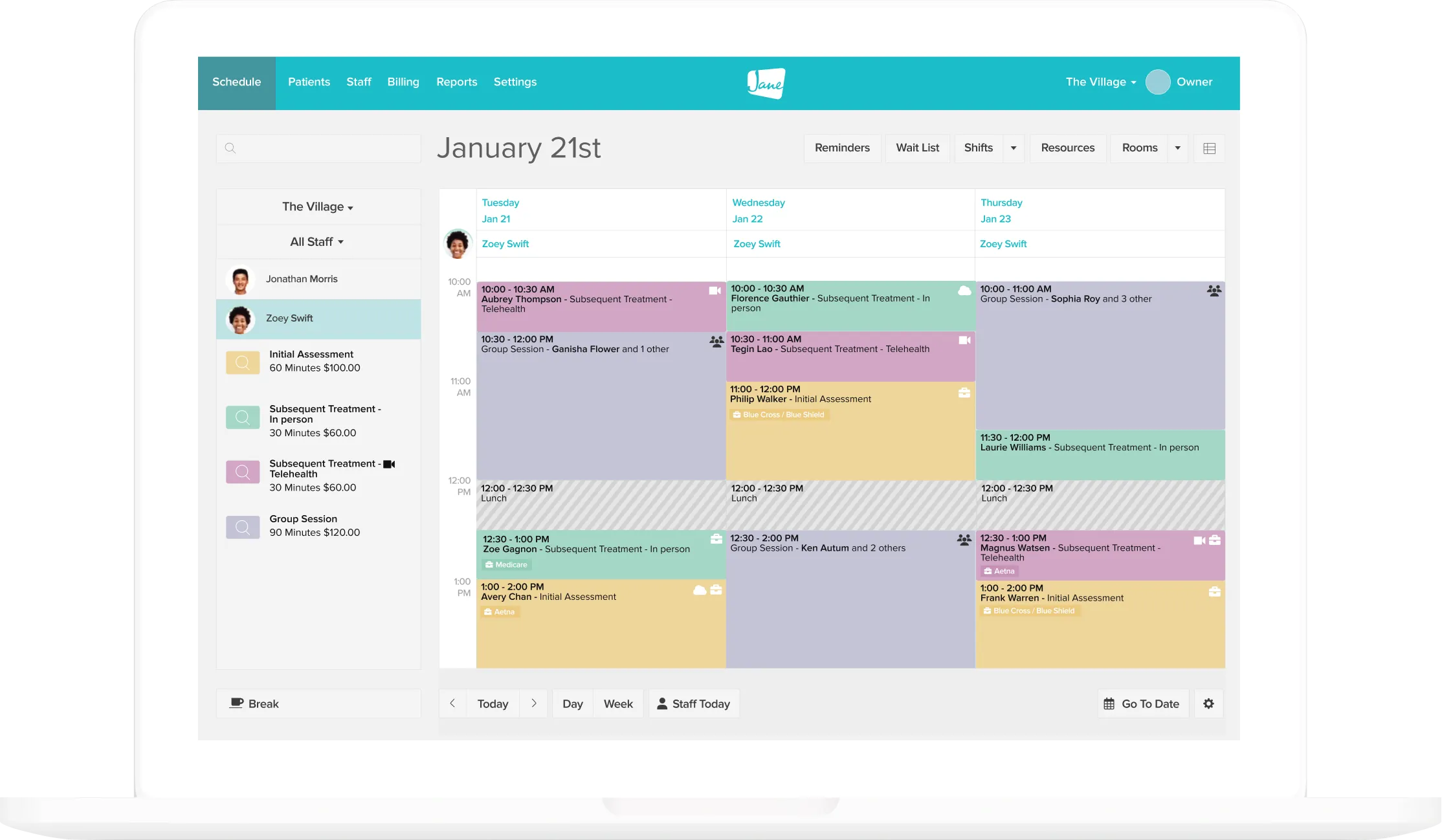
Pabau is an all-in-one clinic management platform built for aesthetic, wellness, medical, and multi-specialty practices. For med spas specifically, it covers the full patient journey – from online booking and digital intake forms through clinical charting, treatment notes, before and after photo management, and post-care follow-up – without requiring separate systems for each stage.
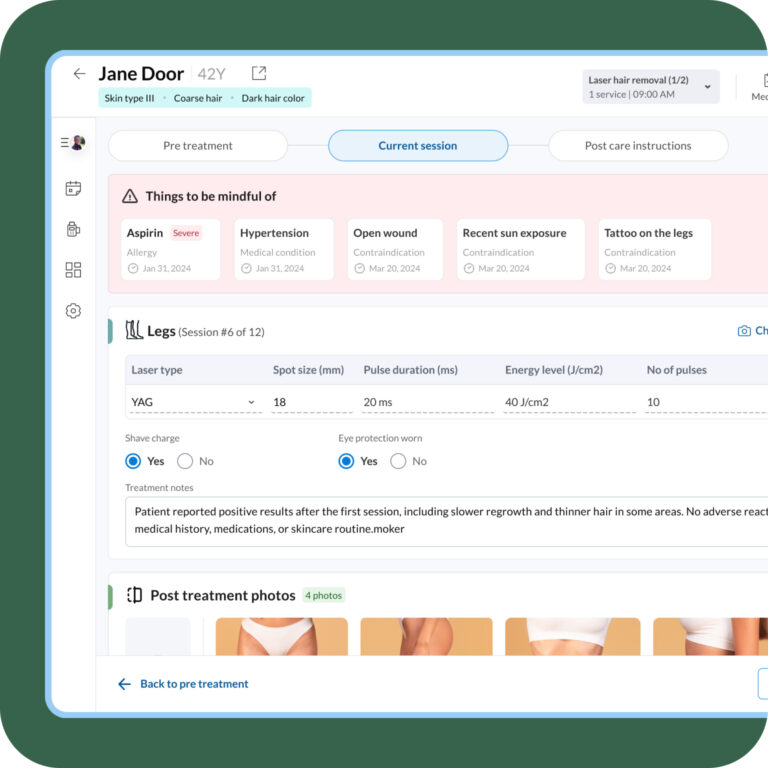
Clinical documentation is handled through customisable templates that med spa teams can build around their specific treatments. Injection plotting tools allow practitioners to record product placement directly on body maps, creating a visual treatment record that supports consistency and safety across appointments. Consent forms are sent to clients before their visit, collected digitally via the client-facing app, and stored against the patient record automatically – eliminating paper handling and reducing no-shows caused by incomplete pre-appointment admin.
On the operational side, Pabau includes inventory management for injectables and retail products, integrated POS, commission tracking, and multi-location support – all within the same platform. Automated appointment reminders, waitlists, deposits, and loyalty programmes reduce the administrative load on front-of-house teams. According to Capterra reviewers, Pabau holds a 4.5 out of 5 rating based on over 370 verified reviews, with users consistently highlighting the platform’s clinical charting depth and booking automation as standout features.
Zenoti targets enterprise-level med spa and wellness chains that need sophisticated scheduling logic, marketing automation, and centralised reporting across dozens of locations. Its inventory management goes beyond basic stock tracking – the platform supports automated reorder alerts and supplier management, which matters when you are managing high-value injectables across multiple sites.
Where Zenoti excels operationally, it carries a cost and complexity premium. Setup and onboarding are consistently flagged as challenging by smaller operations, and the pricing model makes it less viable for independent practices or small groups. Capterra reviewers give Zenoti 4.3 out of 5, noting strong reporting capabilities but citing customer support inconsistency as a recurring concern. The platform is purpose-built for scale – which is its strength and its limitation depending on your business model.
PatientNow was built specifically for aesthetic practices. Its focus is the patient journey surrounding the clinical encounter – automated consent workflows with e-signature capability, patient communication tools, and intake form management. For practices where the pre- and post-treatment experience is a competitive differentiator, PatientNow offers a tailored workflow that general-purpose platforms struggle to replicate out of the box.
The tradeoff is breadth. PatientNow’s third-party integration ecosystem is limited compared to broader platforms, and the interface has been described by some users as dated. Capterra reviewers give PatientNow 4.2 out of 5, with positive themes around consent form workflows and patient communication, and negative themes around pricing for smaller practices and limited integrations.
Aesthetic Record is the most specialised platform on this list. Built exclusively for aesthetic and med spa providers, it centres its clinical tools around body mapping and injectable tracking – features that serve injectors and aesthetic nurses particularly well. Its entry-level pricing is lower than most competitors, making it accessible to solo practitioners and small practices that do not need full practice management functionality.
That specialisation has a cost in terms of business management capability. Reporting is less sophisticated than broader platforms, and the integration ecosystem is narrower. Capterra reviewers give Aesthetic Record 4.6 out of 5, with particular praise for its aesthetics-specific charting tools. Practices that need both deep clinical documentation and robust business management typically find themselves needing a second tool alongside Aesthetic Record.
DrChrono is a customisable EHR platform with strong billing and claims management tools. Its template flexibility appeals to multi-specialty practices where aesthetic services sit alongside other clinical offerings. However, it was not designed with med spa workflows in mind – body mapping, injectable tracking, and aesthetic-specific consent forms require custom configuration rather than being available out of the box.
Capterra reviewers rate DrChrono at 3.9 out of 5, and G2 reviewers give it 3.6 out of 5 – the lowest scores of any platform in this comparison. Positive themes centre on billing capability and customisability; negative themes include a steep learning curve and customer support responsiveness. For a pure med spa operation, DrChrono is best suited to practices that already have strong technical resources for platform configuration.
Mangomint consistently earns the highest usability ratings of any platform in this category. Its clean interface, responsive support, and straightforward booking and POS tools make it an attractive choice for wellness-adjacent businesses that are earlier in their operational complexity. Capterra reviewers give Mangomint 4.8 out of 5 – the highest rating in this comparison.
The limitation is clear: Mangomint is not an EMR. It lacks the clinical documentation, HIPAA-grade data management, and medical record capabilities that define an EMR for med spa use. For practices where medical supervision and clinical records are a compliance requirement – which applies to most medically directed med spas – Mangomint addresses only the front-of-house layer. Staff commission tracking via Mangomint has been noted in marketing materials, though the depth of this feature relative to dedicated commission management tools warrants verification.

From digital consent forms and injectable charting to inventory management and automated follow-ups – book a personalised demo and see how Pabau supports med spa operations end to end.

Aesthetic Record’s injectable charting and body mapping tools are among the strongest available for solo aesthetic practitioners. The platform was built from the ground up for this use case, so features like before/after photo capture, treatment history, and client-facing intake forms feel native rather than bolted on. Entry-level pricing makes it accessible for practitioners launching their first practice without the overhead of a comprehensive business management platform.
Business management capability is the gap. Multi-location management, advanced reporting, commission tracking, and integration with accounting or marketing tools are limited compared to broader platforms. As a med spa scales – adding providers, locations, or retail – Aesthetic Record often becomes insufficient as a standalone system. Practices that outgrow it typically face a platform migration at exactly the wrong moment operationally.
DrChrono’s billing and claims management infrastructure is its strongest suit. For med spas that bill insurance – an uncommon but not unknown scenario – or operate alongside a medical practice that does, DrChrono’s billing workflows are more capable than most aesthetic-focused platforms. Template customisability also allows practices with specific documentation requirements to build what they need, given enough configuration time.
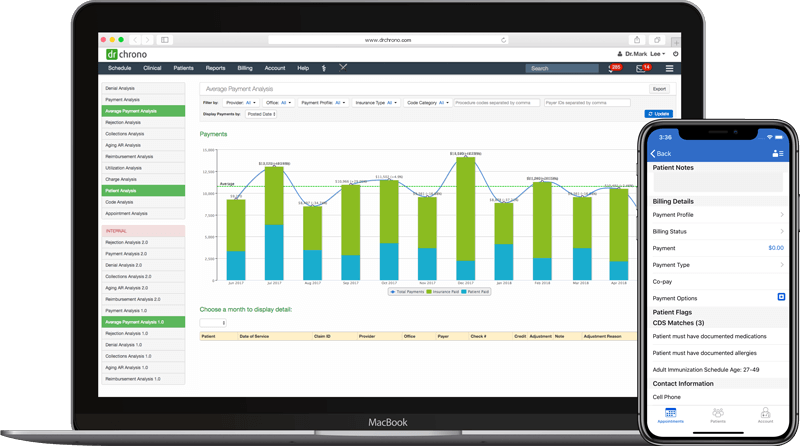
DrChrono was not built for aesthetic medicine. There are no native body mapping tools, no injectable tracking, and the aesthetic workflow logic requires significant custom build. Combined with the lowest review scores in this comparison and reported customer support issues, DrChrono is a difficult recommendation for a med spa that wants a working system quickly. It suits practices with technical resources and multi-specialty clinical needs far better than a focused aesthetic operation.
Usability and support quality are Mangomint’s clearest advantages. The platform’s interface is consistently described as intuitive and modern, and its support team earns praise for responsiveness. For wellness businesses that need clean booking, POS, and basic staff management, Mangomint delivers an excellent front-of-house experience. It suits salons, spas, and wellness studios that do not operate under medical supervision.
For a med spa operating under medical director oversight – which is a legal requirement in most US states – Mangomint does not provide the clinical record infrastructure that HIPAA compliance and medical documentation standards require. There are no treatment notes, no prescription management, no clinical templates, and no HIPAA-compliant patient data architecture designed for medically supervised care. Using Mangomint as the primary system for a medically directed med spa introduces compliance risk that no level of usability can offset.
PatientNow’s automated consent and intake workflows are among the most refined available for aesthetic practices. The platform handles e-signature collection, pre-appointment form dispatch, and patient communication through a structured workflow that reduces the risk of incomplete documentation before treatment. Patient communication tools – including automated follow-up messaging – support the ongoing relationship management that drives retention in med spas.
PatientNow’s integration ecosystem is narrower than broader platforms, and the interface has been flagged as dated by some users. Per-provider pricing can become significant as team size grows. For a multi-provider practice that also needs inventory management, commission tracking, and marketing automation, PatientNow typically requires supplementary tools – increasing total cost and operational complexity.
Zenoti is purpose-built for scale. Enterprise med spa chains that need sophisticated multi-location scheduling, AI-powered booking recommendations, centralised marketing campaigns, and granular inventory control across dozens of sites will find Zenoti’s capabilities hard to match. Its reporting suite provides the business intelligence depth that large operators need when managing performance across a distributed estate.
Cost and complexity make Zenoti impractical for independent med spas or small groups. Setup and onboarding are consistently described as demanding, and the pricing model reflects the enterprise market it serves. G2 reviewers give Zenoti 4.3 out of 5, with customer support inconsistency cited across multiple review platforms. For a practice with one to five providers, Zenoti’s overhead – financial and operational – may outweigh its capabilities.
Pabau’s key advantage for med spas is that it eliminates the need to run parallel systems for clinical and business operations. Digital consent forms, injectable charting, before/after photo storage, scheduling, inventory, POS, and commission tracking all operate within a single platform and a single patient record. This matters operationally – when a practitioner updates a treatment note, that update is visible to the front desk, the billing workflow, and the post-care automation simultaneously.
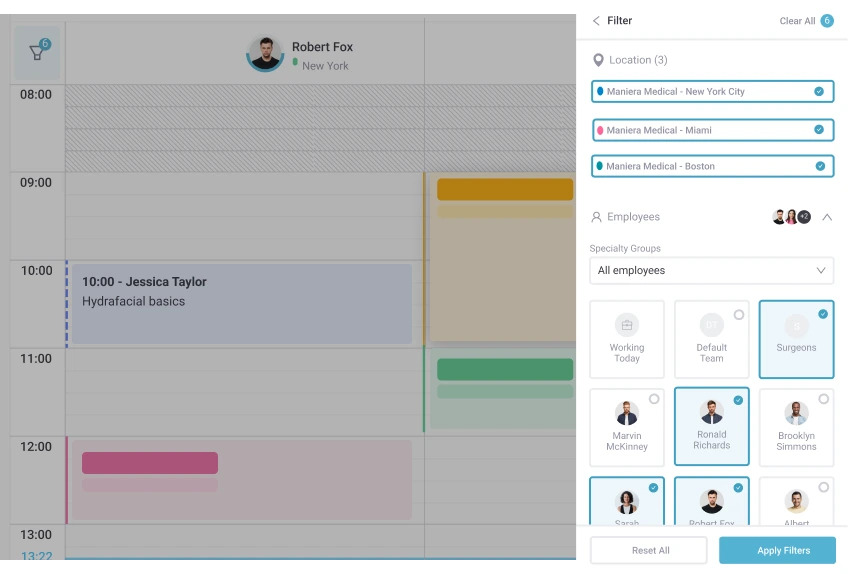
Online booking with deposits, cancellation policies, and automated reminders reduces no-shows without front-desk intervention. The client portal gives patients access to their records, upcoming appointments, and consent forms through a branded interface. For multi-location med spas, Pabau’s centralised management tools keep operations consistent across sites without duplicating admin. According to G2 reviewers, Pabau holds a 4.4 out of 5 rating, with users frequently citing the platform’s comprehensive feature set as a primary reason for their satisfaction.
New users consistently note a learning curve during onboarding. The platform’s breadth – which is its primary advantage – means there are many features to configure before operations feel streamlined. Some feature requests have taken longer to implement than users would like. These are common trade-offs for a comprehensive platform; the investment in setup time typically pays back quickly once workflows are established.
Pricing transparency varies significantly across these platforms. Several do not publish pricing publicly, requiring a sales conversation before any cost can be assessed. The comparison below reflects what is publicly available or disclosed at the time of writing – always verify current pricing directly with each vendor before making a decision.
Pabau offers tiered subscription pricing with core clinical and business features included across plans, avoiding the high per-provider fees that characterise some US-focused platforms. Zenoti’s pricing is tailored to enterprise clients and is not publicly disclosed – expect costs to reflect the scale of operation. PatientNow and DrChrono have both been reported to charge on a per-provider or per-module basis, which can become significant as team size grows. Aesthetic Record has an accessible entry-level tier that suits solo practitioners. Mangomint’s pricing is structured around business size, with plans listed on their website.
For a growing med spa with three to ten providers, platforms with flat or volume-based pricing models tend to offer better long-term value than per-seat structures. The Pabau pricing page provides current tier details – it is worth comparing the total cost of ownership across platforms rather than headline monthly fees, particularly when accounting for add-on modules, integration costs, and onboarding fees that some vendors charge separately.
When comparing med spa EMR pricing, calculate total annual cost including onboarding fees, training costs, integration licensing, and any per-provider add-ons. A platform with a lower headline monthly fee that charges separately for clinical templates, consent forms, or multi-location access may cost significantly more than a flat-subscription alternative once all operational requirements are included.
HIPAA compliance is a non-negotiable requirement for any med spa operating under medical director oversight in the United States. The Health Insurance Portability and Accountability Act, enforced by the Office for Civil Rights (OCR) within HHS, requires covered entities and their business associates to implement appropriate safeguards for protected health information (PHI). For med spa software, this means your platform vendor must sign a Business Associate Agreement (BAA) and maintain HIPAA-compliant data handling practices.
No software platform can make a med spa HIPAA compliant on its own – compliance is an operational and organisational obligation, not a software feature. What software can do is support compliant workflows: encrypted data storage, audit logs, access controls, secure messaging, and documented data processing agreements. Before committing to any platform, confirm that the vendor will provide a BAA and that their data architecture meets OCR requirements under the HITECH Act.
Pabau supports HIPAA-aligned workflows for US-based practices and provides documentation on its HIPAA compliance approach. PatientNow and DrChrono, as US-focused platforms, also operate within HIPAA frameworks. Zenoti serves enterprise healthcare clients and positions HIPAA compliance as part of its enterprise offering. For platforms like Mangomint – which operates primarily in the wellness space – HIPAA applicability depends on whether the business meets the definition of a covered entity. Always consult your compliance advisor before relying on software alone for regulatory adherence.
Pabau also provides guidance for UK-based practices on HIPAA compliance for clinic software and GDPR obligations – relevant for aesthetic practices operating across jurisdictions.
According to Capterra reviewers, Pabau holds a 4.5 out of 5 rating based on over 370 verified reviews. Positive themes centre on the platform’s clinical charting depth, consent form automation, and the breadth of the all-in-one feature set. Scheduling and booking tools receive consistent praise for their flexibility. Critical feedback points to a learning curve during initial onboarding and some delays in feature development for specific requests. Trustpilot reviewers give Pabau a 4.6 rating, reflecting strong overall satisfaction from active users.
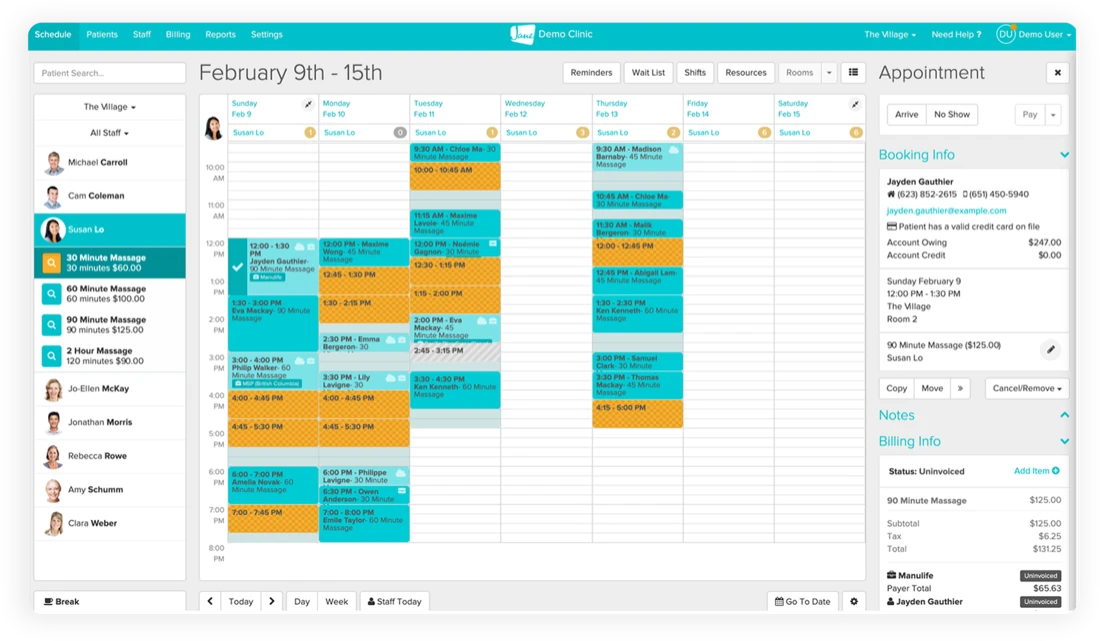
Zenoti carries a 4.3 out of 5 on both Capterra and G2. Reviewers in the enterprise segment highlight the platform’s reporting suite and marketing automation as genuine differentiators. Support quality and onboarding complexity are the most frequent criticisms, with smaller businesses noting that the platform’s scale creates as many problems as it solves for practices below a certain size threshold.
Capterra reviewers rate PatientNow at 4.2 out of 5, praising patient communication tools and consent form workflows while noting the dated interface and limited integrations. Aesthetic Record’s 4.6 Capterra rating reflects strong satisfaction from aesthetic-focused practitioners, particularly around body mapping and injectable charting. DrChrono’s 3.9 on Capterra and 3.6 on G2 are the lowest in this comparison, with billing capability praised but usability and support cited as persistent issues. Mangomint leads on usability with a 4.8 Capterra rating – but reviewers also clearly identify the platform as unsuited to clinically supervised practices.
The right platform depends on your practice model, growth trajectory, and the balance of clinical and business complexity you need to manage.
Choose Pabau if you need a single platform covering clinical documentation, injection plotting, digital consent, scheduling, inventory, commissions, and multi-location management. Pabau is particularly well-suited to growing independent med spas, small groups scaling toward multiple locations, and practices that want to reduce tool fragmentation.
Choose Zenoti if you operate a large multi-location chain with complex scheduling requirements and an enterprise budget. Zenoti’s capabilities at scale are significant, but its cost and onboarding demands make it unsuitable for most independent practices.
Choose PatientNow if your primary priority is patient journey automation – automated consent, intake forms, and post-treatment communication – and you are comfortable adding supplementary tools for inventory and reporting.
Choose Aesthetic Record if you are a solo aesthetic practitioner or small practice focused primarily on injectable charting and body mapping, and you do not yet need comprehensive business management tools.
Choose DrChrono if you operate a multi-specialty medical practice where aesthetic services are one component of a broader clinical offering, you have technical resources for configuration, and robust billing capability is a priority.
Choose Mangomint if you run a wellness studio or spa that does not operate under medical supervision and does not require clinical-grade record keeping or HIPAA-specific data infrastructure.
Most med spa software decisions come down to three operational scenarios, each of which leads to a different platform recommendation.

A single-location med spa adding a second or third site faces the most complex software decision. Tools that worked for one location often break under the coordination demands of multiple sites – scheduling conflicts, inventory discrepancies, inconsistent clinical documentation, and commission disputes become operationally costly. Pabau’s multi-location management tools are designed for this transition, maintaining centralised patient records and operational visibility while allowing location-specific configuration. The challenges of multi-location med spas are well-documented, and platform choice at this stage has long-term consequences.
A practice built primarily around Botox, dermal fillers, and laser treatments – where the clinical record of each session is central to both safety and patient satisfaction – needs injectable-specific documentation tools. Body mapping, product lot tracking, and before/after photo integration directly in the patient record reduce risk and support continuity of care between practitioners. Both Pabau and Aesthetic Record serve this use case well, with the distinction being that Pabau also covers the business management layer that Aesthetic Record does not.
A med spa operating under physician or nurse practitioner oversight with a formal medical director structure has the most demanding compliance requirements. Clinical documentation must meet medical record standards, consent must be defensible, and the software must support HIPAA-compliant data handling. In this scenario, choosing a platform without genuine EMR capability – or one that treats clinical documentation as an afterthought – introduces regulatory exposure that is difficult to remediate. The medical spa compliance checklist provides a useful framework for evaluating where platform gaps create risk.
Before finalising any med spa EMR platform, request a Business Associate Agreement (BAA) from the vendor and review their data processing documentation. A vendor that cannot provide a BAA or is unclear about their HIPAA compliance posture is a compliance liability, regardless of how capable their clinical features appear.

Need to evaluate the full range of med spa software options? Best Medical Spa Software covers the leading platforms across scheduling, clinical charting, and business management in a single structured guide.
Comparing Pabau directly against another platform? Pabau vs Aesthetic Record provides a feature-level breakdown of how the two platforms differ for aesthetic and med spa workflows.
Concerned about HIPAA compliance for your med spa? Do Med Spas Have to Be HIPAA Compliant? explains the compliance obligations for medically directed practices in plain language.
Considering your AI documentation options? AI in Med Spas explores how AI-assisted documentation and automation tools are changing clinical workflows in aesthetic practices.
The best EMR software for med spas is the one that matches your operational reality – not the platform with the most features on paper. A solo injector launching their first practice has different requirements than a multi-location chain managing dozens of providers, retail inventory, and complex commission structures.
For most independent and growing med spas, Pabau offers the most balanced combination of clinical depth and operational breadth – covering everything from digital consent and injectable charting to scheduling, inventory, and multi-location management within a single integrated platform. Aesthetic Record is the strongest option for practitioners focused primarily on injectable documentation. Zenoti serves enterprise chains with the budget and operational scale to justify its complexity. PatientNow excels at patient journey automation. DrChrono suits multi-specialty practices with technical resources. Mangomint is the right choice only for wellness businesses operating outside the scope of medical EMR requirements.
Reviewed against American Med Spa Association (AmSpa) operational guidance and publicly available vendor documentation as of 2026.
Pabau is the top-rated all-in-one option for most independent and growing med spas, offering clinical charting, injectable documentation, digital consent forms, inventory management, and scheduling in a single platform. Aesthetic Record is the strongest choice for injectable-focused solo practitioners. Zenoti suits large multi-location chains. The best EMR software for med spas depends on your specific operational model and scale.
Yes, if your med spa operates under medical director oversight and provides treatments that involve prescription medications, injectables, or laser devices, you need a system that maintains clinical records, supports HIPAA-compliant data handling, and stores consent documentation. A booking or salon software platform without genuine EMR capability does not meet these requirements and creates compliance risk.
A med spa EMR should include: customisable clinical charting, injectable or body mapping tools, before/after photo storage within the patient record, digital consent form collection with e-signature, online booking with deposits and automated reminders, inventory tracking for consumables and retail, commission management, HIPAA-compliant data architecture, and multi-location support if you operate more than one site.
Not all med spa EMR platforms are built to the same HIPAA standard. Platforms designed specifically for US healthcare practices – including Pabau, PatientNow, and DrChrono – support HIPAA-aligned workflows and should be able to provide a Business Associate Agreement. Always request a BAA and review the vendor’s data processing documentation before committing. Wellness-focused platforms without clinical EMR infrastructure may not meet HIPAA requirements for medically supervised practices.
An EMR (Electronic Medical Record) system manages clinical data – treatment notes, consent forms, medical history, and patient records. Practice management software handles business operations – scheduling, billing, staff management, inventory, and reporting. The best platforms for med spas, including Pabau, combine both functions. Running separate systems for clinical and business operations creates data silos and increases administrative overhead.
Pricing varies widely. Aesthetic Record offers accessible entry-level tiers for solo practitioners. Pabau uses tiered subscription pricing with core features included. Zenoti prices for enterprise clients on a custom basis. PatientNow and DrChrono have both been reported to use per-provider or per-module pricing. Always calculate total annual cost including onboarding, training, and integration fees rather than comparing headline monthly rates alone.