ICD11
ICD-11 6A02: Autism Spectrum Disorder – Diagnosis & Coding Guide
What is ICD-11 6A02: Autism Spectrum Disorder? ICD-11 code 6A02 represents Autis...

March 11, 2026

Discover free eBooks, guides and med spa templates on our new resources page


Buy now, pay later is now available in Pabau

Read case studies from our satisfied clients

Compare Pabau with alternative systems
 Integrations
 Measure Pabau savings
  Our security commitment
  About us
Learn why this holistic care and aesthetic medicine clinic chose Pabau to power patient care and performance.
Read more
Situational anxiety is a common presentation in clinical practice. Unlike generalised anxiety disorder, situational anxiety is triggered by specific events or circumstances, such as public speaking, medical procedures, or job interviews. However, because there is no single, dedicated situational anxiety ICD 10 code, clinicians must select the most accurate code from several options. As a result, this guide breaks down the correct ICD-10-CM codes for situational anxiety, billing best practices, and how to document these cases effectively.

There is no single situational anxiety ICD 10 code. The most commonly used code is F41.8 (Other specified anxiety disorders).
F41.1 (Generalised anxiety disorder) and F41.9 (Anxiety disorder, unspecified) are alternatives depending on clinical presentation.
Adjustment disorder with anxiety (F43.22) applies when situational anxiety follows an identifiable stressor.
Accurate ICD-10 coding reduces claim denials and supports proper reimbursement for mental health services.
Documentation must link the anxiety directly to the triggering situation for the code to be clinically justified.
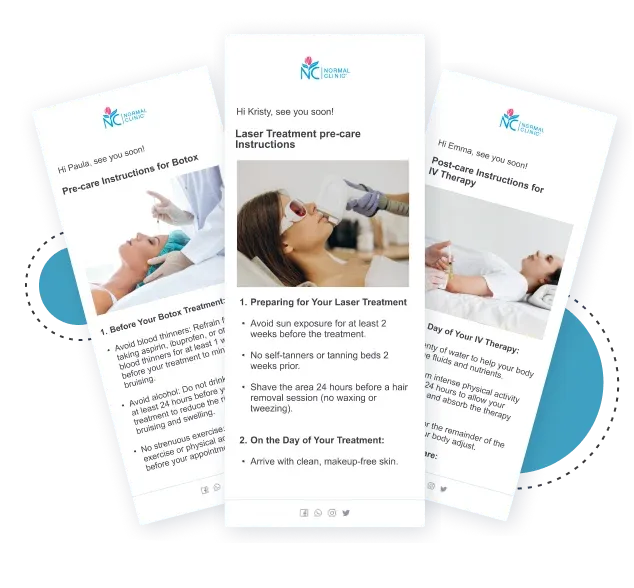
Download our free printable reference sheet with the 25 most common anxiety-related ICD-10 codes for quick clinical lookup.
Situational anxiety refers to feelings of worry, nervousness, or dread that arise in response to a specific event or circumstance. In contrast to generalised anxiety, the anxiety is tied directly to an identifiable trigger rather than being persistent and free-floating.
For example, common triggers for situational anxiety include:
In most cases, situational anxiety is temporary and resolves once the triggering event passes. However, when it becomes severe enough to impair daily functioning or require clinical intervention, selecting the correct situational anxiety ICD 10 code becomes essential for documentation and billing.
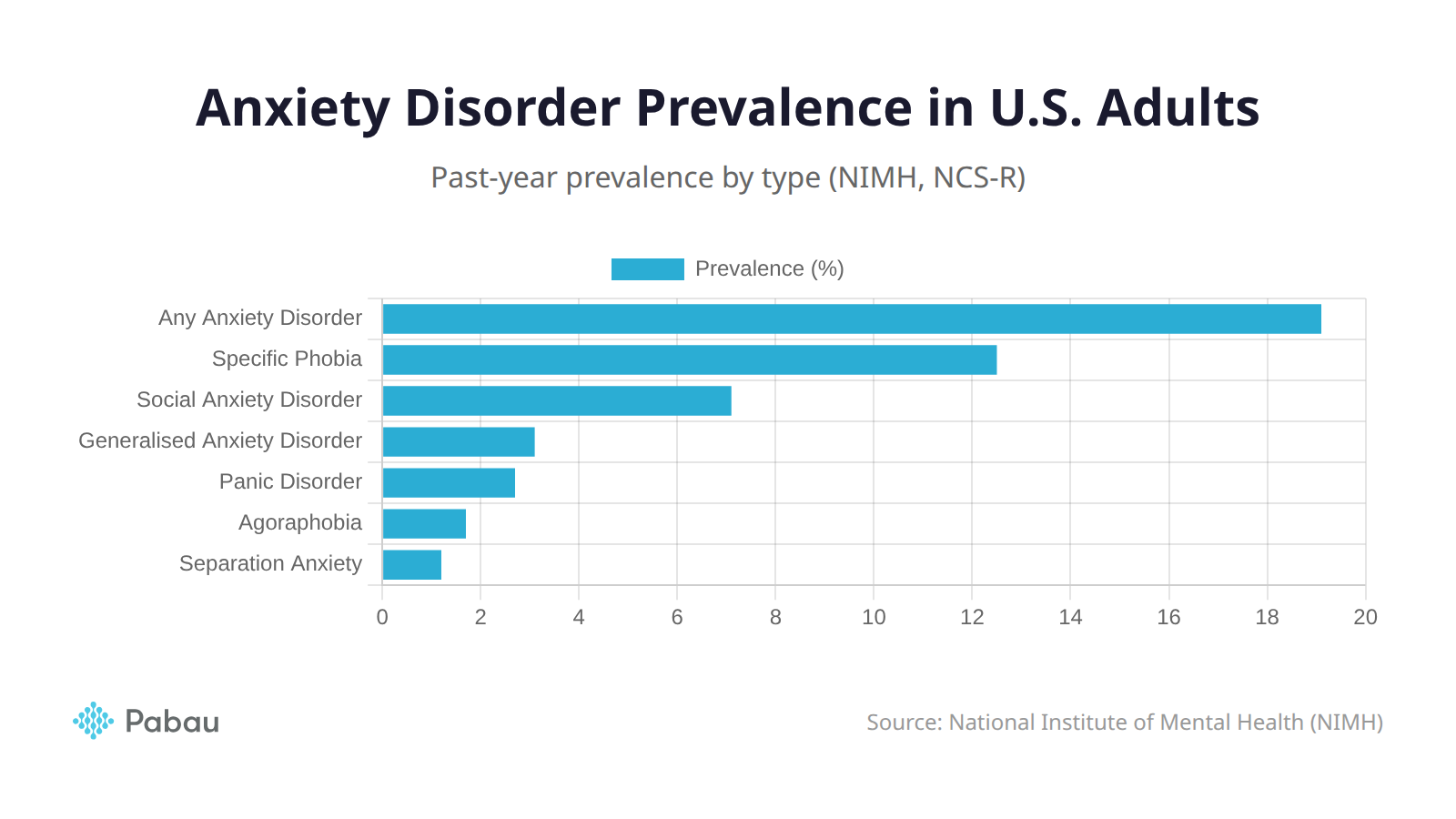
According to the National Institute of Mental Health (NIMH), approximately 19.1% of U.S. adults experienced an anxiety disorder in the past year. Furthermore, many of these cases involve situational triggers rather than chronic, generalised anxiety.
The most appropriate situational anxiety ICD 10 code is F41.8 – Other specified anxiety disorders. In particular, this code captures anxiety presentations that do not fit neatly into the categories of generalised anxiety disorder (F41.1) or panic disorder (F41.0).
Specifically, F41.8 is the recommended code when:
This code falls under the ICD-10-CM category F40-F48 (Anxiety, dissociative, stress-related, somatoform, and other nonpsychotic mental disorders). As a result, it is a billable code, meaning it can be used directly on insurance claims.
When using F41.8 for situational anxiety, always document the specific trigger in your clinical notes. For example, write ‘Patient reports significant anxiety specifically related to upcoming surgical procedure’ rather than a vague ‘patient is anxious.’ Specificity strengthens your clinical justification and reduces audit risk.
While F41.8 is the primary choice, several other ICD-10 codes may apply depending on the clinical picture. Therefore, choosing the right situational anxiety ICD 10 code depends on the duration, severity, and context of symptoms.
Use this code when anxiety is excessive, persistent, and spans multiple life domains rather than being limited to one situation. For instance, if a patient initially presents with situational anxiety but assessment reveals broader, chronic worry, F41.1 may be more appropriate.
This code applies when an anxiety disorder is present but the clinician cannot yet determine the specific type. Similarly, it is useful for initial visits when further evaluation is needed. However, aim to replace F41.9 with a more specific situational anxiety ICD 10 code as soon as possible.
This is a strong alternative when situational anxiety develops in response to an identifiable psychosocial stressor, such as a divorce, job loss, or bereavement. In addition, the key distinction is that the stressor must be identifiable, and symptoms must begin within three months of the stressor.
If the anxiety is specifically phobic in nature, meaning the patient has an intense, irrational fear of a particular situation that leads to avoidance, this code under the specific phobia category may be more accurate than F41.8. Consequently, clinicians should assess whether avoidance behaviour is the dominant feature.
When the situational anxiety is specifically tied to social interactions or performance situations, social anxiety disorder (F40.10) should be considered instead of a general situational anxiety ICD 10 code. For example, persistent fear of being judged in group settings points toward this diagnosis.
Selecting the correct situational anxiety ICD 10 code requires careful clinical assessment. As a result, the following decision framework can help guide your coding:
Step 1: Identify the trigger. First, determine whether the anxiety is tied to a specific situation or event. If yes, consider F41.8 or F40.248.
Step 2: Assess duration and onset. Next, establish whether the anxiety began after an identifiable stressor within the past three months. If yes, F43.22 (Adjustment disorder with anxiety) may be more appropriate.
Step 3: Evaluate breadth of symptoms. Additionally, consider whether the anxiety extends beyond one specific situation to multiple areas of life. If yes, F41.1 (Generalised anxiety disorder) is likely a better fit.
Step 4: Rule out phobic presentations. Furthermore, assess whether there is marked avoidance behaviour and irrational fear. If yes, a specific phobia code (F40.248) or social anxiety code (F40.10) may apply.
Step 5: Document thoroughly. Finally, regardless of which code you choose, your clinical notes must support the diagnosis with specific observations, patient-reported symptoms, and functional impact.
| Clinical Scenario | Recommended Code | Rationale |
|---|---|---|
| Anxiety before a specific medical procedure | F41.8 | Situational, non-phobic, non-chronic |
| Chronic worry across many life areas | F41.1 | Generalised pattern, not situation-specific |
| Anxiety after a recent job loss | F43.22 | Identifiable stressor, adjustment reaction |
| Intense fear and avoidance of flying | F40.248 | Specific phobia, situational type |
| Anxiety in all social interactions | F40.10 | Social anxiety disorder |
| Unclear anxiety presentation, first visit | F41.9 | Pending further evaluation |
Accurate coding is only half the equation. Your clinical documentation must also support the situational anxiety ICD 10 code you select. Therefore, here are best practices to follow:
Be specific about the trigger. For example, generic statements like “patient is anxious” are insufficient. Instead, document the exact situation that provokes the anxiety and how it affects functioning.
Record severity and functional impact. In addition, note whether the anxiety is mild, moderate, or severe. Similarly, document how it interferes with daily activities, work, or relationships.
Use validated screening tools. The GAD-7 is widely used for anxiety screening and provides a quantifiable severity score that supports your chosen code. Therefore, always include the score in your notes.
Link the diagnosis to the treatment plan. Specifically, your documentation should show a clear connection between the situational anxiety ICD 10 code, the assessed symptoms, and the planned interventions.
Update codes as needed. If initial evaluation uses F41.9 (unspecified), update to a more specific code once the clinical picture is clear. As a result, insurers are less likely to flag your claims for review.
Using a practice management system like Pabau can streamline this process. For instance, with built-in clinical forms and templates, you can standardise your documentation to ensure every note captures the detail needed for accurate situational anxiety coding.
Create a reusable clinical note template with dedicated fields for situational triggers, GAD-7 scores, functional impact, and ICD-10 code justification. This saves time per session and ensures nothing critical is missed during documentation.
“Since switching to Pabau, our clinical documentation has become far more efficient. The customisable forms mean we capture every detail we need for accurate ICD-10 coding, and our claim denial rate has dropped significantly.”

Even experienced clinicians make coding errors. Consequently, here are the most frequent mistakes to avoid when assigning a situational anxiety ICD 10 code:
Using F41.9 as a long-term code. The unspecified code should only be used temporarily. In particular, continued use signals incomplete assessment and may trigger insurer audits.
Confusing situational anxiety with panic disorder. Panic disorder (F41.0) involves recurrent, unexpected panic attacks. However, if panic attacks only occur in specific situations, a situational anxiety or specific phobia code is usually more accurate.
Failing to document the situational trigger. Without documentation linking the anxiety to a specific situation, your code selection lacks clinical justification. Therefore, always note the exact trigger in your records.
Overlooking adjustment disorder codes. When anxiety clearly follows an identifiable life stressor, F43.22 may be more accurate than F41.8. As a result, it provides better clinical specificity and stronger billing justification.
Not considering comorbidities. Many patients with situational anxiety also have depression or other conditions. Consequently, you should code all relevant diagnoses, listing the primary reason for the visit first.
Managing ICD-10 codes manually increases the risk of errors and slows down your workflow. In contrast, Pabau’s practice management software offers features designed to simplify coding and documentation for mental health professionals:
Whether you run a solo therapy practice or a multi-provider psychiatric clinic, Pabau helps you stay on top of coding accuracy while spending less time on paperwork. Additionally, features like SOAP note templates and crisis intervention resources support comprehensive mental health documentation.
Watch a FREE demo to see how Pabau can streamline your mental health practice.

Need a structured evaluation framework? Psychiatric Evaluation Template provides a step-by-step guide for comprehensive mental health assessments.
How do you write effective clinical notes? SOAP Notes for Social Work: A Complete Guide covers best practices for structured documentation.
Can stress actually improve performance? Yerkes-Dodson Law: How Stress Affects Performance and Anxiety explains the science behind optimal arousal levels.
What do you do when a patient is in crisis? Crisis Intervention: De-escalation Techniques and Immediate Support offers practical strategies for urgent situations.
The most commonly used situational anxiety ICD 10 code is F41.8 (Other specified anxiety disorders). There is no single dedicated code for situational anxiety, so clinicians choose from F41.8, F43.22, or F40.248 depending on the clinical presentation.
No. Situational anxiety is triggered by specific events or circumstances and usually resolves when the trigger passes. In contrast, generalised anxiety disorder (F41.1) involves persistent, excessive worry across multiple areas of life for at least six months.
F41.9 (Anxiety disorder, unspecified) can be used temporarily when the specific type of anxiety has not yet been determined. However, it should be replaced with a more specific code like F41.8 once the clinical picture is clear.
Use F43.22 (Adjustment disorder with anxiety) when the anxiety clearly developed in response to an identifiable psychosocial stressor, such as a divorce, job loss, or bereavement, and began within three months of the stressor.
Your clinical notes should identify the specific situational trigger, describe the severity and functional impact of the anxiety, include validated screening scores like GAD-7, and link the diagnosis to your treatment plan.
Yes, most insurance plans cover treatment for anxiety disorders when supported by a valid ICD-10 code and appropriate clinical documentation. As a result, using a specific code like F41.8 rather than F41.9 typically results in fewer claim issues.