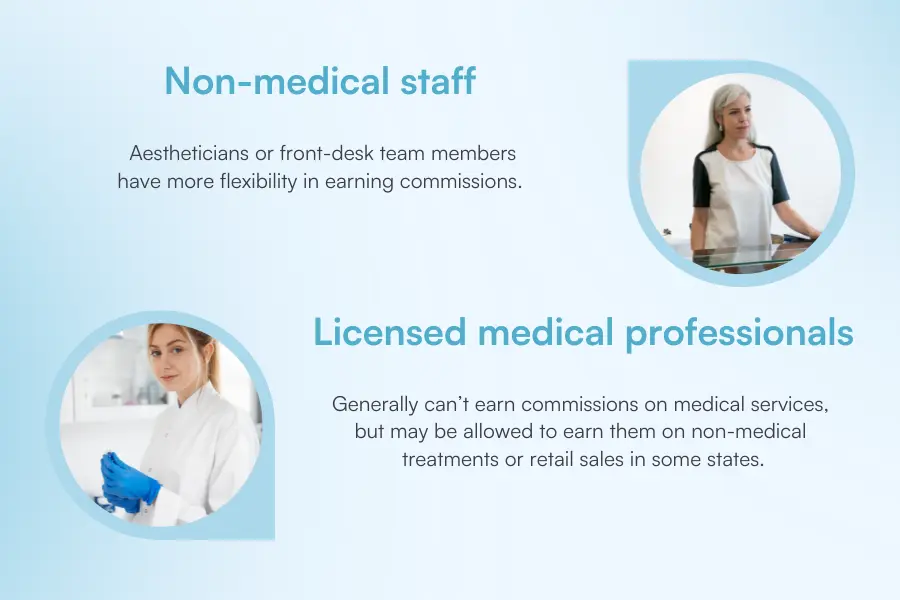
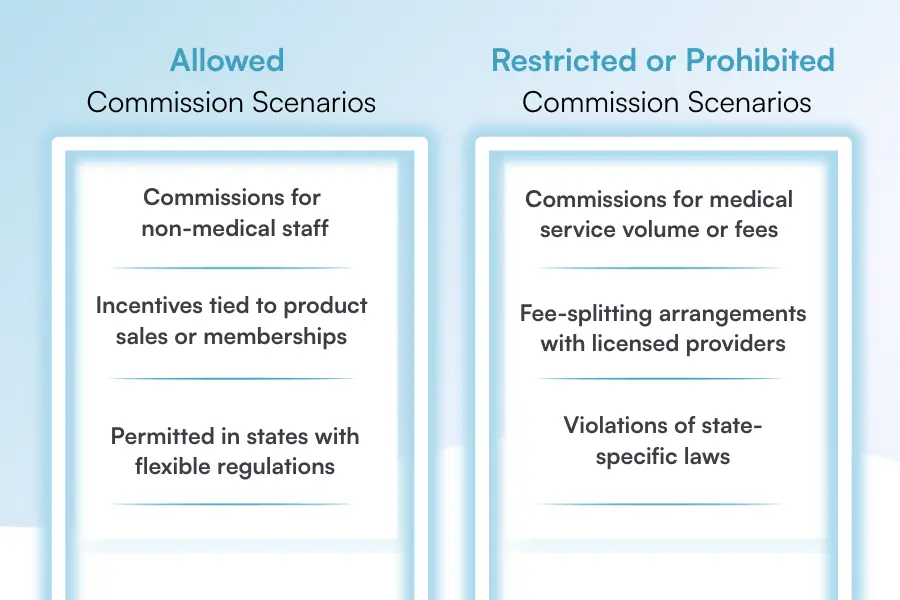
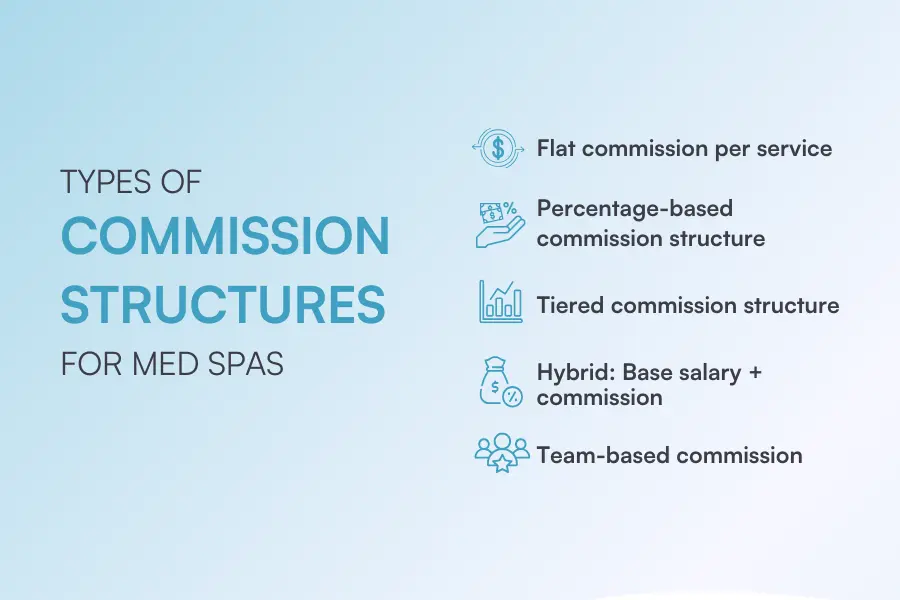
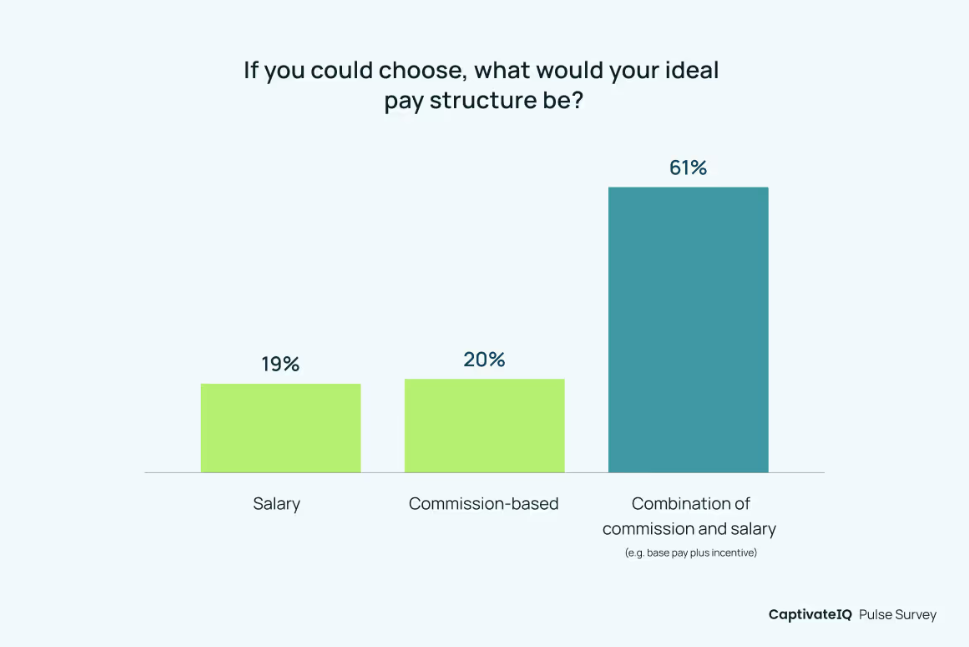
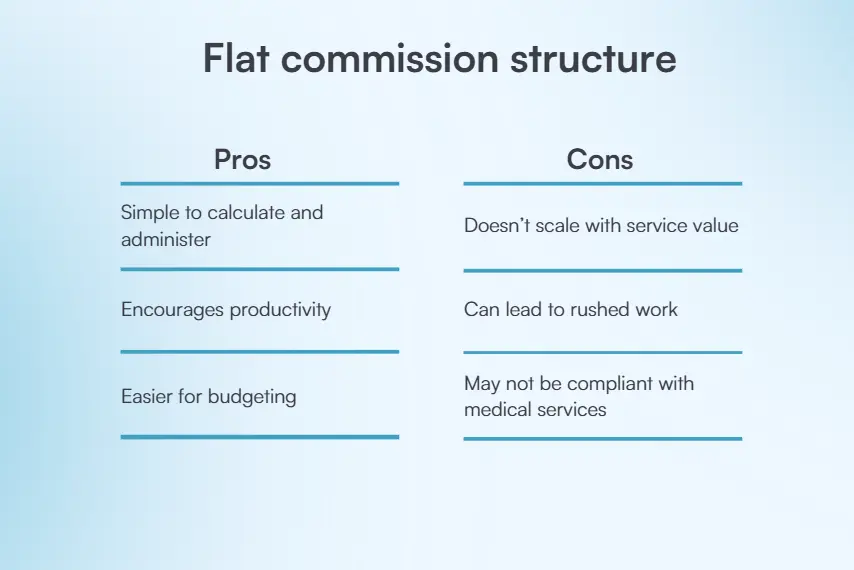
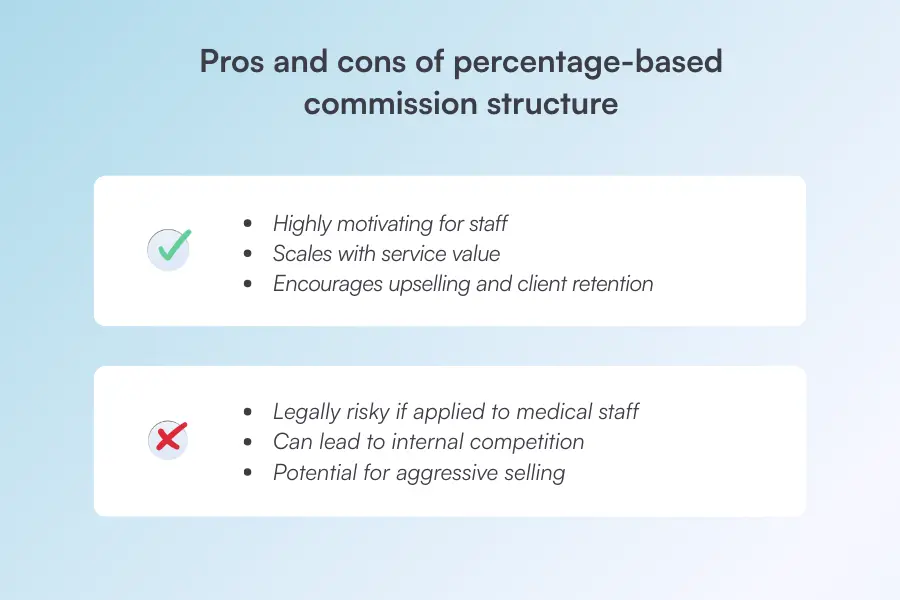
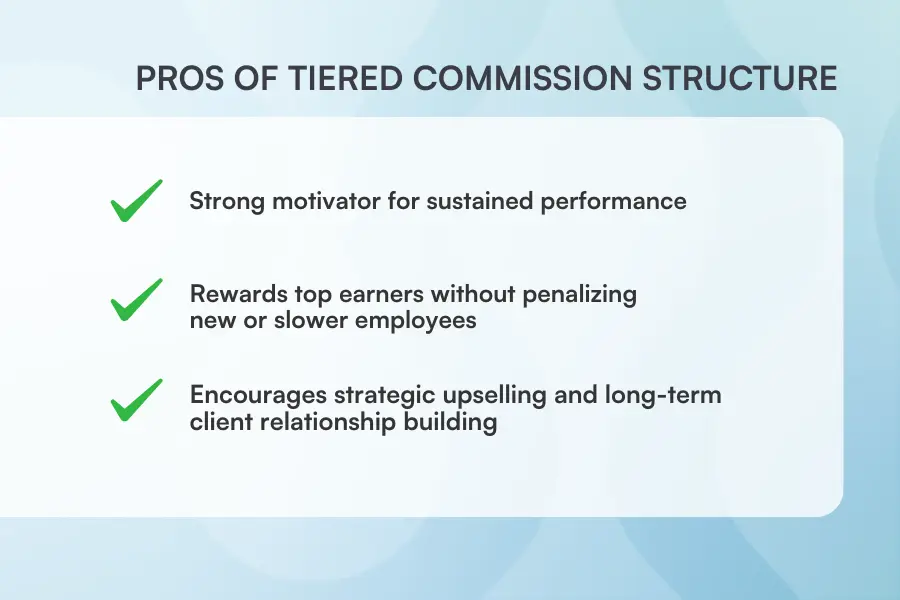
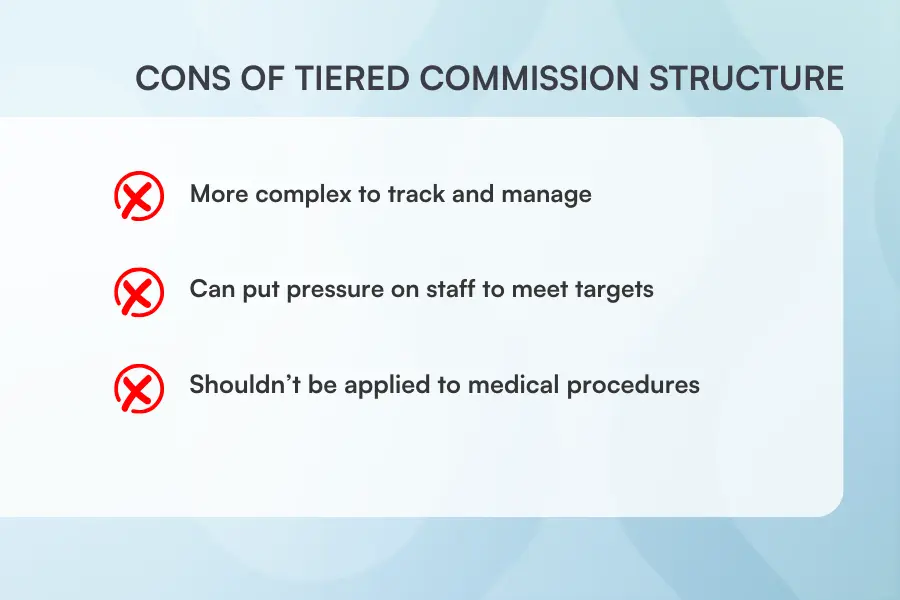
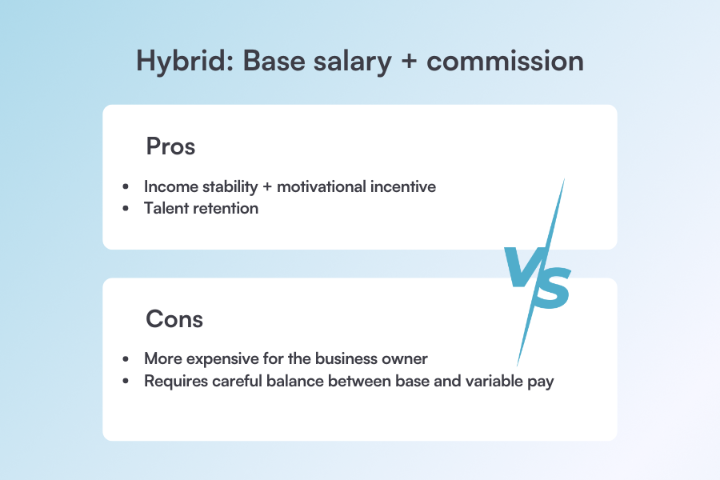
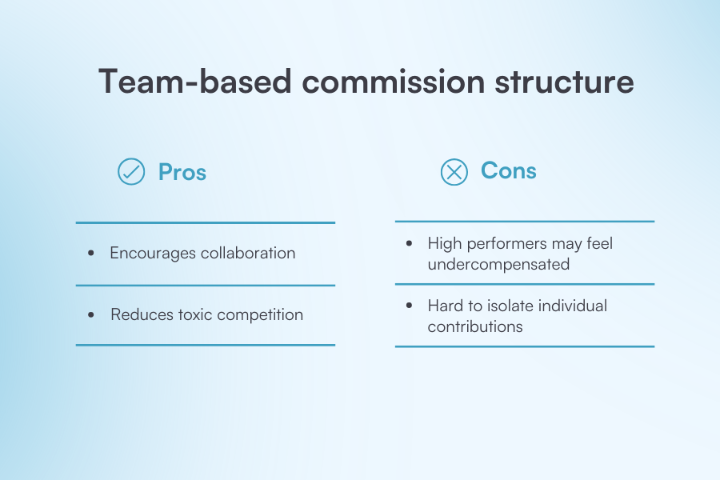
We all know that a nice salary can really motivate employees.But while a big paycheck might keep someone around for a while, it doesn’t always inspire them to go the extra mile. Commissions, on the other hand, can.When there’s a clear reward tied to performance, it boosts morale and makes it much harder for top talent to jump ship to another med spa.However, medical spas need to tread carefully. There are strict legal regulations, particularly when it comes to compensating licensed providers.And that’s why, in this blog, we’ll break down five common commission structures used in med spas, why they work, how to implement them legally and effectively, and when it might be smarter to steer clear. ⚠️ Disclaimer: This blog post is for informational purposes only and does not constitute legal or financial advice. Please consult a licensed attorney in your state before making decisions about your med spa’s compensation structure. Can med spas offer commission-based compensation legally? There’s no simple yes or no answer.Offering commission-based pay depends heavily on state-specific laws and the roles of the staff involved. Source: Pabau ❓ When med spas CAN offer commission-based compensation:Non-medical staff — front desk staff, sales associates, or aestheticians providing non-invasive, non-medical treatments.Sales-based incentives — selling retail products, memberships, packages, or gift cards are typically allowed.States without strict fee-splitting laws — for instance, some states, like California, generally permit percentage-based agreements, as long as compensation reflects fair market value and does not directly or indirectly incentivize referrals. ❓ When med spas CAN’T offer commission-based compensation:Licensed medical providers — physicians, nurse practitioners, physician assistants, and registered nurses typically can’t receive commissions tied directly to the volume or value of medical services they provide.Licensed providers can’t share fees or profits with non-licensed individuals as an incentive — this can violate fee-splitting statutes.Offering financial incentives that could encourage unnecessary or excessive medical procedures — can potentially violate Anti-kick back laws.Offering compensation for patient referrals — based on Anti-kickback statutes, is a crime. Illustration: Pabau In summary, many, if not all states enforce fee-splitting statutes and federal and state anti-kickback laws. So when setting up a pay structure for your licensed medical team members, you should be extra careful. In fact, it’s best to consult with a healthcare attorney before implementing commission-based pay. Common types of commission structures for med spas The type of commission structure you implement can have a big impact on staff motivation, revenue growth, and compliance. Illustration: Pabau But before we dive into the different commission structures used in med spas, let’s look at what employees actually prefer when it comes to compensation. According to a CaptivateIQ Pulse survey, the most favored structure is a combination of salary and commission. Source: CaptivateIQ On the other hand, salary-only models are the least preferred, with just 19% of respondents favoring them. With that in mind, let’s explore the commission structures that could be the best fit for your med spa. ⬇️ Flat commission per service A flat commission per service structure involves paying med spa employees a fixed amount for each service they perform, regardless of the price or complexity of that service. How it works: For example, an aesthetician might earn $20 for every facial or $50 for every laser hair removal treatment. One of the main advantages of this model is that it is straightforward, easy to track, and gives employees a predictable incentive tied directly to their output. Plus, it works especially well for services with consistent pricing and time requirements. Illustration: Pabau However, the downside of a flat commission structure is that they don’t scale with the value of services, which can demotivate staff performing higher-priced procedures and may encourage rushed, quantity-over-quality work. More importantly, flat commissions for medical services performed by licensed professionals are generally prohibited in most states due to fee-splitting and other legal restrictions. ✅ Best for:Non-medical staff such as:Licensed aestheticiansLaser technicians (if not performing medical-grade treatments)Front desk or sales associates (for upselling retail or memberships)🟢 In some cases, a flat commission structure is also allowed for medical staff, but as long as they are not tied to the performance of medical procedures, like product sales and memberships. Percentage-based commission structure In a percentage-based commission structure, employees earn a set percentage of the revenue generated from each service they perform or sale they close. How it works: A provider might earn 20% of the revenue from every treatment (for example, a skin resurfacing procedure) they complete. This model directly aligns compensation with revenue, so it’s highly motivating for staff — especially top performers — because it rewards them in direct proportion to the revenue they generate. It naturally encourages upselling and cross-selling, client retention, and greater effort on higher-value, more complex services. Illustration: Pabau While percentage-based commissions can drive performance, they also create income instability and may encourage aggressive sales tactics or unhealthy team competition. More importantly, they’re generally not allowed for licensed medical professionals — such as RNs, NPs, PAs, and physicians — unless structured through compliant models like flat salaries with discretionary bonuses. In many states, tying compensation to medical service revenue may violate fee-splitting or anti-kickback laws, making legal compliance essential. ✅ Best for:Non-medical staff, such as:AestheticiansSales teamsFront-desk employees involved in retail sales or memberships. It may also be used for commissioning product sales by any role that does not involve medical decision-making. Tiered commission structure A tiered commission structure rewards employees based on performance thresholds. As staff hit certain sales or revenue targets, their commission rate increases.This approach allows you to create a strong incentive for high performance by increasing commission rates as staff hit higher sales milestones. How it works: For example, earning 10% on the first $3,000 in sales, 12% on the next $3,000, and 15% beyond that. The pros of a tiered commission structure is that it encourages consistent growth and pushes team members to exceed goals, rather than settle once a basic target is met. Illustration: Pabau However, this structure also comes with drawbacks. It is quite complex to manage and requires accurate tracking systems to monitor sales tiers effectively. Additionally, it may discourage lower-performing staff and create a stressful working environment if targets feel unattainable. Illustration: Pabau Similar to percentage-based commission, this structure would likely violate fee-splitting laws if applied to medical procedures. So, for medical professionals, this model should only be applied in ways that comply with state laws, typically excluding any commission tied directly to medical service revenue. ✅ Best for: Sales-oriented roles, such as front-desk staff, aestheticians, and non-medical team members involved in product sales, memberships, gift cards, and enrollment in loyalty programs. Hybrid: Base salary + commission In the hybrid compensation structure, employees receive a regular hourly wage or monthly salary, plus a percentage or flat fee commission on services or product sales. How it works: Here’s a real-world example of how one med spa structures commission-based pay for its team:Estheticians are paid hourly (starting at $13/hour), plus commission and tips. They earn:$25–$35 per Hydrafacial (based on monthly volume)$10–$15 per membership sold$25–$30 per package sold20% commission on retail sales$50 bonus for each 5-star Google review$70 monthly bonus for 70%+ utilization The hybrid commission model combines the stability of a base salary with the motivational benefits of performance-based incentives. It’s particularly attractive to experienced professionals who seek reliable income while still being rewarded for high performance. At the same time, it offers valuable support for new hires, giving them the financial cushion they need as they work to grow their client base. Illustration: Pabau However, even though the hybrid model offers flexibility for staff members, employers face higher upfront payroll costs and must carefully balance base pay and commission to maintain motivation without compromising the financial stability of their med spa And still, while hybrid structures are generally more compliant than pure commission models, commission tied to medical services must be avoided or structured carefully. ✅ Best for:Licensed medical professionals in states where direct commission is restricted. This includes roles such as: Nurse Practitioners Registered NursesPhysician AssistantsPhycians The hybrid model is particularly effective for roles that combine clinical care and sales responsibilities. Team-based commission A team-based commission structure rewards employees based on the collective performance of a group rather than individual sales or service revenue. In a med spa, this might mean the entire staff — nurses, aestheticians, front desk coordinators — shares a bonus if the spa meets monthly revenue or client retention targets. How it works:Let’s say, as a med spa owner, you set a monthly team revenue goal of $100,000. If the team hits or exceeds that target, a $5,000 bonus pool is awarded and distributed among the staff. You can then choose to split the pool equally or allocate it based on roles or contribution percentages.Equal split example: Each of the 5 team members receives $1,000 if the revenue goal is met.Weighted split example:Nurse Injector (30% of bonus pool): $1,500Aesthetician 1 (25%): $1,250Aesthetician 2 (25%): $1,250Client Coordinator (10%): $500Front Desk Associate (10%): $500 The pros of a team-based commission structure are that it promotes a collaborative environment by rewarding collective success rather than individual performance, builds unity among staff, encourages teamwork, and eases the pressure of meeting personal sales goals. Illustration: Pabau While this commission structure encourages collaboration, it can also lead to issues like free-riding, where less productive team members benefit from others’ efforts. This structure may reduce individual accountability and dampen motivation for top performers who feel their contributions aren’t fully recognized.Like all commission models, team-based bonuses involving licensed medical professionals must be carefully structured in compliance with state laws. ✅ Best for: Front desk teams, client coordinators, and support staff whose success depends on the overall client experience, as well as clinical staff working closely together (like a team of aestheticians and nurses). It works well in med spas that prioritize a cohesive client journey over individual sales targets. What to consider when choosing the type of commission structure for your med spa? Before rolling out a new compensation plan for your med spa, you need to carefully consider several factors:1️⃣ Team size and roles:Smaller teams may benefit from simpler structures, while larger teams might need hybrid or tiered models.2️⃣ Types of services offered: Medical services, retail sales, and non-invasive treatments may all require different compensation approaches.3️⃣ Local and state regulations: Fee-splitting and anti-kickback laws vary by state.4️⃣ Revenue goals: Your commission model should align with your long-term growth plans.5️⃣ Experience level of staff: New hires may need more income stability, while experienced staff might prefer performance-based incentives.6️⃣ Client flow and booking consistency: Seasonality can affect which models work best for financial predictability.7️⃣ Administrative burden: You need to ask yourself — How complex will the commission calculations be? Can your current systems handle it, or will you need new software? Simplify commission tracking with Pabau Without the right tools, implementing and managing a commission structure can be an administrative headache.Pabau, our all-in-one practice management software, makes it easy to track commissions, calculate bonuses, and ensure compliance.Pabau helps med spas:Customize commission plans for each roleAutomate calculations and reduce admin workMonitor individual and team performance in real-timeLearn how Pabau can simplify staff management so you can schedule, commission, and pay your staff hassle-free.Whether you’re using flat fees, tiered incentives, or a hybrid system, Pabau empowers your med spa to scale efficiently and compliantly.👉 Book a free demo.
Compliance and security How practice management software reduces claims in aesthetics It doesn’t take a major mistake to trigger a claim in aesthetics. Often, it’... Maja Muzhdeka November 14, 2025
Compliance and security How to navigate CQC registration: A step-by-step approach If you’ve ever tried to find your way out of a maze, you’ll know how complex... Ivana Karafiloska November 12, 2025
Compliance and security The modern UK GDPR compliance checklist for business success There’s probably a form on your desktop right now that you meant to update thr... Maja Muzhdeka October 22, 2025
Compliance and security How to choose the right commission structure for your med spa Every owner wants their aesthetic business to be the talk of the town, and outst... Tijana Kargovska August 13, 2025