Primary & Preventive Care
Interlocking Finger Test Template
The Interlocking Finger Test Template is a simple yet powerful bedside screening...

March 4, 2026

Discover free eBooks, guides and med spa templates on our new resources page


Buy now, pay later is now available in Pabau

Read case studies from our satisfied clients

Compare Pabau with alternative systems
 Integrations
 Measure Pabau savings
  Our security commitment
  About us
Learn why this holistic care and aesthetic medicine clinic chose Pabau to power patient care and performance.
Read more

A coolsculpting consent form protects your clinic legally and ensures patients understand the risks of cryolipolysis before treatment.
The form must include contraindication screening, a clear description of potential side effects (including paradoxical adipose hyperplasia), and signed acknowledgements.
Collecting consent digitally speeds up your workflow and creates a secure, auditable record for every treatment session.
Download our free coolsculpting consent form template below and start using it in your practice today.
Every aesthetic clinic offering body contouring treatments needs a properly structured coolsculpting consent form before a single applicator touches a patient. CoolSculpting (cryolipolysis) is one of the most popular non-invasive fat reduction treatments worldwide, yet it carries specific risks that patients must understand and formally accept. Without thorough informed consent documentation, your clinic faces unnecessary legal exposure and your patients lack the information they need to make a confident decision.
In this article, you will find a free downloadable coolsculpting consent form template, a breakdown of every section it should contain, and practical guidance on how to implement it in your day-to-day workflow.
A ready-to-use consent form covering patient details, contraindication screening, risk disclosures, PAH warnings, photography consent, and signature blocks.
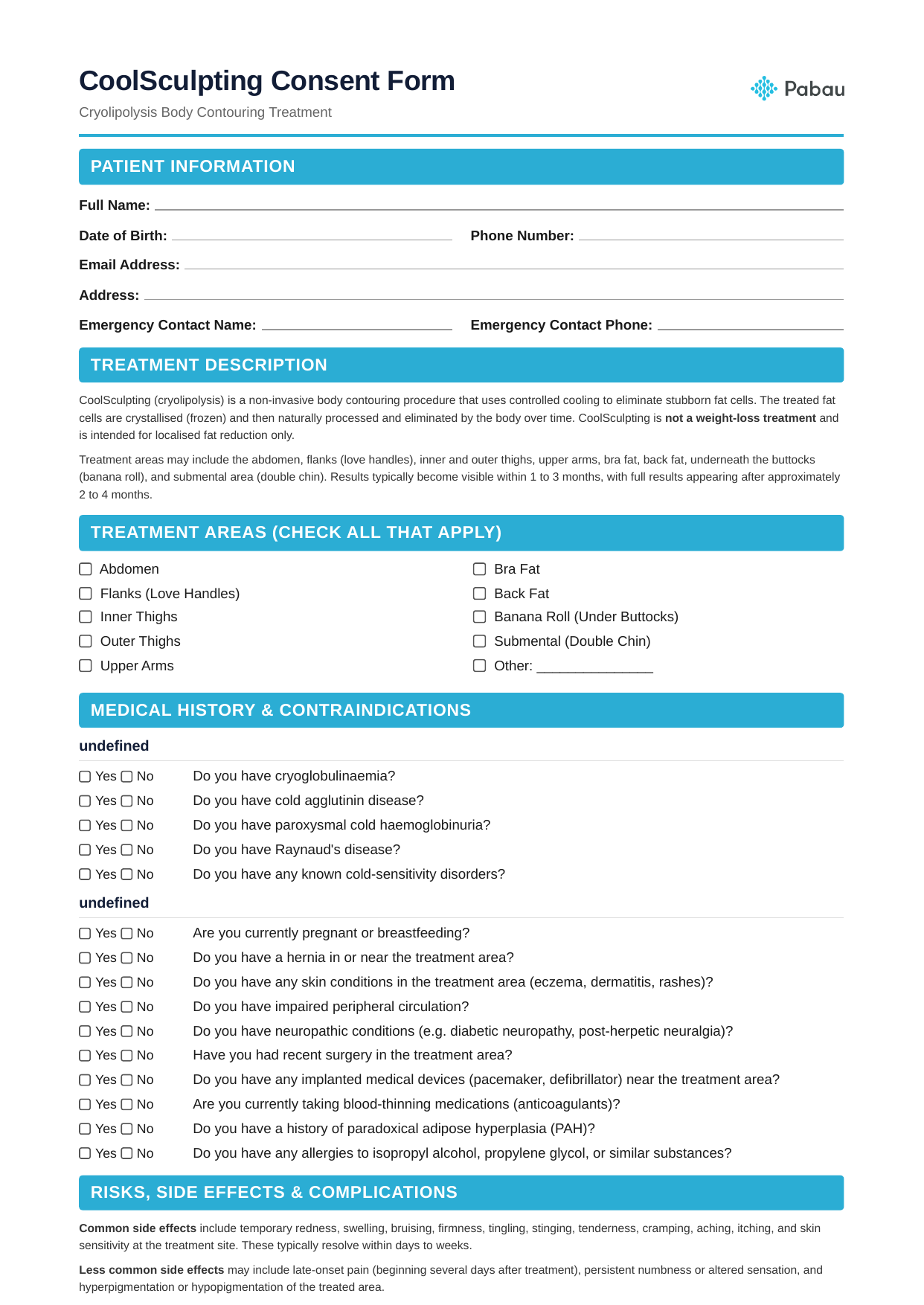
A coolsculpting consent form is a legal document that a patient signs before undergoing cryolipolysis treatment. It serves two essential purposes: it gives the patient a clear, written explanation of the procedure, its risks, and its alternatives, and it provides your clinic with documented evidence that informed consent was obtained.
Unlike a general medical consent form, a coolsculpting-specific version addresses the unique risks associated with controlled cooling technology. These include paradoxical adipose hyperplasia (PAH), temporary nerve-related discomfort, and the important distinction that CoolSculpting is a fat reduction procedure, not a weight-loss solution.
Having a dedicated consent form also demonstrates regulatory compliance. In many jurisdictions, performing aesthetic procedures without documented informed consent can result in disciplinary action, malpractice claims, or difficulty obtaining professional indemnity insurance. For more on protecting your practice, see our guide on how practice management software reduces claims in aesthetics.
Body contouring treatments are among the fastest-growing segments in aesthetics. According to published clinical research, CoolSculpting patient satisfaction rates range from 73% to 96% depending on the study and the number of treatment sessions.
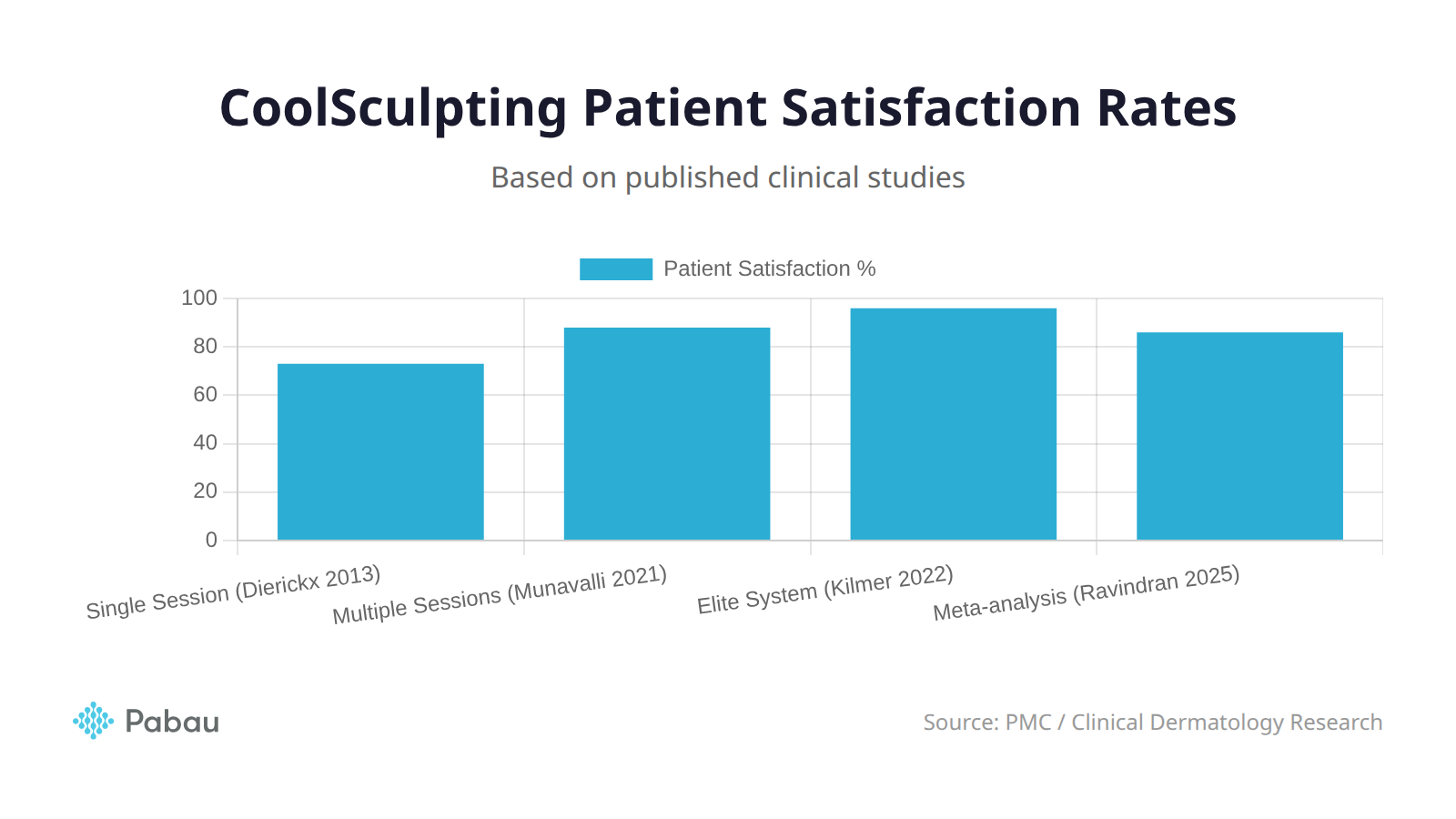
Those are strong numbers, but they also mean that a meaningful percentage of patients may be dissatisfied or experience unexpected outcomes. A thorough consent form sets realistic expectations and protects both parties.
Here are the key reasons to use a dedicated coolsculpting consent form:
Legal protection. A signed consent form is your first line of defence if a patient files a complaint or claim. It proves that the patient was informed of risks and voluntarily agreed to proceed.
Patient safety. The contraindication screening section catches patients who should not undergo cryolipolysis, such as those with cryoglobulinaemia, cold agglutinin disease, or Raynaud’s disease. Missing these conditions can lead to serious adverse events.
Regulatory compliance. Aesthetic regulators and insurance providers expect documented consent for every invasive and non-invasive procedure. A standardised form keeps your records consistent and audit-ready. If you are building or reviewing your med spa compliance framework, consent documentation is a cornerstone.
Professional trust. Walking a patient through a consent form shows that your clinic takes their safety seriously. It builds confidence and reduces cancellations driven by last-minute anxiety.
A well-structured consent form covers seven core areas. Each section has a specific purpose and should not be omitted.
Collect the patient’s full name, date of birth, contact details, address, and emergency contact information. This section links the consent to a specific individual and ensures you can reach them or their next of kin if needed.
Explain what CoolSculpting is in plain language. State that it uses controlled cooling (cryolipolysis) to freeze and eliminate fat cells, that it is not a weight-loss procedure, and that results develop gradually over one to four months. Patients must understand that the treatment targets localised pockets of fat rather than overall body weight.
Include a checklist of common treatment areas: abdomen, flanks, inner thighs, outer thighs, upper arms, bra fat, back fat, banana roll, and submental region. The practitioner should tick the areas being treated during that session. This prevents misunderstandings about the scope of the procedure.
This is one of the most critical sections. Use Yes/No questions to screen for absolute contraindications (cryoglobulinaemia, cold agglutinin disease, paroxysmal cold haemoglobinuria, Raynaud’s disease) and relative contraindications (pregnancy, hernias in the treatment area, skin conditions, impaired circulation, neuropathic disorders, recent surgery, implanted devices, anticoagulant use, and history of PAH).
Any “Yes” answer to an absolute contraindication means the patient cannot proceed. Relative contraindications require clinical judgement. If your clinic uses digital forms, you can build conditional logic that flags these automatically.
Break side effects into three tiers:
Common: Redness, swelling, bruising, firmness, tingling, stinging, tenderness, cramping, aching, itching, and temporary skin sensitivity. These usually resolve within days to weeks.
Less common: Late-onset pain (several days post-treatment), persistent numbness or altered sensation, and pigmentation changes.
Rare: Paradoxical adipose hyperplasia (PAH), where the treated area enlarges rather than reduces. PAH may require corrective liposuction. Frostbite, scarring, and changes in fat distribution are rare but documented.
Also list alternatives to CoolSculpting, including liposuction, laser lipolysis, radiofrequency treatments, injectable fat-dissolving agents, and diet and exercise.
When discussing PAH risk with patients, reference published incidence rates (estimated at 0.005% to 0.39% depending on the study) to provide context. Patients appreciate data-driven conversations rather than vague warnings, and it demonstrates your clinical expertise.
Use numbered statements that the patient initials or ticks. Each acknowledgement should cover a specific point:
Include signature and date lines for the patient, the treating practitioner, and optionally a witness. In some jurisdictions, a witness signature adds an extra layer of legal validity. If you collect consent digitally through a system like Pabau’s digital forms, electronic signatures are timestamped and stored automatically.
Having a well-written form is only half the equation. How you integrate it into your clinical workflow determines whether it actually protects your clinic and serves your patients. Here is a step-by-step process.
Do not wait until the patient arrives to hand them a form on a clipboard. Send the coolsculpting consent form digitally when they book their appointment. This gives them time to read every section carefully, research any terms they do not understand, and prepare questions for the consultation.
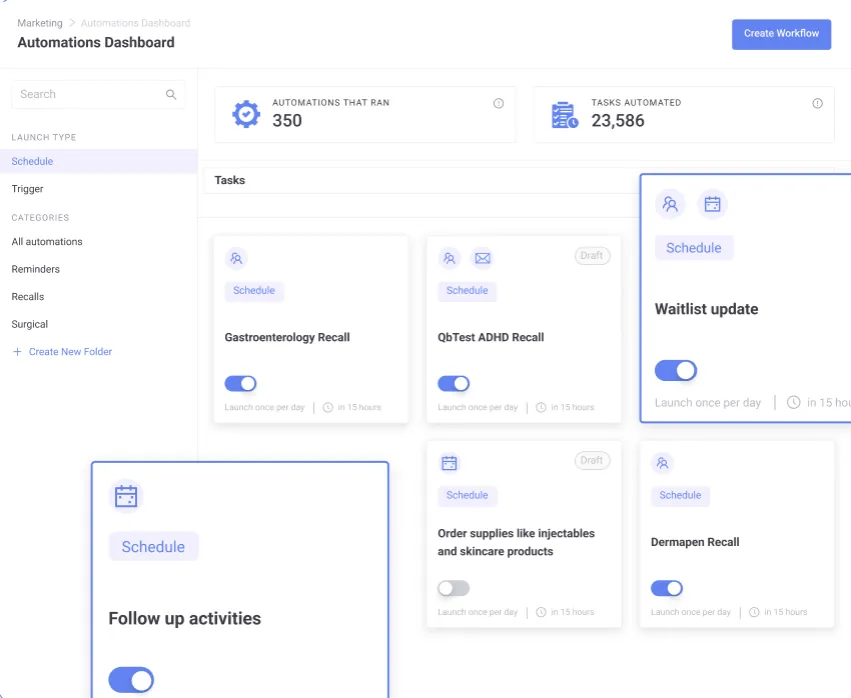
With a practice management system like Pabau, you can automate this entirely. When a patient books a CoolSculpting session, the consent form is attached to their appointment confirmation and sent via email or the client portal. Learn more about preparing for cosmetic consultations.
When the patient arrives, do not simply check that the form is signed. Go through the contraindication screening results together. If any flags appear, discuss them and make a clinical decision about whether to proceed, modify the treatment plan, or refer the patient.
This is also the time to address questions about risks, particularly PAH. Use the conversation to set realistic expectations about timelines, the number of sessions needed, and the gradual nature of fat reduction.
Mark the agreed treatment areas on the form and take standardised before photographs. These photographs serve as a clinical baseline and as evidence that the patient consented to photography. If you are also capturing images for marketing, ensure the separate photography consent section is completed. Pabau’s practice management platform allows you to attach photos directly to the patient’s record alongside their signed consent.
Paper forms get lost, damaged, or misfiled. Digital storage is the standard for modern aesthetic clinics. Store the completed consent form in the patient’s electronic record where it is linked to the specific appointment and treatment. This makes retrieval instant if you ever need it for an audit, insurance claim, or complaint investigation.
CoolSculpting often involves multiple sessions. Best practice is to obtain fresh consent for each session, not rely on a single form signed months earlier. The patient’s medical status may have changed, and re-consenting demonstrates ongoing diligence. If your clinic uses a digital consultation form workflow, this can be automated for returning patients.
Even clinics that use consent forms sometimes make errors that undermine their legal and clinical value. Here are the most common pitfalls.
Using a generic consent form. A one-size-fits-all aesthetic consent form will not mention cryolipolysis-specific risks like PAH, cold-sensitivity contraindications, or the distinction between fat reduction and weight loss. Always use a procedure-specific form.
Skipping the contraindication screening. If your form does not include Yes/No questions about cryoglobulinaemia, Raynaud’s disease, and other cold-related conditions, it is incomplete. These are the conditions most likely to cause serious complications.
Failing to explain alternatives. Informed consent legally requires that the patient understands not just the proposed procedure but also the alternatives. Include liposuction, other non-invasive technologies, and the option of no treatment.
Not updating the form. Medical knowledge evolves. When new research emerges about CoolSculpting risks or contraindications, update your consent form accordingly. Review it at least annually.
Collecting consent after the procedure starts. Consent must be obtained before treatment begins. A form signed mid-procedure or after the fact has significantly less legal value.
If your clinic offers multiple treatments, you may wonder whether one consent form can cover everything. The short answer is no. Each procedure has unique risks, contraindications, and expected outcomes that require their own documentation.
For example, a Botox treatment form addresses neurotoxin-specific risks like eyelid ptosis and muscle weakness, while a microneedling consent form covers infection risk and post-inflammatory hyperpigmentation. A coolsculpting consent form must address cold-related contraindications and PAH, which are irrelevant to injectable or microneedling treatments.
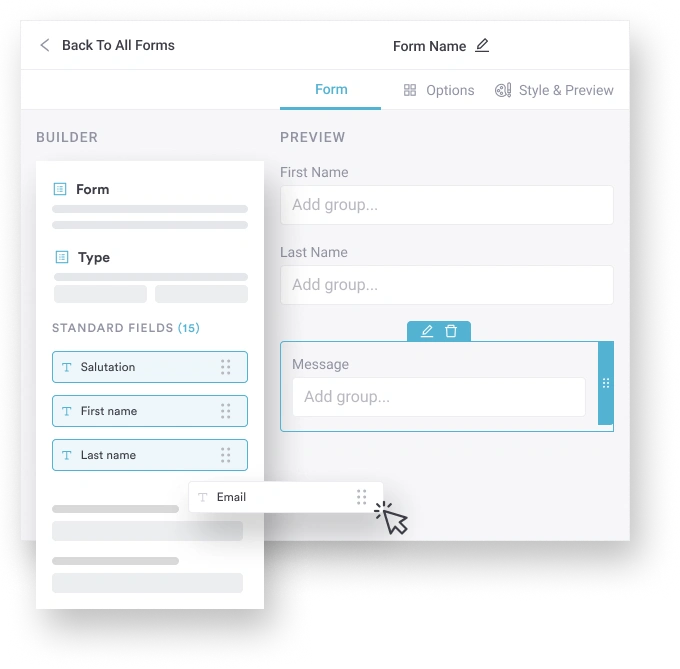
That said, you can maintain consistency across your consent forms by using the same overall structure (patient info, treatment description, contraindications, risks, acknowledgements, signatures) while customising the clinical content for each procedure. Practice management software with a form builder makes this straightforward.
Paper-based consent is fading out for good reason. Digital consent forms offer significant advantages for aesthetic clinics:
Automatic delivery. Forms are sent to patients the moment they book, with reminders if they have not completed them. No chasing, no printing, no scanning.
Conditional logic. If a patient answers “Yes” to a contraindication question, the form can immediately flag it for the practitioner or prevent the booking from being confirmed until the issue is reviewed.
Secure storage. Electronic records are encrypted, backed up, and accessible from any device. You will never lose a consent form to a coffee spill or a misfiled folder.
Audit trails. Digital signatures are timestamped and tamper-proof, which is stronger evidence than a handwritten signature on paper.
Integration with patient records. The signed form sits inside the patient’s profile alongside their treatment notes, photographs, and intake forms for other services.
If your clinic is still using paper, transitioning to digital consent is one of the highest-impact changes you can make. It saves admin time, reduces risk, and improves the patient experience from the very first interaction.

See how clinics use Pabau to create, customise, and automate clinical forms and templates.

Do I need a separate consent form for each CoolSculpting session?
Best practice is to collect fresh consent for each session. The patient’s health status may have changed between appointments, and re-consenting demonstrates ongoing clinical diligence. Most digital form systems can automate this so it does not add administrative burden.
Can a patient withdraw consent after signing?
Yes. A patient can withdraw consent at any time before the procedure begins. If they change their mind during the consultation or even while being prepared for treatment, you must respect their decision and document it.
What happens if a patient refuses to sign the consent form?
You cannot and should not proceed with treatment. Performing CoolSculpting without documented informed consent exposes your clinic to legal liability and violates professional standards. If a patient has concerns, address them. If they still refuse to sign, do not treat.

How to build a Botox treatment form (template included)
How to build a microneedling consent form (template included)
How practice management software reduces claims in aesthetics
2026 med spa compliance for owners
A coolsculpting consent form is a legal document that a patient signs before undergoing cryolipolysis treatment. It outlines the procedure, its risks (including paradoxical adipose hyperplasia), contraindications, alternatives, and expected outcomes. The signed form provides documented evidence that the patient gave informed consent.
Absolute contraindications include cryoglobulinaemia, cold agglutinin disease, paroxysmal cold haemoglobinuria, and Raynaud’s disease. Relative contraindications include pregnancy, hernias near the treatment area, skin conditions, impaired circulation, neuropathic disorders, and a history of paradoxical adipose hyperplasia (PAH).
In most jurisdictions, informed consent documentation is required before performing any aesthetic procedure, including CoolSculpting. Even where not explicitly mandated by law, professional indemnity insurers and regulatory bodies expect clinics to obtain and retain signed consent forms for every treatment.
Review and update your consent form at least once a year or whenever new clinical evidence, regulatory guidance, or device updates affect the risks or contraindications associated with CoolSculpting. Keeping your form current protects your clinic and your patients.
Yes. Digital consent forms with electronic signatures are legally valid in most countries and offer advantages over paper forms, including automatic delivery, secure storage, audit trails, and integration with patient records. Practice management platforms like Pabau allow you to create, send, and store digital consent forms automatically.