










Key takeaways
HCPCS code J2501 covers injection, paricalcitol, 1 mcg, and one billing unit equals one microgram administered.
Medicare Part B pays J2501 at ASP+6% under buy-and-bill, and CMS refreshes that rate every quarter.
Claims need N25.81 or an N18.x diagnosis, plus current PTH, calcium, and phosphorus values on file.
Paricalcitol given during dialysis usually sits inside the ESRD bundle, so it cannot be billed separately.
Paricalcitol ships in single-dose vials, so every J2501 line needs a JZ or JW modifier.
HCPCS code J2501 is the billing code for injection, paricalcitol, 1 mcg. It covers the synthetic vitamin D analog used to control secondary hyperparathyroidism in chronic kidney disease. Medicare Part B pays it under the buy-and-bill model at ASP+6%, and one billing unit equals one microgram.
One rule decides whether you can bill J2501 separately at all. Paricalcitol given during a dialysis session is paid inside the ESRD bundle, so a separate line is not payable. Settle that question first, then work through units, diagnosis pairing, modifiers, and the NDC.
HCPCS code J2501: Definition and code details
J2501 belongs to the HCPCS Level II J-code category, which covers drugs given by routes other than oral. According to the Centers for Medicare and Medicaid Services (CMS), the HCPCS Workgroup maintains J-codes and updates them annually. J2501 remains active and billable, with no termination date in the current CMS HCPCS code file.
Each unit of J2501 represents 1 mcg of paricalcitol, so billing units must match the dose administered. A 4 mcg dose is four units. Under-reporting units shortchanges the practice, and over-reporting is a compliance problem.
What drug does J2501 represent?
Paricalcitol is a synthetic analog of vitamin D, indicated for the prevention and treatment of secondary hyperparathyroidism (SHPT) in chronic kidney disease (CKD). Abbott Laboratories originally marketed it as Zemplar, and AbbVie has marketed it since the 2013 spin-off. Generic injectable formulations are now widely available, and all of them bill under J2501.
The drug works by suppressing parathyroid hormone (PTH) secretion. Failing kidneys cannot activate vitamin D normally, so PTH climbs unchecked and drives bone disease and vascular calcification.
Paricalcitol activates the vitamin D receptor selectively in parathyroid tissue, which lowers PTH without the hypercalcemia risk of older analogs. Practices using prescription management software can tie each order to the patient record, which removes a transcription step before billing.

Where paricalcitol fits, and whether the injectable form is used at all, depends on the stage of kidney disease.
- Stage 3 CKD (eGFR 30-59): oral paricalcitol capsules are typical, and the injectable form is less common at this stage
- Stage 4 CKD (eGFR 15-29): injectable paricalcitol is used when oral absorption is poor or PTH control is inadequate
- Stage 5 CKD and ESRD on hemodialysis: intravenous paricalcitol three times a week at dialysis is the main J2501 use case
- Stage 5 CKD on peritoneal dialysis: injectable paricalcitol may be given at home or in the practice, and billing follows the same path
Covered diagnoses and clinical indications
Medicare and most payers require a documented ICD-10-CM diagnosis that supports the medical necessity of paricalcitol. Without a covered diagnosis on the claim, J2501 denies regardless of clinical appropriateness. A clean claim records both the diagnosis and the lab values that triggered treatment.
Local Coverage Determinations (LCDs) vary by Medicare Administrative Contractor (MAC) jurisdiction, and their thresholds for PTH levels and lab frequency differ. Verify the LCD for your region before you submit. Nephrology and metabolic health EMR systems that store lab results beside the encounter make that check quick.
J2501 fee schedule: Medicare, Medicaid, and commercial payers
Medicare Part B reimburses J2501 at Average Sales Price plus 6% (ASP+6%), and CMS updates ASP pricing quarterly. The table below shows how each payer type sets its rate and where to confirm it. Pull current figures from the CMS Physician Fee Schedule or the quarterly ASP file before you finalize any Medicare billing estimate.
Pro Tip
Run an ASP rate reconciliation every quarter before your billing cycle closes. Pull the current CMS ASP file, compare it against the rates loaded in your billing system, and correct any difference. Skipping the check means you bill last quarter’s rate, which either overbills the payer or leaves money behind.
Buy-and-bill workflow, step by step
Buy-and-bill is the model where the practice purchases paricalcitol, administers it, then bills the payer. For J2501, that applies in physician offices, hospital outpatient departments, and independent dialysis practices. Treating each step as a medical billing compliance checkpoint cuts claim errors and audit exposure.
- Drug acquisition: buy paricalcitol from a licensed wholesaler or specialty pharmacy and keep the acquisition cost records. Medicare pays ASP+6% rather than your invoice price, so the spread between the two is your margin.
- Eligibility verification: confirm active Medicare Part B coverage, secondary insurance details, and any prior authorization requirement before you administer. Medicaid and commercial rules vary by plan.
- Documentation at the point of care: record the dose in mcg, the route, the lot number, the vial NDC, and the date. Log current PTH, calcium, and phosphorus results in the patient record.
- Claim preparation: convert the dose to units at one unit per mcg. Add N25.81 as the primary diagnosis with the matching N18.x stage code. Apply the route and wastage modifiers, then attach the NDC to the claim line.
- Submission and follow-up: send the claim to the primary payer inside the timely filing limits. Medicare Part B claims usually adjudicate in 14 to 30 days. Read the remittance advice for denial codes as it arrives.
Modifiers that apply to paricalcitol claims
Modifiers tell the payer the context of the injection, and they change what gets paid. For J2501, the ones that matter cover the route of administration and the amount of drug discarded.
Paricalcitol injection is labeled for intravenous use only, so JA is the route modifier that applies. Check current CMS transmittals, because modifier policy is revised periodically.
Paricalcitol ships in single-dose vials, so Medicare’s discarded-drug policy applies to every J2501 line. Report JZ when the whole vial goes into the patient. Report JW on a separate line with the wasted microgram count when part of the vial is discarded.
A single-dose vial claim carrying neither modifier gets rejected. Low doses drawn from a larger vial are where wastage most often goes unrecorded.
NDC reporting requirements
CMS requires National Drug Code (NDC) reporting on all Medicare Part B outpatient drug claims. For J2501, the NDC appears as an 11-digit number in 5-4-2 format, with the unit qualifier and the quantity dispensed.
Missing or misformatted NDC data returns the claim before adjudication. Capturing it on the medical documentation forms used during administration stops the error at the source.
Injectable paricalcitol comes in several vial sizes and concentrations, and each generic formulation carries its own NDC. The NDC on the claim must match the vial administered, while the J2501 code applies regardless of manufacturer. Confirm current NDCs through the NLM HCPCS API or your dispensing pharmacy before billing.
Pro Tip
Capture the NDC in the drug administration workflow, not in the billing queue. When the nurse scans or records the vial at administration, the number attaches to the encounter. Billers then read it from the clinical record instead of transcribing it from a paper log.
Common billing errors and how to avoid them
J2501 denials cluster around a short list of causes, and each one is preventable at the chair. Reading the denial codes on your remittance tells you which of them your practice repeats.
ESRD prospective payment system (PPS) note: most dialysis patients fall under the ESRD PPS bundle. Injectable drugs given during the session are paid inside that bundle and cannot be billed separately.
Paricalcitol given during dialysis for an ESRD patient is generally bundled. Paricalcitol for pre-dialysis CKD, or given outside the dialysis session, may be separately billable.
Confirm the distinction with your MAC first, because denial management on a bundled drug costs far more time than the check itself.
Related HCPCS and CPT codes
Nephrology billers meet the same handful of codes alongside J2501, usually other vitamin D analogs or the administration codes billed with them. Cross-reference any of these against the current CMS descriptions before you use them, since descriptors and status change with the annual HCPCS update.
Documentation that supports medical necessity
A clean J2501 claim starts with a complete clinical record. How much of that record reaches the claim line depends on the EHR and billing integration you run.
Disconnected systems leave billers rebuilding clinical context from paper and second screens, which is where the errors collect. For nephrology practices running injectable therapy EMR software, connecting the two removes most of that rebuilding.
- Diagnosis documentation: N25.81 recorded in the progress note, with the renal etiology stated explicitly
- Lab values: current PTH, usually within three months, plus serum calcium and phosphorus with result dates
- Dose and route: the administered dose in mcg and the route, documented by the administering clinician
- NDC and lot number: taken from the vial at administration, matching the NDC billed on the claim
- Vial handling: the discarded amount, if any, recorded so the JZ or JW modifier can be supported
- Physician order: a signed paricalcitol prescription or standing order on file
- Plan of care: the clinical rationale for paricalcitol and the intended treatment duration
- Prior authorization: the authorization number obtained and documented before administration, where the payer requires one
Digital intake forms that prompt for each required field at the point of care leave less to reconstruct later. The same access controls and audit trails that carry HIPAA-compliant documentation apply to drug administration records. Build them into the same workflow rather than a separate log.
How claims management software keeps J2501 claims clean
In most nephrology practices, the clinical record and the billing system sit apart. A nurse writes the dose and vial NDC on a paper log, and a biller retypes it hours later. Every retyped field is another chance to send the wrong unit count.
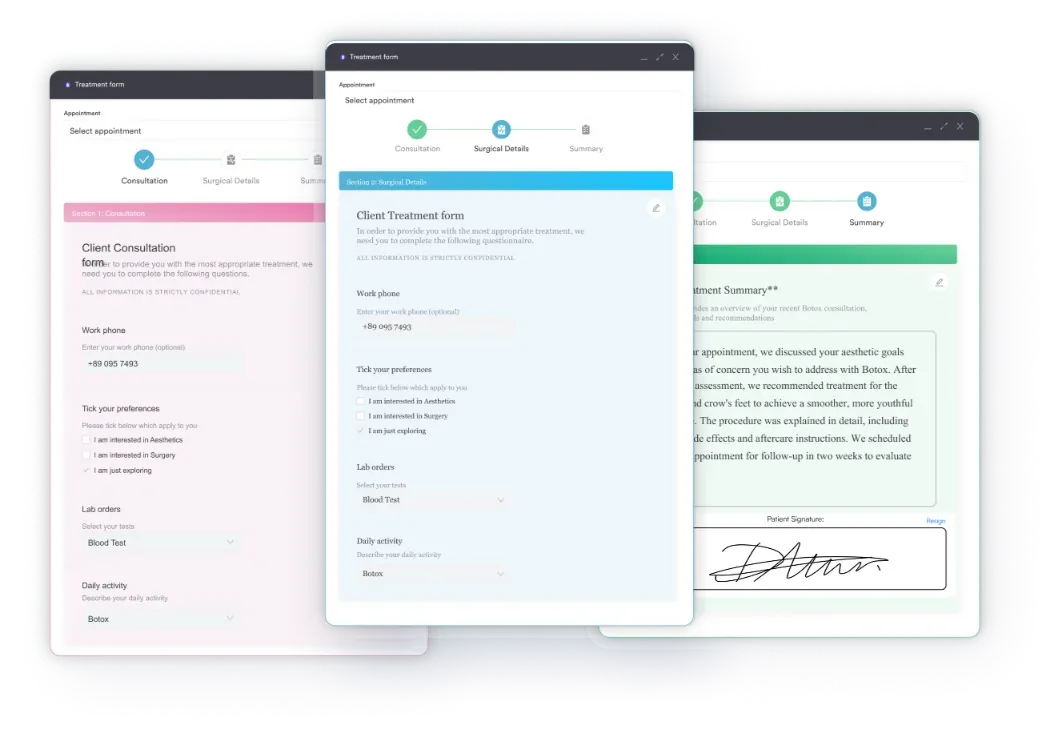
Practice management software like Pabau closes that hand-off. The treatment record holds the dose, route, lot number, and NDC captured at administration, along with the PTH, calcium, and phosphorus results behind the diagnosis. Pabau’s claims management software pulls those fields straight into the claim line, so the units follow the recorded dose.
The outcome is fewer rejections your team has to work twice. Billers stop rebuilding clinical context from screenshots and paper, and an audit request is answered from one record instead of three systems.

Take the manual work out of J-code billing
Pabau connects clinical documentation directly to claim generation. When your team records a paricalcitol administration, the treatment record, diagnosis codes, and NDC data flow into the billing module without re-entry. See how nephrology and dialysis practices use Pabau to cut J-code claim errors.

Conclusion
The costliest decision on a J2501 claim happens before anyone types the code. Check whether the patient sits inside the ESRD bundle, because that one answer decides whether the claim is billable at all.
After that, the work is mechanical. Units follow the mcg dose, the diagnosis pair carries medical necessity, and JZ or JW settles the vial. Capture those at the chair and your billers stop guessing later.
The trade-off worth remembering is timing. Reworking a denied J2501 claim costs far more staff hours than capturing four fields during administration. Book a demo to see how Pabau moves that capture to the point of care for nephrology and dialysis teams.

Continue your research
Need to understand the file your claims travel in? The 837 claim file breaks down the EDI format payers read before a J-code line is ever adjudicated.
Bringing a new nephrologist into the practice? Credentialing with insurance companies walks through the enrollment steps that decide whether drug claims get paid at all.
Want the wider picture around drug billing? Revenue cycle management shows where claim preparation sits between scheduling and collections.
Not sure how your claims reach the payer? Medical claims clearinghouses explains the scrubbing step that catches NDC and unit errors before submission.
Frequently asked questions
What is HCPCS code J2501 used for?
HCPCS code J2501 bills the injection of paricalcitol, 1 mcg. Paricalcitol is a synthetic vitamin D analog used to prevent and treat secondary hyperparathyroidism in chronic kidney disease, including in patients on dialysis. Each billing unit represents one microgram administered.
What drug is billed under J2501?
J2501 covers injectable paricalcitol, sold as Zemplar and as generic formulations. Every manufacturer’s product uses the same J2501 code. The National Drug Code (NDC) on the claim line identifies the specific product and vial billed.
How much does Medicare reimburse for J2501?
Medicare Part B pays J2501 at ASP+6% per microgram unit. CMS refreshes the ASP drug pricing files every quarter, and sequestration trims the payment further. Pull the current figure from the CMS file or the Physician Fee Schedule lookup rather than relying on a fixed dollar amount.
What ICD-10 codes are used with J2501?
N25.81 is the primary diagnosis for J2501 claims, covering secondary hyperparathyroidism of renal origin. Add the CKD stage from the N18.x series. That means N18.3, N18.4, or N18.5 by stage, and N18.6 for ESRD. Billing both codes establishes medical necessity and lowers denial risk.
Is J2501 covered under Medicare Part B?
Yes, Medicare Part B covers J2501 for qualifying secondary hyperparathyroidism and CKD diagnoses. Coverage depends on documented medical necessity, including current PTH, calcium, and phosphorus values. Paricalcitol given during a dialysis session usually sits inside the ESRD bundle and cannot be billed separately.
Do I need a JW or JZ modifier on J2501?
Yes. Paricalcitol comes in single-dose vials, so Medicare’s discarded-drug policy applies. Report JZ when the full vial is administered. Report JW on a separate claim line with the discarded microgram count when part of the vial is wasted.
How do I bill paricalcitol for dialysis patients?
First check whether the patient falls under the ESRD prospective payment system bundle, which covers most drugs given during dialysis. If the drug is bundled, J2501 cannot be billed separately. For pre-dialysis CKD patients, bill J2501 with units matching the mcg dose. Add JA for the intravenous route, JZ or JW for the vial, the NDC, and diagnosis codes N25.81 plus the N18.x stage.