Chiropractic Liability Insurance: Coverage Guide (2026)
Every chiropractor faces exposure to professional liability claims, regardless o...

February 21, 2026


Buy now, pay later is now available in Pabau

Professional liability insurance protects chiropractors from malpractice claims and legal expenses
State licensing boards typically require minimum coverage limits before practice authorisation
Claims-made policies cost less but require tail coverage when changing providers
General liability covers property damage; malpractice insurance covers patient treatment claims
Annual premiums range from $800 to $3,500 depending on location and practice scop
Every chiropractor faces exposure to professional liability claims, regardless of treatment precision or patient satisfaction rates. A single allegation of treatment injury can generate legal defence costs exceeding $50,000 before reaching settlement discussions. State licensing boards mandate proof of insurance before issuing practice authorisation, and referral networks increasingly require coverage verification before accepting new practitioner relationships.
Chiropractic liability insurance protects practitioners from financial consequences of malpractice allegations, premises accidents, and professional negligence claims. Coverage extends beyond courtroom defence to include regulatory board investigations, licence protection proceedings, and consent documentation disputes. Understanding policy structures, coverage limits, and claims triggers determines whether an allegation becomes a manageable administrative matter or a practice-ending financial burden.
Professional liability insurance for chiropractors addresses allegations arising from patient treatment, clinical judgement, and documentation practices. Policies cover defence costs when patients claim treatment caused injury, failed to deliver expected results, or violated informed consent standards. Coverage applies whether claims allege negligence, treatment error, or failure to refer to appropriate specialists.
Defence costs consume policy limits before settlement discussions begin. A malpractice claim alleging spinal manipulation injury typically generates $30,000 to $80,000 in legal fees during discovery and expert witness preparation. Policies respond to allegations even when treatment followed accepted protocols and documentation supports clinical decisions. Digital forms streamline consent documentation, reducing disputes over treatment authorisation and risk disclosure conversations.
According to the American Chiropractic Association, most malpractice claims involve spinal manipulation injuries, missed diagnoses requiring medical referral, and inadequate informed consent documentation. The National Practitioner Data Bank tracks all malpractice payments and adverse actions, creating permanent records accessible to licensing boards and credentialing committees.
Coverage extends to allegations of sexual misconduct, breach of patient confidentiality, and defamation claims arising from treatment discussions. Policies exclude intentional acts, criminal conduct, and claims arising from services outside the chiropractor’s scope of practice.
Claims-made policies cover allegations reported during the active policy period, regardless of when treatment occurred. An injury from 2023 treatment generates coverage only if reported while the 2024 policy remains active. Occurrence policies cover treatment provided during the policy period, regardless of when the claim is filed. A 2023 occurrence policy covers allegations filed in 2026 for treatment delivered in 2023.
Claims-made premiums start 40-60% lower than occurrence coverage but increase annually as the retroactive date extends backward. Switching carriers or retiring requires purchasing tail coverage to maintain protection for past treatment. Tail coverage typically costs 150-300% of the final annual premium. Occurrence policies cost more upfront but eliminate tail coverage requirements when changing insurers or closing a practice.
State chiropractic licensing boards set minimum coverage requirements before issuing practice authorisation. Most states mandate $1 million per occurrence and $3 million aggregate annual limits. Some jurisdictions require higher limits for chiropractors performing specific procedures or treating workers’ compensation patients. According to the Federation of Chiropractic Licensing Boards, 43 states explicitly require proof of professional liability coverage before licence issuance or renewal.
Requirements vary significantly across jurisdictions. California mandates $1 million/$3 million coverage for all licensed chiropractors. Texas requires coverage only for practitioners accepting workers’ compensation patients. Florida requires proof of financial responsibility but allows practitioners to post a $250,000 surety bond instead of purchasing insurance. State requirements represent minimum thresholds, not recommended coverage levels for adequate protection.
Hospital credentialing committees and multi-practitioner clinics typically require higher limits than state minimums. Facilities often mandate $2 million per occurrence and $6 million aggregate coverage before granting admitting privileges or employment contracts. Chiropractic software tracks insurance certificates, renewal dates, and coverage limits across multi-location practices, ensuring compliance with varying state and facility requirements.
Policies define covered services based on state-authorised chiropractic scope of practice. Standard coverage includes spinal manipulation, soft tissue therapy, physical examination, diagnostic imaging interpretation, and nutritional counselling within chiropractic training. Extended coverage endorsements address dry needling, acupuncture, functional medicine testing, and weight loss programmes when state law permits chiropractors to perform these services.
Scope creep generates claim denials. A chiropractor performing injection therapy without appropriate licensing or policy endorsement faces claim denial if a patient alleges injection-site infection or nerve damage. Carriers require advance notification and underwriting approval before adding services outside traditional chiropractic practice. Annual policy reviews should verify covered services match current treatment offerings and state authorisations.
Review policy exclusions annually against actual service offerings. A $2 million policy with a dry needling exclusion provides zero coverage when a needling allegation arises. Request written confirmation from your carrier before adding any service requiring additional certification or state authorisation.
General liability insurance covers property damage and bodily injury claims unrelated to professional treatment. A patient slipping on a wet floor, tripping over equipment in the waiting room, or suffering property damage from a clinic fire generates a general liability claim, not a malpractice claim. Coverage extends to allegations of false advertising, copyright infringement, and defamation arising from non-clinical communications.
Most general liability policies provide $1 million per occurrence and $2 million aggregate annual limits. Premises liability claims from slip-and-fall accidents typically settle for $15,000 to $75,000 depending on injury severity and lost wages. Property damage claims from equipment failures or water leaks range from $5,000 to $50,000. According to industry data, general liability claims occur three times more frequently than malpractice allegations but cost significantly less per incident.
Business Owners Policies (BOPs) bundle general liability with property insurance covering building damage, equipment replacement, and business interruption losses. BOPs cost $1,200 to $3,000 annually for solo practitioners in leased space. Practitioners owning clinic buildings require separate commercial property policies with replacement cost coverage for the structure and equipment. Client management systems document premises incidents, maintenance logs, and safety inspections, supporting defence against slip-and-fall allegations.
The distinction between professional and general liability determines which policy responds to a claim. Treatment table collapse during spinal manipulation triggers professional liability because injury occurred during clinical care. The same table collapse in the waiting room before treatment begins triggers general liability. Allergic reactions to treatment products fall under professional liability; reactions to cleaning products used in common areas fall under general liability.
Some allegations trigger both policies. A patient alleging sexual assault during treatment may generate both a professional liability claim for treatment boundary violations and a general liability claim for intentional infliction of emotional distress. Carriers coordinate defence through shared legal counsel, but coverage limits stack separately. Understanding trigger distinctions prevents gaps where practitioners assume one policy covers allegations actually falling under the other.

Pabau stores policy certificates, coverage limits, and incident reports in centralised records accessible across locations, supporting rapid response to claim notifications and carrier requests.

Workers’ compensation insurance covers employee injuries and occupational illnesses arising from employment. Every state except Texas mandates workers’ compensation coverage under state workers’ compensation laws once a practice employs a minimum number of staff members. Most states require coverage starting with the first employee. Solo practitioners without employees may purchase voluntary coverage to protect against work-related injuries not covered by health insurance.
Premiums vary by state, employee classification, and practice payroll. Administrative staff generate lower premiums than massage therapists or chiropractic assistants performing physical therapy. Annual premiums range from $450 to $1,200 per administrative employee and $1,800 to $4,500 per clinical support employee. Experience modification rates adjust premiums based on claim history, rewarding practices with strong safety records and penalising those with frequent injury claims.
Cyber liability insurance addresses data breach costs, ransomware payments, and regulatory fines following electronic health record compromises. According to the healthcare data breaches database maintained by HHS, breaches cost practices $408 per compromised record on average. A breach affecting 500 patient records generates notification costs, credit monitoring expenses, and regulatory investigation fees totalling $200,000 or more.
Cyber policies provide $1 million to $5 million coverage limits. First-party coverage addresses breach notification costs, forensic investigation expenses, and business interruption losses. Third-party coverage defends against patient lawsuits alleging inadequate data security. Practices must demonstrate compliance with HIPAA Security Rule requirements to avoid regulatory penalties following breach investigations.
Compliance management softwaredocuments data security protocols, staff training records, and access logs, demonstrating reasonable security measures following breach investigations.
Annual premiums range from $800 to $3,500 for solo practitioners maintaining $1 million/$3 million coverage limits. Multi-practitioner clinics with four or more chiropractors pay $3,200 to $12,000 annually depending on total treatment volume and services offered. Premium calculations consider geographic location, years in practice, claim history, coverage limits, and treatment modalities.
High-risk jurisdictions with plaintiff-friendly courts charge premiums 40-80% above national averages. New York, California, and Florida chiropractors pay $2,100 to $3,800 annually for standard coverage. Montana, Iowa, and South Dakota practitioners pay $800 to $1,400 for identical limits. Urban locations generate higher premiums than rural areas due to increased litigation rates and higher settlement values.
Treatment volume affects premium calculations. Carriers classify practices by annual patient visits rather than revenue. A high-volume practice seeing 3,000 patients annually pays 25-40% more than a practice treating 1,200 patients with identical services and coverage limits. Prior claims history increases premiums regardless of fault determination. A single paid claim within the past five years typically increases premiums 15-35% above base rates.
Standard policies offer $1 million per occurrence and $3 million aggregate annual limits. Higher limits cost 30-50% more annually but provide crucial protection in catastrophic claims. A spinal manipulation injury resulting in permanent paralysis can generate settlement demands exceeding $2 million. Practices treating high-net-worth patients or performing high-risk procedures should consider $2 million/$6 million or $3 million/$9 million limits.
Aggregate limits represent total annual payout capacity across all claims. Three separate $500,000 settlements exhaust a $1 million/$3 million policy’s per-occurrence limit but leave $1.5 million aggregate coverage remaining. The fourth claim in the same policy year draws from remaining aggregate capacity. Practices facing multiple allegations simultaneously require aggregate limits substantially exceeding per-occurrence thresholds. Clinic dashboard management tracks incident reports, patient complaints, and claim notifications, alerting owners when aggregate exposure approaches policy limits.
Calculate annual exposure based on treatment volume, not just patient count. A practice performing 6,000 spinal adjustments annually faces different risk profiles than a practice delivering 2,000 adjustments plus 4,000 soft tissue treatments. Match coverage limits to actual procedure counts, not just total patient visits.
Specialist carriers writing exclusively for chiropractors understand profession-specific risk profiles and offer tailored coverage terms. NCMIC, ChiroSecure, and CMF Group specialise in chiropractic malpractice insurance and maintain relationships with defence attorneys experienced in chiropractic litigation. Specialist carriers process claims faster and provide risk management resources addressing common chiropractic allegations.
Carrier financial strength ratings predict claim-paying ability during extended litigation. A.M. Best ratings of A- or higher indicate strong financial capacity to defend multiple claims simultaneously. Carriers rated B+ or lower may struggle to fund defence costs during market downturns or catastrophic loss years. State insurance departments publish complaint ratios revealing carriers with high claim denial rates or slow claim responses.
Policy comparison requires evaluating more than premium costs. Defence cost coverage outside policy limits provides unlimited legal fee payment without reducing settlement capacity. Prior acts coverage eliminates coverage gaps when switching carriers mid-career. Consent-to-settle clauses prevent carriers from forcing settlements over practitioner objections. Extended reporting period options provide affordable tail coverage alternatives when retiring or closing practices.
Independent insurance brokers access multiple carriers simultaneously, comparing coverage terms and premium rates across the market. Brokers specialising in healthcare professional liability identify coverage gaps standard agents miss. Annual policy reviews with specialist brokers ensure coverage matches evolving practice operations, newly added services, and changing state requirements. Practice management software centralises insurance documentation, policy schedules, and carrier contact information, supporting rapid response during claim investigations.
Leading carriers provide risk management education addressing common claim triggers. Online training modules cover informed consent documentation, appropriate patient referrals, scope-of-practice boundaries, and maintaining professional treatment relationships. Carriers offering continuing education credits through risk management programmes encourage practitioners to engage with claims prevention strategies proactively.
According to carrier data, inadequate documentation generates 40-60% of malpractice allegations. Detailed treatment notes, informed consent forms documenting risk discussions, and referral letters to medical specialists provide crucial defence evidence. Claims occur years after treatment, when memory fades and staff turns over. Contemporary documentation created during treatment provides the only reliable evidence of clinical decision-making and patient communication.
Some carriers offer premium discounts for practices implementing specific risk management protocols. Documented informed consent processes, regular equipment maintenance logs, and staff training records qualify practices for 5-15% premium reductions. Automated workflows standardise consent documentation, appointment confirmations, and post-treatment instructions across all patient interactions, reducing documentation gaps contributing to claim denials.

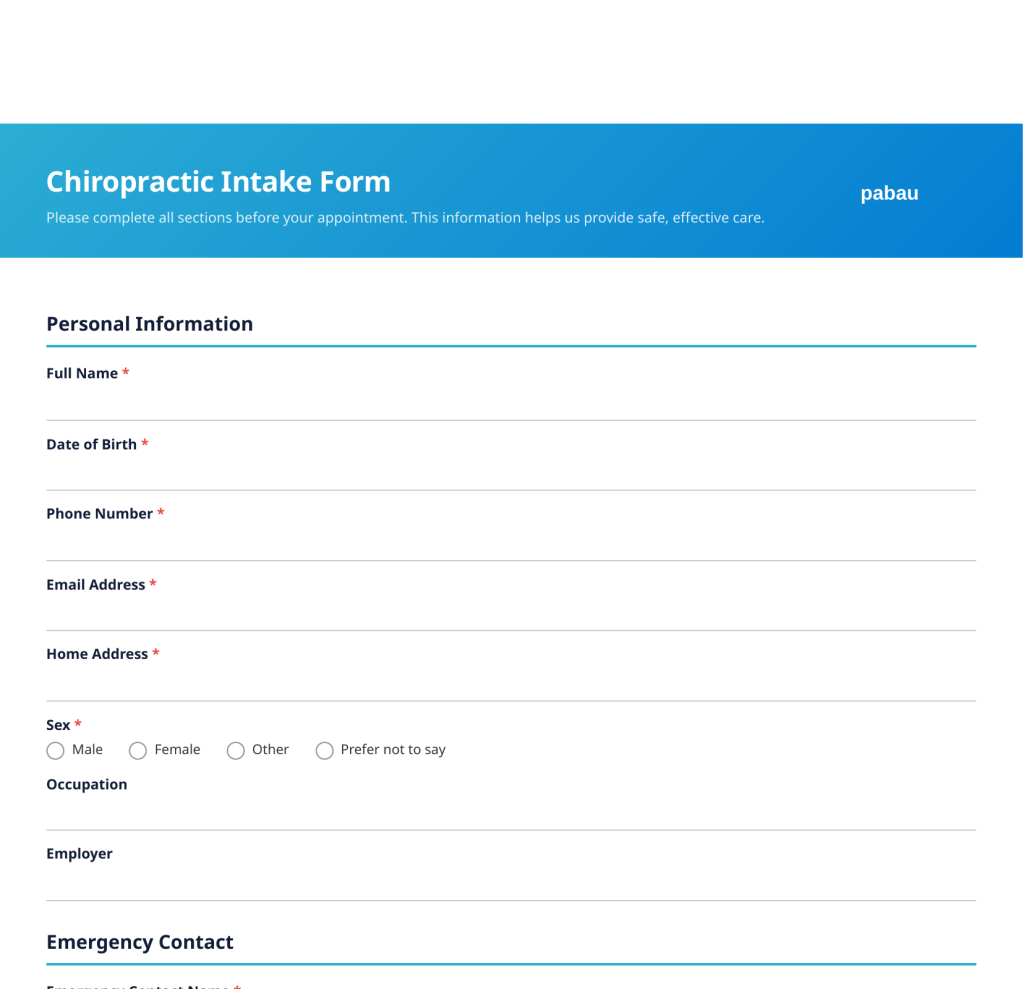
Need a comprehensive intake workflow? Chiropractic Intake Form Template provides structured patient history, contraindication screening, and consent documentation.
Looking for documented patient communications? Email & SMS Campaigns creates timestamped records of pre-treatment instructions, post-care guidance, and appointment confirmations supporting defence claims.
Want centralised compliance documentation? Physical Therapy EMR demonstrates structured clinical workflows applicable across musculoskeletal practices requiring regulatory documentation.
Chiropractic liability insurance represents essential infrastructure protecting practitioners from financial consequences of treatment allegations, regulatory investigations, and premises accidents. State licensing boards mandate minimum coverage before authorising practice operations, and adequate protection extends well beyond regulatory thresholds. Understanding policy structures, coverage triggers, and claims processes determines whether allegations become manageable administrative matters or practice-ending financial burdens.
Selecting appropriate coverage requires evaluating professional liability limits, general liability protection, workers’ compensation requirements, and cyber liability exposure. Claims-made policies offer lower entry premiums but require tail coverage planning. Occurrence coverage costs more annually but eliminates coverage gaps when changing carriers or retiring. Specialist carriers provide profession-specific terms and risk management resources addressing common chiropractic claim scenarios.
State licensing boards in 43 states require proof of professional liability insurance before issuing or renewing chiropractic licences. Coverage requirements typically mandate $1 million per occurrence and $3 million aggregate annual limits. Practitioners in states without mandatory coverage still face malpractice claim exposure averaging $30,000 to $80,000 in defence costs before settlement discussions.
Professional malpractice insurance covers allegations arising from patient treatment, clinical judgement, and documentation practices. General liability insurance covers property damage and bodily injury unrelated to professional services. A patient injury from spinal manipulation generates a malpractice claim. The same patient slipping on a wet floor generates a general liability claim.
Annual premiums range from $800 to $3,500 for solo practitioners maintaining $1 million per occurrence and $3 million aggregate coverage. Multi-practitioner clinics pay $3,200 to $12,000 annually depending on treatment volume and services offered. High-risk jurisdictions like New York and California charge 40-80% above national averages.
The Federation of Chiropractic Licensing Boards reports 43 states explicitly require professional liability coverage before licence issuance or renewal. Requirements vary by jurisdiction. California mandates $1 million/$3 million coverage for all licensed chiropractors. Texas requires coverage only for practitioners treating workers’ compensation patients. Florida allows practitioners to post surety bonds instead of purchasing insurance.
General liability covers patient injuries unrelated to professional treatment. Premises accidents like slip-and-fall incidents, equipment-related injuries in waiting areas, and property damage from facility failures fall under general liability. Treatment-related injuries from spinal manipulation, therapy applications, or clinical procedures require professional malpractice coverage.
Professional liability insurance addresses the highest-cost exposure chiropractors face. Malpractice claims generate defence costs averaging $30,000 to $80,000 and settlements frequently exceeding $100,000. State licensing boards require proof of professional liability before practice authorisation. General liability, workers’ compensation, and cyber liability provide crucial additional protection but supplement rather than replace professional malpractice coverage.