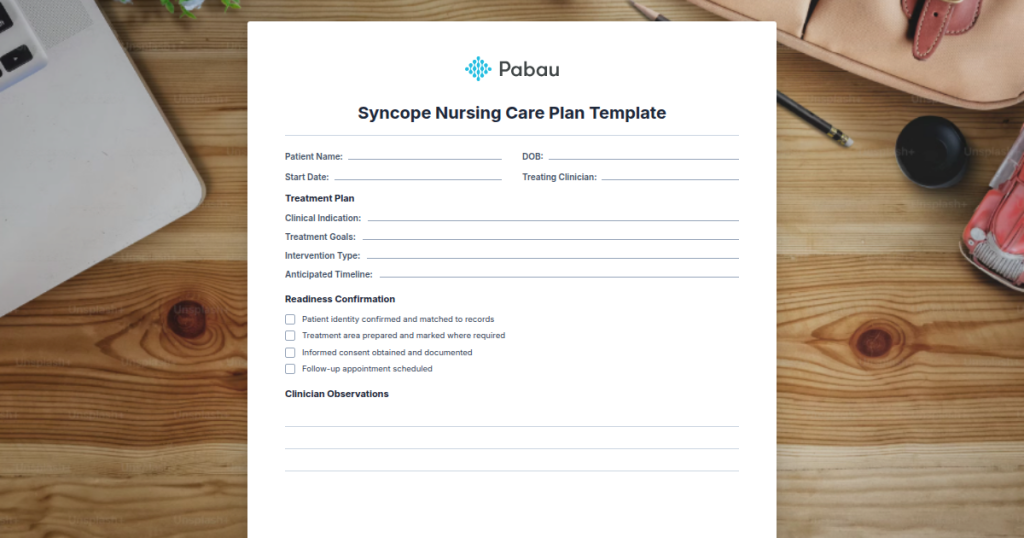
Syncope Nursing Care Plan Template
Download Your Free Syncope Nursing Care Plan Template Syncope Nursing Care Plan ...

May 8, 2026


Buy now, pay later is now available in Pabau

AI-assisted tools like Pabau Scribe can help GPs complete notes 60% faster while improving accuracy and compliance.
Structured, searchable digital records streamline audits and multidisciplinary communication.
Adopting smarter workflows reduces admin pressure and frees up clinical time for patient care.
Secure, cloud-based documentation protects patient data and supports HIPAA and GDPR compliance.
Clinical documentation has become one of the most time-consuming parts of modern general practice.
While accurate notes are essential for patient safety, continuity of care, and regulatory compliance, they often compete with the most important part of the job: time with patients.
As appointment volumes increase and administrative demands grow, many GPs are left finishing notes after hours or rushing documentation during consultations.
This guide explores how AI-assisted note-taking can help GPs write clinical notes faster and more safely—without compromising accuracy, compliance, or clinical judgement—so documentation supports care, rather than slowing it down.
Every GP knows the reality: back-to-back appointments, a flood of patient notes, and the constant pressure to stay compliant with regulations like HIPAA and GDPR. Between clinical reasoning and patient engagement, writing accurate, complete, and legible notes is essential—but it’s also one of the biggest time drains in modern practice.
Digitalization has helped, but even with electronic medical records, many GPs still spend up to 44% of their working day on documentation and other clerical tasks.
That’s where AI steps in to transform how we work.
Clinical notes are more than just records—they’re the cornerstone of continuity of care. For a GP clinic, every entry serves multiple purposes:
Yet when documentation becomes rushed, incomplete, or inconsistent, errors creep in—potentially leading to compliance breaches or patient risk. AI can drastically reduce that risk while enhancing efficiency.
Pabau Scribe, part of Pabau’s integrated ecosystem, brings intelligent automation to the note-taking process. Designed for healthcare professionals, it listens, transcribes, and structures notes automatically—allowing GPs to stay focused on their patients rather than their keyboards.
With AI-assisted note-taking, clinicians can:
| Aspect | Manual Notes | AI-Assisted Notes (Pabau Scribe) |
|---|---|---|
| Speed | Average 6–8 minutes per consult | Under 2 minutes per consult |
| Accuracy | Depends on handwriting or typing consistency | Real-time structured transcription with grammar correction |
| Compliance | Manual reminders for audit points | Built-in regulatory alignment with HIPAA and CQC documentation standards |
| Integration | Requires manual data linking | Auto-syncs with forms, labs, and prescriptions |
| Security | Risk of misplaced paper or local files | Encrypted cloud storage with audit trails |
AI doesn’t replace the clinician—it empowers them. Within Pabau, Pabau Scribe sits directly inside the consultation flow. When a patient arrives, their calendar booking automatically links to their Pabau Go profile.
As the consultation begins, the GP can activate Pabau Scribe to capture key points verbally.
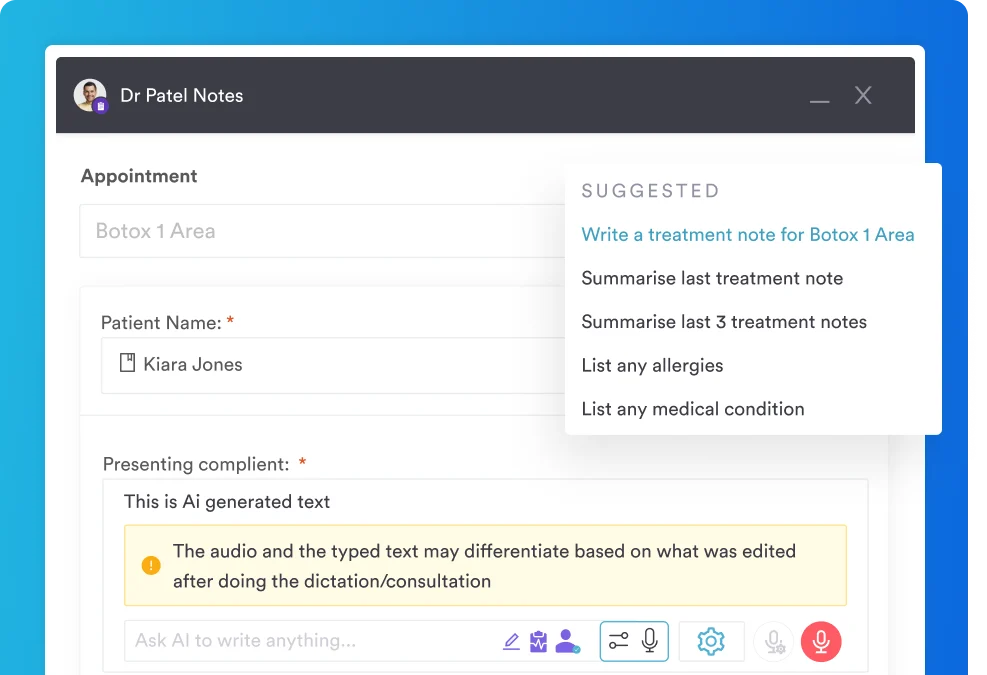
Once the conversation concludes, Pabau Scribe structures the transcript into predefined fields: presenting complaint, history, examination, diagnosis, and management plan.
If forms or prescriptions are linked, they populate automatically. This integration means a full patient record can be updated, reviewed, and securely stored without any manual duplication.
Compliance is not optional in modern healthcare—it’s mandatory. Pabau’s AI features align with the UK’s CQC and GDPR frameworks, as well as U.S. standards like HIPAA. Each note is timestamped, user-tracked, and stored in encrypted form to maintain confidentiality and data integrity.
Beyond security, Pabau Scribe includes safeguards such as:
By combining automation with strict governance, Pabau ensures every entry meets both legal and ethical documentation standards.
Administrative overload is one of the leading causes of GP burnout. Research suggests that admin work — from paperwork to inboxes — is a key contributor to stress and burnout among GPs.
By adopting AI-assisted documentation, clinicians can reclaim valuable hours and redirect focus back to patient care. Benefits include:
AI transforms documentation from a chore into a seamless background task—accurate, compliant, and instantly accessible.
Every GP practice operates under the oversight of bodies like the CQC and GMC, both of which emphasise auditability and documentation accuracy.
Pabau’s audit-ready records, combined with automated consent logging and encryption, ensure full traceability under UK GDPR and the Data Protection Act 2018.
Internationally, the same structure aligns with HIPAA, HITECH, and 21 CFR 11, ensuring global compliance for clinics with overseas branches or telehealth services. 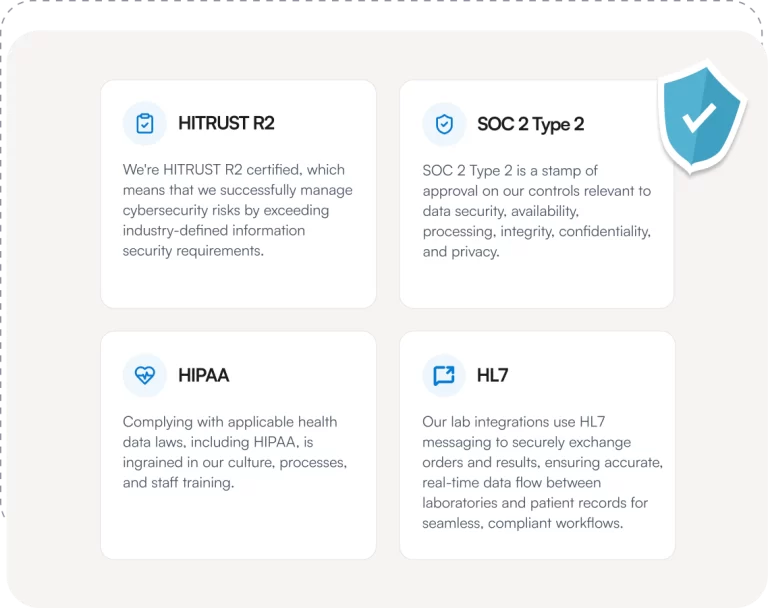
Pabau Scribe isn’t a standalone add-on—it’s part of Pabau’s full ecosystem. It integrates seamlessly with features like:
This centralization ensures every detail—from intake to treatment—is connected, traceable, and instantly retrievable.
For practices looking to transition to AI-driven note-taking, the following steps can help:
Pro Tip: A study of ambient AI scribe deployment reported that clinicians using AI scribes spent about 20% less time on electronic health record (EHR) tasks and experienced a 30% reduction in after-hours documentation compared with standard practice.
AI isn’t replacing the human element of medicine—it’s reinforcing it. By automating repetitive admin and ensuring every note is secure, accurate, and structured, tools like Pabau’s Pabau Scribe allow GPs to reclaim time, reduce risk, and refocus on patient outcomes. As healthcare evolves, documentation should evolve with it—smarter, faster, and safer than ever.