












Download Top 25 Ozone Therapy Protocols and Methods worksheet
Download our free worksheet covering 25 ozone therapy protocols, from autohemotherapy to insufflation, with quick-reference descriptions for every method.

Key Takeaways
Major autohemotherapy (MAH) is the most researched ozone therapy protocol, backed by over 180 published clinical studies.
Each ozone therapy protocol targets different conditions, so matching the method to the patient is essential for safe outcomes.
Proper documentation, consent forms, and concentration tracking are non-negotiable for any clinic offering ozone therapy.
Rectal insufflation offers a systemic alternative to IV methods, making it accessible for clinics without IV licensing.
Clinics that standardise their ozone therapy protocol see better patient outcomes and fewer compliance issues.
Choosing the right ozone therapy protocol is one of the most important decisions a clinic makes when adding this service to its menu. With over a dozen recognised methods, the best ozone therapy protocol depends on the condition you treat, the patient's health profile, and your clinic's capabilities. This guide breaks down every major protocol, explains how each one works, and covers the safety and operational points that matter most.
Whether you run an integrative medicine practice, an IV therapy clinic, or a wellness centre exploring new treatments, understanding each ozone therapy protocol will help you deliver consistent, evidence-informed care.
What Is Ozone Therapy?
Ozone therapy uses medical-grade ozone (O3), a molecule made of three oxygen atoms, to trigger biological responses in the body. Unlike the ozone in Earth's atmosphere, medical ozone comes from specialised equipment that converts pure oxygen into a controlled ozone-oxygen mixture.
The therapy works through controlled oxidative stress. When ozone contacts blood or tissue, it creates reactive oxygen species and lipid oxidation products. These compounds then switch on the body's antioxidant defence systems, boost oxygen delivery to tissues, and shape the immune response. A detailed review by Talebi et al. (2023) in the journal Dentistry found that ozone shows bactericidal, virucidal, and fungicidal properties across more than 100 years of clinical use.
However, ozone must never enter the airways directly. It irritates the lungs, so every ozone therapy protocol uses a controlled delivery route that bypasses the respiratory system.
Types of Ozone Therapy Protocols
Ozone therapy protocols fall into three broad categories: systemic, local, and topical. Systemic protocols send ozone's effects throughout the entire body. Local methods, in contrast, target specific joints, muscles, or cavities. Topical approaches treat surface-level skin conditions and wounds.
The chart below shows how research spreads across these routes.
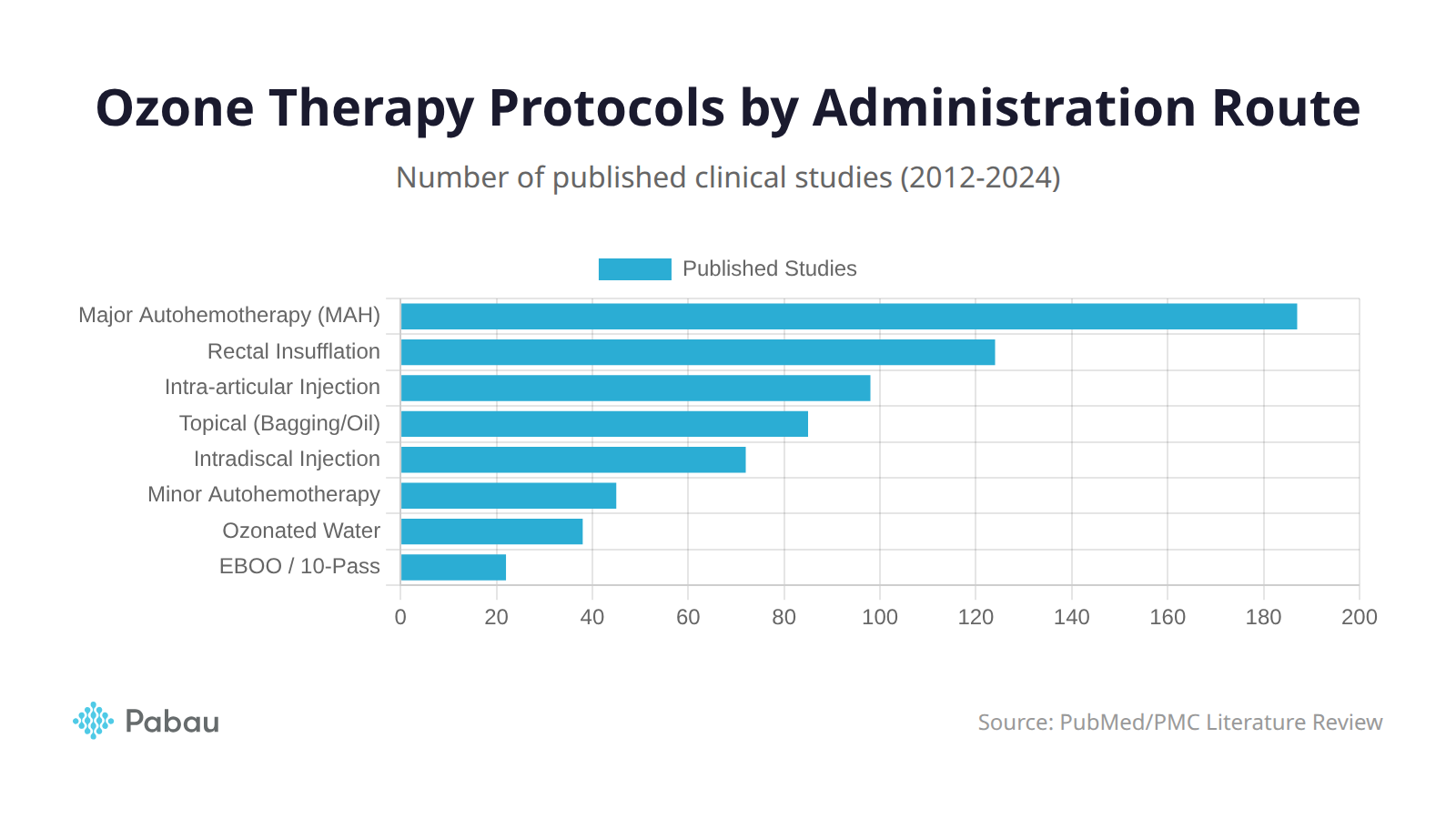
Major autohemotherapy dominates the published literature, but rectal insufflation and intra-articular injections also have strong evidence bases. Picking the right ozone therapy protocol means understanding what each method does and when to apply it.
Major Autohemotherapy (MAH)
Major autohemotherapy is the most widely studied ozone therapy protocol for systemic treatment. During this procedure, a clinician draws 50 to 200 mL of the patient's blood into a sterile container with anticoagulant. Next, the blood mixes with a precise concentration of ozone-oxygen gas, typically between 10 and 40 micrograms per millilitre.
Once the ozone reacts with blood components, the clinician reinfuses the treated blood intravenously. The entire process takes place in a closed, sterile system. As a result, the ozone's reactive products travel throughout the body, boosting antioxidant enzymes and improving oxygen use at the cellular level.
MAH treats chronic fatigue, autoimmune conditions, chronic infections, and general immune support. Most treatment plans involve 10 to 20 sessions over several weeks.
Pro Tip
Track ozone concentrations and volumes for every MAH session in your patient records. Regulatory bodies increasingly expect this level of documentation, and it protects your clinic if outcomes are ever questioned.
Minor Autohemotherapy
Minor autohemotherapy follows a simpler ozone therapy protocol. The clinician draws just 5 to 10 mL of blood, mixes it with ozone, and reinjects it into the muscle, usually the gluteal muscle. This triggers a local immune response rather than a full systemic effect.
Clinics often choose minor autohemotherapy for allergies, skin conditions, and mild immune support. It needs less equipment than MAH and takes less time to perform, making it a practical starting point for clinics new to ozone therapy.
10-Pass and EBOO High-Dose Protocols
For patients who need higher doses, two advanced ozone therapy protocols have gained popularity. The 10-pass method uses a hyperbaric system to ozonate and reinfuse blood 10 times in a single session, delivering far more ozone than standard MAH.
EBOO (Extracorporeal Blood Oxygenation and Ozonation) takes a different approach. It filters the patient's blood through an external circuit, similar to dialysis, exposing it to ozone before returning it. Both methods suit complex cases and need specialised equipment and training.
Rectal and Vaginal Insufflation
Insufflation protocols deliver ozone gas straight into a body cavity through a catheter. Rectal insufflation is the most common form and many clinicians view it as a systemic alternative to autohemotherapy. The colon's mucosal lining absorbs ozone's reactive products well, providing both local and systemic benefits.
Vaginal insufflation, meanwhile, targets gynaecological conditions by introducing ozone into the vaginal cavity. Ear insufflation and bladder insufflation also serve more specific uses.
For many clinics, rectal insufflation stands out because it does not need IV access or blood handling. This makes it a viable ozone therapy protocol for practices without IV licensing.
Ozone Injections (Prolozone)
Prolozone therapy combines ozone with nutrients like vitamins and procaine, injecting the mixture straight into damaged joints or soft tissues. This ozone therapy protocol targets musculoskeletal pain, degenerative joint disease, and sports injuries.
Intradiscal ozone injections have also shown promise for herniated spinal discs. A review in Medical Gas Research found that paravertebral and intradiscal ozone injections cut pain scores sharply in patients with chronic lower back conditions.
Other injection-based protocols include subcutaneous injections for local skin conditions and intramuscular injections for trigger points.
“Since switching to a fully digital workflow, our IV and ozone therapy documentation has become seamless. Treatment records, consent forms, and follow-up notes are all in one place, which means less admin time and more confidence during audits.”

Topical Ozone Applications
Topical methods apply ozone straight to the skin or wound surface. Limb bagging involves sealing an airtight bag around an affected arm or leg and filling it with ozone gas. This works especially well for chronic wounds, diabetic ulcers, and skin infections.
Ozone cupping places a small suction cup filled with ozone over local lesions. Ozonated oils (typically olive or sunflower oil infused with ozone) offer a sustained-release topical treatment that patients can apply at home between clinic visits.
Ozonated water is another flexible option. Clinics use it for wound irrigation, oral rinses, and general disinfection. These topical protocols complement systemic treatments and expand the range of conditions your clinic can address.
How to Choose the Right Ozone Therapy Protocol
Picking the right ozone therapy protocol starts with the patient's condition and goals. For systemic immune support, MAH or rectal insufflation are the standard choices. Musculoskeletal pain responds best to prolozone injections. For wound care, topical bagging or ozonated oils work best.
Concentration matters as well. Therapeutic ozone levels typically range from 10 to 40 micrograms per millilitre for systemic protocols. Clinicians reserve higher levels for specific local uses. As a general rule, start with lower concentrations and adjust based on patient response.
Your clinic's setup plays a role too. MAH and EBOO need IV capabilities, sterile blood-handling equipment, and trained staff. Insufflation and topical methods, in contrast, need less equipment and your team can introduce them more quickly.
Pro Tip
Create a protocol decision tree for your team. Map each condition to a recommended ozone therapy protocol with standard concentrations and session counts. This eliminates guesswork and keeps treatment consistent across practitioners.
Safety and Contraindications
Ozone therapy is generally well tolerated when a trained clinician delivers it correctly. However, certain contraindications apply to every ozone therapy protocol. Patients with glucose-6-phosphate dehydrogenase (G6PD) deficiency must not receive ozone therapy, as it can trigger haemolytic anaemia. Pregnancy, uncontrolled hyperthyroidism, and active bleeding are also absolute contraindications.
Equipment safety matters just as much. Only use medical-grade ozone generators with precise concentration controls. Make sure your treatment room has enough ventilation to prevent ambient ozone build-up. Store all ozone-generating equipment according to manufacturer specs.
Informed consent comes before every treatment. Your consent form should explain the specific ozone therapy protocol, potential side effects (mild discomfort, brief fatigue, or local irritation), and the current evidence base. Using digital consent forms simplifies this process and creates an auditable trail.
Managing Ozone Therapy in Your Clinic
Running an ozone therapy service takes more than clinical knowledge. You need operational systems that support consistent, compliant care.
Documentation and Record-Keeping
Every ozone therapy session should include records of the protocol used, ozone concentration, volume given, treatment length, and patient response. Keeping detailed client records protects your clinic legally and helps you track how well treatments work over time.
Storing treatment notes digitally also means your team can review a patient's full ozone therapy history before each session. This matters most when patients receive multiple protocol types across different visits.
Consent and Intake Forms
Before a patient's first ozone therapy session, collect a thorough medical history. Screen for contraindications like G6PD deficiency, bleeding disorders, and pregnancy. A well-designed intake form lowers risk and shows due diligence.
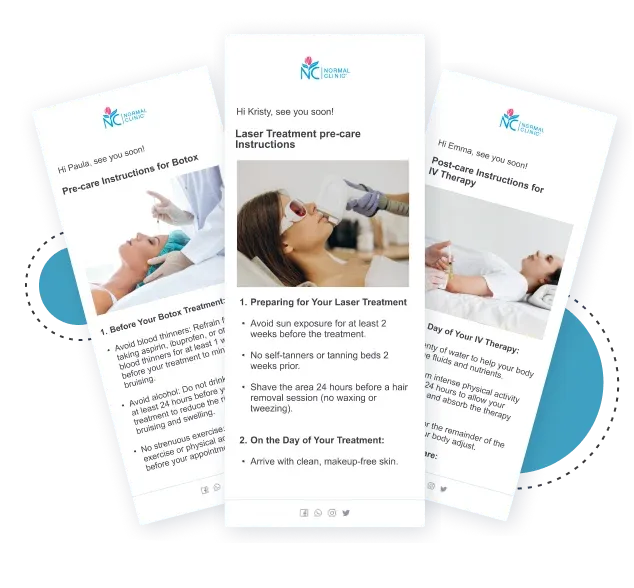
Many clinics find that sending pre-care instructions automatically before each appointment improves patient preparation and cuts appointment delays.
Scheduling and Follow-Up
Most ozone therapy protocols call for multiple sessions. MAH typically involves 10 to 20 treatments, while insufflation may need ongoing maintenance sessions. Setting up recurring appointments keeps patients on track with their treatment plan.
Automated follow-up messages also help you check on patient progress between visits. This proves especially valuable for clinics offering personalised treatment plans that combine ozone with other therapies.
Building Your Service Menu
If you already run an IV therapy clinic, adding ozone therapy is a natural expansion. Many of the operational systems overlap, from online booking to consent workflows and treatment documentation.
For clinics starting from scratch, invest in certified ozone training, medical-grade equipment, and a practice management system that can handle the documentation needs from day one.

Expert Picks
Already running IV services? Our guide to IV therapy clinic best practices covers the operational foundations that apply to ozone therapy too.
Need digital intake and consent forms? See how Capture Forms simplifies patient onboarding for specialised treatments.
Tracking treatment outcomes across sessions? Learn why personalised treatment plans improve results and client retention.
FAQs About Ozone Therapy Protocol
Major autohemotherapy (MAH) is the most widely used and researched ozone therapy protocol. It involves drawing blood, mixing it with medical-grade ozone, and reinfusing it intravenously.
Most ozone therapy protocols require 10 to 20 sessions for systemic treatments like MAH. However, the exact number depends on the condition being treated and the patient’s response.
Ozone therapy is generally safe when administered by trained practitioners using medical-grade equipment. Key contraindications include G6PD deficiency, pregnancy, and uncontrolled hyperthyroidism. Proper concentration control and sterile technique are essential.
MAH treats the patient’s blood outside the body before reinfusing it, while rectal insufflation delivers ozone gas directly into the colon. Both achieve systemic effects, but rectal insufflation does not require IV access or blood handling.
Yes. Many clinics combine ozone therapy with IV nutrient infusions, physiotherapy, or regenerative medicine protocols. Prolozone, for example, blends ozone with vitamins and procaine for joint treatments.
At minimum, you need a medical-grade ozone generator with concentration controls, oxygen supply, sterile disposables, and proper ventilation. For MAH, you also need IV supplies and blood-handling equipment.