Primary & Preventive Care Wellness
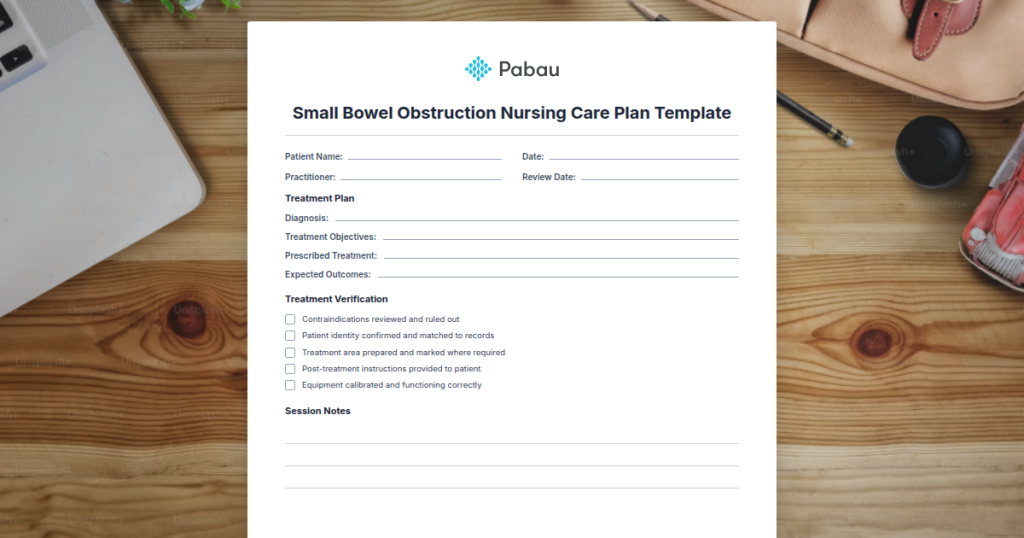
Small Bowel Obstruction Nursing Care Plan Template
A comprehensive small bowel obstruction nursing care plan template provides stru...

March 13, 2026

Discover free eBooks, guides and med spa templates on our new resources page


Buy now, pay later is now available in Pabau

Read case studies from our satisfied clients

Compare Pabau with alternative systems
 Integrations
 Measure Pabau savings
  Our security commitment
  About us
Learn why this holistic care and aesthetic medicine clinic chose Pabau to power patient care and performance.
Read more

EHR meaning: a digital, shareable record of a patient’s health information accessible across authorised providers and care settings.
EHR and EMR are not the same – an EMR stays within one practice, while an EHR is designed to move with the patient across the healthcare system.
Cloud-based EHR systems allow clinic teams to access patient records in real time from any location, reducing reliance on paper and on-site servers.
For independent and private clinics, EHR functionality is most useful when integrated with scheduling, billing, and consent workflows in a single platform.
Regulatory frameworks including HIPAA, GDPR, and NHS Digital standards shape how EHR systems must store, protect, and share patient data.
The term EHR gets used constantly in healthcare discussions, yet its meaning is often blurred with related concepts like EMR, patient portals, and practice management software. Understanding the EHR meaning precisely matters because the type of system a clinic adopts shapes everything from how clinical notes are structured to how patient data flows between providers.
This guide explains what EHR means in healthcare, how electronic health record systems work in practice, and what clinic owners and practitioners need to consider when evaluating an EHR system for their practice. It covers the EHR meaning in context of modern private and independent clinics, the difference between EHR and EMR, and the features that actually drive operational value.
According to the Office of the National Coordinator for Health Information Technology (ONC), an Electronic Health Record is the systematised, digitally stored collection of a patient’s health information. The defining characteristic of an EHR, as the ONC explains, is that it is designed to be shared across more than one healthcare organisation. A patient’s EHR can follow them from a GP to a specialist to a hospital, provided those systems are interoperable and authorised to share data.
That shareability is the core of the EHR meaning. Paper charts, by contrast, belong to a single clinic. Even a well-maintained digital chart in a single-practice system functions more like an EMR than a true EHR if it cannot transmit data to external providers. The distinction is meaningful for any clinic considering how its records should be structured and what regulatory standards apply.
A complete electronic health record includes far more than clinical notes. Patient demographics, medication histories, allergy records, immunisation histories, laboratory results, radiology reports, and treatment plans all form part of the record. In clinic settings, consent forms, before-and-after photographs, and procedure-specific documentation are also routinely incorporated.
The World Health Organization frames EHRs as real-time, patient-centred records that make health information available instantly to authorised users. That framing highlights two practical requirements: the system must support real-time access, and it must include robust access controls. Both have direct implications for how clinic software is configured and maintained.
Three terms dominate conversations about digital patient records, and they are frequently conflated even by experienced practitioners. The ONC and HIMSS (Healthcare Information and Management Systems Society) each provide definitions that draw a consistent line between them.
An Electronic Medical Record (EMR) is a digital version of a paper chart within a single practice. It captures clinical notes, diagnoses, and treatment history for patients seen at that specific location. The EMR doesn’t travel. When a patient leaves that practice, their record stays behind. Clinicians can review an EMR to track a patient’s history within that organisation, but it offers limited value for coordinating care externally.
Many smaller clinics use systems that function as EMRs without realising it. If a platform cannot securely export or transmit structured patient data to another provider’s system, it is operating as an EMR regardless of what the vendor calls it. The distinction between a practice management system and an EMR matters precisely here – both may store clinical data, but their design intent differs.
A Personal Health Record (PHR) is managed and maintained by the patient, not the clinic. Patients compile their own health information – often pulling from multiple providers – into a record they control. PHRs are common in consumer health apps and some national health portal systems. They complement EHRs but are not a substitute for clinical documentation managed by a provider.
For clinic owners, the key takeaway is that EHR meaning sits between these two extremes. It is provider-managed, clinically structured, and interoperable in a way that an EMR is not, while remaining under clinical governance in a way that a PHR is not. Understanding this triangle shapes how clinics should evaluate software claims. For a deeper look at how software categories compare, the guide to the best EMR software options covers these distinctions across different practice types.
Consider a patient attending a private dermatology clinic. Before their appointment, they complete a digital intake form and a consent document. At consultation, the clinician records a SOAP note, photographs the treatment area, and logs the products used. After the session, a post-care plan is sent automatically. If the patient later sees a specialist, the referring clinic can share structured data in a standardised format.
That end-to-end flow is what a functioning EHR system enables. The EHR meaning in operational terms is not just a storage container for notes; it is an active workflow infrastructure that connects the clinical record to every touchpoint of the patient journey.

Pabau combines patient records, consent forms, scheduling, and billing in one platform – so your clinic team works from a single source of truth, not a stack of disconnected tools.

Not every system marketed as an EHR delivers the same depth of functionality. Clinic owners evaluating platforms need to look beyond the label and assess which specific capabilities are present, configurable, and integrated with the broader workflow.
Structured clinical documentation is the foundation of any EHR system. This includes SOAP notes, treatment plans, progress notes, and outcome records. The quality of this feature varies considerably. Some platforms offer fixed note formats; others allow clinicians to build custom templates suited to their specialty. For aesthetics and dermatology practices, fields for injection mapping, product lots, and before-and-after photography are particularly important.
AI-assisted documentation is an emerging capability in this space. Tools that support voice-to-text transcription or suggest note structure based on the consultation type can reduce administrative burden for busy practitioners. It’s worth noting that these tools assist documentation; they do not replace clinical judgement or generate diagnostic conclusions. Platforms like Pabau offer AI-powered clinical note assistance designed specifically for clinic workflows.
EHR systems are deployed in two primary configurations: on-premise and cloud-based. On-premise systems install software on local servers owned and maintained by the clinic. They offer high control over data storage but require IT infrastructure, regular maintenance, and carry the risk of data loss if backup procedures fail.
Cloud-based EHR systems, the dominant model for independent and private clinics today, host data on remote servers accessed via the internet. The practical advantages are significant: real-time access from any location, automatic software updates, no local hardware dependency, and scalability as clinic volume grows. A clinic running multiple locations, for example, benefits from a cloud-based system because all sites operate from a unified patient record rather than siloed local databases.
Consent documentation is both a clinical requirement and a legal protection. In a well-configured EHR, consent forms are sent to patients before their appointment, completed digitally, and automatically attached to their record. The clinician can review consent status before the session begins. Digital forms that integrate directly with the patient record eliminate the manual filing step and create an auditable trail for compliance purposes.
Intake forms serve a parallel function. Pre-appointment health questionnaires, medication declarations, and contraindication screening can all be structured as intake forms that populate directly into the clinical record, reducing data re-entry during consultations.
Audit your current documentation workflow against your EHR’s form library. If staff are re-entering data from paper intake forms into digital records, you’re introducing transcription risk and absorbing unnecessary administrative time. Configure digital intake to populate fields directly – most modern EHR platforms support this natively.
Hospital-grade EHR platforms built for large health systems carry assumptions that don’t fit private practice: dedicated IT teams, specialist billing departments, and high patient volumes that justify complex onboarding. For independent clinics, the relevant question isn’t whether a platform qualifies as an EHR by technical definition – it’s whether the EHR meaning translates into a system the clinic can actually use effectively.
Aesthetics and wellness clinics have documentation needs that generic EHR systems often don’t address. Treatment-specific consent forms, before-and-after photo storage, injection mapping, product lot tracking, and follow-up scheduling tied directly to treatment timelines are all clinical workflow components. A system built for a GP or a hospital department may handle SOAP notes well but lack the procedure-specific fields an aesthetics practitioner needs.
The EHR meaning for these clinics also extends to client-facing tools. Online booking that links directly to the clinical record, automated pre-care and post-care communications, and a patient portal where clients can review their treatment history all form part of what a modern EHR system should support. Clinics in the wellness sector particularly benefit from systems that merge clinical documentation with the operational layer seamlessly.
The regulatory environment shapes how an EHR must be configured, not just what features it contains. In the United States, the Health Insurance Portability and Accountability Act (HIPAA) mandates how patient health information is stored, accessed, and transmitted. The ONC’s Promoting Interoperability Programme incentivises EHR adoption among healthcare providers and sets standards for certified health IT systems.
In the United Kingdom, the Care Quality Commission (CQC) requires that clinical records are accurate, up to date, and accessible to authorised staff. NHS Digital’s interoperability standards govern how systems exchange data within NHS-connected networks. For clinics operating under GDPR – which applies to any practice processing patient data in the UK or EU – data minimisation, right of access, and secure deletion requirements all have direct implications for how an EHR is structured and maintained. Pabau’s GDPR compliance guidance covers the key obligations UK clinics need to address.
In the UAE, the Dubai Health Authority (DHA) and NABIDH (National Backbone for Integrated Dubai Health) set standards for electronic health records and data exchange across Dubai’s healthcare ecosystem. Clinics operating in the region should verify that their EHR system aligns with these frameworks before deployment.
The case for adopting an EHR system isn’t primarily about compliance, though that matters. It’s about what happens to the clinical and operational quality of a practice when patient information is structured, searchable, and connected across workflows.
Manual records introduce transcription errors, legibility problems, and gaps when staff transfer information between systems. According to the World Health Organization, EHRs can support improved care coordination and may help reduce the risk of medication errors when patient histories, current medications, and allergy records are readily accessible. The ONC similarly documents that structured digital records support better clinical decision-making by giving providers access to complete patient histories at the point of care.
For a private clinic seeing 40 patients per day, even small reductions in administrative errors compound across hundreds of weekly interactions. A system that surfaces allergy flags, alerts for contraindications, or prompts for overdue follow-ups saves clinical time and supports safer outcomes.
Clinical documentation and billing are deeply connected. The procedure recorded in the clinical note determines the code assigned, the fee raised, and the insurance claim submitted. When the EHR and the billing system are separate, those connections are manual – introducing delay, inconsistency, and revenue leakage from undercoding or missed charges.
An integrated EHR with built-in claims management removes that manual bridge. The clinical record generates the billing trigger directly. For private clinics operating without a specialist billing team, this integration may reduce claim processing time and help reduce submission errors that trigger rejections from insurers.
Post-pandemic, telehealth has become a standard component of many clinic workflows rather than an occasional exception. An EHR system that integrates telehealth functionality allows clinicians to conduct video consultations with the patient record open in the same interface, note directly into the clinical record during the call, and send follow-up documentation immediately after. Systems that treat telehealth as a bolt-on introduce workflow fragmentation that erodes the operational benefits of having an EHR in the first place.

Trying to decide between an EHR and a practice management system? Practice Management System vs EMR breaks down the functional differences and when each type of platform fits a clinic’s actual operational needs.
Looking for the right EHR for a private practice setting? Best EHR for Private Practice compares the leading platforms against the specific requirements of independent clinicians and small clinic teams.
Need to understand how EHR integrations affect clinic workflows? EHR Integration Guide covers how modern EHR systems connect with billing, scheduling, and third-party tools to reduce manual data transfers.
The EHR meaning goes beyond a simple definition. It describes a system architecture, a data philosophy, and a compliance requirement all at once. For clinic owners and healthcare professionals, understanding what distinguishes a true EHR from an EMR or a basic patient management tool is the starting point for making an informed platform decision.
Cloud-based EHR systems designed for private and independent practice deliver the most operational value when clinical documentation, consent, scheduling, billing, and patient communication are unified rather than distributed across separate tools. The clinics that see the clearest gains from EHR adoption are those that treat the platform as an operational infrastructure decision, not simply a compliance checkbox.
Reviewed against current ONC, WHO, CQC, and GDPR guidance on electronic health record standards and patient data requirements.
EHR stands for Electronic Health Record. It refers to a digitally stored, structured collection of a patient’s health information that is designed to be shared across multiple authorised healthcare providers and settings. The term is used by the ONC, WHO, and NHS Digital as the standard descriptor for interoperable patient record systems.
An EMR (Electronic Medical Record) is a digital chart maintained within a single practice that does not travel with the patient to other providers. An EHR is broader – it is designed to be accessible and shareable across healthcare organisations. Most independent clinics operate systems that function as EMRs; true EHR functionality requires structured data exchange capabilities.
An EHR system stores and organises patient health information in a structured digital format, making it accessible to authorised clinicians at the point of care. Beyond storage, it supports clinical documentation workflows, consent management, care coordination, and in integrated platforms, billing and scheduling. The core purpose is to give providers a complete, reliable view of a patient’s health history.
Core EHR features include clinical note templates, medication and allergy records, lab result integration, consent and intake form management, appointment scheduling, billing support, and patient portal access. Modern cloud-based EHR systems increasingly include AI-assisted documentation, telehealth integration, and automated patient communication tools as standard or add-on capabilities.
Requirements vary by country and practice type. In the US, the ONC’s Promoting Interoperability Programme incentivises EHR adoption rather than mandating it universally, though certain provider categories must demonstrate meaningful use of certified EHR technology. In the UK, CQC standards require that clinical records are accurate and accessible. In the UAE, DHA and NABIDH frameworks establish EHR standards for licensed healthcare facilities.
EHR adoption in clinic settings supports more accurate clinical documentation, reduces manual data entry and transcription errors, enables better care coordination across providers, and creates an auditable record for compliance purposes. When the EHR integrates with scheduling and billing workflows, clinics additionally benefit from reduced administrative overhead and more consistent revenue capture.