Best Practice Management Software in Canada (2026 Guide)
Disclosure: Pabau is our product. We have included it alongside other platforms ...

March 16, 2026


Buy now, pay later is now available in Pabau

Read case studies from our satisfied clients

Compare Pabau with alternative systems
 Integrations
 Measure Pabau savings
  Our security commitment
  About us
Learn why this holistic care and aesthetic medicine clinic chose Pabau to power patient care and performance.
Read more

Pabau suits multi-practitioner clinics needing advanced scheduling, clinical documentation, and automation across multiple locations.
Carepatron is designed for solo practitioners and small teams prioritising simplicity, fast setup, and an affordable entry price.
Pabau includes before/after photo management, injection plotting, and inventory tracking – features absent from Carepatron’s core offering.
Carepatron likely offers a free tier for solo practitioners; Pabau’s pricing is structured for clinic teams with multiple users.
For growing clinics with complex workflows, Pabau delivers more operational depth; for individual practitioners, Carepatron offers a lower barrier to entry.
Choosing between Pabau vs Carepatron comes down to one core question: how complex is your clinic’s day-to-day operation? Both platforms handle scheduling, clinical notes, and invoicing – but they are built for very different practice environments. Pabau is a clinic management platform designed for multi-practitioner settings across aesthetics, dermatology, allied health, and private GP practices. Carepatron positions itself as a healthcare workspace for solo practitioners and small teams who want minimal setup friction.
This Pabau vs Carepatron comparison covers the features, pricing structure, integrations, compliance considerations, and user experience of both platforms. The goal is to give clinic owners and practice managers a clear, evidence-based view of which solution fits their operational context – not a generic feature list, but a practical evaluation of how each platform performs under real clinic conditions.
The most significant difference between Pabau vs Carepatron surfaces in clinical workflow depth. Pabau supports customisable treatment templates, before/after photo management, injection plotting, and comprehensive pre/post-care documentation – features built specifically for aesthetic, cosmetic, and dermatology-focused practices. Carepatron offers SOAP note templates and customisable clinical documentation suited to general allied health and mental health practitioners, but does not replicate the specialty-specific tools Pabau provides.
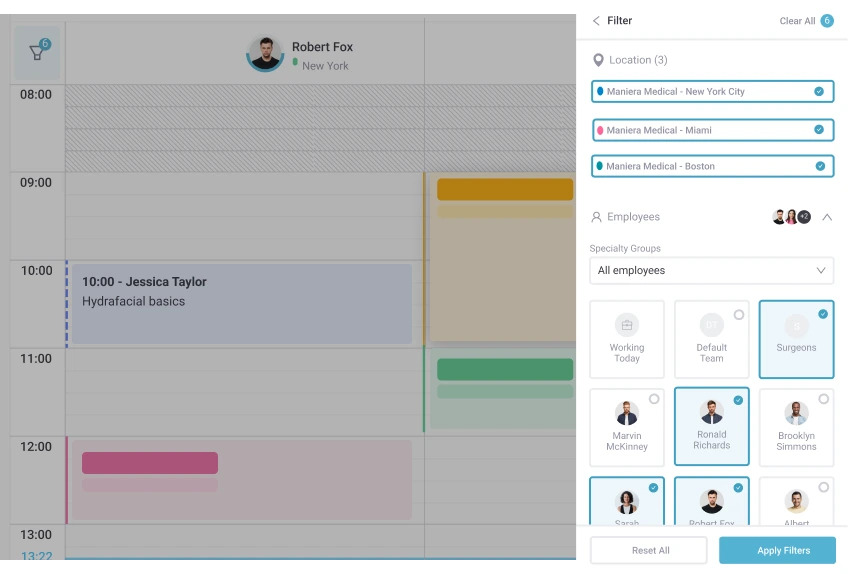
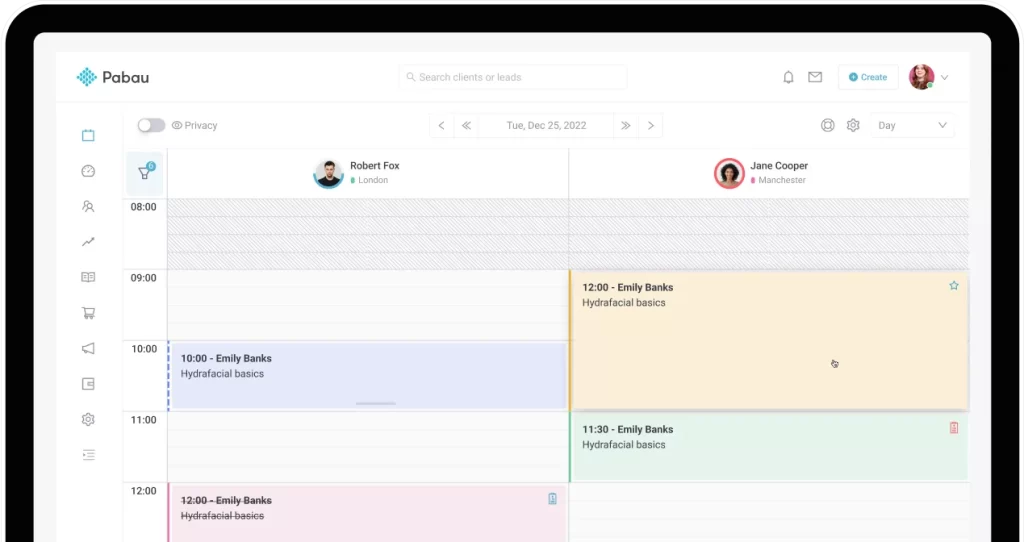
Scheduling tells a similar story. Pabau’s calendar handles multi-location environments with room and resource management, practitioner-level permissions, and automated client reminders built into the booking workflow. A clinic running three practitioners across two sites, for example, can manage availability, resource allocation, and appointment confirmations from a single interface. Carepatron’s scheduling interface is straightforward and effective for individual practitioners, but the granular resource management that larger teams rely on is not part of its core design.
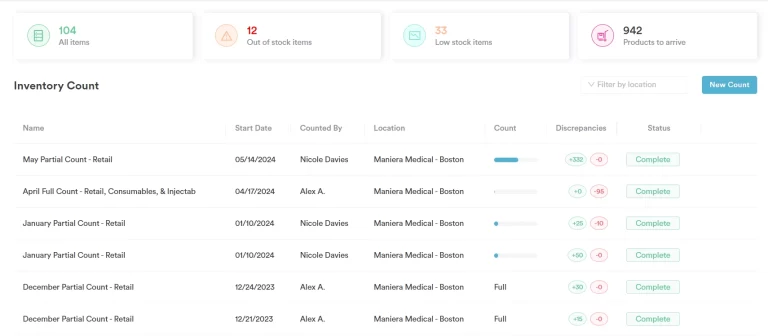
On the billing side, Pabau includes integrated invoicing, payment processing, financial reporting, and stock and inventory management. Carepatron covers invoicing and basic billing workflows, with some medical billing support targeted at general practice and allied health. For clinics that need to track product usage alongside treatment revenue, Pabau’s inventory layer adds operational value that Carepatron does not replicate.
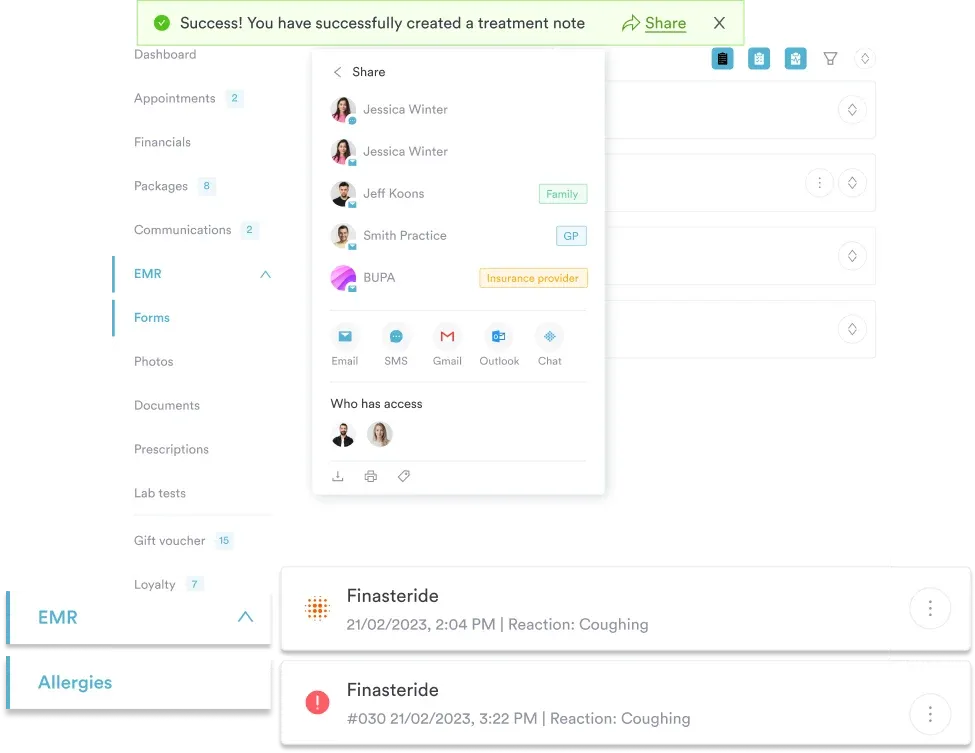
Both platforms offer a client portal and document management tools. Pabau extends this with digital consent forms, automated pre- and post-care communication, and a structured lead management workflow. These features are particularly relevant for aesthetic and cosmetic clinics where consent documentation is a compliance requirement and client journey management directly affects revenue.
Carepatron’s primary strength is accessibility. For a solo practitioner or a small two-to-three person allied health team, the platform offers a genuinely low-friction entry point. Setup is fast, the interface is clean, and practitioners can be operational quickly without extensive onboarding or configuration. That ease of use is a real advantage for clinicians who want to focus on patient care rather than software administration.
The platform’s clinical documentation tools cover the needs of many general allied health workflows. SOAP notes, customisable templates, and basic document management give solo psychologists, occupational therapists, and speech therapists a functional electronic records environment. Carepatron also reportedly offers a free tier for individual practitioners (verify current availability and feature limitations at carepatron.com/pricing), which makes it one of the more accessible options in the market for practitioners just starting out.
Integrations with tools like Stripe and Google Calendar suit individual practitioners managing their own schedules and payments. For a practitioner seeing 15-20 clients per week from a single location, the platform covers the core operational needs without the overhead of a more complex system. Telehealth is reportedly available via a Zoom integration, though current availability should be confirmed directly with Carepatron.
The limitations of Carepatron become apparent when clinic complexity increases. Multi-location management, room and resource scheduling, inventory tracking, and the kind of automated marketing workflows that growing clinics rely on are not part of Carepatron’s core feature set. A clinic adding a second location or a third practitioner will quickly find the platform’s scaling constraints.
Reporting and analytics are also more limited than what established clinics need for revenue management and performance tracking. Financial reporting, treatment outcome tracking, and staff performance analytics – the data layers that inform clinic growth decisions – are less comprehensive than platforms built specifically for multi-practitioner environments. For aesthetic or cosmetic clinics where before/after photo management and injection records are clinical and compliance requirements, Carepatron does not provide the specialty-specific tooling these workflows demand.
Pabau’s core advantage in the Pabau vs Carepatron comparison is operational depth across multiple clinic types. The platform supports aesthetic and cosmetic practices, dermatology clinics, private GP practices, physical therapy, mental health, and multi-specialty settings from a single unified system. Multi-location management, team permissions, automated client communications, and integrated financial workflows are all part of the standard offering – not add-ons that need to be stitched together.

Before/after photo management and injection plotting tools are notable differentiators for aesthetic and cosmetic practices. These features support both clinical record-keeping and compliance documentation in a way that general-purpose platforms cannot match. Combined with digital consent forms, automated pre/post-care messages, and a client portal, Pabau provides a complete patient journey workflow from booking through to follow-up.
According to Capterra reviewers, Pabau scores 4.3 out of 5 for overall performance, with positive themes around comprehensive clinic management features, strong automation tools, and helpful onboarding support. Trustpilot places Pabau at 4.4 out of 5, reflecting consistent satisfaction among multi-practitioner clinic teams. G2 records a 4.2 rating. Review counts were not available at the time of writing.
Pabau’s feature depth comes with a learning curve. New users – particularly those migrating from simpler tools or spreadsheet-based workflows – typically need time to configure the system and adopt its full capability. Reviewers on Capterra note this onboarding complexity as a recurring consideration, and some users report occasional software bugs during the platform’s ongoing development cycle.
Pricing is structured for clinic teams rather than individual practitioners. For a solo practitioner comparing Pabau vs Carepatron on cost alone, Carepatron’s lower entry price (or free tier) will be more attractive. Pabau delivers better value per user as team size and feature requirements grow – but the initial investment is higher for small or newly established practices.
Pricing is one of the clearest decision points in any Pabau vs Carepatron evaluation. Carepatron reportedly offers a free tier for solo practitioners, with paid plans designed for small teams at accessible price points – verify current plan details and feature limitations directly with Carepatron, as pricing structures change. This makes Carepatron a viable starting point for individual practitioners or very small practices with limited software budgets.
Pabau uses a subscription model priced for clinic teams, with tiered plans based on features and team size. Specific pricing is available on request at pabau.com/pricing. The value proposition shifts significantly with team size: for a clinic with four or more practitioners, the per-user cost of Pabau’s offering – relative to the depth of features delivered – becomes more competitive than entry-level platforms that charge separately for each additional capability. Solo practitioners will find Carepatron’s lower entry price more attractive; established multi-practitioner teams will typically find Pabau’s feature-to-cost ratio more favourable.
Both platforms’ pricing should be evaluated against total operational cost, not just subscription fee. A clinic using separate tools for consent forms, before/after photos, automated reminders, and inventory management will often find that a unified platform like Pabau reduces total software spend despite a higher headline price.
Before finalising your platform decision, map every software tool your clinic currently uses – scheduling, consent forms, billing, reminders, photography, inventory. Calculate the combined monthly cost. Platforms like Pabau consolidate these into one subscription, which frequently undercuts the total cost of running five separate tools. Run the numbers before defaulting to the lowest individual subscription price.

From multi-location scheduling and clinical notes to automated consent forms and financial reporting – Pabau brings your whole operation into one connected platform. Book a personalised demo and see how it fits your clinic.

Integration ecosystems reflect the intended user base of each platform. Carepatron connects with Stripe for payment processing, Zoom for video consultations, and Google Calendar for scheduling – a practical set of tools for individual practitioners managing their own workflows. The integration scope is deliberately limited to what solo and small-team users need most, which keeps setup simple but constrains more complex clinic technology stacks.
Pabau’s integrations target clinic-scale operational needs, connecting with payment processors, marketing tools, and healthcare-specific systems. For a clinic running email marketing alongside patient management, or integrating payment processing directly into the booking workflow, Pabau’s connected architecture reduces the manual reconciliation that separate tools require. Clinics operating in regulated markets also benefit from compliance management features built into the platform rather than bolted on through third-party integrations.
Support model differences are equally significant. Pabau offers dedicated onboarding support, live chat, and a knowledge base – with implementation support designed specifically for clinics migrating from existing systems. This matters for practices with complex data migration requirements or multiple practitioners who need guided setup. Carepatron’s support model leans toward self-service: documentation, email support, and community resources suited to practitioners who prefer to configure their own systems independently. Neither model is objectively superior – it depends entirely on how much hands-on support your team needs during setup and beyond.
User review data for this Pabau vs Carepatron comparison reflects a clear pattern. Pabau holds a 4.3 out of 5 rating on Capterra, a 4.4 out of 5 on Trustpilot, and a 4.2 out of 5 on G2 (review counts were not confirmed at the time of writing). Positive themes from Pabau reviewers consistently reference comprehensive clinic management features, strong automation capabilities, and helpful onboarding support. The recurring areas for improvement centre on the initial learning curve and occasional software issues during updates.
For Carepatron, verified ratings on Capterra, Trustpilot, and G2 were not available at the time of writing – review profiles for Carepatron on major platforms either were not confirmed or did not have published scores. Based on product positioning and user community feedback, the consistent themes are ease of setup, an accessible entry price, and a clean interface well-suited to solo practitioners. Clinicians who have outgrown Carepatron frequently cite the need for more advanced reporting, better multi-practitioner coordination tools, and specialty-specific clinical documentation as reasons for migrating to platforms with greater depth.
The asymmetry in available review data is itself informative: Pabau has a more established track record on independent review platforms, reflecting a larger and more diverse user base across clinic types and sizes. When evaluating practice management software for a growing clinic, the volume and breadth of verified user reviews on independent platforms is a useful signal of market maturity.
The decision in any Pabau vs Carepatron evaluation depends on where your practice is today and where it is heading. Three questions clarify the choice quickly: How many practitioners work at your clinic? Do you operate across more than one location? Does your clinical workflow require specialty-specific documentation – consent forms, before/after photography, injection records?
Choose Carepatron if you are a solo practitioner or a small allied health team (two to three practitioners), you prioritise ease of setup over feature depth, and your practice operates from a single location with straightforward scheduling and billing needs. The platform’s reported free tier makes it a low-risk starting point for practitioners who are new to digital practice management.
Choose Pabau if you run a multi-practitioner clinic – whether in aesthetics, dermatology, private GP, physical therapy, mental health, or a multi-specialty setting – and you need a platform that handles scheduling, clinical documentation, consent management, financial reporting, and automated client communications in one connected system. Pabau is also the stronger choice for any clinic planning to scale, add locations, or increase team size over the next 12-24 months.
Practical use cases sharpen this Pabau vs Carepatron comparison beyond feature lists. Consider a dermatology clinic with five practitioners across two sites: they need multi-location calendar management, before/after photo records for each treatment, digital consent documentation for regulated procedures, and financial reporting that consolidates revenue across both sites. Pabau handles all of these within a single platform; Carepatron does not offer the tools that workflow requires.
Contrast that with an independent occupational therapist running a private practice from a single consulting room, seeing 18 clients per week. They need scheduling, SOAP notes, invoicing, and a basic client portal. Carepatron’s interface is well-matched to that workflow, and the lower subscription cost (or free tier) makes financial sense for a solo operation at that scale.
For medical spa practices, skin clinics, and mental health practices that are growing – adding practitioners, expanding services, or considering a second location – the platform decision made today has a compounding effect on operational efficiency over the following years. Migrating between platforms mid-growth is costly and disruptive. Choosing a platform with the capacity to scale from the outset avoids that transition overhead.

Need a detailed Carepatron alternative overview? Carepatron Alternatives covers the leading practice management platforms across different clinic types and sizes.
Evaluating Pabau against the broader market? Pabau Competitors and Alternatives provides a structured breakdown of how Pabau positions against other clinic management solutions.
Want to understand what clinic software should include? Clinic Management Software Buyer’s Guide outlines the key features and questions every clinic owner should evaluate before committing.
Looking at practice management features in depth? Practice Management Software Features explains the core capabilities that separate basic scheduling tools from full clinic operating systems.
The Pabau vs Carepatron comparison resolves differently depending on practice scale and complexity. Carepatron offers a clean, accessible entry point for solo practitioners and small allied health teams who need core scheduling, clinical notes, and invoicing without a steep learning curve or high initial cost. That is a genuine strength for the audience it is designed to serve.
Pabau operates at a different level of clinical and operational depth. For multi-practitioner clinics across aesthetics, dermatology, private medicine, physical therapy, and multi-specialty environments, Pabau provides the scheduling infrastructure, clinical documentation tools, compliance features, automation workflows, and financial reporting that complex practice management requires. The automated workflows, team management, and multi-location capabilities are built for clinics that have moved beyond the solo practitioner model.
If your clinic is growing – or you anticipate growth – choosing a platform with the operational depth to support that trajectory is a decision worth making early. Pabau is built for that journey.
It depends on team size and workflow complexity. Carepatron is better suited to solo practitioners and very small teams (two to three people) who need a simple, low-cost solution. Pabau is the stronger choice for small clinics with multiple practitioners, specialty-specific documentation needs, or plans to grow – it scales in ways Carepatron does not.
Pabau’s scheduling supports multi-location environments, room and resource management, and advanced automated reminders integrated into the booking workflow. Carepatron offers straightforward calendar scheduling well-suited to individual practitioners from a single location. For clinics with multiple practitioners or sites, Pabau provides significantly more granular scheduling control.
Carepatron reportedly offers a free tier for solo practitioners and lower-priced paid plans, making it less expensive at the individual practitioner level. Pabau is priced for clinic teams and delivers greater value per user as team size and feature requirements grow. Total operational cost – including any separate tools you currently use – should factor into the comparison.
Carepatron provides invoicing and basic billing features with some medical billing support targeted at general practice and allied health practitioners. For clinics needing comprehensive financial reporting, inventory management integrated with billing, or multi-location revenue consolidation, Pabau’s billing capabilities are more extensive. Verify current Carepatron billing features directly with the vendor.
Carepatron is used primarily by solo practitioners and small allied health teams – psychologists, occupational therapists, speech therapists, and general practitioners in small private practices. Pabau serves a broader range of clinic types including aesthetic and cosmetic clinics, dermatology practices, medical spas, private GP and wellness clinics, physical therapy, mental health practices, and multi-specialty or multi-location healthcare operations.