Primary & Preventive Care
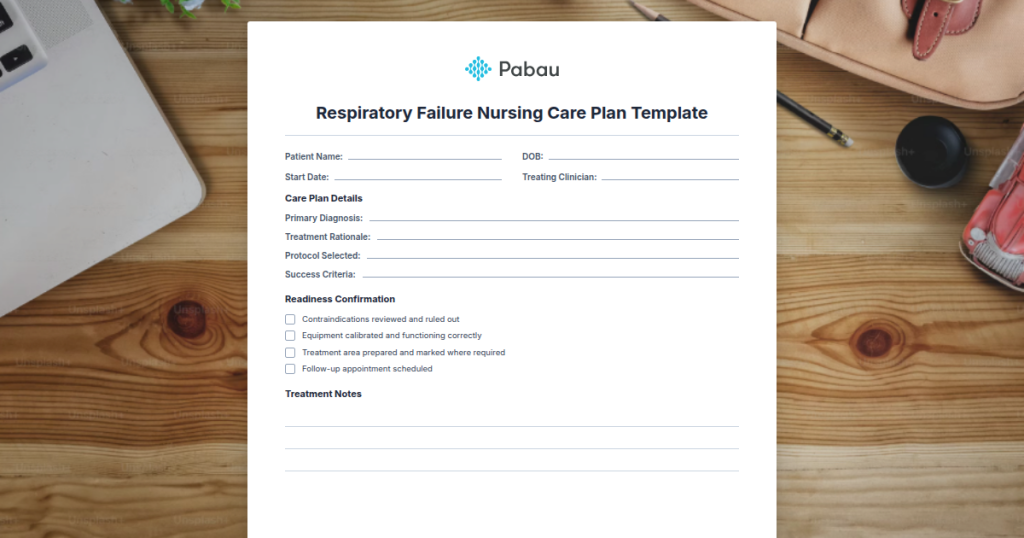
Respiratory Failure Nursing Care Plan Template
A Respiratory Failure Nursing Care Plan Template provides clinicians with a syst...

March 17, 2026


Buy now, pay later is now available in Pabau

Obtain written authorisation from parents before treating minors.
Meet HIPAA and state-specific legal requirements for minor consent.
Document treatment plans and risk disclosures in a single form.
Support digital signatures for faster consent capture workflows.
Protect your clinic from liability with comprehensive parent communication.
A parental consent form is a legally binding document that authorises healthcare providers to deliver treatment to minors. By securing informed consent from parents or legal guardians, you establish clear communication about proposed treatments, create a documented record of authorisation, and protect your clinic against liability. This guide explains what parental consent forms are, why they matter in healthcare practice, and how to implement them effectively in your clinic workflows.
A ready-to-use template covering patient details, parental contact information, treatment authorisation, risk disclosure, consent declarations, and digital signature capture for minor patients.
Download templateA parental consent form is a legal document that documents a parent’s or legal guardian’s authorisation for a healthcare provider to treat a minor patient. It establishes informed consent, creates a documented record that protects your clinic, and ensures compliance with healthcare regulations governing treatment of minors.
The form captures essential information: the minor’s full name, date of birth, and medical history relevant to the proposed treatment. It includes the parent’s or guardian’s contact details, relationship to the child, and signature. Research on parenting styles and child development shows that parents’ decision-making approaches influence how they evaluate treatment options for their children.
Most importantly, it documents the parent’s understanding of the proposed treatment, risks, and explicit authorisation to proceed. Digital forms can automate this capture process, improving speed and accuracy.
Legally, parental consent forms serve as evidence that you have fulfilled your duty of care. By securing written consent before treatment, you demonstrate that parents understood the procedure, had the opportunity to ask questions, and chose to proceed knowingly. Research on understanding parental consent procedures shows that altruistic motivations and desire to contribute to medical knowledge influence parents’ healthcare decisions for their children.
This protects your clinic in disputes.
Under HIPAA regulations, minors’ health information requires parental authorisation. In most jurisdictions, parents or legal guardians must consent to medical treatment for children under 18 years old, with limited exceptions for emergency care or specific situations. Research on parental consent in pediatric research shows that parents balance multiple factors when making healthcare decisions for their children.
, with limited exceptions for emergency care or specific situations.
Implementing a parental consent form in your clinic workflow ensures consistent practice and regulatory compliance. Follow these five operational steps to capture consent effectively.
Digital consent capture streamlines this workflow. Forms completed electronically and signed digitally reduce paper handling and create time-stamped records automatically linked to patient charts.

Pabau's digital forms let parents complete and sign consent forms before arrival. Reduce paperwork, speed up check-in, and keep compliant automatically.

Any healthcare practice treating minors must use parental consent forms. This spans multiple clinical settings and specialities.
Mental health clinics and therapists working with young patients need consent forms because parents must authorise ongoing psychological treatment, medication recommendations, and clinical note-keeping. A parental consent form documents the parent’s understanding of confidentiality boundaries. Mental health practice management software can automate consent workflows.
Physical therapy and rehabilitation clinics treat pediatric patients recovering from sports injuries or surgery. Parents must consent to the specific exercises, techniques, and frequency of treatment. A consent form documents understanding of potential soreness and expected outcomes. Physical therapy EMR systems help manage pediatric treatment plans alongside consent documentation.
Aesthetic and cosmetic practices increasingly treat adolescents seeking minor procedures (skin treatments, laser therapies). Parental consent is legally required and clinically essential to ensure parents understand the procedure, costs, and aftercare.
Speech therapy, occupational therapy, and special education clinics working with children often require parental consent. Treatment may extend over months and parents need to reinforce techniques at home. Consent forms establish shared responsibility for progress.
Primary care clinics and private GPs treating minors for acute or chronic conditions use parental consent forms to document authorisation for specific treatments or medications.
Implementing a standardised parental consent form delivers operational and legal benefits that strengthen your clinic’s compliance and patient safety culture.
Legal protection and liability mitigation. A signed parental consent form is evidence that you obtained informed authorisation before treatment. If a complication arises or a parent disputes the decision, the form demonstrates you disclosed risks and obtained explicit permission. This protection is essential if your clinic faces complaints or regulatory inspection.
Regulatory compliance. HIPAA, state child protection laws, and professional licensing boards all expect documented parental authorisation for minor treatment. During CQC inspections or audits, reviewers check that you have consent documentation for all minors treated. A compliance management system ensures consistent documentation across your clinic.
Parent engagement and operational efficiency. A thorough consent form opens dialogue. Parents understand the procedure and risks, ask questions before signing, and feel informed. This reduces misunderstandings and post-treatment complaints. Digital consent forms completed before appointments reduce clinic check-in time and eliminate paper shuffling.
Clinical safety. A consent form forces explicit discussion of the specific treatment planned, risks, and alternatives. Following best practices in pediatric consent ensures that providers address both parental concerns and children’s developmental capacity to participate in decisions.
This clarity protects the child and clinician by ensuring informed consent is documented.
Document refusal or deviation. If a parent declines a treatment recommendation or requests a modification to the proposed plan, note this explicitly in the patient record and obtain a new signed consent reflecting the agreed-upon approach. Never proceed with treatment a parent has refused, and always document the decision and reasoning in the clinical note. This protects both the child and your clinic.
The Health Insurance Portability and Accountability Act (HIPAA) establishes strict rules for handling minor patients’ health information. Understanding these rules is essential for legally compliant parental consent workflows.
Parental access and privacy. Under HIPAA, parents generally control their child’s health information until age 18. However, some state laws create exceptions. Adolescents may consent independently to mental health treatment, substance abuse care, or sexual health services in certain states, limiting parental access to those specific records. The adolescent independent consent rights under HIPAA vary by state law and treatment type, requiring providers to understand specific circumstances where parental access may be denied.
Your consent form should clarify what information parents will receive and what information the clinician may keep confidential by law. HIPAA compliance guidance can help structure these privacy disclosures.
Consent for disclosure and use of information. When obtaining parental consent for treatment, obtain explicit consent for how the minor’s health information will be used-shared with schools, other healthcare providers, or insurance companies. A comprehensive parental consent form includes checkboxes documenting parental authorisation for these uses.
Emergency treatment and independent consent. HIPAA permits treatment of minors without parental consent in genuine emergencies where the child’s life is at immediate risk. After emergency care, document the circumstances and notify the parent. Some states also allow minors (often 14-17) to consent independently to specific treatments like mental health care or contraception, requiring separate consent language in your form. Parents’ rights in medical decisions can be limited when state law determines the child’s best interest requires independent consent. (often 14-17) to consent independently to specific treatments like mental health care or contraception, requiring separate consent language in your form.
Real-world family structures complicate consent workflows. Many minors have two parents, divorced parents, stepparents, foster parents, or court-appointed guardians. A robust parental consent form must address these variations.
Who can consent: custody, guardianship, and foster care. In intact families, both parents may sign. In separated families, typically the custodial parent (or both if shared custody) must consent. A stepparent or grandparent may lack legal authority unless they have formal guardianship. Children in state foster care have legal guardians appointed by child protective services; the foster parent usually handles day-to-day decisions, but you may need to contact the state agency for certain treatments. Verify the consenting adult’s legal relationship to the child before proceeding. Research on parental permission and child assent highlights the importance of understanding family dynamics and decision-making capacity in healthcare consent.
Client management systemsallow you to record guardian details and custody status in the patient profile.
Emancipated minors and emergency treatment. Some states recognise “emancipated minors”-adolescents under 18 with legal independence through court order. Emancipated minors can consent to their own medical treatment. If a child arrives for emergency care and no parent can be reached despite reasonable efforts, ethical guidance for minors permits emergency treatment to prevent death or serious injury, medical ethics guidelines permit emergency treatment to prevent death or serious injury. Document the circumstances in the medical record and attempt to notify the parent afterward to obtain retroactive consent for any follow-up treatment. Understanding barriers to pediatric clinical participation helps providers address parental concerns more effectively during the consent process.
to obtain retroactive consent for any follow-up treatment.

How do you capture consent digitally without paper? Digital Forms enable parents to complete and sign parental consent forms on tablets or phones before check-in, automatically storing signatures in the patient record.
How can you ensure minor patient records stay compliant? Compliance Management Software tracks consent documentation and audit trails for regulatory readiness.
How do you link consent to appointment workflows? Client Records store signed parental consent forms alongside treatment notes, allowing clinicians to verify consent before each appointment.
A parental consent form is more than a legal requirement-it is a foundation for ethical practice and operational clarity. By documenting parental authorisation, disclosing treatment risks, and establishing clear communication, you protect minors, build parent trust, and shield your clinic from liability.
Whether you work in mental health, physical therapy, aesthetics, or primary care, a standardised form tailored to your jurisdiction and clinical context ensures consistent compliance. Digital consent workflows accelerate the process further, enabling parents to sign securely and instantly linking signatures to patient records.
Use the template provided here as your starting point. Customise it for your specific treatments, local regulations, and clinic workflow. Train your team on proper consent documentation and storage. Review consent practices annually to remain aligned with changing regulations and clinical standards.
This varies by jurisdiction and treatment type. Most states allow minors to consent independently to mental health, sexual health, and substance abuse treatment at ages 14-16. Always check your state law.
Do not proceed with non-emergency treatment. Document the refusal, note the parent’s reason, and file in the patient record. Discuss alternatives or reschedule when consent can be obtained.
Generally, retain forms for 3-7 years after the last treatment. Some states require retention until the child reaches age 18 plus an additional period. Consult your state medical board for specific rules.
Yes. Most jurisdictions recognise digital signatures as legally equivalent to handwritten signatures under the Uniform Electronic Transactions Act (UETA) or similar laws. Ensure your platform timestamps the signature and securely stores the document.
Typically, one comprehensive parental consent form covers ongoing treatment. If the treatment plan changes significantly or a new procedure is introduced, obtain updated consent. Minor variations within the original plan do not require new signatures.