Primary & Preventive Care Wellness
Small Bowel Obstruction Nursing Care Plan Template
A comprehensive small bowel obstruction nursing care plan template provides stru...

March 13, 2026

Discover free eBooks, guides and med spa templates on our new resources page


Buy now, pay later is now available in Pabau

Read case studies from our satisfied clients

Compare Pabau with alternative systems
 Integrations
 Measure Pabau savings
  Our security commitment
  About us
Learn why this holistic care and aesthetic medicine clinic chose Pabau to power patient care and performance.
Read more

Collect medical history and contraindication screening before appointments
Streamline consent documentation with pre-built template sections
Ensure HIPAA and CQC compliance with standardised capture
Use digital intake to reduce administrative time onsite
Link patient responses directly to clinical decision-making
A hair transplant intake form is the clinical foundation for safe, compliant patient onboarding in hair restoration clinics. This standardised form captures essential medical history, screens for contraindications (Finasteride use, bleeding disorders, psychological readiness), and documents informed consent before FUE or FUT procedures. By collecting medical data digitally before the consultation appointment, clinics reduce on-site administrative time, enable clinicians to review flagged conditions in advance, and maintain audit-ready documentation for regulatory bodies like the CQC (Care Quality Commission) and HIPAA compliance. This guide explains how to implement a hair transplant intake form template, what sections a comprehensive form should include, and how the form workflow integrates with clinical assessment and treatment planning.
The Hair Transplant Intake form template above is a ready-to-use clinical tool designed for hair restoration clinics. It captures comprehensive medical history across 24 key assessment areas-including cardiovascular health, medication interactions (Finasteride, Minoxidil), previous hair loss treatments, bleeding risk, and psychological readiness. The form includes contraindication screening, consent declarations with signature blocks, and automated field mapping into your clinic management system for immediate clinical review. Download the form as a PDF and customise it to match your clinic’s branding and specific protocols.
A comprehensive medical history intake form for hair transplant clinics to assess patient eligibility, capture contraindications, and gather treatment consent.
Download template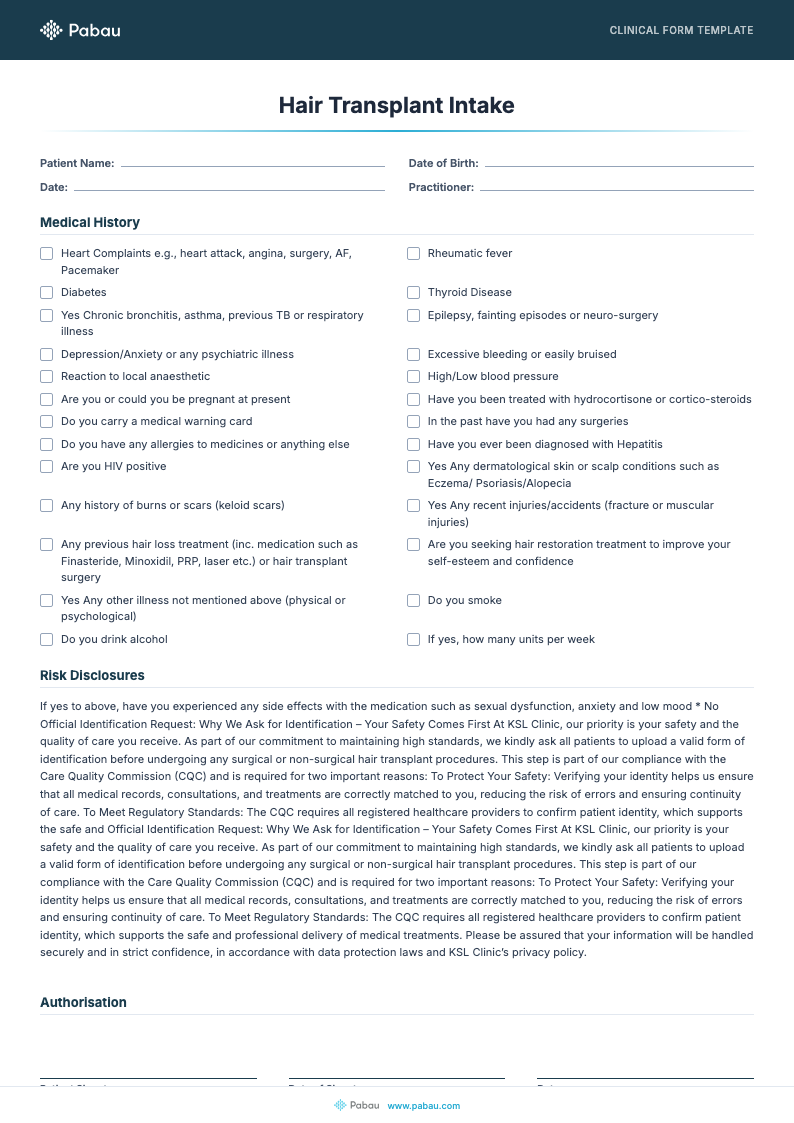
A hair transplant intake form is a medical document that collects structured patient information before hair restoration treatment begins. It serves three critical functions: (1) medical screening to identify contraindications (active infections, uncontrolled bleeding disorders, certain medications like Finasteride that require special protocol); (2) informed consent documentation that establishes the patient has understood procedure risks, recovery expectations, and limitations; and (3) baseline clinical assessment of hair loss pattern, donor area viability, and patient goals.
The form captures medical history spanning cardiovascular health, diabetes, thyroid disease, psychiatric conditions, medication use, allergies, and previous hair treatments. It also screens for lifestyle factors-smoking, alcohol use-that affect healing outcomes. Patients provide responses digitally before arriving for consultation, enabling clinicians to review flagged items and adjust treatment protocols in advance.
From a regulatory standpoint, a completed hair transplant intake form is a mandatory compliance document. Under Care Quality Commission (CQC) regulations, all registered healthcare providers must maintain documented evidence of informed consent before surgical procedures. The form creates an audit trail demonstrating that clinicians screened for absolute contraindications-bleeding disorders, active anticoagulation, certain cardiac conditions-before proceeding. Under HIPAA requirements, the form is a patient medical record subject to strict confidentiality and data protection protocols.
The Hair Transplant Intake form workflow follows five operational steps, each aligned to the actual form sections designed for comprehensive patient screening.

Pabau's digital forms system automates patient intake and consent capture, eliminating paper, reducing administrative time, and ensuring every response feeds directly into clinical notes.

Hair transplant intake forms are essential for any clinic performing hair restoration procedures, including FUE (Follicular Unit Extraction) and FUT (Follicular Unit Transplantation) surgeries.
Hair Transplant Clinics. Dedicated hair restoration practices relying on high-volume patient throughput need standardised intake workflows to screen large numbers of candidates quickly while maintaining compliance. An intake form template cuts administrative burden on clinical staff.
Cosmetic Surgery Practices. General cosmetic surgery clinics offering hair transplants alongside facelift, rhinoplasty, or body contouring procedures benefit from a hair-specific intake form that captures procedure-unique contraindications and consent language.
Dermatology Clinics. Dermatologists performing hair transplants or supervising mid-level providers need intake documentation that screens for dermatological conditions (keloid scarring, active psoriasis, traction alopecia) that influence graft survival and patient candidacy.
Multi-Location Aesthetic Groups. Chains operating multiple hair transplant clinics across regions use standardised intake templates to ensure consistent screening protocols, reduce clinician liability variation, and maintain unified compliance documentation across locations.
Regulatory Compliance and Audit Readiness. The CQC requires documented evidence that clinicians obtained informed consent before surgical procedures. A standardised hair transplant intake form creates this audit trail. Completed forms demonstrate that your clinic screened for contraindications, explained risks, and captured patient signature-all mandatory for regulatory inspection.
Reduced Clinician Liability. Written documentation that the patient disclosed bleeding disorders, current anticoagulation therapy, or psychiatric medications protects clinicians if adverse outcomes occur post-operatively. The hair transplant consent form creates an objective record of what the patient knew and agreed to before treatment.
Faster Clinical Decision-Making. By collecting medical history before the appointment, clinicians review responses in advance, identify flagged conditions, and have time to prepare modified protocols or additional patient counselling. This reduces in-appointment delays and improves consultation efficiency.
Streamlined Administrative Workflow. Paper intake forms require manual data entry, filing, and retrieval. Digital forms auto-populate the patient record, eliminate transcription errors, and link responses directly to clinical notes. Clinic staff save time on administrative overhead, freeing capacity for patient care.
Data Privacy and Security. HIPAA-compliant and GDPR-aligned digital forms encrypt patient medical data, create immutable audit logs, and ensure data is stored securely. Paper forms carry higher risk of loss, unauthorised access, or mishandling.
Patient Experience and Completion Rates. Patients completing forms at home (rather than in a crowded waiting room) report higher satisfaction and accuracy. Remote completion reduces on-site time spent on paperwork, improving the perceived patient experience.
Request that patients upload a valid form of identification along with their hair transplant intake form. Many clinics discover post-appointment that patients misrepresented age, medical history, or medication use. A government-issued ID cross-check (driver’s license, passport) before the appointment flags discrepancies early, reduces procedural risk, and strengthens your compliance documentation against regulatory review.
Contraindication screening is the hair transplant intake form’s core clinical function. Hair transplant procedures involve surgical wounding (in FUT) or micro-extractions (in FUE), local anaesthetic infiltration, and days of healing with restricted activity. Patients with certain medical conditions face higher complication risk.
Absolute Contraindications. Active bleeding disorders (haemophilia, Von Willebrand disease), current anticoagulation therapy (warfarin within 5-7 days of procedure), uncontrolled hypertension, or recent myocardial infarction typically preclude hair transplant surgery. Patients disclosing these conditions during intake screening should be counselled to defer treatment or seek cardiology clearance before proceeding with any hair transplant consent form execution.
Relative Contraindications. Diabetes, thyroid disease, and psychiatric conditions (anxiety, depression) don’t automatically disqualify patients but require additional monitoring and sometimes modified protocol. A diabetic patient, for example, may proceed with enhanced infection prevention and closer post-operative follow-up. The intake form’s contraindication screening identifies these earlier to enable clinician preparation.
Medication Interactions. Finasteride (Propecia), commonly prescribed for hair loss prevention, may increase bleeding risk during FUE extraction. Minoxidil (Rogaine) can cause scalp irritation if applied post-operatively too soon. The hair transplant patient form captures these medication histories so clinicians can adjust post-operative care instructions or timing of treatment. Contraindication screening in the intake form enables this advance planning before appointment time, reducing no-shows due to disqualification and allowing clinicians to develop individualised protocols.
Beyond contraindication screening and informed consent capture, the hair transplant intake form collects baseline patient goals and lifestyle factors that shape recovery protocols. This contextual information allows clinicians to develop personalised aftercare plans before the patient leaves the clinic, improving compliance and satisfaction with outcomes.
Smoking and Alcohol Use. The intake form screens for smoking frequency and alcohol consumption (weekly units). Smoking reduces blood flow to the scalp, impairing graft survival; alcohol thins the blood, increasing bruising and swelling. Patients disclosing heavy smoking or alcohol use need enhanced post-operative counselling about temporary abstinence periods to optimise outcomes. This screening data allows clinics to tailor patient experience resources to address specific risk factors identified during intake.
Psychological Readiness. Hair transplant outcomes develop over 6-12 months as grafts establish and hair grows. Patients with unrealistic expectations or those pursuing treatment primarily for self-esteem without stable life context may experience dissatisfaction. The intake form includes questions about motivations for treatment (improving confidence, addressing specific areas of thinning versus seeking complete baldness reversal). This allows clinicians to assess psychological readiness and adjust patient education accordingly, ensuring the hair transplant consent form discussions address emotional as well as medical factors.
Previous Hair Loss Treatments. Patients who have used Finasteride, Minoxidil, PRP, or laser therapies provide baseline data on what has and hasn’t worked. This informs realistic outcome discussion and helps clinicians explain why transplantation may succeed where medical therapy did not. Integrating this data into compliance documentation and individualised aftercare instructions-written or video-improves patient compliance and satisfaction with the transplant outcome.

How can you streamline digital consent workflows? Pabau’s Digital Forms enable automated intake capture, conditional logic for contraindication follow-up, and digital signature integration directly into patient records.
What documentation standards apply to your clinic? HIPAA Compliance for Clinic Software outlines regulatory requirements for patient medical records, data encryption, and audit logs relevant to intake form storage and management.
How do you manage compliance for aesthetic procedures? Hair Clinic CRM Software covers operational workflows for hair transplant clinics, from intake through treatment planning to post-operative follow-up and compliance tracking.
A hair transplant intake form is no longer optional-it is a regulatory and clinical necessity. By capturing medical history, contraindication screening, and informed consent before the appointment, clinics reduce liability, improve clinical decision-making, and demonstrate compliance to regulatory bodies like the CQC. The form transforms patient onboarding from a time-consuming paper process into an automated, secure, audit-ready workflow that protects both clinicians and patients.
Using a pre-built template like the Hair Transplant Intake form above accelerates implementation, ensures consistent screening across your clinic team, and immediately creates the documentation evidence required during regulatory inspection. Clinics that implement digital intake forms report faster consultation times, fewer missed contraindications, and higher patient satisfaction-making the form an investment in both safety and operational efficiency. For best-practice guidance on hair transplant contraindications and screening protocols, consult the International Society of Hair Restoration Surgery (ISHRS). Using a clinic management system that integrates intake forms ensures that every completed form feeds directly into clinical workflows and compliance records.
Reviewed against current CQC and HIPAA compliance requirements for healthcare intake documentation.
Complete the hair transplant intake form digitally 24-48 hours before your appointment. Gather information about your medical history, current medications, previous hair treatments, and lifestyle factors (smoking, alcohol use). Bring a valid government-issued ID for identity verification. This preparation allows the clinic team to review your medical history in advance and prepare any additional screening questions.
Digital form completion typically takes 10-15 minutes. In-clinic consent review and consultation with the clinician add 30-45 minutes. The total appointment time allows for thorough medical review without rushing informed consent discussions.
Many clinics now offer virtual consultations following intake form completion. Digital forms enable clinicians to review your medical history and contraindications before the video call, making the session more efficient and focused on treatment planning rather than information gathering.
Disclose any medication changes or accidental doses to your clinical team immediately after the appointment but before treatment. Certain medications (anticoagulants, NSAIDs) increase bleeding risk and require procedural modifications or deferral. The intake form capture ensures your team has a baseline medication record for comparison.
Your clinician will advise based on your intake form responses. Common guidance includes stopping vitamin E, fish oil, and aspirin 5-7 days before surgery to reduce bleeding. Some clinics recommend biotin or zinc for scalp health post-operatively based on intake screening results.
Finasteride does not need to be stopped before surgery, but your clinician may adjust post-operative instructions due to its mild anticoagulant effect. The intake form flags this medication so your team can provide tailored guidance aligned with your specific clinical profile.