Primary & Preventive Care
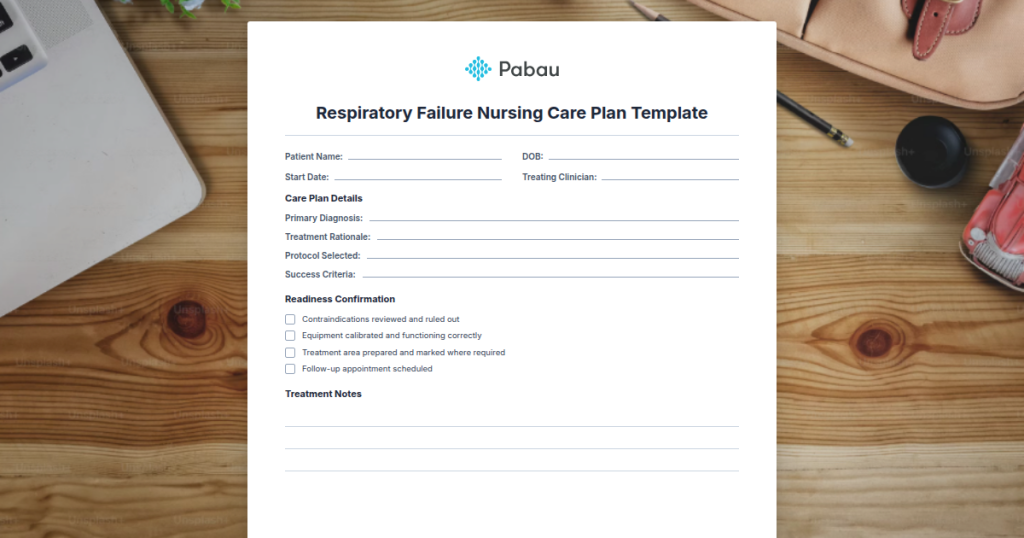
Respiratory Failure Nursing Care Plan Template
A Respiratory Failure Nursing Care Plan Template provides clinicians with a syst...

March 17, 2026


Buy now, pay later is now available in Pabau

Case management intake forms collect essential client information for assessment and care planning.
Structured templates improve consistency and reduce documentation errors across care teams.
HIPAA-compliant intake processes protect client confidentiality and meet regulatory requirements.
Digital intake forms streamline workflows and auto-populate client records for faster care coordination.
Multi-disciplinary teams use shared intake data to coordinate services and identify client priorities.
A case management intake form is the foundation of effective client assessment. It captures critical information-demographics, medical history, referral sources, risk factors, and care needs-that guides service delivery and ensures clinicians have complete context before first contact. Whether serving mental health clients, medical case management populations, or social work cases, a well-designed intake process sets the tone for coordinated care and compliance.
This guide explores how to use a case management intake form template, what sections matter most, and why structured intake workflows improve both client outcomes and operational efficiency. We’ll also show you how digital intake tools eliminate paper-based bottlenecks and integrate directly into care coordination platforms.
A structured intake form for comprehensive client assessment, covering client demographics, medical history, referral sources, risk assessment, eligibility screening, consent declarations, and care coordination information.
Download templateA case management intake form is a structured clinical document that gathers essential information about clients entering case management services. It serves as the first formal assessment touchpoint, creating a baseline record that informs care planning, eligibility determination, and service coordination across practitioners and teams.
The form typically captures five key information domains: client demographics and contact details; medical and psychosocial history; referral sources and reason for referral; risk assessment findings; and initial eligibility screening. This structured approach ensures no critical information is overlooked and creates a consistent record for multi-disciplinary teams to reference.
From a regulatory perspective, intake forms serve as documentation evidence for HIPAA compliance, CQC standards in the UK, and state-level case management licensing regulations. They establish informed consent, confirm confidentiality acknowledgement, and create an audit trail showing clinicians have completed proper initial assessment before service delivery begins.
Well-designed intake forms reduce duplicate data entry, improve care continuity, and signal to clients that their needs will be assessed thoroughly and respectfully.
Using a case management intake form effectively requires a structured five-step process that balances thoroughness with client engagement. Each step builds on the previous one, creating a complete assessment snapshot by the time the form is submitted.
Digital intake forms (using digital intake solutions) can streamline this process by auto-populating client names across all sections, auto-calculating risk scores, and triggering follow-up tasks automatically when high-risk flags are detected.

Streamline client onboarding, eliminate paper forms, and auto-populate care plans-all in one unified platform.

Case management intake forms are essential across multiple healthcare and social service settings. Mental health clinics and psychology practices use them to assess presenting concerns, safety risk, and treatment readiness before engagement. Social work agencies rely on intake forms to determine eligibility for case management services and establish baseline needs for vulnerable populations.
Primary care and integrated behavioral health settings use case management intake forms to identify patients needing care coordination support-those with multiple chronic conditions, frequent emergency department use, or social determinants of health barriers. Occupational therapy and rehabilitation programs use structured intake forms to document functional limitations and set rehabilitation goals before treatment begins.
Multi-location practices and franchises benefit significantly from standardized intake forms because they ensure consistent assessment across all locations and multi-location team coordination. A case manager can access complete intake information recorded by colleagues at another site, reducing redundant questioning and accelerating care continuity.
Compliance and legal protection. Structured intake forms document that clinicians have completed required initial assessment before service delivery. This creates an audit trail satisfying CQC inspections, regulatory compliance requirements, and state licensing board standards. A complete intake record is your strongest defence in clinical negligence disputes because it demonstrates informed decision-making and client consent.
Workflow efficiency and time savings. Standardized forms eliminate clinician time spent designing custom assessment questions or worrying about what information to capture. Case managers can complete intakes in 15-20 minutes instead of 30-40, freeing capacity for relationship-building and care planning. Digital forms save an additional 10-15 minutes per client by auto-populating fields and eliminating data re-entry into electronic records.
Multi-disciplinary coordination. Intake data visible to all team members (physicians, therapists, social workers, care coordinators) means everyone understands client context. Risk flags, family dynamics, and social determinants of health are documented once and accessible to all, reducing siloed decision-making and improving integrated care quality.
Risk identification and safety. Systematic risk screening during intake captures suicide, abuse, substance dependence, and homelessness indicators that unstructured conversation might miss. Early risk identification allows clinicians to implement safety plans immediately rather than discovering acute needs weeks into treatment.
Client engagement and transparency. A well-structured intake form signals to clients that their needs will be assessed carefully and their information treated respectfully. Using a client portal to deliver intake forms digitally improves accessibility-clients complete forms on their own time, from their devices, before attending their first appointment.
Build conditional logic into your intake form so questions adapt based on client responses. If a client indicates substance use history, the form automatically displays deeper screening questions about frequency and treatment history. This reduces form length for clients who don’t need those sections, improving completion rates and client experience.
Modern case management rarely happens in isolation. Clients often see multiple practitioners-primary care physicians, mental health counsellors, social workers, occupational therapists-across different clinic locations or agencies. A comprehensive intake form becomes the shared reference point that connects these practitioners and prevents duplicated assessment.
When intake data is captured in a shared client management system, every team member can see presenting problems, risk factors, and service history. A therapist reviewing a client’s psychiatric history can see the occupational therapist’s functional assessment notes. A care coordinator tracking eligibility for housing support can see the social worker’s assessment of family dynamics. This transparency improves decision-making and prevents clinicians from contradicting each other’s recommendations.
Standardized intake sections also improve handoffs between care settings. When a client transitions from acute psychiatric care to outpatient therapy, the outpatient clinician already has essential context from the hospital intake form. When a client moves between case managers due to caseload changes, the new case manager doesn’t start from zero-the prior intake form documents what was already assessed.
Case management intake forms capture sensitive personal information: mental health diagnoses, substance use history, abuse trauma, financial hardship, and social vulnerabilities. Protecting this data is both a legal obligation and an ethical imperative to client trust.
HIPAA regulations require that intake forms containing protected health information be stored in encrypted systems with access limited to authorised team members. Paper intake forms must be stored in locked cabinets in restricted-access areas. Digital forms should use role-based access control so case managers see only the intake data relevant to their assigned clients, not entire clinic intakes.
Data retention policies matter too. Most jurisdictions require case management records (including intakes) be retained for 6-7 years after discharge. Establish a protocol for secure destruction of paper records and a clear deletion schedule for digital records once retention periods expire. Include data security and retention language in intake form consent sections so clients understand how long their information will be kept and how it will be protected.
Using AI-assisted documentation tools can improve security by reducing clinician manual typing on shared computers and centralizing data in a single encrypted platform rather than scattered across email, paper, or spreadsheets.

Need to capture client information without paper forms? Digital Forms eliminate paper intake workflows and auto-populate client records, reducing data entry time and improving accuracy.
Want to speed up clinical documentation? Echo AI Scribe can assist with case note generation after intake, capturing assessment findings and care plans with minimal typing.
Looking to track client progress post-intake? Measurements Tracking allows case managers to monitor client outcomes and adjust care plans based on objective progress data.
A well-designed case management intake form is more than administrative requirement-it’s the clinical foundation for effective, coordinated care. By systematically capturing client demographics, history, risk factors, and service needs, intake forms enable clinicians to make informed decisions, coordinate across teams, and identify safety priorities from day one.
Whether using paper or digital formats, the principles remain the same: consistency, completeness, clarity, and compliance. Standardized intake workflows reduce clinician burden, improve client experience, and create the documentation evidence that satisfies regulators and supports clinical accountability.
Reviewed against current HIPAA regulations, CQC standards, and case management best practices.
Essential sections include client demographics and contact details, medical and psychosocial history, referral source and presenting problem, risk assessment screening (suicide, abuse, substance dependence), service eligibility determination, informed consent declarations, and clinician signature with date. Customise additional sections based on your client population and setting (e.g. trauma history for mental health clients, functional limitations for rehabilitation).
Digital forms eliminate paper scanning and manual data re-entry, reducing intake completion time by 10-15 minutes per client. They auto-populate client names and contact information across all sections, calculate risk scores automatically, and trigger downstream workflows (scheduling, team assignment, care planning) instantly when high-risk flags are detected. Accessible from any device, digital intakes improve compliance with remote or multi-location teams.
Intake forms containing protected health information must be stored in encrypted systems with role-based access controls limiting visibility to authorised team members. Patient consent for information sharing must be documented on the form. Paper forms must be stored in locked cabinets in restricted areas. Implement data retention policies (typically 6-7 years post-discharge) and secure destruction protocols. Regular audits should verify compliance and identify unauthorised access.
Use conditional logic (digital forms) to show/hide sections based on client responses or case type. Mental health intakes can include detailed trauma and substance use screening. Medical case management intakes can emphasise medication lists and chronic disease management. Social work intakes can focus on family dynamics and housing stability. Maintain core sections (demographics, history, risk assessment, consent) across all forms for consistency, then add specialised sections relevant to your setting.
Most jurisdictions require case management records including intakes be retained 6-7 years after client discharge or final contact. Some states mandate longer retention for minors (until age 18 plus 6 years). Check your state licensing board and HIPAA regulations. Establish a clear schedule for secure destruction of paper records and digital deletion protocols. Include retention policy language in client consent sections so clients understand how long their information will be kept.