











Key takeaways
HCPCS Code J2788 describes injection of Rho(D) immune globulin, human, minidose, 50 micrograms (250 IU), administered intramuscularly for Rh-negative patients.
Bill one unit per 50 mcg dose. Brand names include HyperRHO S/D Mini-Dose and MICRhoGAM Ultra-Filtered PLUS.
Most payers want the NDC on the J2788 claim line, reported with the N4 qualifier and the 11-digit code.
Medicare reimburses J2788 at ASP+6% under buy-and-bill for physicians; hospital outpatient departments use OPPS pricing instead.
Practice management software like Pabau maps HCPCS codes to patient records, so J2788 claims carry the right dose and NDC.
HCPCS Code J2788 is the billable code for an injection of Rho(D) immune globulin, human, minidose, 50 micrograms (250 IU), given intramuscularly. It applies to Rh-negative patients who need Rh immunoprophylaxis after a first-trimester obstetric event.
Three things decide whether a J2788 claim pays on first submission:
- The unit count matches the dose in the chart
- The diagnosis sits on the payer’s covered list
- The NDC appears on the claim line with the N4 qualifier
The full 300 mcg dose is billed under J2790. Code selection follows the dose documented in the record, not the gestational age on its own.
HCPCS Code J2788: Definition and code details
HCPCS Code J2788 describes the injection of Rho(D) immune globulin, human, minidose, at a dose of 50 micrograms (250 IU). The drug is given by intramuscular injection.
The code falls under the HCPCS Level II J-code category for injectable drugs. It has been active since January 1, 1987, and remains current for 2026.
CMS owns the code set and revises it every year, so the description below is worth re-checking each January. You can read the definitions in the official HCPCS code set.
Brand names and drug information
Two FDA-approved brand products map to HCPCS Code J2788. Both are formulated at the 50 mcg minidose strength and given intramuscularly. The chart names the brand, so match it to the code before the claim is built.
NDC reporting requirement: Many payers, including Medicare, want the National Drug Code (NDC) on the same claim line as J2788. Report it as the N4 qualifier, the 11-digit code, the unit of measure (UN), and the quantity administered.
NDC numbers change with manufacturing lots. Check the code for the vial actually administered against the FDA’s NDC Directory, rather than a static reference list. That one habit closes off a whole denial category and gets you to a clean claim sooner.
Clinical indications and covered diagnoses
Rh-negative patients need passive immunization to stop sensitization against Rh-positive red blood cells. J2788 covers the minidose used for early first-trimester events, where fetal-maternal hemorrhage is small in volume.
Untreated Rh incompatibility can cause hemolytic disease of the fetus and newborn in a later pregnancy. The 300 mcg full dose, billed as J2790, covers later pregnancy, delivery, and larger bleeds.
OB/GYN practices bill J2788 most often, though fertility practices manage the same first-trimester events.
Medicare and most commercial payers check the billed diagnosis against their covered indications list before authorizing payment. CMS publishes the annual code list that sits behind those decisions.
ICD-10-CM codes used with J2788
These ICD-10-CM codes are the ones most commonly paired with J2788 claims. Cross-reference the current CMS Local Coverage Article A56786 for the definitive covered list.
Coverage verification tip: the ICD-10-CM codes that pay for J2788 shift with annual CMS updates. Confirm coverage against the current version of Article A56786 before billing, not a prior-year coding resource.
How to bill J2788: Units, modifiers, and claim setup
Unit calculation causes more J2788 errors than anything else. Bill one unit for each 50 mcg dose administered.
Most first-trimester indications need a single minidose vial, so the claim line reads J2788 with one unit. If the record shows two vials of the 50 mcg product, bill two units.
Applicable modifiers
Modifier requirements depend on the payer and the care setting. These are the ones you will meet most often.
Claim line setup: place J2788 on its own line item. Report the NDC qualifier (N4), the 11-digit NDC number, the unit of measure (UN), and the quantity.
Bill the injection administration separately, usually CPT 96372 for a therapeutic IM injection. Never bundle administration into J2788. On an electronic submission, those fields travel inside the 837 claim file.
Pro Tip
Audit your J2788 claims quarterly. Filter for denials coded CO-4 (inconsistent modifier) or CO-5 (procedure code inconsistent with modifier). Those two codes drive most modifier-related J2788 rejections. They are almost always fixable while the claim is still inside the filing window.
Medicare reimbursement and fee schedule
Medicare Part B covers J2788 when it is billed with a covered diagnosis under the buy-and-bill model. Payment is calculated through the CMS Physician Fee Schedule, which prices drugs on Average Sales Price rather than an RVU-based rate.
Average Sales Price (ASP) pricing
Under Medicare Part B, physician offices that buy and administer J2788 are reimbursed at ASP+6%. The payment equals the drug’s Average Sales Price for that quarter, plus a 6% add-on. CMS updates ASP quarterly from manufacturer-reported sales data.
- Physician office setting: ASP+6% under the buy-and-bill model
- Hospital outpatient department: OPPS packaging rules apply, so J2788 may be folded into the APC rate instead of being paid separately
- Critical access hospitals: cost-based reimbursement may apply, depending on the cost reporting method
- ASP files: CMS publishes quarterly ASP drug pricing files at cms.gov. Always price from the current quarter’s file
Important: never quote a dollar figure for ASP payment without naming the effective quarter. Rates move every three months, and a stale amount in a reference guide is a billing error waiting to happen.
J2788 vs J2790: Choosing the right code
Both codes describe Rho(D) immune globulin, and the only difference is dose. Billing J2790 for a first-trimester event invites a medical necessity denial. Billing J2788 when the full 300 mcg dose was given under-reports the drug and costs the practice money.
Decision rule: code selection follows the dose actually administered, as documented in the clinical record. Gestational age guides the clinical decision about which dose to give, not the coding decision afterward.
Do not pick the code from the clinical scenario alone. The chart has to name the product, the dose in mcg, the route, and the patient’s Rh-negative status.
Documentation requirements for J2788 claims
A J2788 claim needs documentation that establishes medical necessity, names the product administered, and confirms the patient’s Rh status. Incomplete documentation is the second most common reason these claims are denied, behind diagnosis code errors.
The clinical note is what backs the claim record, and it is the first thing a billing compliance audit asks to see.
- Patient Rh status: lab report confirming Rh-negative blood type on file in the patient record
- Clinical indication: the obstetric event, with the date of onset or procedure
- Gestational age: confirmed at the time of administration, which supports minidose versus full-dose selection
- Drug name and lot number: the exact brand given, such as HyperRHO or MICRhoGAM, plus dose in mcg, route, and lot number from the vial
- NDC number: recorded from the vial administered, not from a formulary reference
- Administering provider: name and NPI of the provider who gave the injection
- Prescribing provider: name and NPI of the ordering physician
Structured digital forms capture all of this at the point of care, instead of leaving it to be reconstructed once a claim is challenged. Clear medical forms workflows prompt for the lot number and NDC while the vial is still in hand.

Pro Tip
Build the J2788 checklist into your EHR template for Rh immunoprophylaxis encounters. Include fields for Rh status confirmed, gestational age, product name, lot number, NDC, dose administered, and diagnosis code selected. A completed checklist means a complete claim, and a complete claim means fewer denials.
Commercial payer billing considerations
Medicare’s ASP+6% methodology does not carry over to commercial payers. Most commercial contracts price J2788 one of three ways: a percentage of Average Wholesale Price, a contracted fee schedule rate, or actual acquisition cost. Which one applies comes down to the contract.
Prior authorization requirements differ too. Plenty of commercial plans want authorization before J2788 is administered, especially outside the standard obstetric indications. Run eligibility verification at intake, so the front desk sees the requirement before the injection rather than after.
- Verify coverage annually: contract rates get renegotiated, so last year’s rate may no longer hold
- Check formulary status: some plans cover only specific brand products, so confirm which brands are on formulary before ordering
- AWP billing: when the contract runs on an AWP percentage, use the current AWP from Red Book or Medi-Span rather than the label price
- Secondary payer rules: when Medicare is secondary to a commercial plan, apply coordination of benefits before submitting
Keeping a payer-specific billing reference inside your practice management system stops Medicare rules being applied to commercial claims. EHR integration surfaces those rules while the claim is being created, not after it is denied.
Common claim denials and how to avoid them
The table below maps the J2788 denial reasons that show up most often to their root cause and the fix. Read it against your own denial log before the next billing cycle.
Work your remittance advice weekly and group J2788 rejections by denial code. Sorting by code rather than by date makes the pattern obvious inside a month.
Then correct and resubmit inside the payer’s timely filing limits, because a corrected claim filed late pays nothing. A monthly review with the billing team keeps the same four or five root causes from repeating.
How Pabau supports J2788 billing
Rho(D) immune globulin is given quickly, often during a difficult appointment. The NDC, lot number, dose, and diagnosis all have to be captured before the patient leaves. On paper, or across systems that do not talk to each other, that rarely happens in one pass.
Practice management software like Pabau connects the clinical record straight to the billing workflow. Its claims management software maps HCPCS codes, J2788 included, to treatment records. The coder sees the product, dose, and diagnosis in one view while building the claim.
Patient record management holds Rh status, prior administration history, and gestational age in the same chart. Billers get their supporting documentation without hunting through separate systems, which is what removes the re-entry behind unit errors and missing NDC fields.
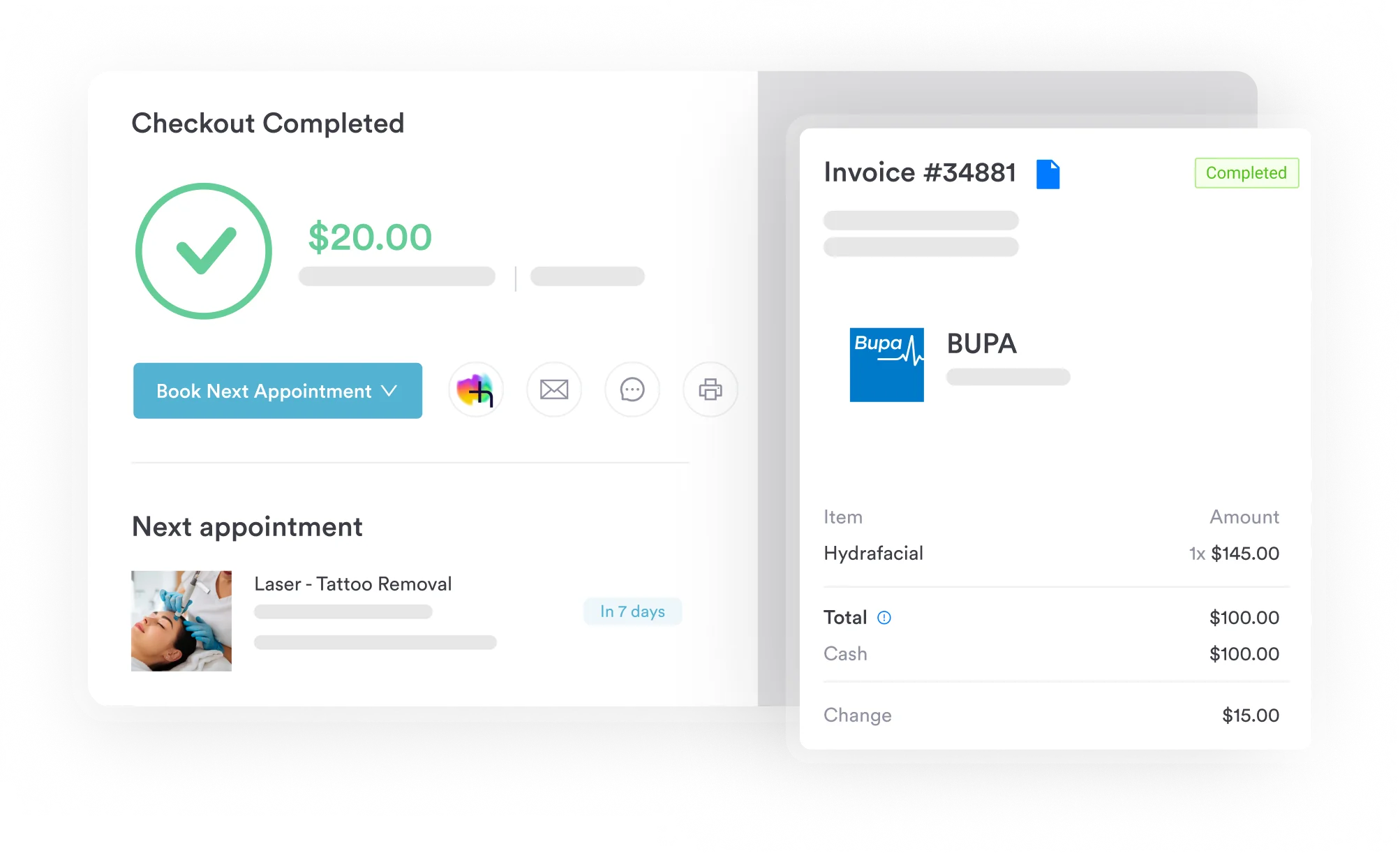
Practice scheduling software ties into the same record, so a J2788 encounter is flagged for billing review the moment the appointment closes. Nothing sits in a stack waiting to be worked.

Streamline J2788 and HCPCS billing in one place
Pabau maps HCPCS codes to patient records and captures NDC numbers at the point of care. Your team submits J2788 claims with the dose, diagnosis, and product already attached.

Conclusion
J2788 is a small code with tight requirements. Get the dose, the diagnosis, and the NDC right at the point of care and the claim pays on first submission.
The practices that stop chasing these denials are the ones capturing billing data during the encounter, rather than reconstructing it days later. That is a workflow decision more than a coding one. Book a demo to see how Pabau keeps J2788 documentation and claim submission in one place.

Continue your research
Want the whole billing cycle mapped out? Revenue cycle management walks through every stage between the appointment and the payment landing.
Denials piling up faster than you can work them? Denial management in healthcare sets out a triage process for reworking and appealing claims.
Not sure what your clearinghouse should be doing? Medical claims clearinghouse explains scrubbing, submission, and the rejections to catch before the payer does.
Adding a provider who needs to bill drug codes? Getting credentialed with insurers covers the paperwork and the timelines to plan around.
Want a benchmark for first-pass payment? Clean claim defines what payers accept without edits and how to measure your own rate.
Frequently asked questions
What is HCPCS Code J2788 used for?
HCPCS Code J2788 bills the administration of Rho(D) immune globulin, human, minidose, 50 micrograms (250 IU), given intramuscularly. It applies to Rh-negative patients after a first-trimester obstetric event such as threatened abortion, miscarriage, ectopic pregnancy, or elective termination. It covers the minidose formulation only. The full-dose 300 mcg version is billed under J2790.
What is the difference between J2788 and J2790?
J2788 covers the 50 mcg minidose of Rho(D) immune globulin, used for first-trimester events before roughly 12 weeks gestation. J2790 covers the 300 mcg full dose, used for antepartum prophylaxis at 28 weeks, postpartum administration, and later-trimester events. The code follows the dose actually administered, not the gestational age on its own.
What ICD-10 codes are used with J2788?
The codes paired most often are O36.0110 for maternal care for anti-D antibodies in the first trimester and O03.9 for spontaneous abortion without complication. O20.0 covers threatened abortion, O04.9 covers complications after elective termination, and O08.9 covers complications after ectopic pregnancy. Cross-reference the current CMS Local Coverage Article A56786 for the authoritative covered list.
How many units should be billed with J2788?
Bill one unit of J2788 for each 50 mcg dose administered. Most first-trimester indications need a single minidose vial, so the claim line usually reads J2788 with one unit. If two vials of the 50 mcg product were given, bill two units and make sure the chart documents the dose.
What is the Medicare reimbursement rate for J2788?
Medicare reimburses J2788 at ASP+6% for physician-administered buy-and-bill claims. The dollar amount changes quarterly as CMS updates the Average Sales Price files. Price the claim from the current quarter’s CMS ASP drug pricing file at cms.gov rather than any static published figure.
Can J2788 be billed in a hospital outpatient setting?
Yes. In hospital outpatient departments, reimbursement follows OPPS rules rather than the ASP+6% methodology used in physician offices. Under OPPS, J2788 may be packaged into an APC payment instead of being paid as a separate line item. Whether that happens depends on the APC grouping for the encounter.
Which brand names map to HCPCS Code J2788?
Two 50 mcg minidose products map to J2788. They are HyperRHO S/D Mini-Dose from Grifols and MICRhoGAM Ultra-Filtered PLUS, labeled by Kedrion Biopharma. Record the exact brand and lot number from the vial, because the NDC has to match the product administered.