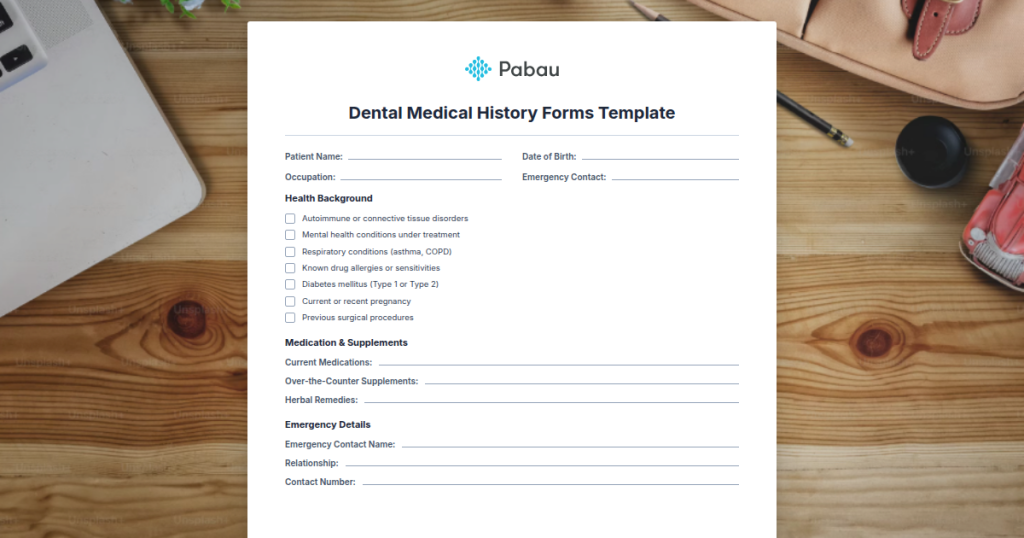
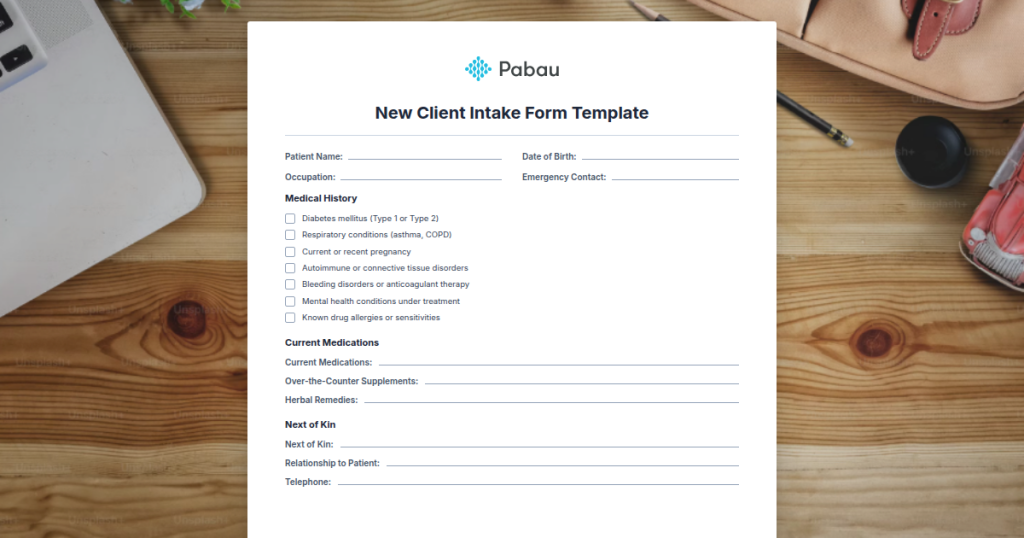
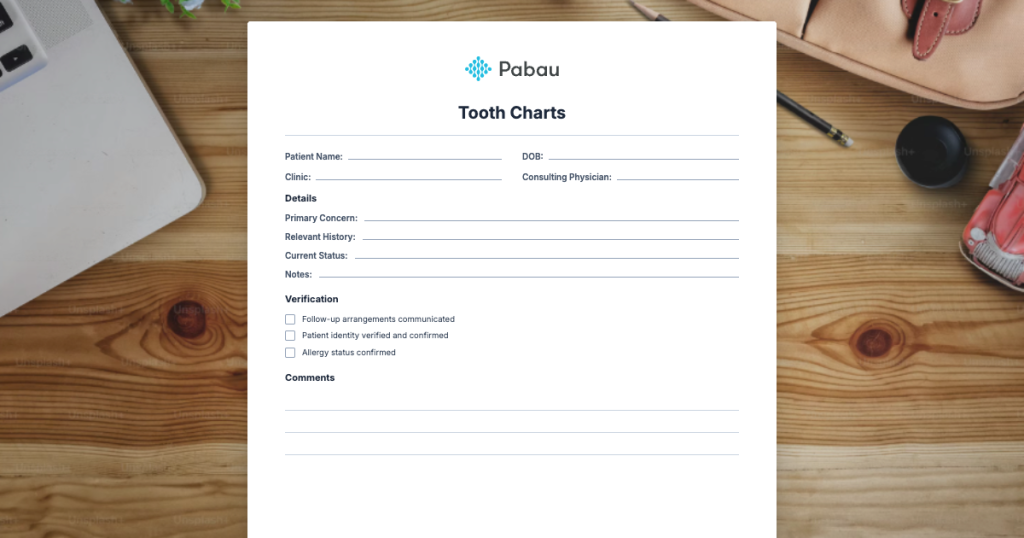
Dental Medical History Forms Template
A dental medical history form template is a standardised patient intake document...

March 16, 2026


Buy now, pay later is now available in Pabau
For modern skin clinics, the ability to accurately assess and document skin conditions is vital to achieving consistent clinical outcomes.
A skin assessment tool provides the foundation for this process—offering objective, measurable insights that guide treatment decisions and help monitor progress over time.
In an industry driven by precision and patient trust, structured analysis ensures every diagnosis and recommendation is based on verifiable data rather than subjective observation.
A structured skin analysis is a systematic approach to evaluating the condition of the skin through both visual examination and digital measurement tools. Unlike a quick visual check, this process uses standardised parameters—such as hydration, pigmentation, elasticity, and pore size—to deliver objective data.
By incorporating technology like high-resolution imaging or AI-powered diagnostic tools, clinicians can create a comprehensive picture of the skin’s health. This enhances accuracy and provides a scientific foundation for treatment planning.
The right skin assessment tool doesn’t just measure—it transforms how clinicians communicate, plan, and deliver care. Here are several key benefits:
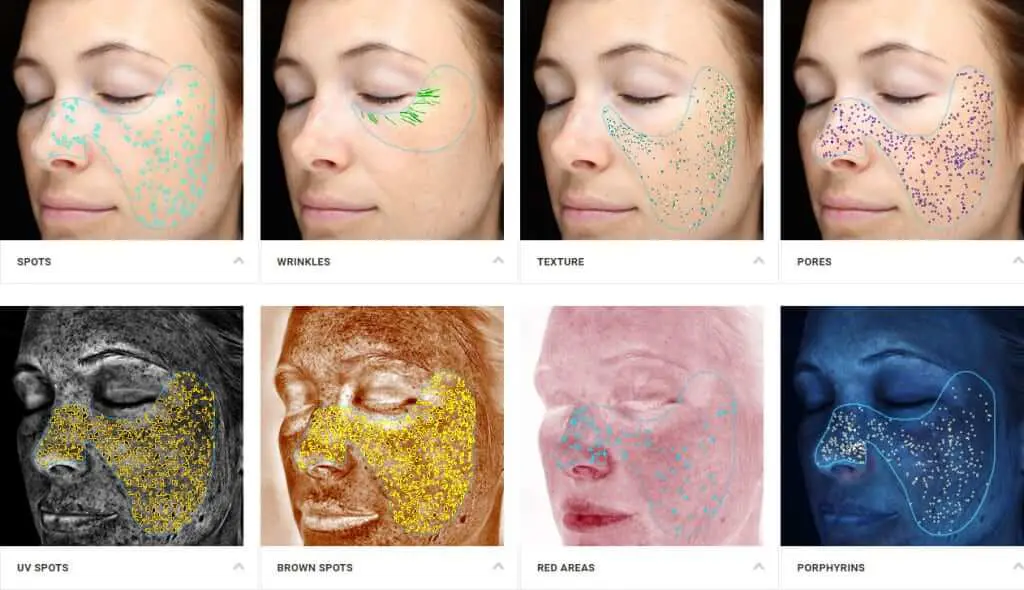
Source: Total Skin Center
To be clinically useful, a skin assessment tool should integrate several essential features:
| Feature | Purpose | Clinical Benefit |
|---|---|---|
| High-resolution imaging | Captures skin texture and pigmentation in detail | Improves diagnostic accuracy |
| UV and cross-polarised lighting | Reveals underlying damage or conditions not visible to the naked eye | Early detection and prevention |
| AI-based skin scoring | Automates analysis using algorithms | Reduces analysis time and human error |
| Data storage and comparison | Keeps a record of previous assessments | Facilitates progress tracking |
| Integration with clinic software | Links analysis results to client files | Streamlines operations and reporting |
Clinics that adopt structured analysis see measurable improvements in treatment accuracy, patient satisfaction, and overall care quality. By collecting consistent, quantifiable data, clinicians can personalise treatment plans with far greater precision. This leads to:
Moreover, digital assessment data supports evidence-based practice—allowing clinics to benchmark results and optimize protocols based on real-world performance.
Research published in JAMA Network Open shows that using AI-based diagnostic tools in dermatology can significantly improve diagnostic accuracy compared with clinicians working without digital support.
Adopting a skin assessment tool doesn’t require a complete overhaul of clinic operations. Integration is smooth when you align it with your existing workflow. Here’s how:
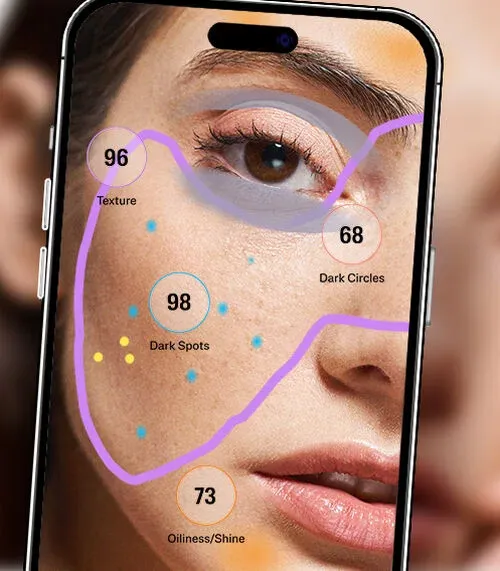
Digital imaging and AI have revolutionised how skin clinics evaluate, treat, and monitor patient progress. Through machine learning algorithms, clinicians can detect early signs of conditions such as acne, pigmentation disorders, or photoaging. This data-driven precision is especially valuable in multi-practitioner settings, ensuring consistency across treatments.
Moreover, digital tools align with the trend toward personalised medicine—tailoring interventions based on unique skin profiles rather than generic categories. This evolution is key to maintaining competitiveness in a tech-driven aesthetics market.
Source: Cetaphil
Here are 3 widely used skin analysis tools, from professional clinical devices to advanced AI-powered solutions:
VISIA Skin Analysis System – A professional imaging device used in dermatology and medspa consults to capture high-resolution facial images and analyze multiple skin concerns (spots, wrinkles, texture, pores, UV damage). It’s considered a gold standard for detailed complexion assessment, and we find a lot of Pabau clients find this as the go to for skin analysis.
Perfect Corp. AI Skin Analyzer / Skincare Pro – An AI-driven skin analysis tool that uses photos or live camera input to detect up to ~15 skin concerns and generate personalized skin reports and care recommendations. It’s widely used in clinics, retailers, and digital platforms.
DermaScan / 3D Skin Analysis Devices – Devices like DermaScan or other 3D imaging scanners capture deeper skin structure information (beyond surface imaging), often using ultrasound or 3D reconstruction technology to evaluate texture, subdermal features, and more.
Linking your skin assessment tool with practice management software like Pabau allows you to centralize results, automate follow-ups, and visualize long-term trends. Integrated digital records enable clinicians to access patient history instantly, compare past results, and provide evidence-based recommendations—all within one secure platform.
For example, medical spa AI technology already demonstrates how automation enhances clinical efficiency, and the same principle applies to structured analysis in dermatology and skin clinics.
A structured approach to skin evaluation not only improves diagnosis but also deepens client trust, enhances compliance, and delivers more consistent results. Implementing a modern skin assessment tool transforms subjective observations into actionable insights—empowering clinicians to elevate both treatment precision and patient satisfaction.
So, if your skin clinic handles aesthetic treatments, diagnostics, or operates across multiple locations, Pabau is the solution for you.
Pabau provides a medical-grade platform that brings structured skin assessment templates, before-and-after photography, and visual comparison tools together within a single, centralized client record—so clinicians can assess, document, and track skin outcomes without relying on multiple systems.
Request a live demo with Pabau today.