Aesthetics & Beauty Medspa
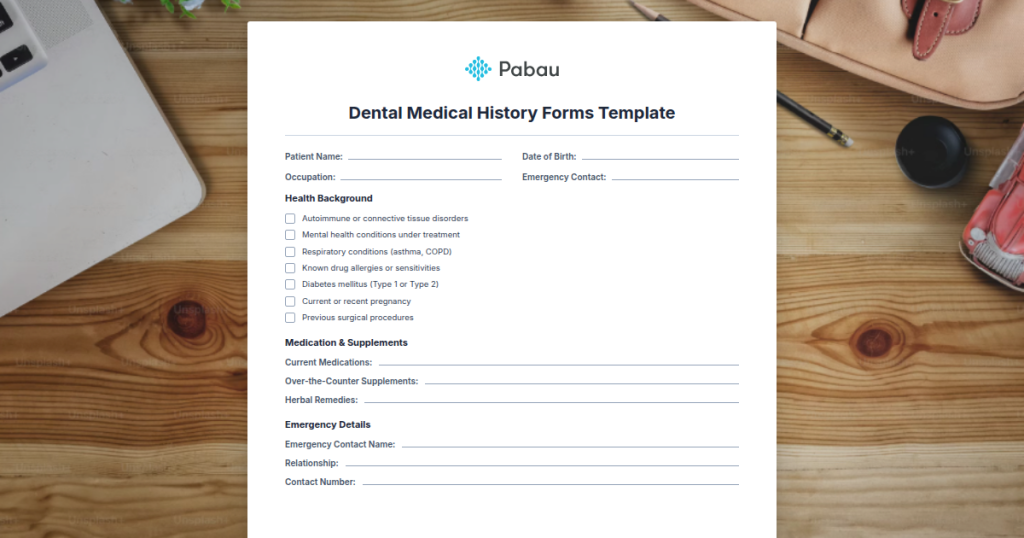
Dental Medical History Forms Template
A dental medical history form template is a standardised patient intake document...

March 16, 2026


Buy now, pay later is now available in Pabau

Legal protection through documented informed consent and risk acknowledgment
Contraindication screening prevents unsafe treatments and adverse reactions
Pre-treatment and post-care instructions improve treatment outcomes
GDPR/HIPAA compliance through digital signature capture and storage
Clinic liability reduction via comprehensive procedure explanation
A laser hair removal consent form is an essential legal and clinical document that establishes clear communication between practitioners and patients before any treatment begins. This laser hair removal informed consent ensures patients understand the procedure, anticipated risks, expected outcomes, and their post-treatment responsibilities. For aesthetic clinics, medspas, and dermatology practices, a well-structured consent form protects both patient safety and clinic liability whilst meeting regulatory standards across the UK, US, and UAE jurisdictions.
This guide covers how to implement a comprehensive laser hair removal consent form, what sections must be included, and how digital forms integration can streamline your clinic workflow. Whether you’re opening a new laser clinic or updating existing documentation, understanding consent form requirements is crucial for compliance and patient trust.
This free laser hair removal informed consent template is ready to download and adapt for your clinic. The form covers all essential sections: patient demographics, contraindication screening, procedure explanation, risk disclosure, expected results, and signature blocks. Simply download, customise for your protocols and jurisdiction, and have your medical team review before use.
A ready-to-use consent form covering pre-treatment screening, procedure explanation, comprehensive risk disclosure, post-treatment care instructions, and patient signature blocks for laser hair removal treatments.
Download template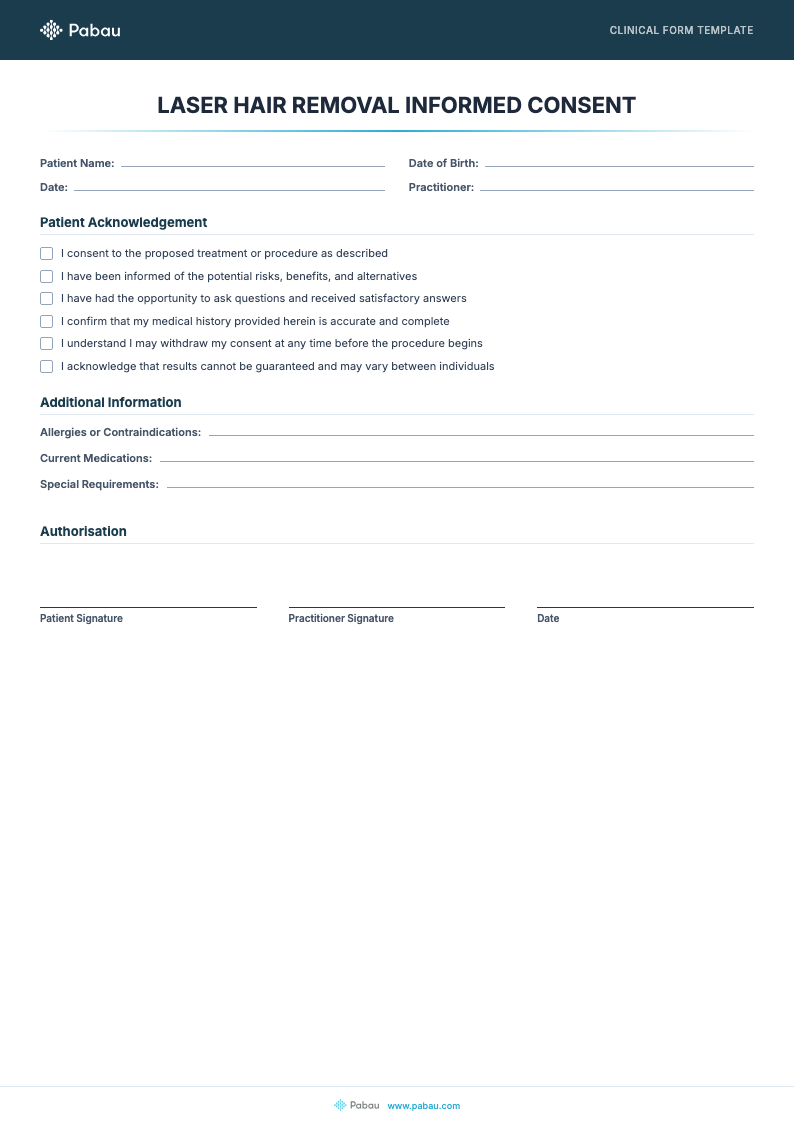
A laser hair removal consent form is a legal document that documents patient understanding and agreement to undergo laser hair removal treatment. Unlike a simple waiver, informed consent forms must demonstrate that patients have been fully informed of the procedure, its potential risks, benefits, expected outcomes, and their right to ask questions or decline treatment.
From a regulatory perspective, informed consent is a legal requirement under medical and aesthetic practice standards per American Society for Laser Medicine and Surgery guidelines. In the UK, the Care Quality Commission expects aesthetic providers to document informed consent using a written form covering risks, benefits, alternatives, and the patient’s right to decline. The form must be in plain language, specific to laser hair removal, and retained for at least 6 years.
A properly structured consent form serves three purposes: it protects patient autonomy by ensuring they understand what will happen, it protects the clinic by documenting that appropriate information was provided, and it supports clinical safety by capturing contraindications before treatment begins. The form becomes part of the patient’s permanent medical record and must be retained according to local regulations, typically 6-10 years depending on jurisdiction.
Implementing a laser hair removal consent form correctly requires a structured five-step workflow that integrates with your clinic’s appointment and documentation systems.

Managing consent forms manually across multiple patients slows clinics down. Pabau's digital forms automation links laser hair removal consent directly to appointments, sends forms automatically before visits, and captures digital signatures in your patient records. Reduce administrative burden and ensure compliance effortlessly.

A laser hair removal consent form is essential for any aesthetic clinic, medical spa, dermatology practice, or beauty clinic offering laser hair removal services.
Medspas and aesthetic clinics performing high-volume laser hair removal treatments need streamlined consent workflows. With 10-30 laser appointments per week, digital consent forms reduce paper handling and ensure every patient is properly informed before treatment.
Dermatology practices integrating cosmetic laser services alongside clinical dermatology benefit from consent forms that satisfy both medical and aesthetic standards. The form documents the transition from therapeutic to cosmetic indications.
Laser hair removal clinics specialising exclusively in laser hair removal rely on consent forms to manage liability and demonstrate professional standards. Clinics in high-regulation jurisdictions (UK, UAE, California) face heightened scrutiny of consent documentation.
Multi-location clinics require standardised consent forms across all locations to ensure regulatory consistency. A master template adapted for each jurisdiction (UK, US, UAE) protects the clinic from compliance gaps.
Regulatory compliance: A documented consent form satisfies CQC, FDA, GDPR, HIPAA, and DHA requirements. Audits and inspections expect written evidence that patients were informed of risks before treatment.
Liability protection: By documenting that a patient was informed of risks and consented to treatment, the clinic establishes a legal record that patient autonomy was respected. If an adverse outcome occurs, documented consent demonstrates the clinic acted professionally, reducing legal exposure.
Patient safety: The contraindication screening section prevents unsafe treatments. Patients with active infections, pregnancy, or medications that contraindicate laser treatment are identified before harm occurs, improving outcomes through evidence-based treatment selection.
Operational efficiency: Digital consent forms sent before appointments allow patients to complete them at home, reducing appointment time. Automated distribution through patient portals saves staff time and reduces missing signatures on appointment day.
Professional credibility: Patients perceive clinics using formal consent processes as more professional and trustworthy. Documented consent conversations demonstrate commitment to patient safety and informed decision-making, improving patient confidence and retention.
Audit your current consent form annually. Review adverse events from the past year, check competitor forms for emerging risk disclosures, and verify your form reflects current treatment protocols. Update the form date to reflect the revision. Digital forms platforms allow version control and audit trails, supporting legal discovery if claims arise.
Laser hair removal is classified as a medical device procedure, triggering informed consent regulations globally.
UK jurisdiction: The Care Quality Commission (CQC) expects written informed consent covering risks, benefits, alternatives, and the right to decline. Forms must be specific to laser hair removal in plain language and retained 6+ years. MHRA regulations require laser device risk information to be communicated to patients via the consent process.
US jurisdiction: The FDA classifies laser devices as Class III/IV depending on use. State medical boards require written informed consent for procedures performed by licensed practitioners. HIPAA mandates secure retention of signed forms in patient medical records. Some states require documented consent for procedures performed by nurses or estheticians.
UAE and international: The Dubai Health Authority requires written informed consent in Arabic and English for all aesthetic procedures with documented risks.
GDPR compliance: GDPR requires explicit consent for processing patient medical data (skin type, contraindications, treatment responses). Written consent forms satisfy this requirement. Digital signatures create audit trails proving when and where consent was obtained, supporting compliance investigations.
Best practice: Use procedure-specific forms in plain language, document that patients had opportunity to ask questions, provide copies to all patients, and retain forms indefinitely for aesthetic procedures.
Manual paper consent creates compliance risks and slows clinics. Digital consent workflows improve efficiency whilst strengthening documentation.
Client portal automation: Practice management systems automate consent distribution via patient portals. When a laser appointment is booked, patients receive a link to the consent form, complete and digitally sign before arrival, eliminating paperwork on appointment day and improving clinic flow.
Digital signature audit trails: E-signatures create timestamps and IP address logs proving when and where consent was obtained. This audit trail provides stronger legal evidence than handwritten signatures. GDPR and most international regulations accept digital signatures as legally equivalent to handwritten ones.
Automated reminders: Digital systems send pre-treatment reminders 48 hours before appointments along with pre-care instructions, reducing missed instructions and improving clinical outcomes.
Integration with patient records: Digital forms attach directly to appointment records, eliminating manual data entry and creating a single source of truth for regulatory audits or legal discovery.
Version control and expiry tracking: Digital systems track which form version each patient signed, important if your consent is updated. Systems can automatically flag expired consents during booking-critical for multi-location compliance and treating returning patients safely.
Pabau’s digital forms feature streamlines this workflow, automatically linking laser hair removal consent templates to service bookings. Integration with Echo AI means consent data cross-references with treatment notes, creating comprehensive audit trails from initial consent through procedure to outcome documentation.

Need to automate your consent workflow? Digital Forms allows you to create treatment-specific laser hair removal consent templates that automatically distribute to patients before appointments and capture digital signatures in your patient records.
Want to reduce clinic administrative burden? Client Portal enables patients to complete and sign consent forms remotely before arrival, eliminating paperwork processing on appointment day.
Need AI-powered documentation for laser consultations? Echo AI automatically generates clinical notes from your laser consultation, documenting patient understanding and consent discussion without manual typing.
A laser hair removal consent form is not a legal formality-it’s a cornerstone of professional aesthetic practice. Well-designed consent forms document that patients understand risks, protect clinics from liability, satisfy regulatory requirements, and improve patient safety through contraindication screening.
The template provided above covers all essential elements required across UK, US, and UAE jurisdictions. Customise it for your clinic’s specific treatment protocols, have your medical-legal team review it, and implement digital delivery to streamline workflow. Your patients will appreciate the professionalism, and your clinic will have documented evidence of informed consent if questions ever arise.
Retain signed consent forms indefinitely for aesthetic procedures, or per your jurisdiction’s medical record retention rules. Most US states require 6-10 years minimum; UK CQC expects 6+ years; UAE requires retention during the patient relationship plus additional years. Digital storage with backup ensures long-term availability for potential claims or audits.
You should use procedure-specific consent forms when risks differ significantly. Laser hair removal, laser skin resurfacing, and laser tattoo removal carry different risks, so separate forms document procedure-specific risks more clearly. A generic laser consent may not satisfy informed consent standards if complication-specific risks aren’t discussed.
Yes. Digital signatures (e-signatures) are legally equivalent to handwritten signatures under ESIGN Act (US), GDPR (EU/UK), and most international standards. Digital signature audit trails (timestamp, IP address, device) actually provide stronger legal evidence than handwritten signatures alone.
You cannot proceed with treatment without documented informed consent. Document the refusal in the patient record with date and time. Offer alternatives (discussion with medical director, rescheduling, different treatment), but treatment without signed consent creates significant liability. Refusal itself is valid clinical documentation.
Legally yes, but practically problematic. Signing on the day doesn’t give patients time to reflect or ask questions at home. Best practice is sending forms 24-48 hours before appointments so patients arrive mentally prepared and informed. Day-of signing may not satisfy informed consent standards if claims arise later.