

IV Therapy Primary & Preventive Care
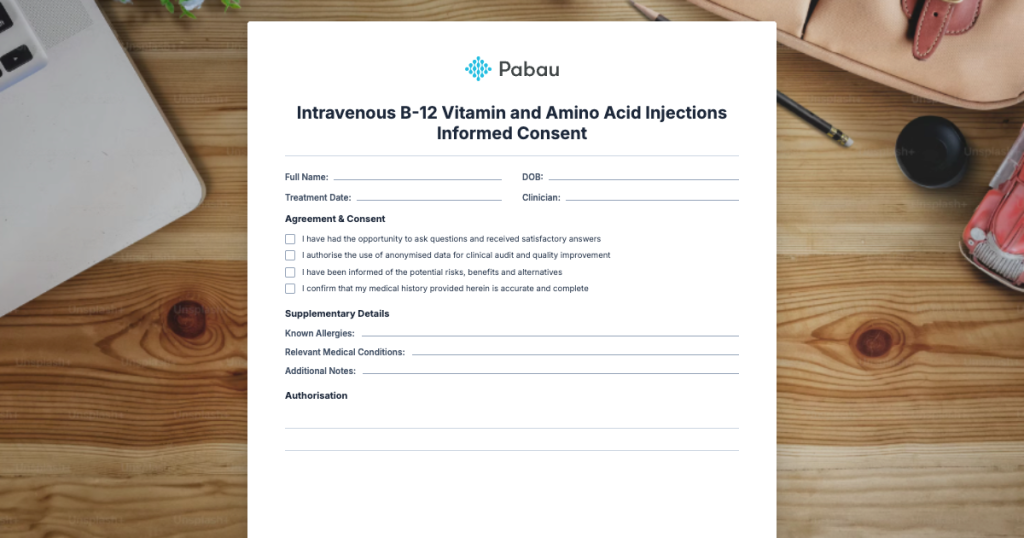
Intravenous B-12 Vitamin and Amino Acid Injections Informed Consent
A b12 injection consent form is a clinical documentation tool that educates pati...

February 25, 2026


Buy now, pay later is now available in Pabau

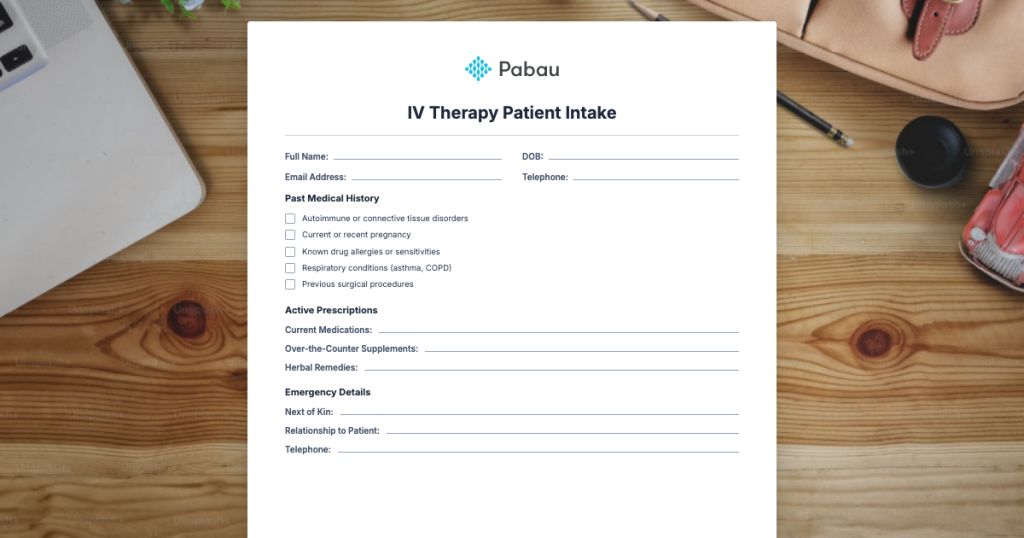
IV therapy intake forms document medical history and contraindications before treatment.
HIPAA-compliant digital forms streamline screening and reduce clinic liability.
Essential sections include allergies, medications, surgery history, and informed consent.
Pre-appointment digital completion saves clinic time and improves patient safety.
An IV therapy intake form is the clinical foundation of safe intravenous treatment delivery. Before administering nutrient infusions or hydration therapies, practitioners must document comprehensive patient medical history, current medications, allergies, and explicit informed consent. A well-structured IV therapy intake form protects both patient safety and clinic liability while ensuring every treatment decision is grounded in complete clinical data.
This guide covers the essential components of an effective intake form, explains why specific questions matter clinically, and provides a downloadable template your IV therapy clinic can implement immediately. Whether you operate a mobile IV service, wellness clinic, or in-house IV bar, this template ensures you capture the medical information required for safe practice and regulatory compliance.
A comprehensive intake form capturing patient details, medical history, current medications, allergies, surgical history, lifestyle factors, contraindication screening, risk disclosures (latex sensitivity), and informed consent declarations before IV therapy administration.
Download template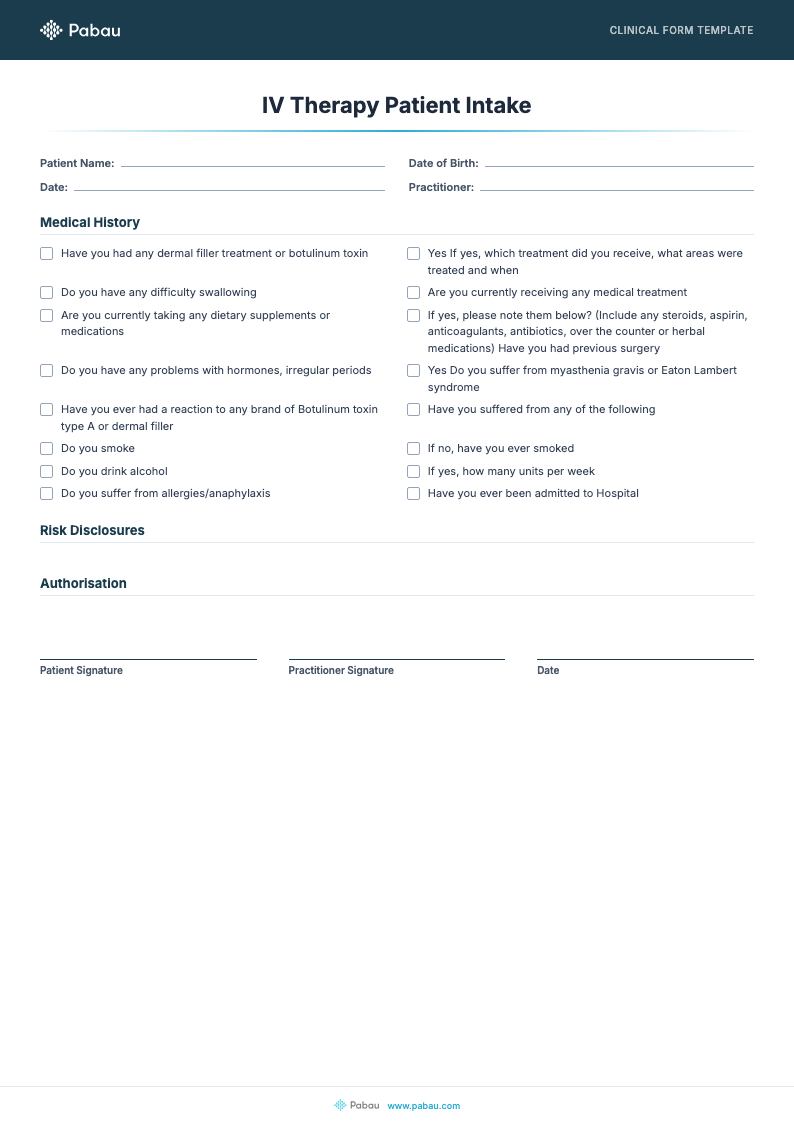
An IV therapy intake form is a structured medical assessment document that collects essential health information before administering intravenous nutrient therapy. Unlike generic patient intake forms, it addresses physiological and pharmacological considerations unique to IV treatment: venous access history, medication interactions, and allergies-particularly latex sensitivity, which directly impacts treatment delivery.
The form serves both clinical and legal functions. Clinically, it screens for contraindications (myasthenia gravis, recent botulinum toxin, difficulty swallowing) that make IV treatment unsafe. Legally, a properly completed intake form establishes documented informed consent. Under informed consent doctrine, practitioners must disclose material risks, available alternatives, and the patient’s right to refuse treatment. A signed form proves this conversation occurred-essential evidence during regulatory audits or malpractice investigations.
In HIPAA-compliant digital systems, intake forms become part of the patient’s protected health record (PHR), subject to automatic encryption, access logging, and backup. This means practitioner teams can securely review completed forms during consultations, flag concerning medical history, and adjust treatment protocols while maintaining audit trails documenting who accessed the form and when.
Effective intake workflows balance clinical thoroughness with patient convenience. The form should be distributed early enough for complete responses, yet reviewed carefully enough to catch contraindications before the appointment. Here’s how to implement this into your clinic workflow:
For mobile IV therapy businesses, send the form 2-3 days before home visits. Digital form collection in cloud-based intake systems reduces paper, improves security, and enables real-time clinical review before the appointment.

Digital forms eliminate paper and streamline patient screening before IV therapy treatments. Book a demo to see how.

Any practitioner administering intravenous therapies needs a structured intake process. IV wellness clinics and medspas offering vitamin infusions, hydration therapy, and micronutrient IVs must screen clients for medications or medical conditions that could interact with infusions or complicate IV access. IV therapy clinics serving healthy clients seeking performance optimisation face particular liability risk-a thorough intake form documents that safety was prioritised before treatment.
Functional medicine and integrative medicine practices using IV nutrient therapy for chronic illness require detailed medical history to contextualise IV protocols within broader treatment plans. Mobile IV therapy businesses must screen for contraindications remotely and obtain consent digitally before arriving at the patient’s home. Primary care clinics offering IV hydration for dehydration or post-operative recovery, and aesthetic clinics combining IV therapy with other treatments, all depend on a unified intake process capturing interactions between IV protocols and complementary modalities.
Patient safety – foundational protection against adverse events. A comprehensive intake identifies contraindications that make IV therapy risky: myasthenia gravis, uncontrolled hypertension, severe renal disease. By screening for allergies, phlebitis history, and medication interactions before treatment, you prevent potentially serious complications.
Informed consent documentation – legal and ethical requirement. State medical boards require documented evidence that informed consent was obtained. A signed intake form proves the patient understood treatment risks, agreed to the protocol, and received information about alternatives. This protects your clinic in malpractice litigation and regulatory investigations.
Workflow efficiency – reduce appointment-day friction. When patients complete intake remotely, your staff can review responses in advance, flag concerns, and prepare customised protocols. This eliminates 15-20 minutes of appointment-time paperwork, allowing longer clinical consultation. For high-volume clinics, this compounds into significant time savings.
Medication interaction screening. Patients on anticoagulants, immunosuppressants, or certain cardiovascular drugs may require protocol modifications. An intake form documenting all current medications allows clinical review and informs needle insertion technique or post-infusion monitoring decisions.
HIPAA compliance and audit readiness. Digital intake forms enable automatic encryption, access logging, and backup-all HIPAA requirements. Regulatory audits expect complete documentation of patient screening and consent. A digital system demonstrates compliance automatically. Reviewed against current HIPAA Security Rule requirements and medical documentation standards.
Flag medication interactions during intake review, not after infusion starts. Create a checklist of medications requiring protocol modifications (anticoagulants = slower infusion rate). Review this checklist against every patient’s medication list before scheduling confirmation.
Not all patient questions are equally relevant to IV safety. A focused intake prioritises medical history items directly affecting treatment decisions. Vascular access and infusion history reveals whether patients have had previous IV therapy, difficulty with needle insertion, phlebitis, or clotting disorders. These responses determine needle gauge, insertion site selection, and infusion rate requirements.
Document all prescription drugs, over-the-counter medications, and dietary supplements. Anticoagulants increase bruising risk. Immunosuppressants complicate nutrient absorption. Certain herbal supplements potentiate anticoagulant effects. Ask specifically about latex allergy-IV therapy depends on glove use, and IV line ports often contain latex. A latex-allergic patient requires non-latex equipment. Screen for autoimmune conditions (myasthenia gravis, Eaton-Lambert syndrome) that contraindicate certain IV protocols, and assess kidney or liver function status, as impaired clearance may require dose adjustments.
Informed consent requires that patients understand and explicitly agree to treatment, including material risks and alternatives. Many clinics treat consent as a checkbox. True informed consent is a conversation documented by a signed form. Patients must understand that IV therapy carries inherent risks: bruising and swelling at the insertion site (common and minor), phlebitis (rare), thrombosis (very rare), and allergic reactions (rare but potentially serious).
Explain what the specific IV protocol aims to achieve and the evidence supporting it. Avoid overpromising-“this protocol supports energy and recovery” is honest; “this IV will cure your fatigue” is not. Document that the patient was informed of alternatives and has the right to decline treatment. Ensure patients know what to do after infusion (monitor for swelling, stay hydrated, report adverse reactions within 24 hours) and how to contact the clinic if concerns arise.

Need AI-assisted clinical notes after IV consultations? Echo AI auto-generates treatment summaries from practitioner dictation, capturing infusion details and patient responses for rapid documentation.
Want to centralise all patient forms in one system? Digital forms software enables drag-and-drop customisation, conditional logic, and automatic population of patient records.
Looking to streamline mobile IV workflows? Client portals let mobile IV services send intake forms days before home visits, enabling remote screening and digital signature capture.
An IV therapy intake form is not bureaucratic friction-it is the clinical and legal foundation of safe practice. Comprehensive patient screening identifies contraindications, captures informed consent, and creates documentation protecting both patient safety and clinic liability. A well-designed intake process signals to patients that their health is carefully considered before treatment begins.
The template provided above can be downloaded and customised to your clinic’s specific protocols. Whether you operate an in-clinic IV bar, mobile wellness service, or functional medicine practice, a structured intake workflow combined with digital delivery and secure archival transforms patient screening from a checkbox exercise into genuine clinical care.
Have a paper backup form available for on-the-spot completion. However, this delays the appointment and prevents pre-appointment review. Improve compliance by sending reminders 48 and 24 hours before the appointment, clearly explaining how early completion protects patient safety.
A core intake form can be standardised, but consider protocol-specific addendums. High-dose vitamin C protocols require screening for glucose-6-phosphate dehydrogenase (G6PD) deficiency. NAD+ protocols require addiction history questions. Customise the template to your clinic’s most common protocols.
Do not cancel automatically. Contact the patient to discuss whether protocol modifications are possible or if referral to their primary care physician is needed for medical clearance. Document this conversation. Some contraindications are absolute (untreated myasthenia gravis); others are relative and manageable with protocol adjustment.
HIPAA requires retention for the patient relationship duration plus at least 6 years after the last encounter. Some state medical boards mandate longer retention. Store digitally with automatic backup and encryption, not in paper files vulnerable to loss or unauthorised access.