Primary & Preventive Care Wellness
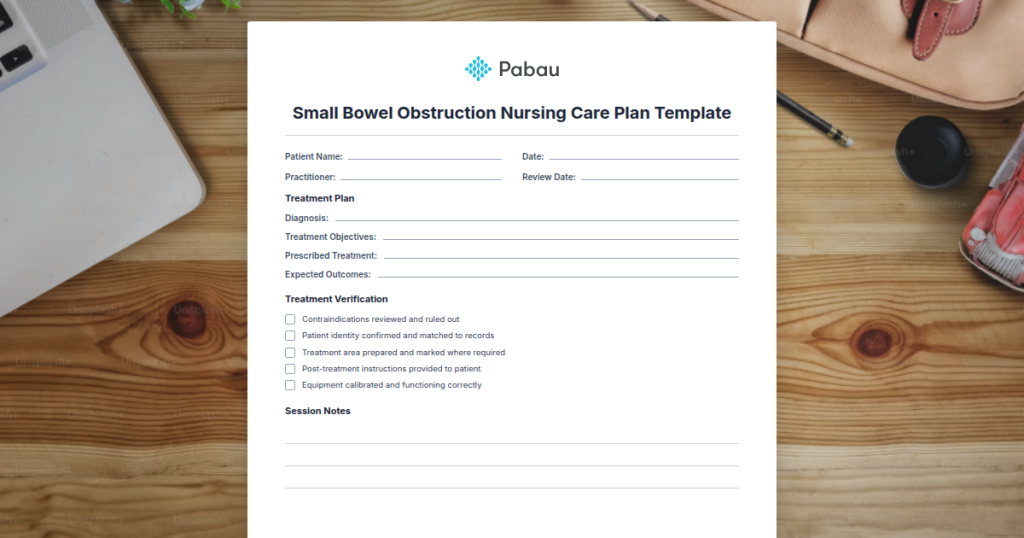
Small Bowel Obstruction Nursing Care Plan Template
A comprehensive small bowel obstruction nursing care plan template provides stru...

March 13, 2026

Discover free eBooks, guides and med spa templates on our new resources page


Buy now, pay later is now available in Pabau

Read case studies from our satisfied clients

Compare Pabau with alternative systems
 Integrations
 Measure Pabau savings
  Our security commitment
  About us
Learn why this holistic care and aesthetic medicine clinic chose Pabau to power patient care and performance.
Read more

Captures medical history, medications, allergies, and contraindications systematically
Enables rapid risk identification before the first appointment
Supports HIPAA, GDPR, and CQC compliance with documented consent
Reduces appointment time spent on administration by 10-15 minutes
Integrates seamlessly with digital forms and EMR systems
A general practice intake form is the foundation of safe, efficient patient onboarding. It gathers critical information-medical history, current medications, allergies, family background, and social factors-before the initial GP consultation. This ensures clinicians have a complete clinical picture from the start, reducing appointment time spent on data collection and enabling faster, more informed decision-making.
This article provides a complete downloadable template for general practice clinics, explains what to include, covers compliance requirements (HIPAA, GDPR, CQC), and walks you through implementation in both paper and digital workflows. We’ll also cover best practices for customising the form to match your clinic’s specific needs and patient population.
A ready-to-use patient registration form covering demographics, medical history, current medications, allergies, past surgeries, family history, social history, and doctor signature block.
Download template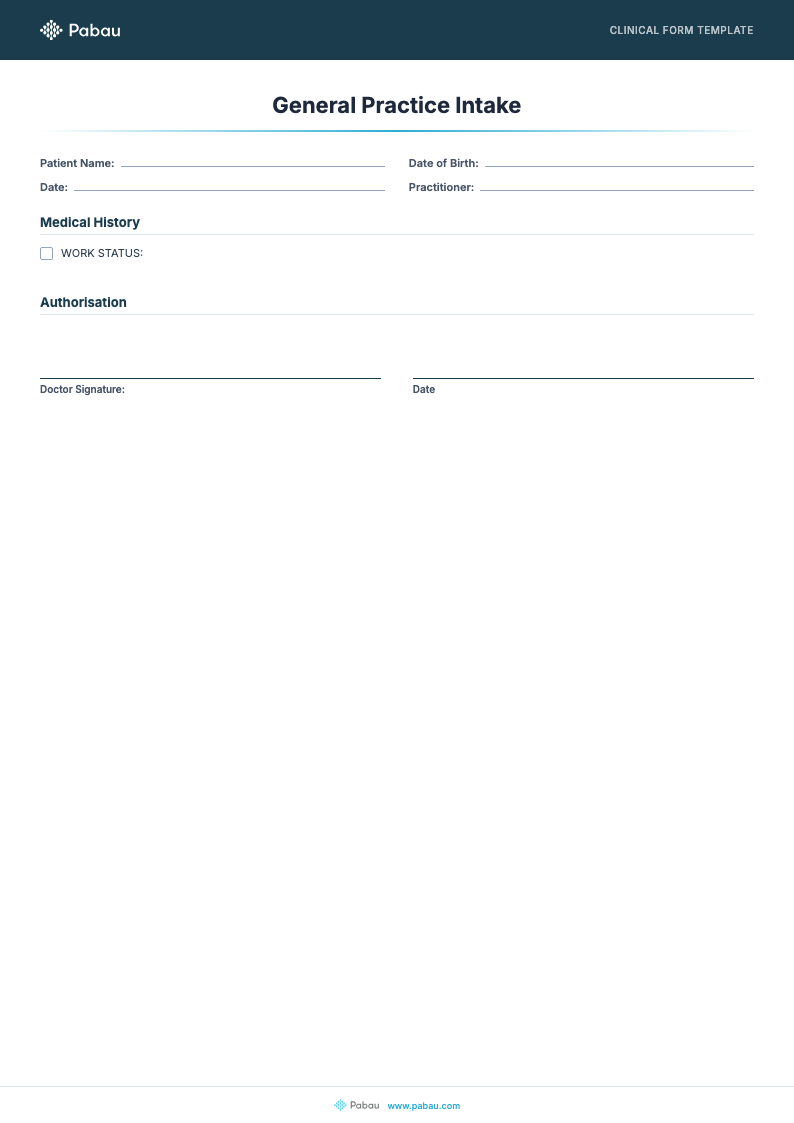
A general practice intake form is a structured document that captures essential information from new patients during their first appointment. It collects demographic details (name, date of birth, contact information), complete medical history (past illnesses, surgeries, current conditions), current medications and supplements, known allergies, family medical history, social history (smoking, alcohol use), employment status, and emergency contact information.
The primary clinical purpose is to identify contraindications, drug interactions, and health risks before treatment begins. For GP practices specifically, it establishes baseline information for ongoing care continuity and enables rapid triage during consultations. A well-designed form reduces duplicate questioning, speeds up initial assessments, and creates a documented record that meets legal and regulatory standards.
From a compliance perspective, the form serves as proof that you’ve obtained informed consent and collected necessary health information in accordance with data protection regulations. In the UK, the Care Quality Commission (CQC) expects GP practices to maintain comprehensive patient records with documented medical history and consent evidence. Under GDPR (EU and UK), you must document lawful basis for collecting personal and health data. In US markets, HIPAA compliance requires forms demonstrating you’ve informed patients about their privacy rights.
Digital intake forms have largely replaced paper versions, enabling conditional logic (skip irrelevant sections based on answers), automatic spelling corrections, and direct data import into patient records. Whether paper or digital, the structural content remains consistent: systematic medical history capture supporting safe clinical decision-making.
The general practice intake form process follows five key steps, from pre-appointment setup through final archiving. Each step ensures complete information capture and proper documentation for your patient record system.

Replace paper forms with intelligent digital intake that auto-populates patient records. Conditional logic, e-signatures, and multi-language support built in.

A general practice intake form is essential for any GP clinic, private practice, or walk-in urgent care centre collecting first-time patient information. It’s particularly valuable for private GP practices that must build complete patient records from scratch, multi-location practices needing standardised intake across clinics, and integrated care centres combining general practice with physiotherapy or minor surgery.
Wellness and functional medicine practices serving fee-paying patients emphasise detailed history-taking to inform personalised treatment plans. Their intake forms often extend beyond standard medical history to capture lifestyle, nutrition, stress levels, and specific health goals.
Clinical safety: Identifying allergies, contraindications, and drug interactions before treatment begins prevents adverse events. A single missed drug allergy could result in serious harm; systematic intake forms eliminate this risk.
Compliance and audit readiness: CQC inspections expect documented evidence that practices obtain informed consent and maintain comprehensive patient records. A signed intake form provides immediate proof. Under GDPR and UK Data Protection Act 2018, you must demonstrate lawful basis for processing patient health data-the form documents this consent.
Efficiency gains: Digital intake forms reduce appointment time spent on history-taking by 10-15 minutes. Patients complete forms at home, arriving with all information already documented. Clinicians review instead of transcribe, freeing time for clinical examination.
Data accuracy and completeness: Structured forms with required fields and dropdown menus reduce spelling errors, missing information, and inconsistent data formats. Automatic patient management system integration populates records accurately without manual transcription.
Audit your form annually against current CQC guidelines and GDPR requirements. Regulations evolve, and your form’s compliance status can drift if not reviewed. Set a calendar reminder each January to review field relevance, consent language clarity, and data retention timeframes.
Under GDPR (and UK Data Protection Act 2018 for UK practices), processing patient health data requires documented lawful basis. The most common basis for patient intake forms is explicit consent-patients must understand why you’re collecting each data element and agree freely.
Your intake form must include a privacy notice explaining: what data you collect, why (for clinical care, safety, regulatory compliance), who has access (clinical staff, regulatory bodies), how long you retain it (typically 8-10 years post-discharge per NHS standards), and their rights (access, correction, deletion requests). The Information Commissioner’s Office (ICO) guidance specifically addresses health data in GP practices. Their recommendations emphasise: collect only needed data, explain why in plain language, document consent, securely store data, and respect deletion requests within 30 days where clinically safe.
General practice intake form digitalisation eliminates paper processes entirely. When a patient completes a digital form online or via SMS link, the data flows directly into their patient record-no manual entry queue, no scanning backlog, no lost paperwork. Multi-location practices benefit from centralised form management: design once, deploy across all clinics. If a patient visits clinic A for consultation, then clinic B for physiotherapy, both clinics access the same intake record.
Scheduling integration streamlines workflow further. When you book an appointment, the confirmation message includes a link to the intake form. Patients receive it 24-48 hours before their visit, creating a natural reminder to complete. By appointment time, the form is done, reviewed, and clinician notes are prepared-the appointment begins with clinical discussion, not administration. For practices with high DNA (did-not-attend) rates, pre-appointment intake data collection serves a secondary benefit: patients who invest time completing intake digitally have higher show-up rates (studies show 8-12% improvement).

Ready to digitise patient intake workflows? Digital Forms enable conditional logic, e-signatures, and automatic EMR population-eliminating paper entirely.
Need to streamline clinic check-in? Client Portal lets patients complete intake, update records, and view appointment details in one place.
Want AI-powered clinical documentation? Echo AI generates clinical notes from patient intake data and voice dictation, saving clinicians 30+ minutes per day on documentation.
A comprehensive general practice intake form is the foundation of safe, compliant, and efficient patient care. It captures medical history, identifies contraindications, and creates documented evidence of consent-all before treatment begins. Whether you use the template provided here or adapt it for your specific patient population, the key is consistency: use the same form across all clinics, review responses before appointments, and archive signed copies in permanent records.
Digital intake forms streamline the process further, reducing administrative burden while improving data accuracy and patient experience. Combined with comprehensive compliance management systems, they transform intake from a paperwork task into an automated workflow that supports better clinical outcomes.
Essential sections: patient demographics (name, DOB, contact), medical history (past illnesses, surgeries), current medications and supplements, allergies, family medical history, social history (smoking, alcohol, drug use), insurance information, and emergency contact. For treatment-specific forms, add targeted questions relevant to the procedure.
Templates save time by providing pre-designed, legally compliant structures. They ensure consistency across clinics, reduce missing information, support regulatory compliance (GDPR, HIPAA, CQC), and can be customised for your speciality without starting from scratch.
Use a digital form platform (Pabau, Jotform, Google Forms) or design a paper version using Word/PDF. Include required fields (demographics, medical history, medications, allergies), add conditional logic to skip irrelevant sections, and ensure privacy notices explain data usage. Test with a patient before full rollout.
Review annually against current regulations (GDPR updates, CQC guidance changes, HIPAA rule updates). Update immediately if laws change affecting your jurisdiction, your clinic adds new services requiring new health questions, or patient feedback reveals confusing sections.
Yes. Adapt templates for your speciality, add fields specific to your treatments, adjust language for your patient population, and include your clinic’s branding. Most digital form platforms allow unlimited customisation without additional cost.