Uncategorized
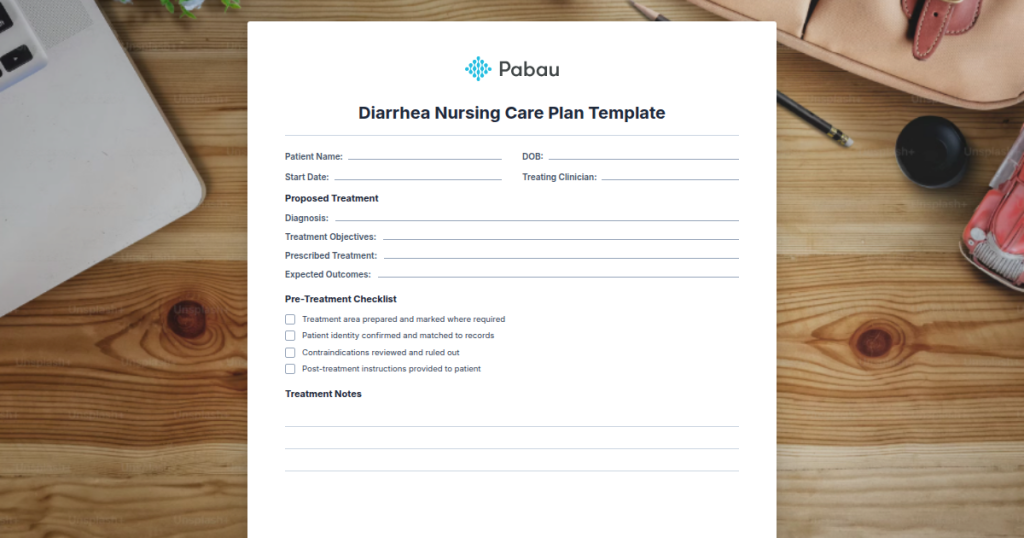
Diarrhea Nursing Care Plan Template
A diarrhea nursing care plan template is an essential clinical tool that helps r...

March 4, 2026

Discover free eBooks, guides and med spa templates on our new resources page


Buy now, pay later is now available in Pabau

Read case studies from our satisfied clients

Compare Pabau with alternative systems
 Integrations
 Measure Pabau savings
  Our security commitment
  About us
Learn why this holistic care and aesthetic medicine clinic chose Pabau to power patient care and performance.
Read more
A diarrhea nursing care plan template is an essential clinical tool that helps registered nurses and healthcare practitioners deliver systematic, evidence-based care to patients experiencing acute or chronic diarrhea. This comprehensive framework guides assessment, diagnosis, intervention planning, and outcome evaluation, ensuring consistent documentation and improved patient outcomes.

Diarrhea nursing care plan templates provide structured frameworks for assessing, diagnosing, and treating patients with diarrhea
Key nursing diagnoses include Diarrhea related to infection, Deficient Fluid Volume, and Risk for Impaired Skin Integrity
Evidence-based interventions focus on hydration management, dietary modifications, skin care, and patient education
Proper documentation and evaluation ensure quality care delivery and help prevent serious complications like dehydration
Get immediate access to our comprehensive diarrhea nursing care plan template in PDF format. This ready-to-use tool includes complete assessment guidelines, NANDA-approved nursing diagnoses, evidence-based interventions, and patient outcome criteria. Simply download, customize for your patient population, and implement immediately in clinical settings or practice management software.
Diarrhea affects millions of patients annually and ranges from mild, self-limiting episodes to severe, life-threatening conditions requiring hospitalization. The condition is defined as three or more loose or liquid stools within 24 hours and can result from infectious agents, medication side effects, dietary factors, inflammatory bowel disease, or functional disorders. A structured diarrhea nursing care plan template helps nurses identify underlying causes, assess severity, and implement appropriate interventions before complications develop.
Without proper planning, diarrhea can lead to serious complications including dehydration, electrolyte imbalance, acute kidney injury, and skin breakdown. Vulnerable populations like pediatric patients, geriatric individuals, and immunocompromised persons face heightened risks. Comprehensive care planning prevents these outcomes and supports faster patient recovery.
Effective assessment forms the foundation of any quality diarrhea nursing care plan template. Nurses must evaluate both subjective and objective data systematically.
The diarrhea nursing care plan template should include sections for recording all these elements systematically, allowing quick reference and communication among interdisciplinary team members.
Your diarrhea nursing care plan template must incorporate NANDA-approved nursing diagnoses that guide care prioritization. Primary diagnoses include:
Each diagnosis should include specific related factors and defining characteristics documented in your template, allowing clinicians to customize the care plan to individual patient presentations. Client record management features in practice management software can help organize and retrieve this information efficiently.
The most effective diarrhea nursing care plan template includes detailed, evidence-based interventions organized by nursing diagnosis:
Integrating these interventions into your diarrhea nursing care plan template ensures comprehensive care delivery. Automated workflows can help track intervention implementation and patient progress.
Want to streamline your care planning process and ensure consistent documentation? Book a demo with our team to see how practice management software can integrate your nursing care plan templates into daily workflow, improving efficiency and patient outcomes.
Your diarrhea nursing care plan template must include measurable, time-bound patient goals. Examples include: Patient will maintain fluid intake of at least 1,500 mL daily within 24 hours. Patient will report decreased stool frequency from current baseline to less than three episodes daily within 48 hours. Patient skin remains intact with no signs of breakdown over treatment period. Patient verbalizes understanding of dietary modifications before discharge.
Evaluation should occur regularly, comparing actual outcomes against established goals. Documentation should note whether goals were met, partially met, or not met, with rationale and plan modifications as needed. This iterative process ensures the care plan remains relevant and effective throughout treatment.
A complete diarrhea nursing care plan template should include patient assessment (stool characteristics, frequency, hydration status), NANDA-approved nursing diagnoses, measurable patient goals, evidence-based interventions, specific outcome criteria, and an evaluation section. The template should address fluid and electrolyte balance, skin integrity, patient education, and infection control measures.
Key nursing diagnoses include Diarrhea related to infection or dietary factors, Deficient Fluid Volume related to excessive fluid loss, Risk for Impaired Skin Integrity related to frequent loose stools, Deficient Knowledge related to dietary management, and Risk for Electrolyte Imbalance. Each diagnosis should include specific related factors documented in your template.
Assess skin turgor, mucous membrane moisture, capillary refill time, and urine output. Monitor vital signs including blood pressure and heart rate. Document urine specific gravity. Record all fluid intake and output carefully. Watch for signs of dehydration including dizziness, dry mucous membranes, decreased urine output, and tachycardia.
Most diarrhea patients require at least 1,500 to 2,000 mL of fluid daily through water, clear broths, electrolyte solutions, and other beverages. Fluid needs may be higher depending on diarrhea severity, fever presence, and individual factors. Encourage frequent small sips rather than large volumes to improve tolerance and absorption.
Yes. The template is fully customizable to meet individual patient needs. Modify assessment criteria, add specific diagnoses relevant to your patient, adjust interventions based on patient age and acuity, and personalize goals to reflect facility protocols and patient preferences. Ensure all modifications align with evidence-based practice standards.
Your diarrhea nursing care plan template should address population-specific needs. Pediatric patients require weight-based fluid calculations and closer dehydration monitoring due to rapid fluid loss. Geriatric patients face increased complication risk and may have multiple comorbidities affecting treatment options. Immunocompromised patients need stricter infection control and longer antibiotic courses. Pregnant patients require careful medication selection to avoid fetal harm.
Templates should include sections allowing documentation of age, comorbidities, and any special considerations affecting care delivery. This ensures comprehensive, individualized planning regardless of patient type.
Proper documentation within your diarrhea nursing care plan template protects patients and healthcare providers legally. Record all assessments objectively, documenting specific findings rather than vague observations. Chart interventions immediately after implementation. Include patient responses to interventions and any complications. Ensure all entries are legible, dated, and signed. Use standardized terminology and abbreviations approved by your facility.
Documentation serves as the primary evidence of care delivery and clinical decision-making. Compliance management tools help ensure all documentation meets regulatory standards and facility policies.
Begin with a thorough initial assessment using your template. Document all findings systematically. Select appropriate nursing diagnoses based on assessment data. Establish realistic, measurable patient goals with specific timeframes. List interventions in priority order addressing most critical diagnoses first. Ensure all team members understand the plan. Evaluate progress at regular intervals, typically every shift or daily depending on acuity.
The nursing process is cyclical. Be prepared to revise the care plan when new information emerges or when interventions prove ineffective. Regular revision demonstrates responsiveness to patient needs and commitment to quality care.
Healthcare organizations can enhance care planning by integrating templates into client management systems, allowing secure access across care teams and reducing documentation time. This approach improves communication, ensures consistency, and supports better patient outcomes.
Diarrhea nursing care planning requires systematic assessment, evidence-based interventions, and careful documentation. Our diarrhea nursing care plan template provides the structured framework needed to deliver quality care consistently. Download your free template today and take the first step toward standardized, comprehensive diarrhea management in your clinical setting. For additional resources on patient assessment and care documentation, consult the NANDA International website for the latest nursing diagnosis standards.