Primary & Preventive Care
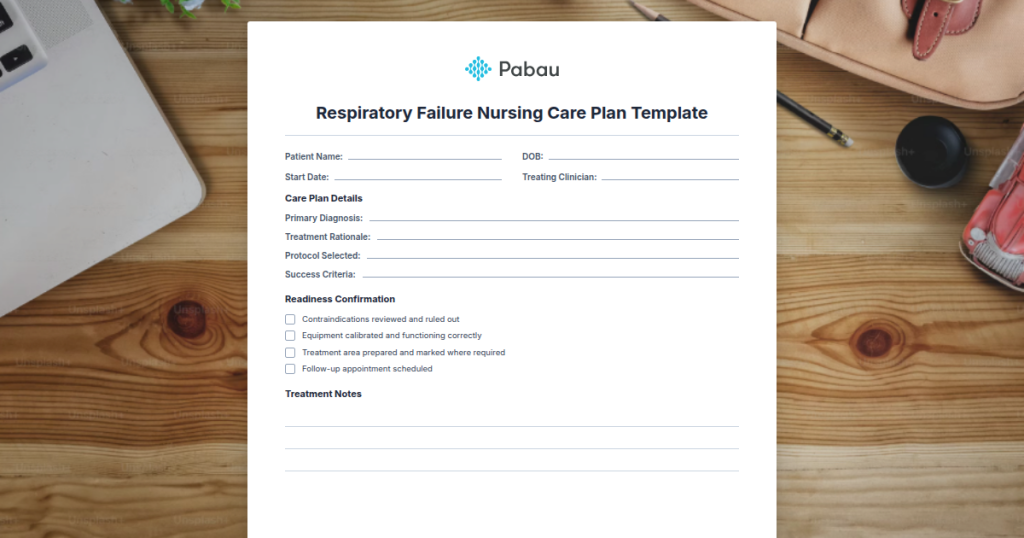
Respiratory Failure Nursing Care Plan Template
A Respiratory Failure Nursing Care Plan Template provides clinicians with a syst...

March 17, 2026


Buy now, pay later is now available in Pabau

Captures patient history, symptoms, medications, and family psychiatric background
Structured sections ensure no clinical information is missed during intake
Supports HIPAA-compliant documentation and informed consent workflows
Streamlines initial psychiatric assessment and treatment planning
A psychiatry intake form is the foundation of effective mental health assessment. This comprehensive template guides clinicians through systematic information gathering during initial patient consultations, ensuring accurate diagnosis, safe prescribing, and individualised treatment planning. Mental health practitioners-psychiatrists, psychiatric nurse practitioners (PMHNPs), psychologists, and licensed therapists-rely on intake forms to establish baseline clinical data and build rapport with new patients from the first visit.
A ready-to-use psychiatry intake form capturing patient demographics, medical history, psychiatric background, current symptoms, medication list, family history, mental status examination, and treatment goals.
Download template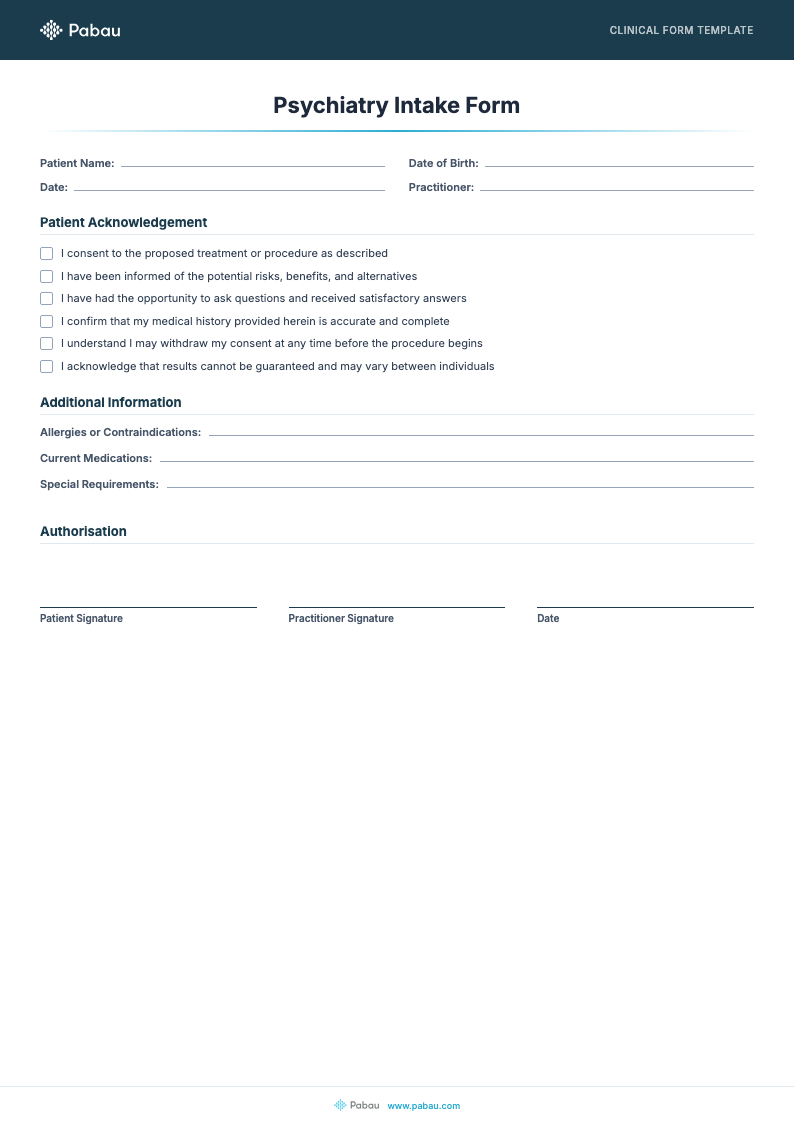
A psychiatry intake form is a standardised clinical assessment document that collects essential information about a patient’s psychiatric history, current mental health status, medical background, and life circumstances. Mental health clinics use this form to establish a comprehensive baseline before treatment begins. The form documents protected health information (PHI) under HIPAA regulations, making proper consent and security protocols essential from the outset.
The form serves dual purposes: it creates a legal and clinical record of informed consent and captures diagnostic information required for treatment planning. Clinicians use intake data to identify contraindications to medications, screen for suicidality and safety risks, and understand the patient’s presenting problem within their unique social and family context. A well-structured psychiatry intake form reduces the need for repeated questioning across appointments and supports continuity of care if the patient is referred to other providers.
Digital psychiatry intake forms integrate with paperless intake workflows, allowing patients to complete assessments before arrival via secure portals. This approach reduces wait times, improves data accuracy, and demonstrates compliance with documentation standards expected by insurance payers, professional licensing boards, and auditors.
Completing a psychiatry intake form follows a logical workflow designed to gather information systematically while building therapeutic rapport. Each section addresses a distinct area of clinical assessment, allowing clinicians to move from objective data collection to more subjective symptom and emotional exploration.
Many practices use AI-powered clinical documentation tools to streamline note-taking during the intake interview. After gathering information, the clinician documents their mental status examination findings (affect, thought process, concentration, insight) and formulates an initial diagnostic impression and treatment plan based on DSM-5 or ICD-10 criteria.

Pabau's digital form workflows automate psychiatry intake distribution, completion tracking, and clinical note integration-reducing administrative burden and improving patient experience.

Psychiatry intake forms are essential for any mental health practice. Psychiatrists use them for medication management and diagnostic assessment in outpatient clinics. Psychiatric nurse practitioners (PMHNPs) rely on intake forms to establish baseline information before prescribing psychotropic medications. Licensed therapists, counsellors, and psychologists use intake forms to understand presenting problems and contraindications for therapeutic interventions.
Community mental health centres, private practice clinics, university counselling services, and hospital psychiatric departments all require standardised intake documentation. Practices serving diverse populations benefit from intake forms that ask about cultural background, language preferences, and family structure-factors that influence treatment planning and engagement. A robust psychiatry EMR system makes intake form management seamless across settings and practitioner types.
Diagnostic accuracy: A structured intake form ensures clinicians ask all relevant diagnostic questions, reducing the risk of missed symptoms or comorbidities. Systematic questioning supports consistent diagnostic assessment across all new patients.
Safety and risk assessment: The form prompts clinicians to screen for suicidal ideation, homicidal thoughts, and substance use-critical safety information that must be documented at intake. Early identification of risk allows clinicians to implement appropriate safety protocols and referrals.
Medication safety: A complete medication history, allergy list, and past medication trials section prevent harmful drug interactions and unnecessary polypharmacy. Documenting contraindications protects both patient and prescriber.
HIPAA and regulatory compliance: A documented intake form with consent signatures and privacy notices demonstrates adherence to HIPAA requirements and professional board standards. Auditors expect to see evidence of informed consent and baseline risk assessment in patient records.
Continuity of care: When patients are referred to another provider or admit to hospital, a complete intake form provides essential historical context. This documentation reduces gaps in care and prevents duplication of assessment.
Insurance and billing documentation: Intake forms supply the medical necessity documentation required by payers. Level of complexity codes (E&M codes 99201-99205) depend on documented history of present illness and medical decision-making-information the intake form provides.
Automate intake form distribution via secure patient portal to reduce no-shows and administrative overhead. Patients complete forms on their own schedule before appointment, giving clinicians time to review baseline data and use appointment time more efficiently for therapeutic work.
Documenting psychiatric history requires clinician skill in asking sensitive questions while maintaining professional boundaries. Ask about previous diagnoses using open language: “Have you ever been diagnosed with a mental health condition?” rather than leading questions. Allow patients to describe their experience in their own words before providing diagnostic labels.
Document the timeline of psychiatric symptoms-when did the patient first notice anxiety, depression, or other concerns? Ask about previous treatment: “Have you ever seen a therapist, psychiatrist, or counsellor?” Capture the name of the provider, dates of treatment, and outcome (did treatment help, why did it end?). This detail informs current treatment decisions and prevents repetition of unsuccessful approaches.
For patients with psychiatric hospitalisations, document the date, facility, length of stay, and reason for admission. Ask about electroconvulsive therapy (ECT), involuntary holds, or crisis interventions. This history is clinically relevant and legally important for understanding the severity of past illness.
Record substance use honestly and without judgment. Ask about alcohol frequency and quantity, use of cannabis, stimulants, opioids, and other drugs. Document age of first use and any treatment for addiction. Substance use disorders frequently co-occur with psychiatric illness and require integrated treatment planning.
The mental status examination (MSE) is the clinical observation component of the intake process. During the interview, the clinician observes and documents affect (displayed emotion), mood (reported internal emotional state), thought process (organised vs. disorganised), thought content (delusions, obsessions), insight (understanding of illness), and judgment (decision-making capacity). These MSE findings, combined with historical information from the intake form, support the initial diagnostic impression.
Informed consent must be documented at intake. Explain confidentiality limits: mandatory reporting of child abuse, elder abuse, imminent danger to self or others, and duty to warn. Describe how records are shared with insurance companies and other providers. Clarify that the patient can consent to or refuse specific treatments. Electronic consent signatures with date stamps provide clear documentation of authorisation and are HIPAA-compliant when captured through secure systems.
Many clinicians include tiered contraindication screening in the intake form-absolute contraindications (e.g., allergy to a medication class) that prevent treatment, and relative contraindications (e.g., caution with certain drugs in specific medical conditions) that require clinical judgment. Documenting these risk factors at intake supports safety and legal defensibility of treatment decisions.

Need guidance on clinical documentation standards? Safer Clinical Notes covers best practices for writing notes that protect patient care and legal defensibility.
Looking to improve mental health clinic workflows? Mental Health EMR Software for Clinics explores how practice management systems integrate intake forms with billing and appointment scheduling.
Want to streamline compliance documentation? Compliance Management Software helps mental health practices track regulatory requirements and audit-ready documentation.
A psychiatry intake form is more than a box-ticking exercise-it is the clinical foundation of safe, effective, and compliant mental health care. By systematically gathering information about patient history, current symptoms, medications, and family context, clinicians can formulate accurate diagnoses, identify safety risks, and design targeted treatment plans. Whether your practice uses paper or digital forms, a well-designed psychiatry intake form demonstrates professional competence and protects both patient and clinician through clear documentation and informed consent.
A psychiatry intake form should capture patient demographics, medical and psychiatric history, current medications, family psychiatric history, substance use history, presenting problem, mental status examination, and informed consent. The form identifies safety risks, medication contraindications, and baseline information needed for diagnosis and treatment planning.
Paper psychiatry intake forms are HIPAA compliant if stored securely and access is restricted to authorised staff. Digital intake forms must use encrypted transmission and password-protected portals. Either format requires documented patient consent for information use and sharing, as well as privacy notices.
A comprehensive psychiatric intake appointment typically takes 60-90 minutes for adult patients. If patients complete the intake form before arrival via a secure portal, appointment time can focus on clinical assessment and treatment planning rather than information gathering.
A psychiatrist, psychiatric nurse practitioner (PMHNP), or licensed therapist can conduct intake assessments. The clinician documents findings and uses intake data to develop a treatment plan. Some practices use medical assistants or intake coordinators to collect preliminary information, with the clinician reviewing and verifying accuracy.
A psychiatry intake form emphasises medication history, medical conditions, family psychiatric history, and detailed mental status examination-information needed for prescribing decisions. A therapy intake form focuses more on presenting problem, goals for therapy, and psychosocial context. Both assess safety and risk, but psychiatry intakes include more medical detail.
Yes. Digital intake forms completed via secure patient portals are standard in modern practices. Patients complete forms remotely before arrival, clinicians review data in advance, and electronic signatures document consent. Digital forms integrate with EHR systems for seamless documentation and reduce paper handling.