

Primary & Preventive Care
Respiratory Failure Nursing Care Plan Template
A Respiratory Failure Nursing Care Plan Template provides clinicians with a syst...

March 17, 2026


Buy now, pay later is now available in Pabau

A medical cannabis patient intake form collects critical screening data before patient assessment and certification
Essential form components include symptom assessment, prior treatment history, contraindication screening, and patient consent
State-specific regulatory requirements shape form content and documentation protocols across different medical cannabis programs
Digital intake workflows reduce appointment time and improve data completeness compared to paper-based forms
Clinician review of screening responses before appointments enables targeted assessment and safer treatment decisions
Medical cannabis clinics and dispensaries that prioritise structured patient assessment report better treatment outcomes and stronger regulatory compliance. The first point of contact-a comprehensive medical cannabis patient intake form-sets the tone for safe, informed decision-making.
This guide walks you through the essential components of a medical cannabis patient intake form, why each element matters for clinical and legal safety, and how to implement a workflow that protects both patients and your practice. A downloadable template is included below to streamline your clinic operations immediately.
A comprehensive 14-page screening questionnaire covering medical condition assessment, prior treatment history, contraindication screening (cardiac, pregnancy, mental health), current cannabis use documentation, and patient acknowledgment of treatment protocols.
Download template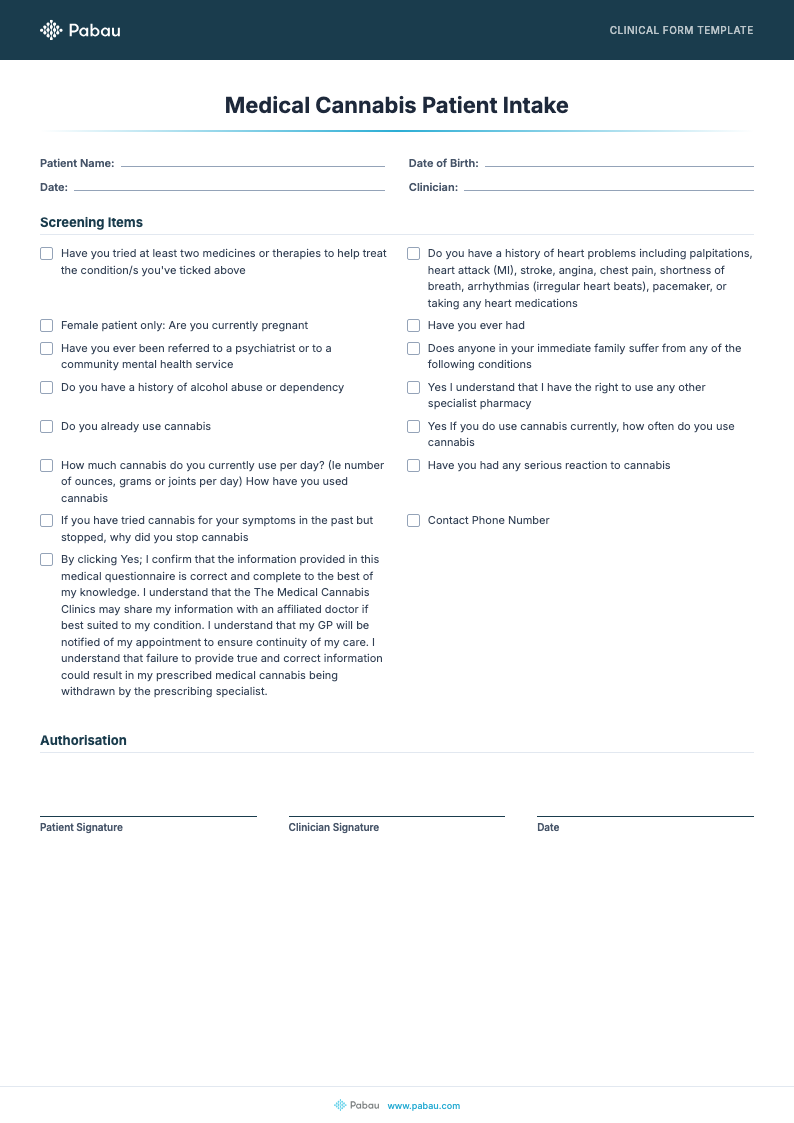
A medical cannabis patient intake form is a structured clinical assessment document that healthcare providers and cannabis clinic staff use to gather comprehensive information about patients seeking medical cannabis treatment. The form captures medical history, current symptoms, prior treatment attempts, contraindication screening, and patient understanding of treatment protocols.
Unlike general medical intake forms, a cannabis-specific form includes screening items tailored to cannabis safety and efficacy-prior cannabis experience, frequency and method of use, history of serious reactions, and family history of mental health conditions. These details help practitioners determine appropriate patient selection, identify safety concerns, and recommend initial dosage and administration routes.
From a legal standpoint, the form documents informed consent and establishes that the patient meets medical necessity criteria under the jurisdiction’s medical cannabis programme. Most state regulations require written evidence that the patient has a qualifying condition and has been counselled on risks and expected benefits. Iowa’s Medical Cannabis Program, for example, mandates a documented patient information sheet discussion before certification. A thorough intake form satisfies this requirement and becomes part of the permanent medical record.
The form also protects the clinic. By documenting screening responses, you create a record showing that contraindications were assessed and discussed. If a patient develops complications, the intake form demonstrates due diligence in patient selection and safety counselling.
Effective intake workflow centres on completing the form before the appointment, which allows clinicians to review responses in advance and focus face-to-face time on clarification and clinical decision-making rather than data gathering.
Many clinics using digital form capture software report that this workflow reduces appointment time by 15-20 minutes, as clinicians no longer spend time transcribing handwritten responses or clarifying illegible entries. Patients also report a more professional experience when their medical history is clearly documented before they meet the clinician.

Capture patient screening data pre-appointment, review responses in advance, and focus face-to-face time on clinical assessment rather than data entry.

Medical cannabis patient intake forms are essential for any healthcare setting that prescribes or recommends cannabis-based treatment. Private practice GPs and functional medicine practitioners managing patients with treatment-resistant anxiety, chronic pain, or neurological conditions benefit from structured intake documentation. Cannabis clinics operating under state medical marijuana programmes rely on the form to demonstrate regulatory compliance and patient selection criteria.
Integrative and naturopathic medicine practices that incorporate cannabis as part of comprehensive treatment protocols use the form to establish baseline mental and physical health status. Dispensary staff at licensed facilities use adapted versions to screen for contraindications before recommending product type and dosage to patients.
Mental health practitioners-psychologists, counsellors, psychiatric nurse practitioners-increasingly encounter patients asking about cannabis for anxiety, depression, or PTSD. A structured intake form helps these professionals assess whether cannabis is appropriate, whether other therapies should be prioritised, and what safety concerns (e.g., family psychiatric history, current medications) need clinician attention before any recommendation.
Occupational health and sports medicine clinicians working with athletes or workers managing chronic pain also use these forms. The form’s contraindication screening (cardiac history, pregnancy, mental health referrals) ensures safe practice across all these specialties.
A standardised intake form creates a paper trail of informed consent and due diligence. When regulators or insurers request documentation that you assessed medical necessity and screened for contraindications, a completed form provides evidence immediately. This reduces administrative burden and strengthens your defence in case of patient complaints or regulatory inquiries.
Clinically, the form guides safer treatment decisions. Screening for prior failed treatments helps you understand why the patient is now considering cannabis-they’ve exhausted conventional options. Cardiac history screening prevents recommending cannabis to patients at cardiovascular risk without appropriate monitoring. Pregnancy screening (for female patients) prevents exposure to cannabinoids during gestation. Psychiatric history screening alerts you to patients who may be vulnerable to cannabis-induced psychosis or worsening mental health, so you can discuss risk and adjust recommendations or monitoring accordingly.
The form also establishes baseline cannabis use patterns. A patient who reports daily cannabis use may require higher initial doses or different product recommendations than a cannabis-naive patient. Documenting prior reactions to cannabis (e.g., “I tried edibles once and experienced severe anxiety”) helps you select appropriate administration routes and prevent adverse experiences.
From a workflow perspective, digital intake forms reduce scheduling friction. Patients complete forms at home on their own time, appointment slots aren’t delayed by lengthy intake conversations, and clinicians receive pre-appointment summaries so they can focus 15-20 minutes of face-to-face time on clinical reasoning rather than data collection. This efficiency improvement translates directly to higher appointment throughput and patient satisfaction.
Audit your current intake process. Count how many minutes clinicians spend gathering and transcribing patient history during appointments. Multiply by your monthly appointment volume and hourly staff cost. Digital pre-appointment intake typically recovers 15-20 minutes per appointment-often enough to schedule an additional patient or extend clinical time with existing patients without extended office hours.
Medical cannabis programmes vary significantly by state, and intake form content must align with local regulatory requirements. Washington State’s medical cannabis framework requires clinicians to document that the patient has a “serious health condition” and specify the qualifying diagnosis. An intake form that lists state-approved qualifying conditions and captures the patient’s specific diagnosis supports this requirement.
Pennsylvania’s medical marijuana programme mandates that the practitioner certifies the patient has an “approved serious medical condition.” The intake form’s medical condition checklist and clinician review notes provide the documentation trail showing this assessment was completed.
Utah, Iowa, and New Hampshire medical cannabis programmes similarly require written documentation of the clinical assessment. Intake forms specifically designed for the approved condition lists in each state reduce compliance risk. For example, Utah’s programme approves a different set of conditions than Pennsylvania’s, so a general cannabis intake form won’t capture state-specific qualifying diagnoses unless customised.
Utah Department of Health’s medical cannabis patient assessment checklist specifically mentions documenting prior cannabis experience: “Knowing a patient’s experience with cannabis will let you know if they need extra help to figure out the right types and amounts of cannabis to use and how to manage side effects.” A thorough intake form that includes prior use history and any prior adverse reactions aligns with this regulatory expectation and supports better clinical outcomes simultaneously.
Beyond standard medical assessment, a comprehensive cannabis intake form captures cannabis-specific preferences and safety factors. Ask patients about prior experience with different cannabis product types: flower (smoked or vaporised), edibles, tinctures, topicals, or oils. This information informs initial product recommendations and sets realistic expectations about onset time and duration of effect.
Include questions about THC-to-CBD ratio preferences, especially if the patient has psychiatric concerns or anxiety. Some patients tolerate high-THC cannabis poorly and benefit from higher-CBD strains or balanced 1:1 products. Documenting this preference in the intake process avoids trial-and-error dosing and reduces adverse reactions.
The form should also capture the patient’s treatment goals in their own words. Is the goal symptom relief (pain reduction, anxiety decrease, improved sleep)? Functional improvement (return to work, increased exercise tolerance, reduced medication side effects)? Or mood stabilisation (reduced depression, increased motivation)? These stated goals become the metrics against which you’ll measure treatment success at follow-up appointments. A patient whose intake form says “I want to reduce my anxiety enough to go back to work” has a clear, measurable goal. This clarity supports better monitoring and treatment adjustments over time.
HIPAA regulations apply to cannabis intake forms just as they do to all medical documentation. If your clinic is a covered entity or business associate, patient intake data must be stored securely, access logs must be maintained, and breaches must be reported to affected patients within 60 days.
Many cannabis clinics use digital forms that are encrypted in transit and at rest, with role-based access controls limiting which staff members can view patient screening responses. A digital form also creates an audit trail showing which staff member accessed the patient record and when-a HIPAA requirement that paper forms cannot satisfy.
Some cannabis clinics operating in states with strict privacy laws (e.g., where cannabis is still federally illegal but state-permitted) separate cannabis documentation from the main medical record for extra privacy protection. A HIPAA-compliant intake form management system that supports this separation of records while maintaining complete clinical documentation provides the best outcome: regulatory compliance plus patient privacy assurance.
Review your clinic’s data handling workflow. If intake forms are currently paper-based, verify that patient signatures are stored in a locked cabinet and that access logs exist. If forms are digital, confirm encryption settings and test your audit trail logging. This 30-minute compliance audit often prevents expensive HIPAA violations and demonstrates due diligence to regulators.

Looking to automate intake workflows and reduce appointment delays? Digital forms software eliminates paper shuffling and captures screening data automatically before patients arrive.
Need to track dosage changes and treatment response over time? Digital patient records link initial intake assessments to follow-up notes, creating a longitudinal history that informs dose adjustments and identifies treatment patterns.
Want to ensure HIPAA compliance and secure patient documentation? HIPAA-compliant clinic management systems provide encrypted data storage and access logs that satisfy regulatory requirements while protecting patient privacy in cannabis medicine.
A comprehensive medical cannabis patient intake form is the foundation of safe, ethical, and compliant cannabis prescribing. By capturing medical history, screening for contraindications, documenting prior treatment attempts, and establishing baseline cannabis use patterns, you create a clinical record that supports better treatment decisions and demonstrates regulatory due diligence.
The downloadable template provided above includes all essential screening items and regulatory language. Customise it for your state’s approved qualifying conditions and your clinic’s specific workflow. Whether you implement it as a digital form sent pre-appointment or a paper form completed in the waiting room, the structured approach to patient assessment will strengthen your clinical outcomes and protect your practice.
A comprehensive intake form should capture: medical history and current diagnoses, prior treatment attempts, contraindication screening (cardiac history, pregnancy, mental health referrals), current and prior cannabis use patterns, family psychiatric history, and documented patient consent acknowledging risks and benefits discussed.
Yes, most state medical cannabis programmes mandate documented assessment of medical necessity and informed consent. The intake form creates the documentation trail showing you assessed the patient’s condition, screened for contraindications, and counselled them on risks before certification or recommendation.
A 15-item screening questionnaire typically takes 10-15 minutes for patients to complete. Digital forms sent 24-48 hours before appointments allow patients to complete them on their own time without delaying clinic schedules.
Critical contraindication screening includes: active or prior cardiac events (MI, stroke, arrhythmias, pacemakers), pregnancy (in female patients), severe psychiatric illness or current psychotic symptoms, substance use disorder (especially alcohol dependency), and uncontrolled hypertension. Each of these warrants clinician discussion and possible referral before cannabis initiation.
The core assessment elements (medical history, contraindication screening, prior treatment) are universal. However, the list of qualifying medical conditions must match your state’s medical cannabis programme. Customise the condition checklist and any state-specific consent language before using the form in your clinic.
Yes. Prior cannabis experience significantly affects dosage recommendations and product selection. Patients with prior daily use may need higher initial doses than cannabis-naive patients. Documenting prior reactions-including any adverse experiences with specific product types or consumption methods-helps clinicians tailor recommendations and prevent adverse outcomes.