Primary & Preventive Care
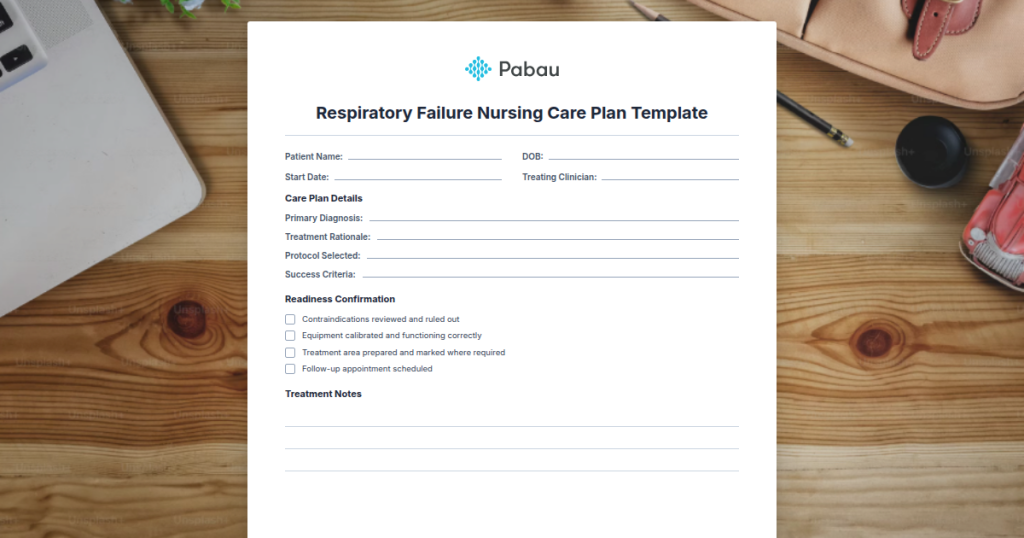
Respiratory Failure Nursing Care Plan Template
A Respiratory Failure Nursing Care Plan Template provides clinicians with a syst...

March 17, 2026


Buy now, pay later is now available in Pabau

ASRS v1.1 is an 18-item validated screening tool for adult ADHD developed by WHO
Part A (6-item screener) identifies probable ADHD; Part B (12 items) assesses symptom severity
Scoring uses frequency ratings; interpret with clinical judgment and comprehensive assessment
Suitable for primary care, mental health clinics, occupational health, and private practice
Identifying adult Attention Deficit Hyperactivity Disorder (ADHD) requires systematic assessment. The ADHD Self-Assessment Rating Scale (ASRS) is a standardised 18-item questionnaire developed by the World Health Organization (WHO) to help clinicians recognise potential ADHD symptoms in adult patients. This guide explains what the ASRS is, how to administer it, and how to interpret results within clinical workflows.
A standardised 18-item screening tool evaluating ADHD symptoms, attention difficulties, and hyperactivity indicators across life domains for clinical assessment and referral decisions.
Download templateThe ADHD Self-Assessment Rating Scale (ASRS-v1.1) is a brief, validated questionnaire for identifying symptoms of Attention Deficit Hyperactivity Disorder in adults aged 18 and over. It comprises 18 items split into two parts: a 6-item screening section (Part A) and a 12-item symptom detail section (Part B).
The scale was developed based on diagnostic criteria from the DSM-IV but remains widely used in clinical practice for initial screening. Each item asks patients to rate symptom frequency on a Likert scale (usually ranging from 0 = never or rarely to 4 = very often), measuring inattention, hyperactivity, and impulsivity across work, home, and social contexts.
The ASRS is not diagnostic on its own. Rather, it functions as a cost-effective first-line screening tool that prompts further clinical evaluation-including structured interviews, collateral history, and psychological testing-before any ADHD diagnosis is confirmed. Clinicians use it to determine whether a patient warrants referral to a specialist or comprehensive assessment.
Administering the ASRS v1.1 correctly ensures valid results and reliable clinical decision-making. Follow these five operational steps:
Document the screening date, raw scores, and interpretation in the patient’s clinical record. Electronic digital forms can auto-calculate scores and flag high-risk cases for automatic referral pathways, streamlining clinic workflows.

Automate ASRS administration, scoring, and referral workflows with Pabau's digital forms and clinical documentation system.

The ASRS is designed for clinicians working in adult mental health settings. Primary users include psychiatrists, clinical psychologists, and mental health nurses screening for ADHD before specialist referral. However, the tool’s simplicity and brevity make it valuable across multiple healthcare contexts.
Primary care clinicians use the ASRS as an initial screening step before referring patients to ADHD clinics or specialist mental health services. Occupational health services administer it during workplace wellness assessments or when employees report productivity concerns. Psychology practices use it as part of comprehensive neuropsychological evaluations. Coaching and executive functioning clinicians incorporate the ASRS when clients report attention difficulties or productivity struggles, helping differentiate between skill deficits and potential underlying ADHD.
The tool is also suitable for functional medicine practitioners and integrative health clinics evaluating neurocognitive symptoms within the context of metabolic or environmental factors. The brief format makes it practical for high-volume practices and telehealth consultations.
Standardised, validated tool: The ASRS v1.1 has been rigorously tested across multiple populations and jurisdictions, demonstrating strong sensitivity (86-87%) for identifying probable ADHD and specificity for distinguishing ADHD from other conditions. Its validation by the WHO and citation in peer-reviewed literature (e.g. Journal of Attention Disorders) establishes clinical credibility.
Efficient screening: The 6-item Part A takes 1-2 minutes to complete, making it ideal for busy clinical settings. Practices can screen 20-30 patients daily without administrative burden. Early identification reduces diagnostic delays and improves patient outcomes.
Dimensional severity data: Unlike binary screening tools, the ASRS captures symptom severity across inattention and hyperactivity/impulsivity domains, informing treatment planning and monitoring. A patient with predominantly inattentive ADHD may require different interventions than one with combined-type ADHD.
Cost-effective referral triage: By accurately identifying candidates for specialist assessment, practices reduce unnecessary referrals and wait times, improving resource allocation across the healthcare system.
Document ASRS administration in your patient record with the date, raw scores, and your clinical interpretation. Flag positive screens for automatic referral prompts within your EMR system-Pabau’s Echo AI can generate referral letters automatically based on threshold scores, saving time and ensuring consistency.
A frequently asked question in clinical practice: Is the ASRS still valid for DSM-5-TR diagnoses despite being developed for DSM-IV criteria? The answer is nuanced.
The ASRS v1.1 was created in the early 2000s based on DSM-IV diagnostic thresholds (6+ inattention symptoms OR 6+ hyperactivity/impulsivity symptoms, with onset before age 12). The DSM-5 (published 2013) revised criteria slightly-raising the symptom count threshold for adults over 17 to 5+ symptoms in each domain and requiring onset by age 12 (unchanged from DSM-IV). The DSM-5-TR (2022) refined the adult presentation criteria further, acknowledging that inattention symptoms may manifest differently in adulthood than childhood.
Importantly, no authoritative study has definitively addressed whether ASRS scores directly map to DSM-5-TR diagnostic criteria. The ASRS remains a screening tool, not a diagnostic instrument. Clinicians should use ASRS results as one data point within a comprehensive assessment framework: structured clinical interview (e.g. DIVA or CAT-A for DSM-5 alignment), collateral history, developmental history, and functional impairment documentation. If diagnostic precision is critical, consider administering symptom-count checklists that explicitly reference DSM-5-TR criteria alongside the ASRS.
In practice, many clinics use the ASRS as a cost-effective first-line screener, then refer positive cases to specialists who conduct DSM-5-TR-aligned diagnostic interviews. This two-stage model balances efficiency with diagnostic accuracy.
Integrating ASRS screening into routine clinical workflow maximises its value. Most effective practices embed the tool at key decision points: new patient intake, annual wellness visits, or when a patient reports attention-related concerns.
Intake workflow: Ask all new adult patients (or those aged 18+) to complete Part A of the ASRS during intake paperwork. Scoring takes seconds; a threshold-triggered flag alerts the clinician to administer Part B during the consultation. If scores are high, the clinician documents findings, explains next steps (specialist referral, further testing), and schedules follow-up.
Problem-focused workflow: When a patient reports specific concerns (concentration difficulties, disorganisation, procrastination, difficulty prioritising), clinicians can administer the ASRS to systematically assess whether ADHD is contributing. This prevents missed diagnoses and frames further intervention appropriately.
Monitoring workflow: If a patient has been diagnosed with ADHD and is receiving treatment (medication, therapy, coaching), repeat ASRS administration at 3- or 6-month intervals can track symptom response and treatment efficacy. Improvement (lower scores over time) indicates treatment success; persistent elevation may suggest medication adjustment or additional interventions.
Modern practice management systems allow ASRS data to flow directly into clinical records and referral letters, reducing manual transcription errors and ensuring continuity of care.

Need guidance on ADHD diagnostic criteria? Psychiatric Evaluation Template provides a comprehensive structure for documenting psychiatric assessments alongside screening tools like the ASRS.
Want to streamline intake documentation? Capture Forms allows you to design custom ASRS workflows with automatic scoring and conditional logic that routes positive screens to referral pathways.
Looking for ADHD-focused practice management? ADHD Clinic Software explores how modern EMRs support diagnostic workflows, assessment tracking, and treatment monitoring for ADHD-focused practices.
The ADHD Self-Assessment Rating Scale remains one of the most widely used adult ADHD screening tools in global clinical practice. Its validation, brevity, and dimensional scoring make it an efficient first step in identifying patients who warrant comprehensive ADHD assessment. By understanding how to administer, score, and interpret the ASRS correctly-and by contextualising results within a thorough clinical evaluation-practitioners can improve diagnostic accuracy and patient outcomes.
Whether you work in primary care, mental health, occupational health, or specialist ADHD clinics, incorporating the ASRS into your standard intake protocol enhances efficiency and ensures no patient with probable ADHD goes unrecognised. Download the free template above and integrate it into your practice today.
The ASRS measures inattention and hyperactivity/impulsivity symptom severity (dimensional data), while DSM-5-TR defines three presentation subtypes: predominantly inattentive, predominantly hyperactive/impulsive, and combined type (categorical diagnosis). Use ASRS dimensional scores to characterise symptom profile, then map to DSM-5-TR subtype during diagnostic formulation. High inattention scores with low hyperactivity scores suggest inattentive type; balanced scores suggest combined type.
The ASRS manual provides age and gender-stratified normative data. Typically, scores above the 90th percentile for a patient’s demographic group indicate clinically significant symptoms. However, normative data varies by population and study; always consult the scoring guide accompanying your ASRS tool or reference peer-reviewed validation studies for your specific population.
Yes, with caveats. The ASRS remains a valid screening tool; however, no definitive research maps ASRS cutoff scores to DSM-5-TR diagnostic thresholds. Use the ASRS as a first-line screener, then confirm diagnosis via DSM-5-TR-aligned structured clinical interview (e.g. DIVA, CAT-A) with collateral history. This two-stage approach balances efficiency with diagnostic precision.
Part A (6-item screener) identifies probable ADHD rapidly; a score of 14+ warrants Part B administration. Part B (12 items) quantifies symptom severity and subscale distribution (inattention vs hyperactivity/impulsivity). Together, Part A determines whether screening is positive, and Part B characterises symptom profile and severity. Always interpret both scores alongside clinical observation and functional impairment.
The ASRS has strong sensitivity (86-87%) for identifying probable ADHD but is a screening, not diagnostic tool. It should never be used alone to diagnose ADHD. Always pair ASRS results with comprehensive clinical assessment, developmental history, psychological testing if indicated, and collateral information. Used this way, the ASRS improves diagnostic efficiency and reduces missed cases.