Primary & Preventive Care Wellness
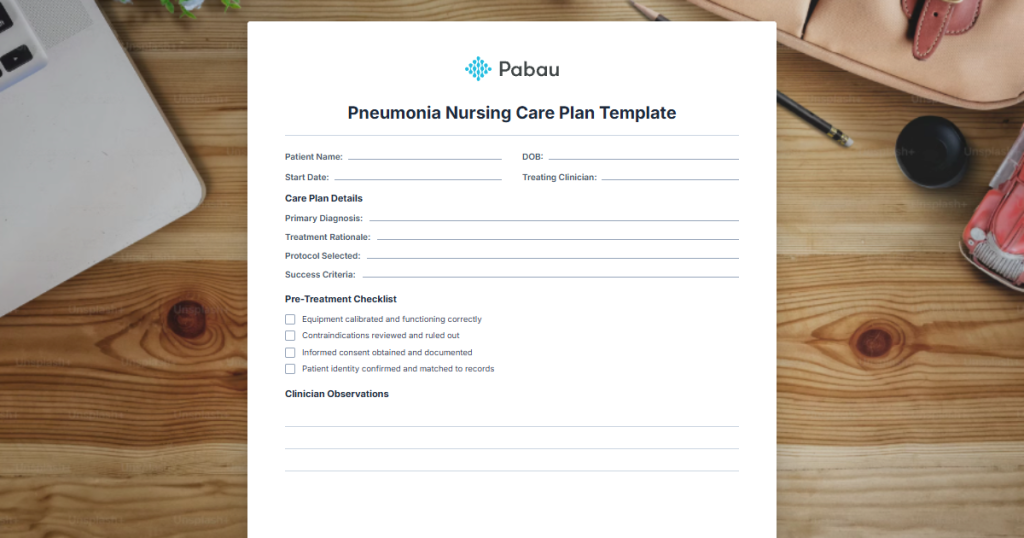
Pneumonia Nursing Care Plan Template
Pneumonia remains a leading cause of hospitalisation and morbidity in acute care...

April 1, 2026


Buy now, pay later is now available in Pabau

Heavy metal blood testing requires royal blue EDTA tubes for accurate trace element measurement.
Clinical interpretation relies on reference ranges and ICP-MS quantification methods.
Pre-test patient preparation (seafood avoidance) affects result validity.
Documentation templates standardise specimen collection and result tracking workflows.
Regulatory compliance (CLIA, OSHA) governs occupational and environmental screening protocols.
A heavy metal blood test template provides healthcare practitioners with a standardised framework for ordering, collecting, and documenting toxic metal screening in clinical practice. Heavy metal blood tests measure the concentration of nutrient and toxic elements-including lead, mercury, cadmium, and aluminium-in whole blood specimens using advanced laboratory technology.
This guide explains what constitutes an effective heavy metal blood test template, why clinical workflows benefit from standardised documentation, and how practitioners can integrate specimen collection protocols into their patient care systems. Whether you’re screening for occupational exposure, environmental contamination, or functional health assessment, a well-designed template ensures specimen integrity and clinical accuracy.
A comprehensive template for documenting blood test orders, specimen collection protocols, informed consent, and clinical interpretation of laboratory results including heavy metal screening panels.
Download templateA heavy metal blood test template is a clinical documentation form that guides practitioners through the systematic process of ordering, collecting, and interpreting laboratory results for toxic metal screening. The template captures essential workflow steps: patient demographic information, test requisition details, specimen collection instructions, informed consent documentation, and post-test clinical interpretation guidance.
Heavy metal testing typically measures 16 nutrient and toxic elements using inductively coupled plasma mass spectrometry (ICP-MS), an advanced analytical technology that quantifies trace element concentrations with high precision. The most commonly tested elements include lead, mercury, cadmium, arsenic, beryllium, and cobalt-metals that accumulate in tissues and may affect human health at elevated levels.
From a regulatory perspective, heavy metal blood tests fall under OSHA and NIOSH occupational health guidelines when used for occupational exposure assessment. Under the Clinical Laboratory Improvement Amendments (CLIA), laboratories performing heavy metal testing must maintain accreditation and follow standardised specimen handling protocols to ensure result validity and practitioner confidence in clinical decision-making.
The template workflow follows five operational steps that reflect real clinical practice for heavy metal screening. Each step incorporates evidence-based guidance from laboratory medicine standards and occupational health protocols to ensure specimen integrity and accurate result interpretation.
Using a standardised template reduces documentation gaps, ensures compliance with laboratory communication standards, and creates a complete audit trail for each test-essential for occupational health records and regulatory review.

Digital forms capture patient data, consent, and test requisitions in one unified system.

Heavy metal blood test templates are essential for functional medicine practitioners, naturopathic doctors, integrative medicine clinics, and occupational health specialists who screen patients for toxic metal exposure. These healthcare professionals integrate heavy metal assessment into broader environmental health and metabolic wellness evaluation frameworks.
Functional medicine clinics use heavy metal blood tests to identify nutritional imbalances and toxic element accumulation as root causes of chronic symptoms. Practitioners document patient exposure history (occupational, dietary, environmental) alongside test results to inform targeted detoxification protocols and micronutrient supplementation strategies.
Occupational health teams and industrial medicine specialists require standardised heavy metal screening templates to comply with OSHA exposure limits and worker safety monitoring. Regular testing of employees in manufacturing, mining, or construction settings generates longitudinal records that demonstrate workplace safety compliance and identify exposure trends.
Integrative medicine and longevity clinics screen affluent, health-conscious patients for environmental toxin exposure as part of preventive health assessment. Heavy metal testing becomes part of a comprehensive biomarker panel that guides personalised wellness strategies and lifestyle modification recommendations.
Private general practitioners and wellness consultants integrate heavy metal screening into patient intake workflows when clinical presentation suggests environmental or occupational exposure risk. The standardised template ensures they capture all necessary pre-test information and create organised documentation for follow-up consultation.
Standardised specimen collection protocols: A template ensures every patient receives identical pre-test preparation instructions, eliminating inconsistent results caused by dietary interference (e.g., unrestricted seafood consumption affecting mercury and selenium readings). Practitioners document that patients understand tube type requirements (royal blue EDTA) and avoid contaminated specimen containers, directly protecting clinical validity.
Documented informed consent and clinical governance: The template captures patient acknowledgment of test purpose, interpretation limitations, and any follow-up procedures that may be recommended. This documentation protects practitioners against liability claims, demonstrates duty of care, and satisfies regulatory expectations for patient education and autonomy in clinical decision-making.
Audit trail and occupational compliance: For clinics serving occupational health contracts, a completed template creates a permanent record of every employee screening, exposure history documentation, and result interpretation. This audit trail satisfies OSHA record-keeping requirements and supports workplace safety investigations or regulatory inspections.
Clinical interpretation consistency: Templates that include reference range fields and interpretation guidance help practitioners avoid inconsistent result analysis. Standardised interpretation frameworks reduce cognitive load during busy clinic days and ensure all patients’ results receive equivalent clinical attention.
Integration with digital health records: When templates are built into functional medicine practice management systems, patient demographic data and test requisition information populate automatically, reducing duplicate data entry and medication errors. Results can be linked directly to patient records, enabling longitudinal tracking of metal accumulation trends over time.
Archive a copy of the specimen collection tube lot number and collection date with patient results. If a laboratory error is suspected, batch number documentation enables rapid investigation and potential result invalidation-critical for occupational health screening where worker safety decisions depend on result accuracy.
Heavy metal blood testing requires whole blood collection in royal blue top EDTA (K2) tubes-trace element-specific containers manufactured without metal contamination. Standard lavender or green top tubes contain metallic additives that would falsely elevate test results and render the specimen unsuitable for analysis.
The required specimen volume is typically 3-4 mL of whole blood. Patients should understand that the collection process is identical to routine blood work, but the tube colour differs. Phlebotomists should label the tube clearly and handle it with care to prevent hemolysis (cell rupture), which can interfere with trace element quantification. If patients have received gadolinium or iodine contrast media, follow the 96-hour waiting period after contrast media before specimen collection to avoid analytical interference.
Pre-test preparation significantly affects result validity. Patients must avoid seafood consumption for 48 hours before specimen collection because shellfish and finfish naturally accumulate mercury, selenium, and other trace elements from marine environments. Even a single seafood meal can elevate blood mercury levels and create false-positive results that misrepresent chronic exposure status.
Fasting status depends on the specific laboratory’s recommendations, but many facilities request fasting specimen collection to eliminate post-prandial metabolic variation. Document fasting instructions clearly in the template and confirm patient compliance at the collection appointment to protect result interpretation.
Heavy metal blood tests use inductively coupled plasma mass spectrometry (ICP-MS) technology to quantify trace elements with exceptional precision. ICP-MS ionises sample atoms and measures their mass-to-charge ratio, enabling detection of metals at parts-per-billion concentrations. This advanced methodology explains why heavy metal testing is more expensive than routine clinical chemistry but offers superior sensitivity for occupational and environmental screening.
Each element tested has an established reference range-the concentration range expected in non-exposed populations. Results above the upper reference limit suggest either excessive environmental or occupational exposure, or dietary accumulation. Reference ranges vary between laboratories and testing methodologies, so practitioners must always contextualise results within the specific laboratory’s established standards by consulting Mayo Clinic Laboratories reference materials.
Result interpretation requires clinical judgment that considers patient exposure history. Lead elevation in a construction worker signals occupational risk, whereas lead elevation in a suburban patient with no known exposure warrants investigation into home renovation activities, contaminated water sources, or older painted housing stock. A template that captures comprehensive exposure history enables more accurate clinical interpretation than isolated lab values. Reference MedlinePlus guidance on heavy metal blood tests for standardised interpretation frameworks.
Important: Heavy metal blood tests identify current blood concentrations and may not reflect lifetime tissue burden. Some metals (lead, cadmium) accumulate in bone and organs while circulating at low blood levels. Research on red blood cell parameters as biomarkers demonstrates that alterations in blood parameters can help clinicians assess heavy metal exposure effects, particularly in areas with environmental concerns. Clinical interpretation should acknowledge this distinction and avoid overstating conclusions about total body metal burden based on blood testing alone.

Need to streamline clinical documentation workflows? Digital Forms enable paperless intake and consent collection directly into patient records.
Want to automate result transcription and clinical note generation? Echo AI Scribe assists practitioners in converting laboratory results into structured clinical documentation.
Looking for laboratory data integration with patient records? Lab Management Software connects specimen requisitions, results, and clinical interpretation within unified practitioner dashboards.
Building occupational health screening protocols? Functional Medicine Software supports multi-visit testing frameworks and longitudinal health monitoring.
A heavy metal blood test template transforms ad-hoc specimen collection into a standardised clinical process that protects patient safety, ensures result validity, and creates comprehensive documentation for follow-up care. Whether you’re screening occupational exposure, assessing environmental toxin burden, or supporting functional health assessment, a well-designed template ensures every practitioner interaction captures consistent, clinically actionable information.
Download the free template above, customise it for your clinical workflow, and integrate specimen collection protocols into your patient intake system. When template-based assessment becomes routine, practitioners spend less time on documentation and more time on clinical interpretation-delivering better outcomes for patients exposed to occupational or environmental heavy metals.
Royal blue top EDTA (K2) tubes are required. These trace element-specific containers are manufactured without metal contamination. Standard lavender or green top tubes contain metallic additives that falsely elevate results and render specimens unsuitable for analysis.
Patients must avoid seafood for 48 hours prior to specimen collection. Shellfish and finfish naturally accumulate mercury and selenium, and even a single meal can elevate blood levels and create false-positive results that misrepresent chronic exposure status.
Inductively coupled plasma mass spectrometry (ICP-MS) ionises sample atoms and measures their mass-to-charge ratio, enabling detection of metals at parts-per-billion concentrations. This advanced methodology provides superior sensitivity for occupational and environmental screening compared to traditional flame atomic absorption spectroscopy.
Most comprehensive panels test 16 nutrient and toxic elements. Nutrient elements include calcium, copper, lithium, magnesium, manganese, molybdenum, selenium, and zinc. Toxic elements typically include lead, mercury, cadmium, arsenic, beryllium, cobalt, nickel, and thallium.
Clinical Laboratory Improvement Amendments (CLIA) establish accreditation and testing standards. For occupational screening, OSHA and NIOSH guidelines define exposure limits and worker monitoring requirements. Compliance with these frameworks ensures laboratories maintain quality standards and practitioners receive result credibility.