Primary & Preventive Care Wellness
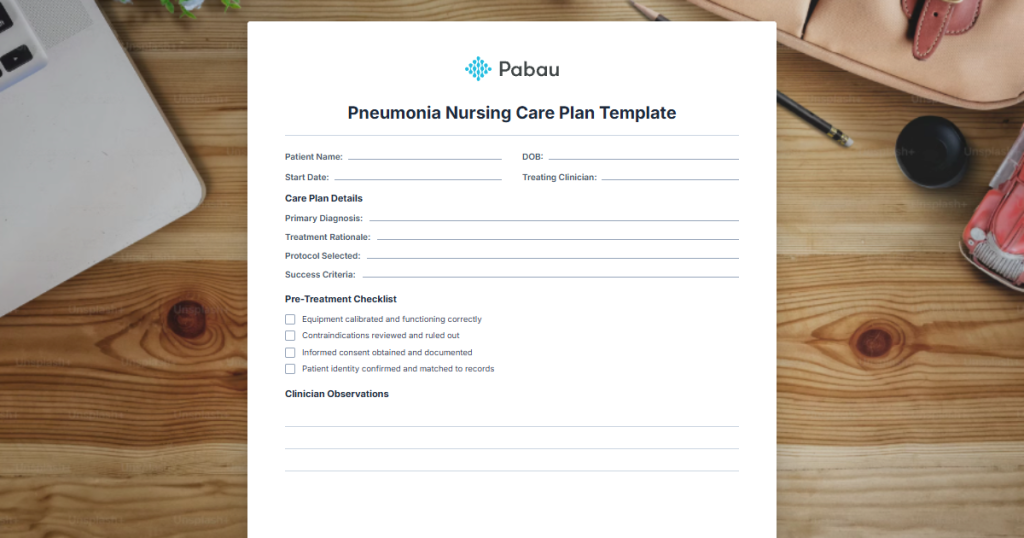
Pneumonia Nursing Care Plan Template
Pneumonia remains a leading cause of hospitalisation and morbidity in acute care...

April 1, 2026


Buy now, pay later is now available in Pabau

A 14 point review of systems template documents all major body systems during patient assessment.
CMS recognises complete ROS as requiring review of at least 10 systems for billing accuracy.
Systematic ROS documentation reduces coding errors and improves claim approval rates.
Standardised templates ensure consistent, audit-ready patient records across your clinic.
Digital ROS forms integrate seamlessly with patient records for faster clinical workflows.
A 14 point review of systems template is a clinical documentation tool that guides healthcare professionals through a systematic evaluation of a patient’s health across all major body systems. Rather than relying on memory or informal questioning, this structured checklist ensures that clinicians capture symptoms and health status information consistently-a practice that strengthens both clinical outcomes and billing accuracy.
The 14 body systems evaluated include constitutional (fever, weight changes, fatigue), ear/nose/throat, cardiovascular, respiratory, gastrointestinal, genitourinary, musculoskeletal, neurological, psychiatric/behavioural, skin, hematologic/lymphatic, endocrine, and allergic/immunologic. CMS recognises this comprehensive approach as a complete ROS when clinicians document findings across at least 10 systems-a threshold that directly affects billing levels for evaluation and management services.
Many practices rely on memory or handwritten notes, which creates gaps in documentation and increases the risk of coding denials. A ready-to-use review of systems template eliminates guesswork, ensures compliance with regulatory expectations, and accelerates your clinical workflows. This guide explains how to use the 14 point ROS template effectively in your clinic, why it matters for both clinical practice and revenue, and where to find a free downloadable version.
A comprehensive medical assessment tool that systematically evaluates a patient’s health across all 14 major body systems, including constitutional, ENT, cardiovascular, respiratory, gastrointestinal, genitourinary, musculoskeletal, neurological, psychiatric, integumentary, hematologic/lymphatic, endocrine, and allergic/immunologic systems.
Download templateThe template is ready to print, distribute digitally, or adapt for your specific clinic workflows. No sign-up required-download directly and begin using it in your next patient appointment.
A 14 point review of systems template is a structured questionnaire that guides clinicians through a systematic assessment of a patient’s health across all major organ systems. Each system is evaluated for the presence or absence of specific symptoms-a methodical approach that differs significantly from an informal or conversational history.
The 14 systems covered are: constitutional (fever, chills, weight loss, fatigue), ear/nose/throat (hearing changes, sinus pain, nasal congestion), cardiovascular (chest pain, palpitations, orthopnoea), respiratory (cough, dyspnoea, wheezing), gastrointestinal (nausea, diarrhoea, abdominal pain), genitourinary (dysuria, frequency, urgency), musculoskeletal (joint pain, stiffness, weakness), neurological (headaches, dizziness, numbness), psychiatric/behavioural (anxiety, depression, mood changes), integumentary (rashes, itching, skin lesions), hematologic/lymphatic (easy bruising, lymph node swelling), endocrine (temperature sensitivity, hair loss, thirst), and allergic/immunologic (allergies, autoimmune history, recurrent infections).
From a clinical perspective, the ROS serves as a safety net. Patients often underreport symptoms or forget to mention secondary complaints, especially when focused on a single presenting problem. A systematic review ensures that subtle but important findings-early warning signs of systemic disease, medication side effects, or lifestyle factors-are captured and documented. Research on systematic patient screening methods demonstrates that structured evaluation tools improve detection rates for underlying health conditions.
From a regulatory standpoint, CMS guidance ties the completeness of ROS documentation directly to billing levels for evaluation and management services, making accurate documentation both clinically sound and financially necessary.
Integrating a structured ROS workflow into your clinic requires clear operational steps. The following five-step framework ensures consistent documentation across your team:
Practices using digital forms can pre-populate ROS fields from previous responses, saving staff time and ensuring consistency. For example, if a patient reported “no asthma” last year, the form can auto-fill that unless the patient updates it-a workflow efficiency that also reduces documentation errors.

See how digital intake forms and clinical templates integrate with your practice management workflow-reducing paperwork and improving documentation consistency across your team.

Any practice conducting patient evaluations benefits from a standardised ROS template. Primary care clinics (family medicine, general practice) use ROS routinely as part of annual wellness visits and acute care encounters. Mental health practitioners document ROS to screen for medical conditions that might underlie or complicate psychiatric symptoms-for instance, fatigue could indicate depression, thyroid dysfunction, or anaemia, and a systematic review flags these possibilities.
Functional medicine and integrative health clinics rely heavily on comprehensive ROS to identify root causes of chronic symptoms. A patient presenting with fatigue and joint pain may reveal a pattern of allergic/immunologic system involvement once the full 14-system picture is documented. Wellness centres, IV therapy clinics, and longevity-focused practices use ROS to establish baseline health status and monitor changes across visits.
Multi-location practices and larger clinics benefit especially from templated ROS, as it ensures consistent documentation quality regardless of which clinician or location sees the patient. When a patient transfers between your locations or sees a different provider, a complete ROS history provides continuity and reduces the risk of missed findings.
Clinical Safety. A systematic ROS reduces the risk of missing important symptoms or early signs of serious illness. Studies on structured clinical documentation templates show that standardized assessment tools improve diagnostic accuracy and patient safety outcomes.
When symptoms are discovered incidentally (during casual conversation rather than structured questioning), they’re more likely to be overlooked in a busy clinic. A template ensures every patient receives the same thorough assessment, improving clinical safety across your practice.
Documentation Compliance. Regulatory bodies (NHS in the UK, CMS in the US) expect documentation to demonstrate the breadth and depth of clinical assessment. A complete ROS-documented across at least 10 systems-supports higher-level billing codes for evaluation and management services. Incomplete or vague ROS documentation leaves money on the table and increases audit risk.
Billing Accuracy. Correct ROS documentation directly impacts coding decisions. A documented complete ROS strengthens your justification for billing a higher E/M level, improving revenue without increasing patient volume. Billing denials often cite “insufficient documentation of ROS” as a reason for coding downgrades-a structured template eliminates this risk.
Workflow Efficiency. Printing or sharing a standardised form takes seconds; remembering what to ask takes mental effort and invites gaps. Staff can distribute the template before the clinician enters the room, allowing patients to review and self-complete simpler items while the clinician focuses on complex or concerning symptoms. This hybrid approach accelerates the appointment without sacrificing thoroughness.
Audit Readiness. If your documentation is ever audited (by an insurer, regulator, or legal inquiry), a complete, dated ROS in the patient record demonstrates professional diligence. Conversely, missing or vague ROS is a red flag to auditors. Templated forms create an audit trail that protects your practice.
Track which ROS findings correlate with your most common diagnoses. If 60% of patients with depression report gastrointestinal symptoms, train your team to explore GI health more deeply during mental health consultations. Over time, you’ll refine your ROS approach to match your patient population and improve both clinical and billing outcomes.
Standard ROS documentation practices differ between practices based on specialty, but core principles remain consistent. Negative findings (e.g., “denies fever, denies chills”) are documented with clarity-use phrases like “ROS reviewed: 14 systems, no abnormalities noted” only if genuinely true. Professional guidance on ROS documentation requirements emphasizes that some auditors require specific system counts documented in the clinical note.
-use phrases like “ROS reviewed: 14 systems, no abnormalities noted” only if genuinely true. Positive findings require specificity: symptom name, duration, severity, triggers, and impact on daily life. Avoid vague entries like “various complaints” or “patient reports feeling unwell”; instead, document the specific systems and symptoms discovered.
Many clinics use abbreviations for speed (e.g., “Const: denies F/C/NS; ENT: denies hearing changes, reports seasonal rhinitis; CV: no CP, no palpitations”). This is acceptable if abbreviations are standardised across your team and clearly defined in your documentation guidelines. What matters is that a reader (auditor, colleague covering your patient, your own future self months later) can understand exactly what was asked and what was found.
Time-of-encounter notation is often overlooked but clinically important. ROS findings can change rapidly; documenting “ROS completed at 10:15 am” alongside the results establishes a clear timeline. For patients with evolving acute illness, this detail can be crucial for understanding disease progression.
CMS guidance for Evaluation and Management (E/M) services ties billing levels directly to the documented depth of history. A complete ROS (reviewing at least 10 of the 14 body systems or documenting that all systems were reviewed) supports billing for a more comprehensive E/M level. Partial ROS (2-9 systems) maps to lower billing codes and reduced reimbursement.
For practices billing high-complexity encounters (e.g., new patient comprehensive visits, complex medical management), proper ROS documentation can mean the difference between billing E/M level 4 and level 5-a reimbursement difference of several hundred pounds per encounter. Over a year, improved ROS documentation consistency translates to significant revenue recovery.
Auditors frequently examine ROS documentation during post-payment reviews. If your submitted claim shows “complete ROS” but the patient record contains no evidence of that assessment, the claim is subject to downgrade and recoupment. A standardised template with signed/dated completion evidence protects your practice during audits.
Paper and digital approaches both work; the key is consistency. Paper templates can be printed before appointments and filed in the chart. Digital forms (captured through intake apps or EHR systems) offer efficiency gains: auto-save functionality, pre-population from prior visits, built-in validation (e.g., requiring responses before the form is submitted), and instant searchability in the record.
Staff training is essential. Receptionists or nurses administering the ROS need clear instruction on asking neutral, open-ended questions and recording responses accurately. A brief video or written guide (“How to Administer the 14-System ROS”) ensures consistency. Some practices include the ROS administration as part of their vital signs protocol, treating it as routine as blood pressure measurement.
For practices using mental health practice management or functional medicine software, integrating the ROS template into your system workflow ensures it’s part of every appointment. Alerts can flag if an ROS wasn’t completed, prompting staff to complete it before the clinician finalises the note.

Need a structured framework for clinical history-taking? SOAP Notes for Social Work and Clinical Practice explains how to integrate ROS findings into your broader clinical documentation structure.
Looking to automate patient intake workflows? Digital Forms and Intake Capture helps streamline ROS data collection and automatically populate patient records.
Want to ensure your documentation meets compliance standards? HIPAA Compliance for Medical Offices covers best practices for storing and securing completed ROS forms and patient assessment data.
A 14 point review of systems template is a foundational tool for systematic clinical assessment and compliant medical documentation. Whether your practice is paper-based or fully digital, adopting a standardised ROS approach improves clinical safety, billing accuracy, and operational efficiency. The template itself is simple-a structured list of 14 body systems and targeted symptom questions-but its consistent use across your clinic creates profound cumulative value: better patient outcomes, stronger billing justification, audit-ready records, and reduced revenue leakage from documentation gaps.
Download the free 14 point ROS template above and integrate it into your next appointment cycle. Start with your busiest clinician and measure what changes: improved documentation completeness, faster note writing, fewer billing denials. Most practices see measurable improvements within two weeks of consistent use.
A complete ROS reviews at least 10 of the 14 body systems. A pertinent ROS reviews only those systems directly related to the patient’s presenting complaint (e.g., respiratory and constitutional systems for a patient with cough). CMS billing levels require complete ROS for higher E/M codes. A 14 point template supports complete ROS documentation.
Yes. Many practices adapt the template by emphasising systems most relevant to their specialty. A mental health clinic may expand psychiatric and neurological questioning; a cardiology practice may deepen cardiovascular and respiratory review. The 14-system framework remains intact, but question wording and emphasis shift to match your patient population and clinical focus.
A typical ROS takes 5-10 minutes if the patient completes a written checklist first, then the clinician asks targeted follow-up questions. With practice and standardised language, times improve. Digital forms with auto-population from prior visits can reduce this further. The goal is thorough documentation, not speed-a rushed ROS defeats its purpose.
No template is legally mandated. However, CMS E/M billing rules require documented evidence of ROS breadth and depth. A structured template makes this evidence clear and auditable. Practices not using a template must still document ROS findings; a template simply ensures consistency and reduces documentation risk.
Yes. Many practices distribute the template (by email, in the waiting room, or via patient portal) and ask patients to complete it before their appointment. The clinician then reviews responses and asks clarifying questions. This hybrid approach saves appointment time and helps patients prepare thoughtful, accurate responses without the time pressure of an in-room encounter.