IV Therapy Primary & Preventive Care
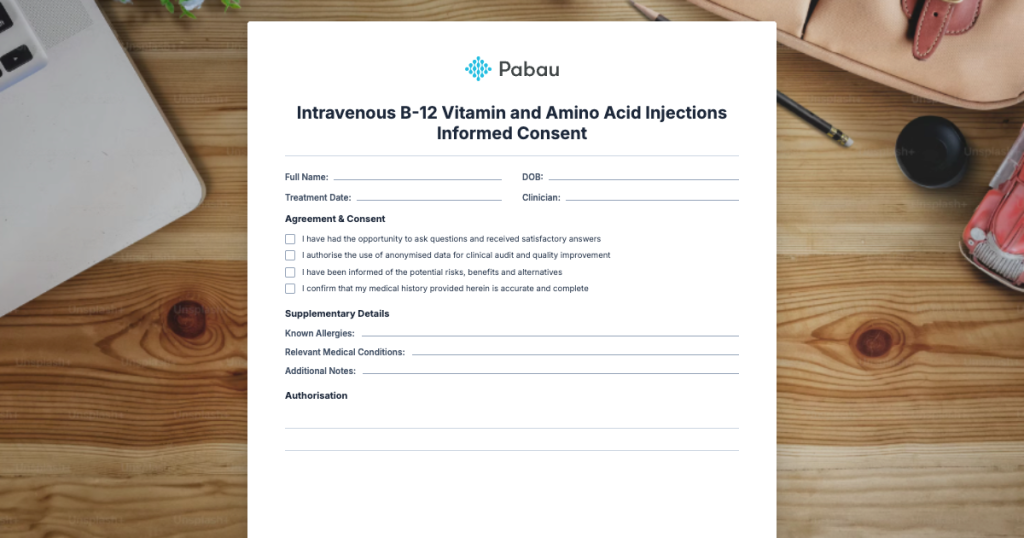
Intravenous B-12 Vitamin and Amino Acid Injections Informed Consent
A b12 injection consent form is a clinical documentation tool that educates pati...

February 25, 2026


Buy now, pay later is now available in Pabau

Legal protection through documented informed consent and risk acknowledgment
Comprehensive contraindication screening prevents adverse events
Patient education ensures realistic expectations for B12 therapy
Post-injection care guidance supports compliance and recovery
Digital signature integration streamlines clinic workflows
A b12 injection consent form is a clinical documentation tool that educates patients about intravenous B-12 and amino acid injection therapy while establishing legal protection for your practice. Before administering parenteral vitamin therapies, clinics must obtain informed consent, disclosing potential benefits, risks, contraindications, and aftercare requirements. This template ensures regulatory compliance, reduces liability, and supports safe clinical workflows for IV therapy, wellness, longevity, and functional medicine practices.
Proper informed consent documentation is not optional-it’s a clinical safety standard and legal requirement. Digital capture forms streamline this process, allowing practices to collect, store, and audit consent workflows without paper management overhead.
A ready-to-use informed consent form covering patient information, B-12 and amino acid injection benefits, potential risks including anaphylaxis, contraindication screening, medication interactions, pre- and post-injection care instructions, and signature blocks.
Download templateA B12 injection informed consent form is a structured clinical document that communicates the purpose, benefits, risks, and procedural details of intravenous or intramuscular B-12 and amino acid injection therapy to patients before treatment. It serves two critical functions: patient education and legal protection.
The form documents that a patient understands the treatment, acknowledges potential side effects (including serious adverse reactions like anaphylactic shock), and consents voluntarily to proceed. FDA labelling for parenteral B-12 products explicitly warns of anaphylaxis risk, making informed consent a regulatory and clinical standard.
In clinical practice, this form becomes part of the patient’s permanent medical record. HIPAA regulations require that consent documentation be stored securely and maintained with the patient’s clinical records. Regulatory bodies, including state medical boards and health departments, expect practices to demonstrate that informed consent was obtained and documented before any invasive or pharmaceutical procedure.
The consent form protects both patient autonomy and practice liability. It establishes a contemporaneous record that the patient understood the risks and chose to proceed-a critical defence if adverse events occur.
Implementing this consent form in your clinic requires a systematic approach. The form is structured to guide patients through all essential decision-making checkpoints before injection administration. Follow these five operational steps to integrate the form into your B-12 therapy workflow.
Digital consent workflows streamline this process. Rather than printing and filing paper forms, digital form solutions allow patients to complete and sign consent on tablet or kiosk, with automated storage linked directly to the patient’s clinical record. This eliminates lost paperwork and ensures every patient record has a timestamped, signed consent on file.

Automate patient consent capture at kiosk or tablet. Store signed forms directly in clinical records with e-signature verification and compliance audit trails.

This B12 injection informed consent form template is essential for any practice administering parenteral B-12 or amino acid injections across multiple clinical settings.
IV therapy and wellness clinics use this form as a standard intake document before every B-12 or lipotropic injection protocol. A comprehensive B12 injection consent form ensures high-volume injection services (50-200 per week) maintain streamlined workflows without compromising documentation quality.
Integrative and functional medicine practices incorporate B-12 therapy into broader nutrient optimization protocols. They use the consent form to educate patients about parenteral B-12 as part of comprehensive micronutrient assessment, often combining B-12 with other vitamins or amino acids.
Longevity and metabolic health clinics offer B-12 injections as part of age-optimisation and energy-support programs. The form positions B-12 therapy within the broader context of preventive health strategies.
Weight loss and bariatric support practices commonly administer B-12 injections to patients with absorption deficiencies. The consent form documents the medical necessity and risk-benefit rationale specific to each patient’s weight loss journey.
Aesthetic and medspa clinics offering injectable nutrient therapies use this form to establish clinical legitimacy and demonstrate informed consent protocols aligned with medical standards. Medical spa software platforms integrate these forms directly into patient intake workflows, ensuring every new client encounters the consent process before their first injection.
Reduces legal and regulatory exposure. A B12 injection informed consent form signed and dated by both patient and clinician demonstrates due diligence if a patient experiences an adverse event. Regulators and medical defence counsel review consent documentation first when evaluating adverse event complaints. A thorough, witnessed, signed form is your strongest defence against liability claims.
Ensures regulatory compliance. State medical boards, health departments, and clinical accreditation bodies (CQC in the UK) expect documented informed consent before parenteral therapies. Compliance management tools track consent collection rates, flagging any patient records missing signed forms before treatment dates.
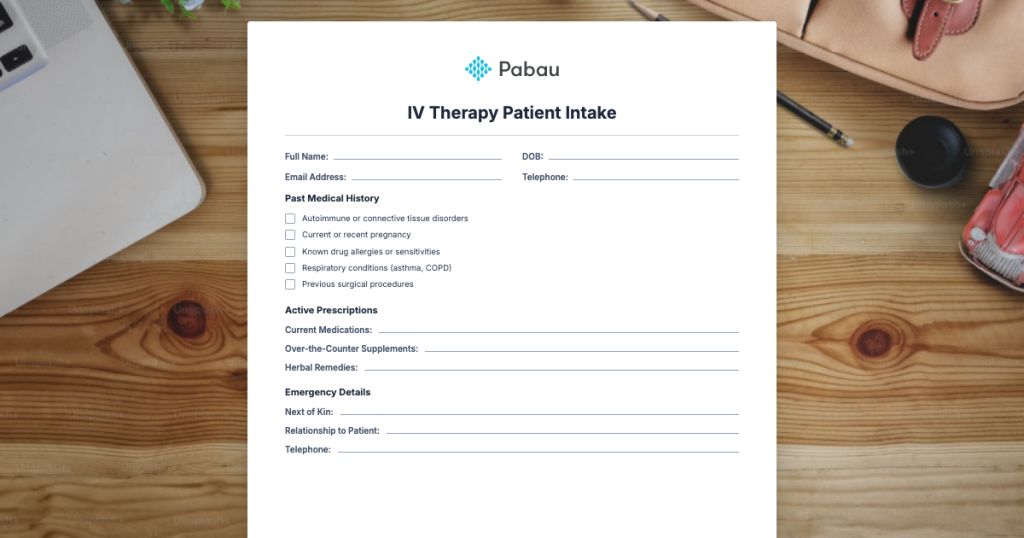
Improves patient safety. By walking patients through contraindication screening, you identify patients who should not receive the injection (allergies, uncontrolled hypertension, pregnancy) before harm occurs. This prevents adverse events and supports appropriate clinical decision-making.
Enhances patient trust and satisfaction. Patients appreciate thorough, transparent explanation of what to expect. A structured consent conversation positions your practice as clinically rigorous and patient-centred.
Document the batch and lot number of each B-12 product used on the consent form or treatment record. This allows rapid identification and recall if a batch is found to be contaminated or if a patient reports adverse events. Link the consent to the injection record with matching dates and product identifiers.
Informed consent depends on clear, honest communication about what can go wrong. A thorough B12 injection consent form should disclose all potential complications. While parenteral B-12 therapy is generally safe, specific populations and medical conditions carry elevated risk.
Anaphylactic shock is the most serious adverse effect. Clinical literature documents anaphylaxis cases following parenteral vitamin B-12 administration, particularly with cyanocobalamin formulations. Symptoms emerge within minutes: severe difficulty breathing, throat tightness, rapid heartbeat, loss of consciousness. Emergency equipment and epinephrine must be available. Because of anaphylaxis risk, intravenous B-12 administration is never recommended-intramuscular injection is the safe route.
Absolute contraindications require practitioner discretion. Patients with documented cobalamin anaphylaxis history, uncontrolled hypertension, or recent acute myocardial infarction should not receive the injection without specialist review. Relative contraindications (metformin use, PPIs, H2-blockers) warrant monitoring but do not always prevent treatment. Pregnancy also requires explicit discussion and documented consent.
Common but minor side effects are expected. Injection site pain (most frequent), temporary dizziness, facial flushing, and mild headache resolve within hours. Patients should know these are normal and not indicators of serious problems. Managing expectations prevents unnecessary anxiety.
What happens after the needle comes out matters as much as the consent conversation. Structured post-injection guidance protects patients and supports clinical accountability.
Immediate post-injection care reduces complications. Patients should remain in the clinic for 10-15 minutes to allow monitoring for delayed anaphylactic reaction. They should avoid strenuous exercise for 24 hours. Applying ice to the injection site for 10 minutes reduces bruising. Hydration supports vitamin utilisation and reduces systemic side effects. Give this guidance in print to every patient.
Injection frequency requires clear documentation. B-12 injections are typically administered weekly, bi-weekly, or monthly depending on practitioner protocols and patient symptoms. The consent form should specify the recommended frequency and expected duration so patients understand long-term commitment.
Document adverse reactions immediately. If a patient reports side effects, record them in the clinical note with time of onset, severity, and duration. Notify the supervising clinician. If anaphylaxis occurs, activate emergency protocols, administer epinephrine, call emergency services, and document the entire incident. Link consent documentation to comprehensive patient records that integrate consent forms, injection dates, batch numbers, and post-injection notes in a single searchable file. Use AI-assisted documentation to streamline post-injection notes with automated templates ensuring consistent capture of injection details, product information, patient tolerance, and any adverse effects.

Need a structured clinical checklist for injection protocols? Myers Cocktail Protocol provides step-by-step guidance for IV nutrient therapy administration, including safety checks and patient monitoring.
Looking to automate consent workflows in your practice? Digital Forms and Capture enables kiosk and tablet-based consent collection with e-signature and automatic clinical file integration.
Want integrated consent and clinical record management? IV Therapy EMR Software links consent forms, treatment records, and adverse event logs in one searchable clinical file for audit and safety monitoring.
A well-designed B12 injection informed consent form does more than check a legal box. It protects patient autonomy, reduces clinical risk, and demonstrates that your practice operates with the rigour and transparency patients deserve. By educating patients about benefits, honestly disclosing risks, screening for contraindications, and documenting everything clearly, you build trust, ensure safety, and create a defensible record if questions ever arise.
Whether you’re launching an IV therapy clinic or adding B-12 injections to an existing practice, start with a robust informed consent process. The time invested upfront pays dividends in patient satisfaction, regulatory confidence, and peace of mind.
Yes. Obtaining and documenting informed consent is a legal and ethical requirement before administering any invasive procedure. Regulatory bodies and clinical accreditation standards expect signed consent on file. Without it, a practice risks liability claims and regulatory findings in the event of adverse outcomes.
Patients cannot refuse to understand risks or acknowledge contraindications-those are non-negotiable parts of informed consent. However, a patient may decline the injection entirely after reading the form. Your role is to ensure understanding, not to persuade. If a patient chooses not to proceed, respect that decision and document it.
Retain the original signed consent form for the duration of the patient’s relationship with your practice, plus a minimum of 7 years after the final visit. This ensures regulatory bodies and courts can access the consent record if a claim or investigation arises years later. Digital storage is acceptable if encrypted and access-controlled.
Treat it as a medical emergency. Administer epinephrine immediately. Call emergency services. Keep the patient under observation. Document the incident thoroughly (time, symptoms, treatment, outcome) in the patient record. Notify your medical director. Report to FDA MedWatch (USA) or Yellow Card (UK).
Intramuscular injection is the recommended and safer route. Intravenous B-12 carries significantly higher anaphylaxis risk and is not standard practice in most clinics. If a patient specifically requests IV administration, discuss it with a supervising physician-it may require hospital referral with emergency capability.