Fertility Reproductive & Sexual Health
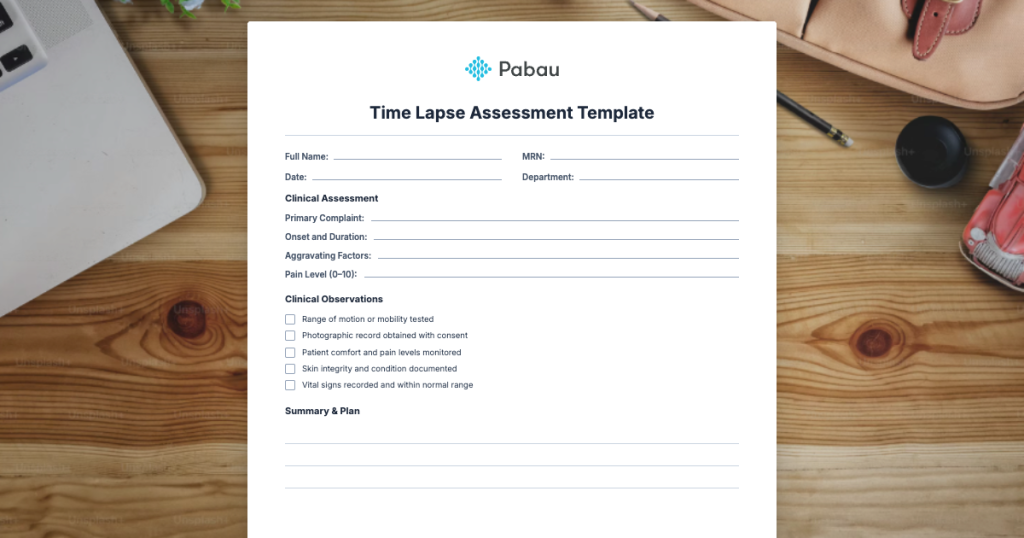
Time Lapse Assessment Template
Download Your Free Time-Lapse Assessment Time-Lapse Assessment A comprehensive t...

March 30, 2026


Buy now, pay later is now available in Pabau

O-Shot consent forms must document PRP origin, risks, contraindications, and patient understanding
Separate absolute and relative contraindications for clinical accuracy and screening efficiency
Include tiered risk disclosures covering infection, bruising, temporary dysesthesia, and rare complications
Digital signature workflows streamline pre-appointment completion and CQC compliance
Customisable templates save clinic time while maintaining medico-legal protection
The o-shot consent form is a critical legal and clinical document for aesthetic clinics offering Orgasm Shot treatments. This procedure uses platelet-rich plasma (PRP) derived from the patient’s own blood to enhance intimate health and sexual wellness in women-and your consent documentation must reflect both the benefits and the real risks involved.
A comprehensive o-shot consent form does more than satisfy regulatory requirements. It demonstrates informed consent, protects your clinic from liability, and ensures patients genuinely understand the procedure before treatment. This guide explains what a professional O-Shot consent form must contain, how to implement it into your pre-appointment workflow, and how to adapt a template to your clinic’s specific protocols and patient population.
A ready-to-use consent form template covering patient details, contraindication screening (absolute and relative tiers), risk disclosures for PRP injection, expected outcomes, anesthesia administration, alternative treatments, post-procedure care instructions, and digital signature blocks for compliance.
Download template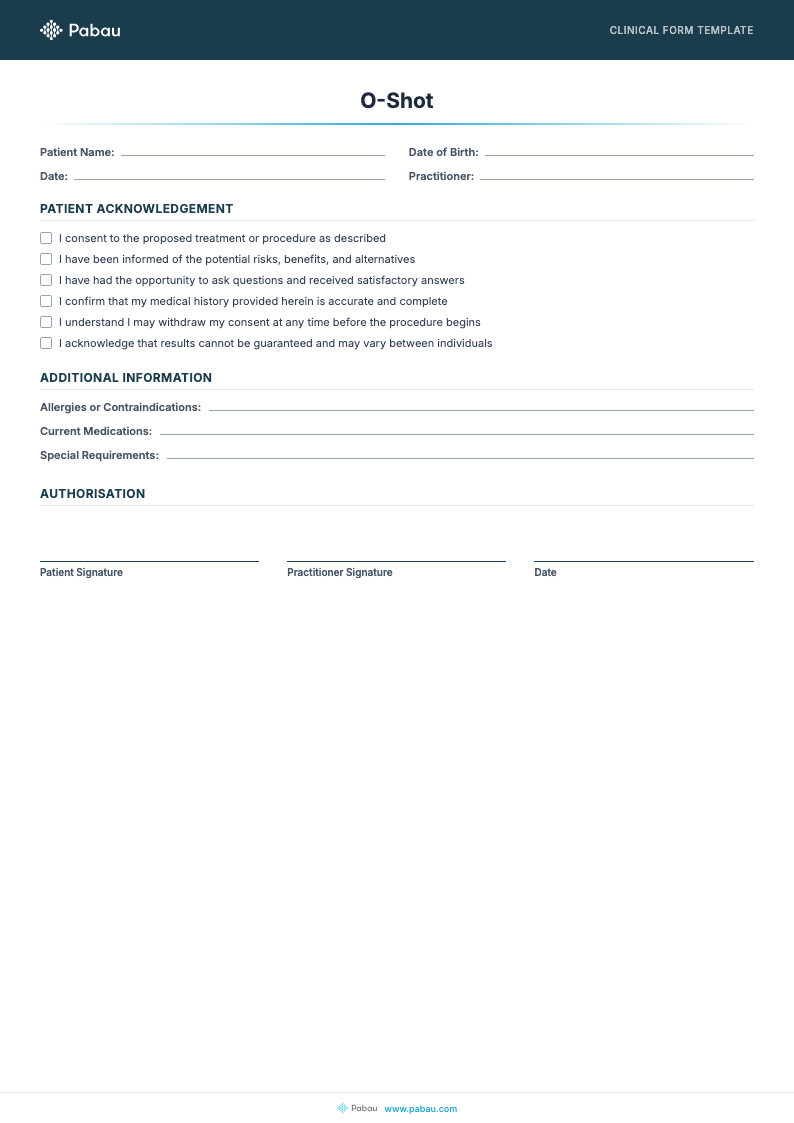
An O-Shot consent form is a medical-legal document designed specifically for aesthetic clinics performing Orgasm Shot (PRP) procedures on the clitoris and vaginal tissue. It serves three critical functions: documenting that the patient understands the procedure, acknowledging the associated risks, and establishing informed consent under UK law (CQC and GMC standards).
The O-Shot uses autologous platelet-rich plasma clinical research-platelets extracted from the patient’s own blood-injected into targeted areas of the clitoris and anterior vaginal wall. While limited scientific evidence supporting O-Shot exists, clinics must ensure consent forms address this uncertainty. Unlike standardised cosmetic procedures, the O-Shot sits at the intersection of aesthetic medicine and sexual wellness therapy. Your consent form must address both clinical safety and patient expectations around intimate outcomes.
A professional consent form covers procedure description, contraindications (absolute conditions that prevent treatment, and relative conditions requiring clinician judgement), documented risks ranging from common to rare, expected timelines for results, alternatives to PRP, anesthesia methods, and post-procedure care. It also includes sections for patient acknowledgment and signature-increasingly digital signatures for paperless, GDPR-compliant workflows.
Implement the o-shot consent form into your clinic workflow using these five operational steps. Ensure your compliance management workflow aligns with your medical director’s protocols before customising the form.

See how private GPs reduce admin, improve clinical safety, and increase revenue with Pabau.

The o-shot consent form is essential for several practice types. Aesthetic and medical spas offering PRP vaginal rejuvenation benefit from procedure-specific documentation that clarifies what O-Shot can and cannot achieve, reducing post-treatment dissatisfaction across diverse patient populations.
Private gynaecology and sexual health clinics integrating regenerative medicine, particularly Cellular Medicine Association certified providers, can adapt the form can adapt the form to their patient communication style while maintaining rigorous risk disclosure standards. Dermatology and aesthetic medicine practices expanding into intimate area treatments gain a bridge between clinical training and sexual wellness terminology.
Multi-location aesthetic groups and franchises need standardised documentation across locations-a template ensures every clinic meets CQC standards and medico-legal requirements while allowing local customisation. Independent practitioner-led clinics without dedicated compliance staff accelerate setup by adapting a ready-made template, reducing legal review time and preventing critical omissions.
Medico-legal protection: A detailed, signed consent form demonstrates informed decision-making under UK law (GMC and CQC standards). If a patient claims they didn’t understand risks or were unaware of alternatives, your documentation provides evidence of thorough disclosure. This is particularly important for intimate procedures where patient expectations and outcomes can diverge significantly.
Compliance with regulatory bodies: The Care Quality Commission (CQC) inspects consent practices during aesthetic clinic assessments. A procedure-specific form with tiered risk disclosure and contraindication screening signals robust governance. Use digital forms platforms to streamline signature collection while maintaining audit trails.
Reduced post-treatment disputes: Clear documentation of expected outcomes and realistic timelines prevents patients from claiming they were promised immediate results. Stating alternatives acknowledges that O-Shot is one option, not the only solution-managing expectations upfront.
Faster clinic onboarding: A template accelerates consent process design for new clinics or practitioners. Rather than starting from scratch, you inherit a procedure-specific framework tested across hundreds of clinics. New team members understand what questions matter, why contraindication screening is tiered, and what post-care information is critical.
Separate your absolute and relative contraindications visually on the form. Use checkboxes or a decision tree so clinicians instantly recognise which conditions prevent treatment versus which require discussion with the medical director. This single change cuts pre-appointment screening time by 40% while protecting patient safety.
Risk disclosure is the ethical and legal cornerstone of informed consent. For O-Shot procedures, risks are tiered-common, self-limiting risks that nearly all patients experience briefly, and rare but serious risks that require immediate attention.
Common risks include bruising (resolves in 7-14 days), swelling of the injection sites (peaks at 24-48 hours, subsides over 1 week), temporary discomfort or aching, and mild dysesthesia or altered sensation (typically resolves within 2 weeks). These are expected outcomes of PRP injection into sensitive tissue. Your consent form should frame them as transient, normal responses-not complications.
Rare but serious risks require explicit documentation. Infection is the most concerning; your form should specify your clinic’s antibiotic prophylaxis protocol (if used), post-care hygiene instructions, and red flags requiring immediate contact (fever, spreading redness, purulent discharge). Hematoma (localised blood collection) may require aspiration if large or painful. Prolonged dysesthesia lasting beyond 4 weeks is uncommon but documented-your form should acknowledge it and outline when to seek specialist assessment.
State what your clinic will and won’t do. Will you offer revision treatment if results are unsatisfactory? What’s the timeline before reassessment? These boundaries, disclosed upfront, prevent misunderstandings later. Use patient portal access to allow patients to retrieve their signed consent forms and post-care instructions whenever needed.
Patient data handling during consent collection is governed by GDPR (UK Information Commissioner’s Office). A digital o-shot consent form stored in your clinic management system must meet several legal requirements.
Data minimisation: Collect only information necessary for informed consent and treatment safety. Avoid generic “marketing” permissions mixed with clinical consent. Separate the clinical consent form from any request to use patient photos before/after-these are distinct consents requiring explicit, separate agreement.
Encryption and access control: Ensure your forms platform encrypts data in transit (HTTPS) and at rest. Limit access to authorised clinical staff; reception team members typically don’t need to view signed consent documents. Audit logs should track who accessed what and when.
Retention policy: State how long you retain consent forms (typically 7 years post-treatment under UK data protection standards for aesthetic procedures, aligned with professional indemnity insurance requirements). Outline destruction methods-deletion from cloud storage, secure shredding of printed forms.
Patient rights: GDPR gives patients rights to access, correct, and delete their data. Your privacy notice should explain these rights and how patients can exercise them. For consent forms, patients can request copies; have a process to provide them within 30 days. A digital consent form solution with encryption and access controls ensures compliance automatically, so your clinical team focuses on consent quality, not compliance mechanics.

List Item #1
List Item #2
An effective o-shot consent form protects both your patients and your practice. By documenting the procedure clearly, screening contraindications rigorously, disclosing risks transparently, and offering alternatives, you demonstrate clinical professionalism and medico-legal diligence. Digital workflows integrated into your medical spa management system reduce friction-patients complete forms before arrival, clinic staff review systematically, and signed documents are instantly accessible for audits or CQC inspections.
Use the template above as your starting point. Adapt it to your medical director’s protocols, your patient population’s demographics, and your clinic’s specific O-Shot technique. Update it annually as clinical evidence evolves or your patient feedback highlights gaps. A living, customised consent form is far more valuable than a generic template-it reflects your clinic’s commitment to informed, safe, ethical care.
Absolute contraindications prevent treatment entirely (e.g., active infection, pregnancy, anticoagulation therapy). Relative contraindications require clinical judgement-the medical director may approve treatment after discussion (e.g., recent filler injection, certain dermatological conditions). Your form should list both, but flag absolute items for automatic exclusion during screening.
Yes, absolutely. State that results typically appear over 3-6 weeks as PRP-derived growth factors initiate tissue remodelling, with peak outcomes at 3 months. Specify that individual outcomes vary-some patients report improvement in sensation or lubrication; others note modest changes. This realistic framing reduces post-treatment disappointment and supports informed consent.
Not recommended. Generic forms lack O-Shot-specific details: PRP origin, injection sites (clitoral and vaginal), tiered contraindications, and realistic outcome timelines. CQC inspectors expect procedure-specific consent documentation. A generic form signals poor governance and may not satisfy medico-legal standards if complications arise.
Use a GDPR-compliant digital forms platform that encrypts data, logs access, and manages retention policies automatically. Separate clinical consent from marketing permissions. Ensure patients understand data retention timelines and their rights to access or delete information. Have a documented process to provide copies within 30 days if requested.
Do not proceed with treatment. Document the refusal in the patient’s record with the date and reason (if disclosed). A signed consent form is a legal and ethical requirement; proceeding without it exposes your clinic to complaints, regulatory action, and liability claims. Use the pre-appointment time to address concerns and clarify misconceptions-many refusals resolve with better communication.
Review annually or whenever clinical guidelines change (e.g., MHRA updates on PRP use, emerging safety data). Use before and after photo documentation linked to signed consent to support outcome tracking and medico-legal clarity. Gather feedback from your clinical team-do patients ask recurring questions that the form doesn’t address? Update the alternatives section if your clinic adds new treatments. Version control your forms so you can track what each patient signed.