Dental Medical History Forms Template
A dental medical history form template is a standardised patient intake document...

March 16, 2026


Buy now, pay later is now available in Pabau

A BMAC injection uses concentrated stem cells and growth factors from a patient’s own bone marrow to promote tissue repair in damaged joints, tendons, and bones.
The procedure takes 60 to 90 minutes, involves minimal downtime, and most patients return to light activity within a few days.
BMAC therapy shows strong clinical evidence for knee osteoarthritis, rotator cuff tears, and non-union fractures.
Costs typically range from £2,000 to £5,000 per session, and most insurance plans do not cover the procedure.
Compared to PRP, BMAC injection delivers a higher concentration of mesenchymal stem cells, making it suitable for more advanced tissue damage.

Download this free BMAC injection patient assessment worksheet. Screen candidates, document procedures, and track outcomes with structured follow-up fields.
Regenerative medicine is changing how clinics approach musculoskeletal injuries and chronic joint conditions. At the centre of this shift is the BMAC injection, a procedure that harnesses a patient’s own bone marrow to accelerate healing. Short for bone marrow aspirate concentrate, BMAC therapy offers clinics a minimally invasive treatment option for patients who want to avoid surgery or have exhausted conventional therapies. In this guide, we break down the science, procedure steps, clinical applications, and practical considerations every clinic should understand before offering BMAC injection services.
A BMAC injection involves harvesting a small sample of bone marrow, concentrating it through centrifugation, and injecting the resulting concentrate into damaged tissue. Bone marrow contains mesenchymal stem cells (MSCs), platelets, cytokines, and growth factors that play a direct role in tissue regeneration.
The science behind BMAC centres on the body’s natural repair mechanisms. MSCs can differentiate into bone, cartilage, and connective tissue cells. When concentrated and delivered to an injury site, these cells stimulate a localised healing response. Research published in Scientific Reports (2024) found that patients receiving BMAC injections for knee osteoarthritis showed significant improvements in pain scores and joint function at four-year follow-up.
Unlike synthetic treatments, BMAC is autologous. This means the concentrate comes from the patient’s own body, which eliminates the risk of immune rejection. For clinics, this translates to a safer treatment profile and fewer adverse reactions to manage.
Understanding the step-by-step process helps clinics set accurate patient expectations and streamline their appointment scheduling.
The clinician evaluates the patient’s medical history, current medications, and imaging results. Blood disorders, active infections, and certain cancers may disqualify candidates. Patients typically stop anti-inflammatory medications five to seven days before the procedure.
Using local anaesthesia, the practitioner inserts a specialised needle into the posterior iliac crest (the back of the hip bone). A syringe draws out 30 to 60 millilitres of bone marrow aspirate. The process takes roughly 10 to 15 minutes.
The aspirate goes into a centrifuge that spins at high speed for 15 to 20 minutes. This separates the sample into layers, isolating the buffy coat layer rich in MSCs, platelets, and growth factors. The final concentrate is typically five to seven times more concentrated than the original aspirate.
The concentrated BMAC is injected directly into the damaged tissue under ultrasound or fluoroscopic guidance. Image guidance ensures precise placement, which improves outcomes and reduces the risk of complications.
Use digital forms to capture detailed pre-procedure assessments and consent. Standardised intake forms reduce clinical errors and keep patient records audit-ready.
BMAC therapy has clinical applications across orthopaedics, sports medicine, and emerging aesthetic fields.
Knee osteoarthritis is the most researched application. A systematic review in PMC (2024) confirmed that BMAC injections significantly improved pain and function compared to hyaluronic acid and corticosteroid injections. Hip and ankle osteoarthritis also respond well to treatment.
Rotator cuff tears, Achilles tendinopathy, and lateral epicondylitis (tennis elbow) are common targets. The growth factors in BMAC promote collagen synthesis and accelerate tendon repair. Sports medicine clinics frequently combine BMAC injection with physiotherapy protocols for optimal recovery.
Non-union fractures and bone defects benefit from the osteogenic potential of MSCs. Orthopaedic surgeons sometimes use BMAC as an adjunct during surgical bone grafting procedures to enhance fusion rates.
Some clinics now explore BMAC for facial rejuvenation and hair restoration. The high concentration of growth factors may stimulate collagen production and hair follicle regeneration. However, evidence in aesthetics remains preliminary compared to orthopaedic applications.
Clinics should document all risks through standardised consent processes and maintain thorough client records for every procedure.
Patients can typically leave the clinic within an hour of the procedure. Here is a general recovery timeline:
Clinics that use automated pre and aftercare emails report higher patient satisfaction and fewer post-procedure calls. Sending recovery instructions through a client portal also streamlines the follow-up process.
BMAC injection is a premium regenerative treatment. In the UK, prices generally range from £2,000 to £5,000 per session. In the US, costs fall between $3,000 and $5,000. Factors that influence pricing include:
Most private insurance plans and the NHS do not cover BMAC therapy, as regulatory bodies still classify it as investigational for many indications. Clinics offering payment processing options and flexible payment plans can make the treatment more accessible to patients.
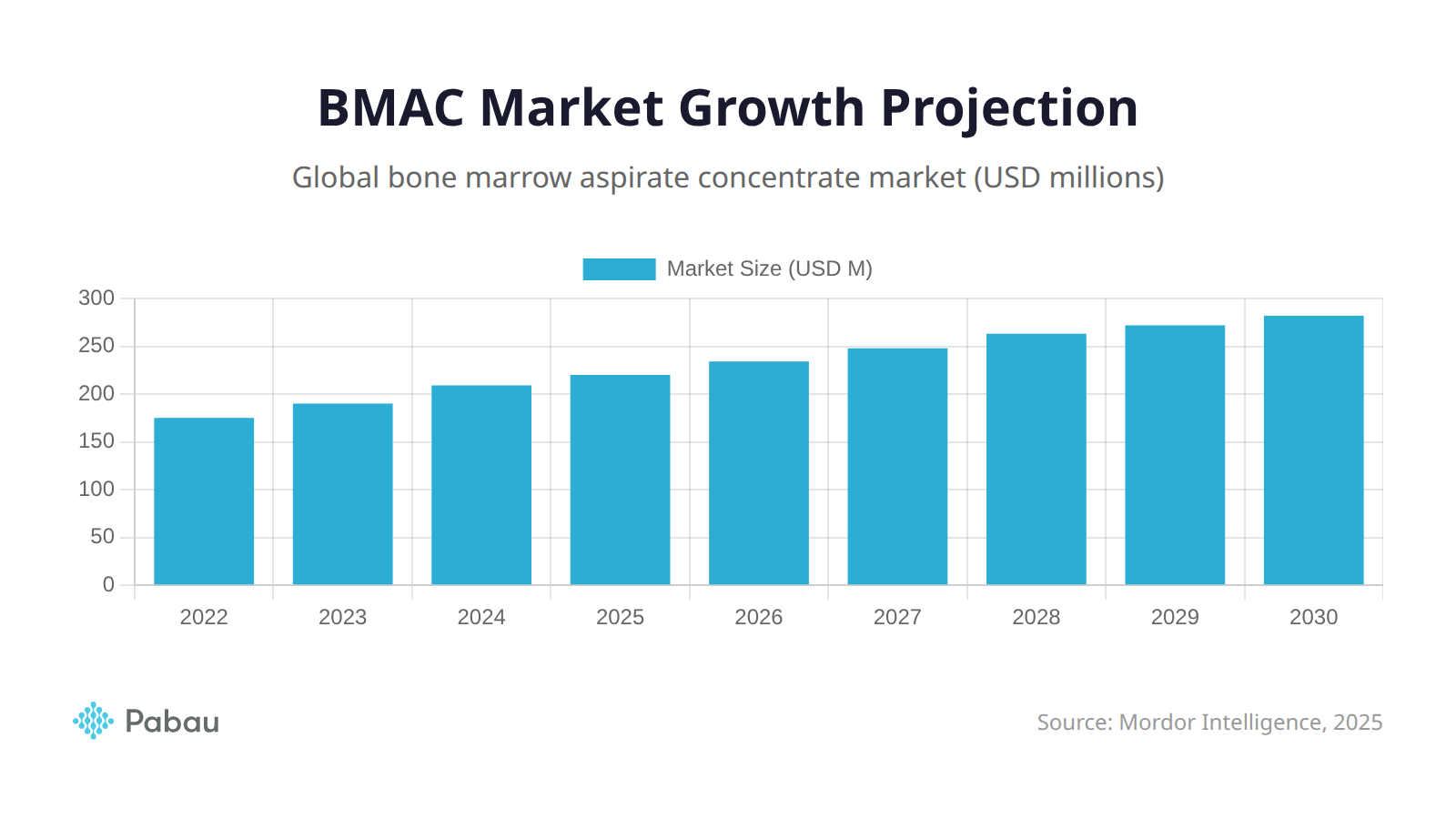
The global BMAC market is projected to grow from approximately $209 million in 2024 to $282 million by 2030, reflecting a compound annual growth rate of around 6.2% (Mordor Intelligence, 2025). This growth signals increasing clinical adoption and expanding patient demand.
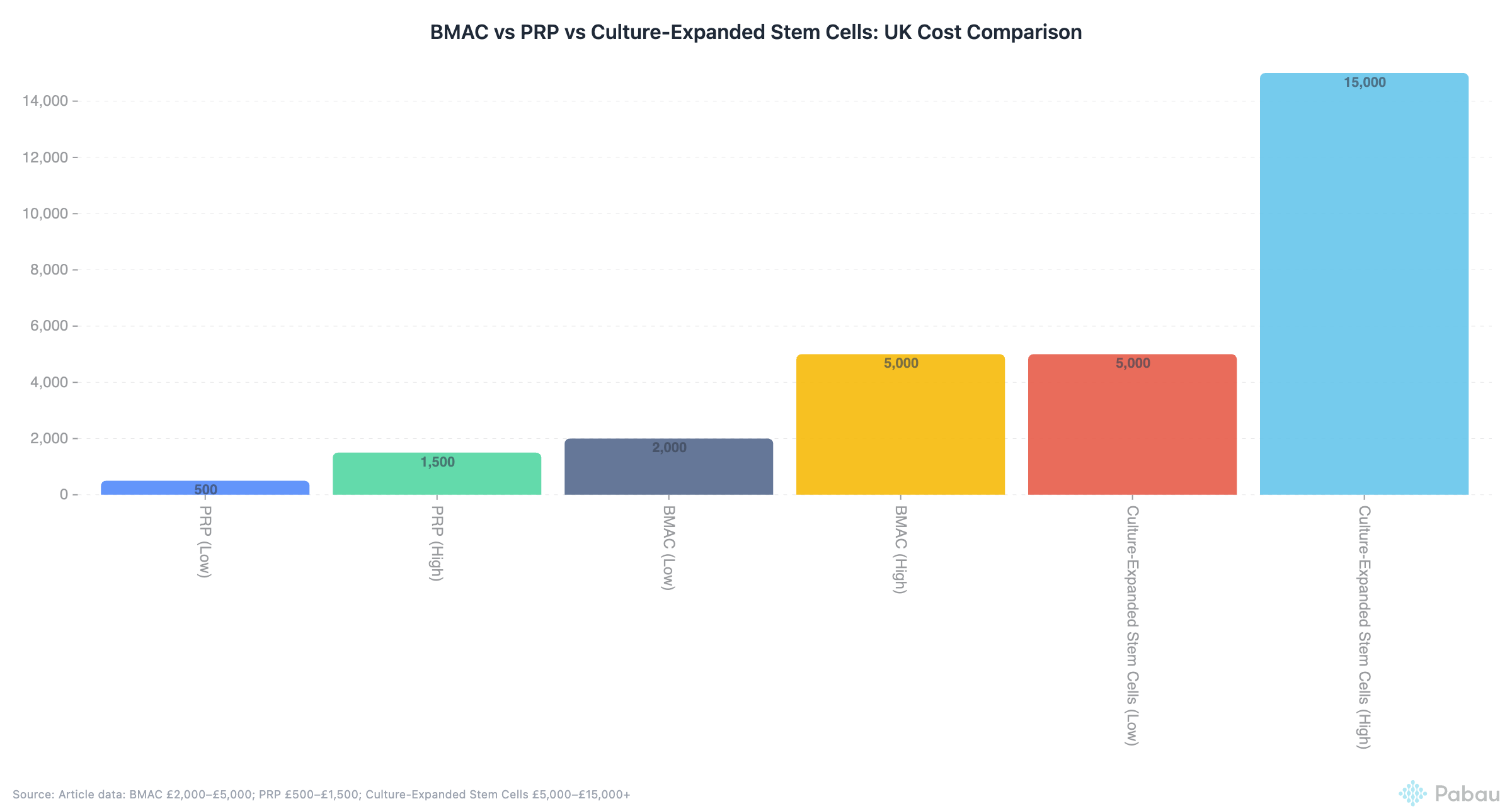
Clinics often field questions about the differences between regenerative treatments. Here is how BMAC injection compares to platelet-rich plasma (PRP) and culture-expanded stem cell therapy.
| Factor | BMAC Injection | PRP | Culture-Expanded Stem Cells |
|---|---|---|---|
| Source | Bone marrow (hip) | Peripheral blood (arm) | Lab-cultured from bone marrow or fat |
| Key components | MSCs, platelets, growth factors | Platelets, growth factors (no MSCs) | High-concentration MSCs |
| Procedure time | 60-90 minutes | 30-45 minutes | Multiple visits over weeks |
| Best for | Moderate to severe joint/tendon damage | Mild to moderate soft tissue injuries | Advanced cartilage or bone defects |
| Cost (UK) | £2,000-£5,000 | £500-£1,500 | £5,000-£15,000+ |
| Regulatory status | Permitted (minimal manipulation) | Widely accepted | Heavily regulated in UK/EU |
A meta-analysis in Frontiers in Medicine (2024) found no significant difference in outcomes between PRP and BMAC for knee osteoarthritis. However, BMAC showed greater promise for more severe cases due to its stem cell content. Many sports medicine clinics now combine both treatments for a synergistic effect.
For clinics managing multiple regenerative treatment lines, inventory management software helps track centrifuge kits, aspiration needles, and processing supplies efficiently.
Adding BMAC injection to your treatment menu requires careful operational planning. Consider these practical steps:
Clinics that invest in structured workflows and proper record-keeping build stronger reputations and attract more referrals in the regenerative medicine space.
Not every patient qualifies for BMAC therapy. Ideal candidates share several characteristics that clinicians should screen for during the initial consultation.
Patients with mild to moderate osteoarthritis (Kellgren-Lawrence grades I to III) tend to respond best. Those with severe end-stage arthritis may still benefit, though expectations should be adjusted accordingly. Younger patients with acute sports injuries, such as meniscal tears or ligament sprains, also see strong results due to their higher baseline stem cell counts.
Contraindications include active bone marrow disorders, blood cancers, uncontrolled infections, and bleeding disorders. Patients on blood-thinning medications may need to pause treatment under medical supervision before the procedure.
A thorough screening process protects both the patient and the clinic. Using standardised digital intake forms ensures no critical health information gets missed during the assessment phase.
Patient education plays a significant role in treatment uptake for regenerative procedures. Many patients arrive with questions shaped by online research, and some carry misconceptions about stem cell therapy.
Clinics that provide clear, evidence-based information during consultations convert more enquiries into bookings. Share published research outcomes, explain the procedure timeline visually, and offer written aftercare instructions patients can review at home.
Tracking clinical outcomes over time strengthens your clinic’s credibility. Use reporting tools to monitor pain scores, functional improvements, and patient satisfaction across your BMAC cohort. This data supports marketing claims and helps refine your treatment protocols.


See how clinics reduce admin, improve clinical outcomes, and increase revenue with Pabau.

Most patients report mild to moderate discomfort during the bone marrow aspiration, similar to a deep pressure sensation. Local anaesthesia numbs the area, and the injection itself causes minimal pain. Post-procedure soreness typically resolves within a few days.
Initial improvements often appear within four to six weeks as inflammation decreases. Full therapeutic benefits, including tissue regeneration and pain reduction, typically develop over three to six months. Some patients continue to improve for up to a year after treatment.
Many patients experience significant improvement after a single session. Depending on the severity of the condition, some may benefit from a second injection six to twelve months later. Your clinician will recommend a treatment plan based on individual assessment and response.
Most private insurance plans and the NHS do not currently cover BMAC injection, as it is still considered investigational for many indications. Patients typically pay out of pocket. Some clinics offer payment plans to improve accessibility.
BMAC contains mesenchymal stem cells, platelets, and growth factors harvested from bone marrow, while PRP contains only platelets and growth factors from blood. BMAC injection is better suited for moderate to severe tissue damage due to its stem cell content. PRP works well for milder injuries and is less invasive to obtain.