ADHD Assessment Mental Health & Therapy
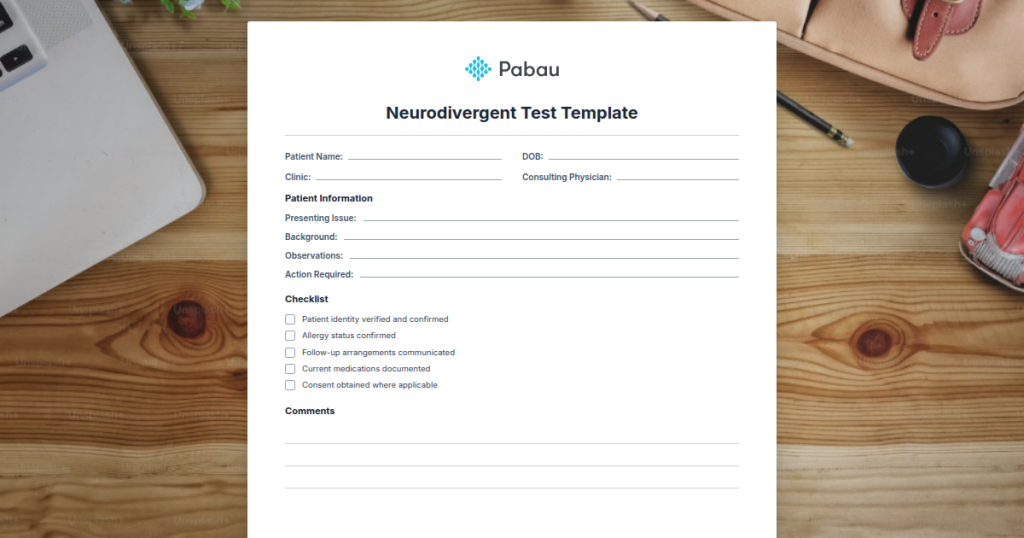
Neurodivergent Test Template
A neurodivergent test template is a clinician-facing screening form that healthc...

April 3, 2026


Buy now, pay later is now available in Pabau

A structured intake form gathers essential client information before the first therapy session.
HIPAA-compliant forms protect client confidentiality and reduce practice liability.
Digital intake forms save time and allow clients to complete information at their own pace.
Include consent declarations and signature blocks to document informed consent.
Tailor questions to your therapy modality and client population.
A therapy intake form is the foundation of a well-organised mental health practice. This structured document gathers essential information about a client’s background, presenting problems, medical history, and treatment expectations before the first session begins. Beyond basic data collection, an effective therapy intake form establishes informed consent, documents client confidentiality agreements, and identifies any contraindications or safety concerns that may affect treatment planning.
For therapists and counsellors, a standardised intake process builds professional credibility, ensures regulatory compliance, and creates a smoother client experience. Many practices find that digital therapy intake forms streamline workflows, reduce administrative burden, and improve data accuracy compared to paper-based alternatives. This guide covers what to include, how to structure your form, compliance best practices, and provides a free downloadable template you can customise for your practice.
A comprehensive mental health intake form template covering client demographics, presenting problems, medical history, contraindication screening, consent declarations, and signature requirements for therapy practices.
Download template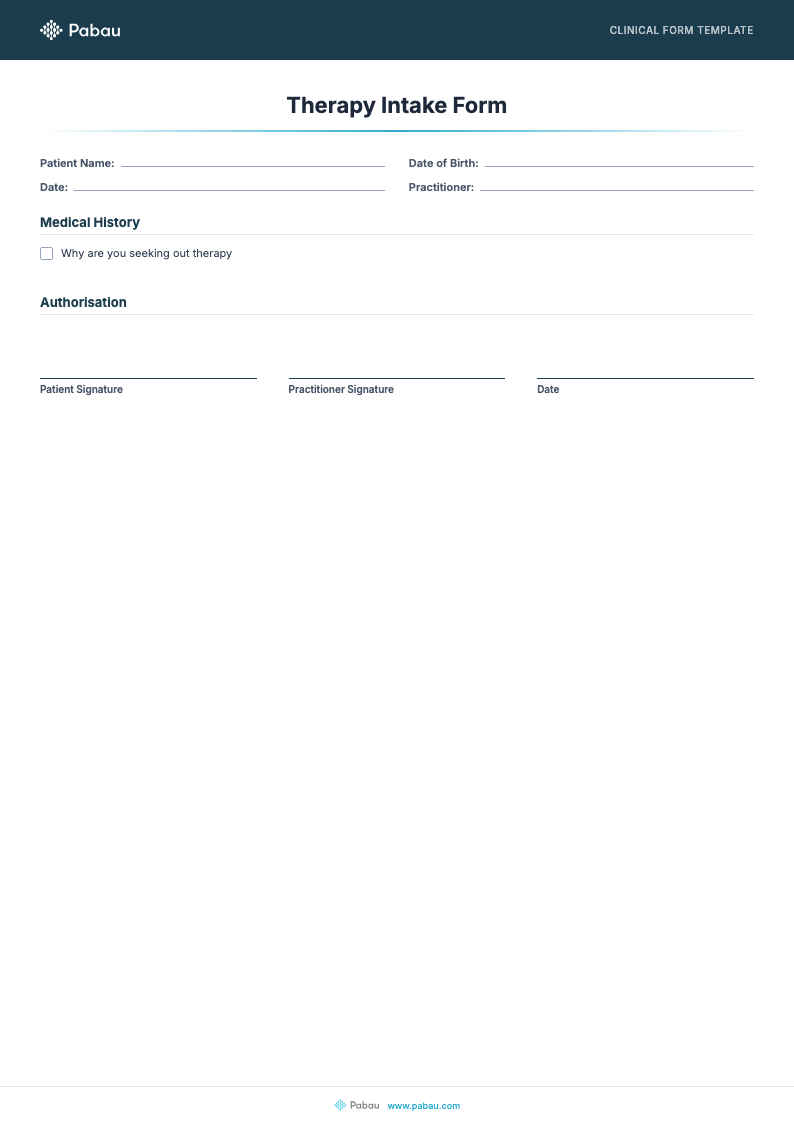
A therapy intake form is a structured document that mental health practitioners use to gather comprehensive background information from clients at the beginning of their therapeutic relationship. It serves multiple clinical and administrative purposes: documenting client consent, screening for medical and psychiatric contraindications, establishing confidentiality agreements, and creating a baseline record of presenting concerns and treatment goals.
Unlike casual consultations, a formalised intake process demonstrates professional practice standards. The form captures client demographics (name, contact information, insurance details), medical history (medications, previous diagnoses, psychiatric treatment), presenting problems (why the client is seeking therapy), and current safety concerns (suicidal ideation, self-harm, substance use). This information becomes part of the clinical record and informs the therapist’s treatment planning and risk assessment.
From a regulatory perspective, intake forms function as part of informed consent documentation. They show that the client understood the terms of therapy, confidentiality limits, and potential risks or side effects of treatment. Most professional ethics codes-including guidelines from the American Psychological Association (APA) and the National Association of Social Workers (NASW)-require documented informed consent before beginning treatment. A well-designed intake form fulfils this requirement and protects both practitioner and client.
Under HIPAA regulations, any form collecting health information must ensure client confidentiality through secure storage and transmission. Digital intake forms with encrypted delivery and cloud storage meet these requirements more reliably than paper forms stored in an unsecured filing cabinet.
The following five-step workflow guides practitioners through administering a therapy intake form effectively. This process balances gathering necessary information with building initial rapport-both critical for successful therapy outcomes.
The key to smooth intake workflow is timing: send the form early enough for thoughtful completion, review it carefully before the session, use it as a guide for conversation (not a script), and ensure all documentation is signed and stored securely.

Many therapists spend hours on intake paperwork each week. Pabau's digital intake forms automate the process, collect signed consent, and auto-populate client records-freeing you to focus on therapy.

A structured therapy intake form is essential for any mental health practice serving individual clients. This includes licensed therapists, psychologists, counsellors, social workers, and psychiatric nurses who conduct one-on-one talk therapy sessions.
Individual therapy practices use intake forms to document client consent and baseline mental health status. A solo psychotherapist conducting 15-20 sessions per week needs a standardised intake process to manage risk assessment and maintain consistent documentation across a growing caseload.
Group therapy and counselling centres benefit from centralised intake procedures that ensure every new client completes the same screening questions, regardless of which therapist they’re assigned to. This creates consistency in safety screening and reduces the risk of missed contraindications or disclosure of abuse.
Telehealth and online therapy platforms rely heavily on digital intake forms because clients are not present in an office. Secure digital transmission, automated reminders, and e-signature capture make remote intake workflows feasible and compliant with confidentiality regulations.
Specialised therapy practices-such as trauma-focused therapy, ADHD coaching, couples therapy, or child psychology clinics-use customised intake forms that ask modality-specific questions. A couples therapist needs different information than an individual therapist; a trauma specialist screens for dissociation and PTSD symptom severity; a coaching practice may focus on goal-setting and life context rather than psychiatric history.
Any practice that bills insurance or operates under professional licensure standards needs documented intake procedures for compliance and liability protection.
Organised risk assessment. A standardised form ensures you ask every new client the same safety screening questions. Rather than relying on memory or intuition, you have documented evidence that you screened for suicidality, self-harm, substance abuse, and abuse history. If a clinical incident occurs, your intake documentation demonstrates due diligence.
Legal protection and compliance. Intake forms create a paper trail of informed consent. If a client later disputes whether they agreed to your fees, confidentiality limits, or therapeutic approach, your signed intake form is evidence of informed discussion. For therapists in regulated jurisdictions, documented intake procedures satisfy professional licensing board standards and reduce malpractice liability.
Better treatment planning. Comprehensive intake data-including past therapy experiences, current medications, family history, and stated treatment goals-allows you to tailor your therapeutic approach. Knowing a client had a negative experience with CBT previously, or that they’re currently taking a medication that affects mood, changes how you proceed clinically.
Improved client experience. When clients complete an intake form at home (rather than in a waiting room), they feel less rushed. They can describe sensitive topics in writing first, which may help them open up in conversation. Digital forms that auto-populate follow-up appointment details and send confirmation reminders reduce no-shows and administrative friction.
Time savings. A well-structured intake form means you spend less session time asking basic demographic questions and more time on therapeutic work. If you see 20 clients per week and save 5 minutes per client on intake administration, that’s nearly two hours of clinical time recovered each week.
HIPAA and data security. Digital intake forms with encrypted transmission and secure storage comply with privacy regulations automatically. You avoid the liability of paper forms left on desks or faxes sent to wrong numbers. Audit trails in digital systems show exactly who accessed client information and when.
Filter intake questions by modality before sending. A couples therapist asking single-therapy questions wastes client time. Build modality-specific intake form versions and select the correct one when scheduling. Practice management software with conditional form logic allows you to show or hide questions based on therapy type, creating a tailored experience and faster completion rates.
Effective therapy intake forms follow a logical structure that moves from administrative information to clinical assessment to consent. The template provided above includes these core sections; customise based on your practice’s needs.
Client demographics. Capture name, date of birth, phone, email, mailing address, emergency contact, and insurance information. This section is straightforward data entry and helps clients feel the process is professional and organised.
Presenting problems. Ask the client to describe why they’re seeking therapy in their own words. Provide checkboxes for common concerns (anxiety, depression, trauma, relationship issues, life transitions, grief) but also leave space for open-ended text. This section immediately tells you the client’s self-defined concern and frames the therapeutic focus.
Medical and psychiatric history. Document current medications, past psychiatric diagnoses, previous therapy experience, substance use, and family mental health history. Ask about suicidal ideation, self-harm, and hospitalisation. These questions directly inform your risk assessment and treatment approach. Be specific: “Have you ever had thoughts of harming yourself?” is more reliable than “Do you feel safe?”
Treatment preferences and modality. Ask whether the client prefers in-person or virtual sessions, whether they’ve had positive or negative therapy experiences before, and what they hope to achieve. This information guides you toward your therapeutic approach (CBT, psychodynamic, EMDR, coaching, etc.) and shows the client that their preferences matter.
Informed consent and confidentiality clauses. Include statements that the client understands your therapeutic approach, fees, cancellation policy, and limits to confidentiality. List mandatory reporting obligations (abuse of children or vulnerable adults, imminent harm to self or others, court orders). Have the client initial each major clause and sign the full form at the end.
Consent for telehealth (if applicable). If you offer virtual sessions, include specific language about risks and benefits of telehealth, technology requirements, and confidentiality in a remote setting. Clients need to understand that a home video session may be interrupted by family members or that their internet connection could be compromised.
Use clear, non-clinical language. Avoid jargon or medical terminology clients won’t understand. Instead of “suicidal ideation,” ask “Have you had thoughts of harming yourself?” Instead of “history of substance abuse,” ask “Have you ever struggled with alcohol or drug use?” Accessible language increases response accuracy and reduces client anxiety.
Keep it focused but comprehensive. A therapy intake form should take 10-15 minutes to complete. If it’s longer, completion rates drop and clients feel overwhelmed before the first session. Prioritise safety screening and clinical history; defer less critical questions to the intake session itself.
Include conditional logic in digital forms. Modern practice management software allows you to show or hide questions based on previous answers. For example, only ask about medication interactions if a client reports taking psychiatric medication. This reduces form length and improves the completion experience.
Be transparent about how data is used. Include a statement explaining what information you’ll store, who will access it, how long you’ll keep it, and what happens if a client requests their records. This builds trust and complies with data privacy regulations like HIPAA or GDPR.
Customise for your therapy modality. A couples therapist asks different intake questions than a trauma therapist or a career coach. Build separate form templates and select the appropriate one based on the type of service. If you offer multiple modalities, this customisation dramatically improves relevance and client engagement.
Test the form with real clients. After designing your intake form, have a few willing clients complete it and ask for feedback. Are any questions confusing? Do they feel the form is too long or invasive? This real-world testing catches usability problems before the form goes into full use.
Store securely and maintain confidentiality. Whether you use paper or digital intake forms, store them in a locked cabinet or encrypted cloud system. Train your entire team on confidentiality; even administrative staff handling intake forms need to understand client data is sensitive. Practice management software designed for mental health includes security features that meet HIPAA standards automatically.

Looking to automate intake and clinical notes? Echo AI generates initial clinical summaries from completed intake forms, saving hours of documentation time each week.
Want to understand therapy modalities available for your clients? Therapy Practice Management guide covers scheduling, documentation, and billing workflows specific to mental health clinics.
Need guidance on intake form compliance? HIPAA Compliance for Clinic Software explains secure form delivery, data storage, and audit trails that protect client confidentiality.
A well-designed therapy intake form is more than administrative paperwork-it’s the clinical foundation of effective therapy. It demonstrates professionalism, protects client safety, ensures informed consent, and creates space for clients to articulate what they need before the first session begins.
Start with the free template provided above, customise it for your therapy modality and client population, and test it with a few clients before rolling out across your practice. As your practice grows, consider moving to digital intake forms that integrate with your practice management system, reducing manual data entry and improving compliance. The time invested in a structured intake process pays dividends in client outcomes, practice liability protection, and administrative efficiency.
A counselling intake form gathers essential background information, screens for safety concerns, documents informed consent, and creates a baseline record of the client’s presenting problems and treatment goals. It fulfils clinical, administrative, and legal documentation requirements.
Yes, and it’s often preferable. Sending the intake form 24-48 hours before the appointment allows clients to complete it thoughtfully at home, reference medical records, and disclose sensitive information in writing. This approach improves data quality and reduces session time spent on administrative questions.
Respect the client’s autonomy while clarifying the importance of safety screening and consent. Explain that confidentiality items and medical history questions directly affect your ability to provide safe, effective therapy. Document what information the client declined to provide. If they refuse critical safety screening, you may need to defer treatment until you have adequate information to proceed.
Digital intake forms can be HIPAA compliant if they use encrypted transmission, secure cloud storage, and include access controls. Ensure your platform encrypts data in transit (HTTPS) and at rest, has business associate agreements in place, and maintains audit logs. Avoid unencrypted email or consumer cloud services (Google Drive, Dropbox) for client health information.
Aim for a form that takes 10-15 minutes to complete. Longer forms have lower completion rates and may discourage new clients. Prioritise safety screening, medical history, and consent; defer less urgent questions to the intake session conversation.
Send the intake form before the appointment so you’ve already collected demographic and medical data. Use the session to build rapport, clarify responses, deepen your understanding of the client’s story, and establish therapeutic alliance. Review the form briefly to show you’ve read it, but spend the majority of the session in conversation, not questioning.