Aesthetics & Beauty Medspa
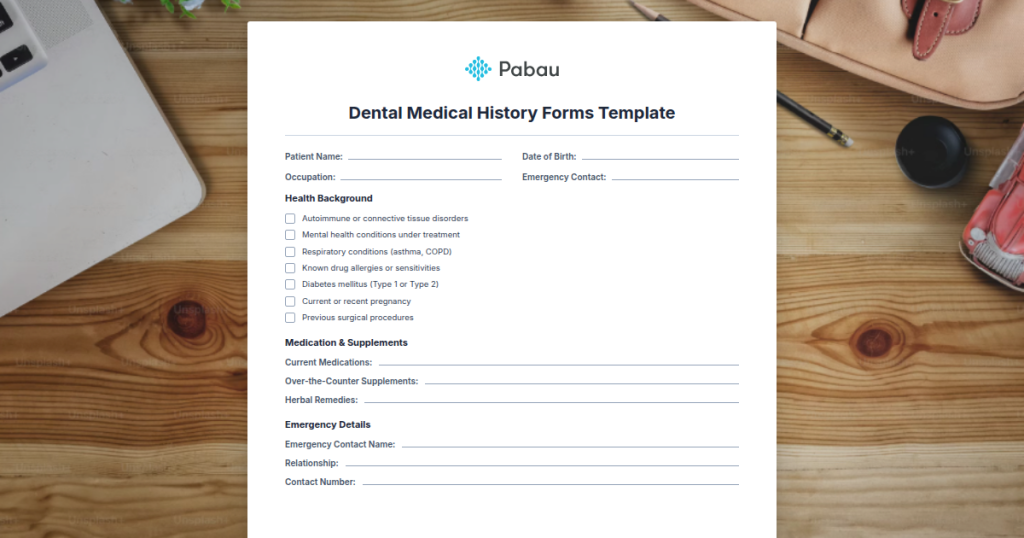
Dental Medical History Forms Template
A dental medical history form template is a standardised patient intake document...

March 16, 2026


Buy now, pay later is now available in Pabau

A skin needling consent form protects both practitioner and patient by documenting informed consent before microneedling treatment.
The form must cover treatment details, risk disclosures, contraindications, and post-treatment care instructions to ensure legal compliance.
Digital consent workflows streamline form completion, reduce paper clutter, and automatically link consent records to patient treatment history.
Template-based forms ensure consistency across appointments and reduce the risk of missing critical consent elements.
A skin needling consent form is a legally essential document that protects both your clinic and your patients. Before any microneedling procedure, patients must understand the treatment process, potential risks, benefits, and aftercare requirements. This form documents that understanding and demonstrates your clinic’s commitment to informed consent – a cornerstone of clinical liability protection and regulatory compliance.
Without a comprehensive consent form, you expose your clinic to regulatory findings, patient complaints, and potential legal disputes. The CQC expects registered practices to obtain documented informed consent before aesthetic procedures. Similarly, FDA guidance and medical negligence standards require practitioners to demonstrate that patients were fully informed before treatment commenced.
This guide explains what a skin needling consent form should contain, how to implement it into your clinic workflow, and how to use one effectively – whether on paper or digitally.
A ready-to-use consent form covering patient details, contraindication screening, risk disclosures, aftercare instructions, and signature blocks for all microneedling procedures.
Download template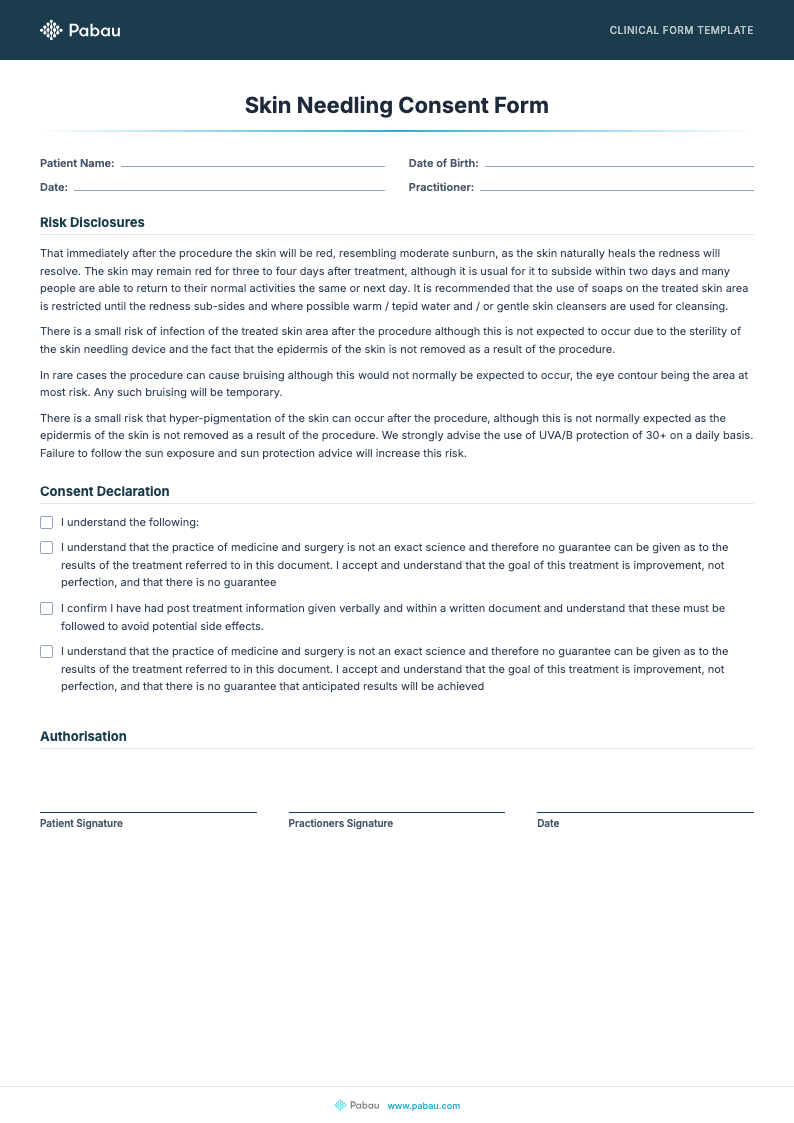
A skin needling consent form is a clinical document that formally records a patient’s agreement to undergo microneedling treatment after being fully informed of the procedure, its risks, benefits, and aftercare requirements. The form serves two purposes: it protects the patient by ensuring they understand what to expect, and it protects the clinic by documenting that informed consent was obtained.
Skin needling – also known as collagen induction therapy or microneedling – uses a specialised device to create controlled micro-punctures in the skin surface. This stimulates the body’s natural healing response, triggering collagen production and skin rejuvenation. Because the procedure involves medical devices and carries inherent risks, informed consent is both a clinical and legal requirement.
From a regulatory perspective, the CQC expects all registered independent healthcare services to obtain documented consent before aesthetic procedures. This mirrors FDA medical device guidance for microneedling tools and aligns with GDPR requirements for patient data processing and clinical documentation. HIPAA-compliant practices in the US face similar obligations to retain signed consent forms as evidence of proper protocol.
Without a skin needling consent form in place, clinics operate at legal and regulatory risk. Practitioners may face allegations that patients were not adequately informed, complaints to the CQC or state medical boards could cite missing documentation, and insurers might decline claims for treatment-related complications if no signed consent exists on file.
A structured consent workflow ensures nothing is missed and that patients complete the form thoughtfully before treatment. The following steps outline a clinical-practice approach grounded in the form’s actual structure and safety considerations.
This five-step workflow converts a paper document into a structured clinical safeguard. Each step documents the patient’s informed consent journey and creates an evidence trail if questions arise later.

Pabau's digital consent forms streamline pre-appointment paperwork, auto-populate from patient records, and link directly to treatment history – reducing manual entry and ensuring no consent element is missed.

Any aesthetic clinic or medical spa offering microneedling procedures should use a skin needling consent form – whether you see patients once a month or dozens per week. Different practice types have distinct needs:
Aesthetic clinics and medispas regularly perform microneedling and related skin rejuvenation treatments. A documented consent form is essential for protecting both patient safety and clinical liability. Many aesthetic clinics see 3-10 microneedling patients per week; a standardised form ensures consistency across all practitioners and appointment times.
Dermatology practices offering in-office skin needling for scar repair, acne-scarring revision, or cosmetic skin rejuvenation require the same level of informed consent documentation. Dermatologists are held to the same CQC and FDA standards as any other practitioner and must retain signed consent forms as part of the medical record.
Laser and light-therapy clinics often combine microneedling with other modalities (radiofrequency, LED therapy, chemical peels). A comprehensive skin needling consent form ensures patients understand each component of their treatment plan, especially when procedures are performed in sequence or as multi-modal packages.
Solo practitioners and independent aesthetic nurses operating as sole traders are particularly exposed to liability risk if consent documentation is missing or incomplete. A standardised form demonstrates professional practice and protects against complaints to professional bodies or insurers.
Multi-location clinic groups benefit from having a single, approved skin needling consent form template deployed across all locations. This ensures regulatory consistency, simplifies staff training, and makes it easier to audit consent compliance during internal reviews or external inspections.
Legal and regulatory protection. A signed skin needling consent form documents that informed consent was obtained before treatment. If a patient later disputes the procedure or files a complaint, the signed form is your primary evidence that they understood the risks and agreed to proceed. The CQC expects clinics to retain this documentation; having it on file significantly reduces regulatory findings related to consent. Additionally, professional indemnity insurers often require signed consent forms and may decline claims if documentation is absent.
Standardised clinical workflow. A template-based form ensures every patient receives the same information in the same sequence. No details are missed, no practitioner improvises the consent conversation, and every appointment follows the same standard of care. This consistency is a key marker of clinical professionalism and reduces the risk of patient confusion or misunderstanding.
Reduced administrative burden. A well-designed form can be completed quickly – most patients finish it in 5-10 minutes. Digital delivery via patient portal means no reception staff time is wasted on paper distribution, no forms get lost, and all responses are automatically stored in the patient record. For clinics with high appointment volumes, this efficiency gain compounds significantly.
Improved patient safety and satisfaction. Patients who review detailed risk information and aftercare instructions are more likely to follow post-treatment protocols correctly. This reduces complications (infection, hyperpigmentation, unexpected bruising) and increases patient satisfaction with results. A well-informed patient is also more likely to book follow-up treatments and refer friends because expectations are aligned with reality.
Data protection and GDPR compliance. Using a standardised, secure form template ensures patient consent is recorded in a compliant manner. Digital forms with audit trails (who completed it, when, from which device) provide evidence of proper consent processing should a data protection authority request information about how consent was obtained.
Document the specific contraindications screened during your consent process. If a patient later reports a contraindication they missed (e.g. current isotretinoin use), your signed form proves you asked the right questions. This distinction between clinician error and patient non-disclosure is crucial in any liability investigation.
An effective skin needling consent form addresses four critical risk-disclosure categories:
Immediate post-procedure skin response. Patients should expect redness resembling moderate sunburn immediately after microneedling. The form documents that this is a normal part of healing, that redness typically subsides within 2-4 days, and that many patients can return to normal activities the next day. By setting realistic expectations upfront, you prevent alarm and reduce “unexpected complication” complaints.
Infection risk. Although rare due to the sterility of microneedling devices and the fact that the epidermis remains intact, infection is a documented risk. The consent form should state this clearly and outline post-treatment care (gentle cleansing, restricted soap use for 24-48 hours, tepid water) that minimises infection risk. Patients who understand the infection risk are more likely to follow aftercare protocols religiously.
Bruising and pigmentation changes. Rare bruising can occur, particularly around the eye contour. Hyperpigmentation is a small risk, especially in darker skin types or if sun exposure is not avoided post-treatment. The form should recommend UVA/B protection of 30+ daily and explain that failure to follow sun protection advice increases this risk. This explicit language demonstrates that you informed the patient of behaviour-dependent outcomes.
No guarantee of results. Perhaps the most important disclosure: skin needling aims for improvement, not perfection. Results vary based on skin type, age, baseline condition, and individual healing response. A patient who signs a form explicitly stating “no guarantee of results” is less likely to pursue legal action if results are modest or slower to appear than expected.
While paper consent forms are legally valid, digital workflows offer significant operational advantages. A digital skin needling consent form sent via secure patient portal or email allows patients to review and complete it at home, at their own pace, before arriving at the clinic. Reception staff no longer spend time distributing, tracking, or scanning forms. The clinic maintains an automatic audit trail (timestamp, IP address, completion confirmation) that strengthens compliance documentation.
Digital forms also improve completion rates. Patients who receive a link to a fillable form are more likely to complete it thoroughly than those handed a clipboard at check-in. Pre-appointment completion also means you have time to identify contraindication flags before the patient arrives, allowing you to call ahead if treatment must be rescheduled due to a newly disclosed medication or condition.
For compliance audits, digital forms are easier to search, retrieve, and aggregate. If an external body requests a sample of your consent documentation, you can quickly pull 10 signed forms from the past quarter rather than rifling through filing cabinets. This efficiency translates to reduced audit burden and faster regulatory responses.

Need a framework for automating patient intake? Pabau’s digital forms feature allows you to create fillable consent forms, send them to patients pre-appointment, and auto-link completed responses to patient records and treatment appointments.
Looking for guidance on clinical documentation standards? Best practices for safer clinical notes explains how to structure treatment records alongside consent documentation for maximum compliance and audit readiness.
Want to streamline appointment confirmations with aftercare? Automated workflows can trigger post-appointment aftercare reminders immediately after the patient signs their consent form, ensuring they receive written post-treatment instructions before leaving the clinic.
A skin needling consent form is not a bureaucratic checkbox – it is a clinical safeguard that protects your patients, your practitioners, and your business. By documenting informed consent, you demonstrate professional practice, comply with CQC expectations, align with FDA and GDPR requirements, and significantly reduce your liability exposure.
The template provided above is ready to download and customise for your clinic. Whether you use it on paper or deploy it digitally, ensure every skin needling patient completes and signs it before treatment begins. Keep signed forms securely archived for the duration your jurisdiction requires (typically 6-10 years). This simple practice transforms a routine aesthetic procedure into a properly documented, clinically sound treatment journey – and that distinction matters when liability questions arise.
In the UK, the CQC expects all registered independent healthcare services to obtain documented informed consent before aesthetic procedures. In the US, state medical boards and FDA guidance support consent documentation for medical devices. While specific statutory requirements vary by jurisdiction, a signed consent form is considered best practice and standard of care across all regions.
Digital consent forms are legally valid provided they include a timestamp, audit trail, and documented patient identity. Many clinics now use electronic signature platforms for efficiency. Handwritten paper forms are also valid; the key is that the signature proves the patient reviewed and agreed to the terms on a specific date.
Retention periods vary by jurisdiction. UK practices should retain patient records for a minimum of 6 years after the last consultation; US HIPAA-covered practices must retain records for 6 years. For aesthetic procedures, many practitioners retain records for 10 years or longer to account for delayed complications or disputes. Check your local regulatory and insurer requirements.
You should not proceed with treatment if a patient refuses to sign a consent form. Refusal suggests the patient is not comfortable with the procedure or does not understand it fully. Document the refusal in the patient record, reschedule the appointment, and offer a consultation to address concerns. This protects both the patient and your clinic.
It is best practice to use procedure-specific consent forms. Each device has different risks, recovery times, and contraindications. A combined “multi-procedure” form may miss important details relevant to individual treatments. If you offer multiple modalities, have a separate form for each procedure or create a modular template that allows you to select relevant sections based on the patient’s treatment plan.