Primary & Preventive Care Wellness
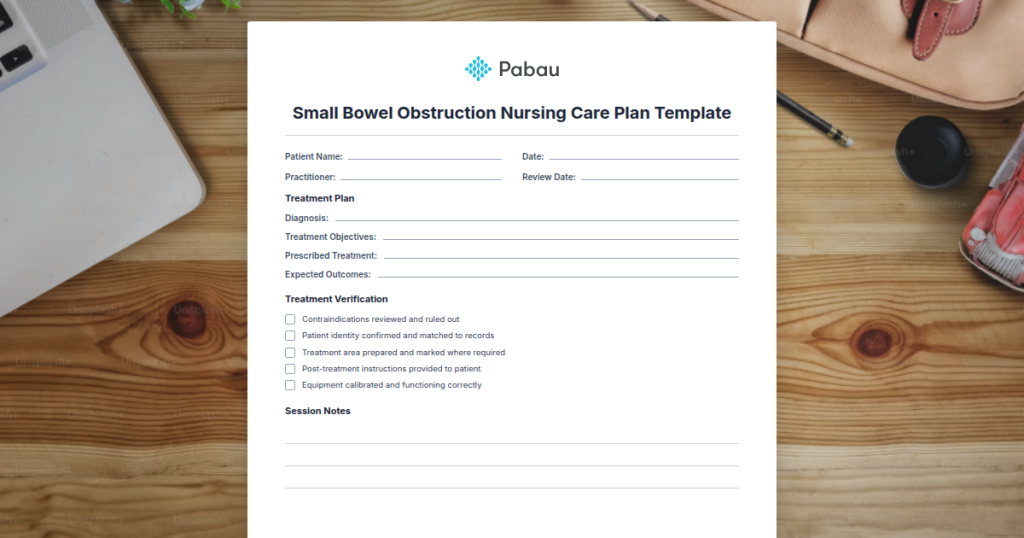
Small Bowel Obstruction Nursing Care Plan Template
A comprehensive small bowel obstruction nursing care plan template provides stru...

March 13, 2026

Discover free eBooks, guides and med spa templates on our new resources page


Buy now, pay later is now available in Pabau

Read case studies from our satisfied clients

Compare Pabau with alternative systems
 Integrations
 Measure Pabau savings
  Our security commitment
  About us
Learn why this holistic care and aesthetic medicine clinic chose Pabau to power patient care and performance.
Read more

A Nursing Care Plan For Impaired Memory Template provides a structured, evidence-based framework for documenting patient assessment, diagnoses, and interventions for cognitive impairment
NANDA-approved diagnoses such as Impaired Memory, Risk for Injury, and Chronic Confusion form the clinical foundation for comprehensive memory care planning
Effective interventions include memory aids, environmental modifications, reality orientation techniques, and consistent daily routines tailored to individual patient needs
Caring for patients with memory impairment demands meticulous documentation and structured care planning. A Nursing Care Plan For Impaired Memory Template streamlines this critical process by providing healthcare professionals with an evidence-based framework for assessing cognitive function, identifying nursing diagnoses, setting realistic goals, and implementing targeted interventions.
Memory impairment affects millions of patients worldwide, from those with early-stage cognitive decline to advanced dementia and post-stroke recovery. Without a standardized approach, nurses risk inconsistent care delivery, missed safety concerns, and inadequate family communication. A comprehensive template ensures every patient receives person-centered, clinically sound care while maintaining regulatory compliance.
A Nursing Care Plan For Impaired Memory Template is a structured clinical document that guides nurses through systematic assessment and documentation of patients experiencing memory loss or cognitive dysfunction. This template bridges the gap between evidence-based practice standards and real-world clinical workflow.
The template incorporates NANDA-I nursing diagnoses, patient-centered goals, and measurable outcomes. It serves multiple purposes: ensuring consistent documentation across care teams, maintaining HIPAA compliance, facilitating interdisciplinary communication, and providing a foundation for care plan reviews and updates.
Memory impairment can stem from various conditions including Alzheimer’s disease, vascular dementia, traumatic brain injury, and medication side effects. According to the National Institute on Aging, more than 6 million Americans currently live with Alzheimer’s disease. A properly constructed template ensures nurses can adapt their approach to the underlying etiology while maintaining core quality standards.
A comprehensive Nursing Care Plan For Impaired Memory Template includes multiple interconnected sections that work together to support clinical decision-making and patient safety.
Each component builds upon the previous one, creating a logical flow from assessment through intervention to evaluation. This systematic approach reduces gaps in care and ensures nothing is overlooked.
The primary NANDA-I nursing diagnosis is Impaired Memory, defined as the inability to remember or recall bits of information or behavioral skills. However, a Nursing Care Plan For Impaired Memory Template typically addresses multiple related diagnoses to capture the full clinical picture.
Selecting the correct primary and secondary diagnoses enables nurses to prioritize interventions based on patient acuity and individual needs.
Research consistently demonstrates that structured, multimodal interventions produce the best outcomes. A Nursing Care Plan For Impaired Memory Template should include interventions across several domains.
For patients with progressive conditions like Alzheimer’s disease, interventions evolve as the disease advances. Early stages benefit from cognitive stimulation and compensatory strategies, while later stages require emphasis on comfort, safety, and emotional support.
Ready to streamline your memory care documentation? Book a demo to see how integrated care planning software can reduce administrative burden and improve patient outcomes across your facility.
Start delivering consistent, evidence-based memory care today. Our free template provides a ready-to-use framework that saves time while ensuring no critical assessment elements are missed.
Structured clinical template with NANDA-approved diagnoses, evidence-based interventions, cognitive assessment sections, and customizable care planning fields for patients with memory impairment.
Download templateEffective implementation requires clear guidance and team commitment. Start by conducting a comprehensive assessment using validated cognitive screening tools. Document baseline function, mobility, medication list, and psychosocial factors. Identify the primary etiology of memory impairment when possible, as this informs intervention selection.
Collaborate with the interdisciplinary team including physicians, speech therapy, occupational therapy, and social work to establish realistic goals. Involve family members or designated caregivers early in planning, as their input provides valuable context and ensures continuity across care settings.
Select interventions that align with the patient’s cognitive level, preferences, and cultural background. Monitor responses to interventions weekly and adjust the care plan as needed. Many facilities find success reviewing the Nursing Care Plan For Impaired Memory Template every 30 days, or more frequently for patients with rapidly progressive conditions.
Person-centered care remains the gold standard in memory care. Rather than imposing a one-size-fits-all approach, tailor the Nursing Care Plan For Impaired Memory Template to reflect each patient’s life history, values, and preferences. Ask family members about the patient’s hobbies, occupations, and important relationships. Incorporate these elements into interventions to boost engagement and therapeutic benefit.
Provide family education about memory impairment, realistic progression timelines, and effective communication techniques. Caregiver support groups and educational sessions reduce strain and improve adherence to care plans. Document all family interactions and education provided to ensure continuity if staffing changes occur.
Ethical considerations include respecting patient autonomy to the extent cognitive ability permits, protecting privacy, managing potentially challenging behaviors with compassion, and facilitating advance care planning discussions before severe decline occurs.
The NANDA-I nursing diagnosis “Impaired Memory” is defined as the inability to remember or recall bits of information or behavioral skills. It is characterized by inability to recall factual information, recent or past events, inability to learn or retain new skills or information, and forgetfulness. Related factors may include neurological disturbances, dementia, Alzheimer’s disease, traumatic brain injury, or medication effects.
Care plans for impaired memory should be reviewed and updated regularly, typically every 30 days or whenever there is a significant change in the patient’s condition. For patients with progressive conditions like Alzheimer’s disease, more frequent reviews (every 2-4 weeks) may be necessary to adjust interventions as cognitive decline advances.
Effective interventions include establishing consistent daily routines, using memory aids and reminder systems, implementing reality orientation techniques, modifying the environment to reduce confusion, providing cognitive stimulation activities, ensuring patient safety through fall prevention measures, and involving family members in care planning and implementation.
Yes, a Nursing Care Plan For Impaired Memory Template can be adapted for various conditions causing memory impairment including Alzheimer’s disease, vascular dementia, mild cognitive impairment, traumatic brain injury, and post-stroke cognitive deficits. The template should be customized based on the specific etiology, severity, and patient’s individual needs and preferences.
Yes, when used within a secure healthcare documentation system, this template follows HIPAA compliance standards. It does not contain pre-filled patient information and allows for secure documentation of patient-specific data in compliance with privacy regulations. Ensure your documentation system uses encryption, access controls, and audit trails.
A Nursing Care Plan For Impaired Memory Template is essential for providing safe, effective, and person-centered care to patients with cognitive impairment. By incorporating comprehensive assessment, evidence-based interventions, and regular evaluation, nurses ensure consistent quality outcomes while reducing documentation burden. Download your free template today and enhance your memory care practice.