

Mental Health & Therapy Psychology
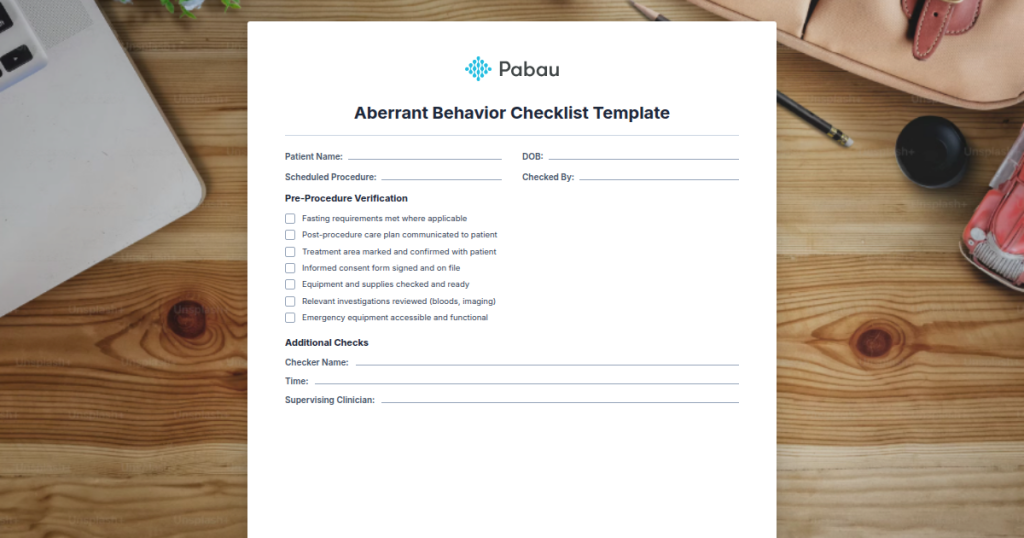
Aberrant Behavior Checklist Template
Key Takeaways Standardised behavioral assessment tool for identifying emotional ...

March 5, 2026

Discover free eBooks, guides and med spa templates on our new resources page


Buy now, pay later is now available in Pabau

Read case studies from our satisfied clients

Compare Pabau with alternative systems
 Integrations
 Measure Pabau savings
  Our security commitment
  About us
Learn why this holistic care and aesthetic medicine clinic chose Pabau to power patient care and performance.
Read more

Systematic allergen documentation prevents unsafe treatment interactions
Digital forms integrate allergy data into clinical workflows automatically
FDA-recognised nine major allergens require standardised tracking
Emergency protocols must be accessible to all staff members
HIPAA-compliant documentation reduces legal and clinical risk
A food allergy form template is the foundation of safe clinical practice across every specialty. Whether you’re running a dermatology clinic, wellness centre, or mental health practice, systematically documented food allergies prevent catastrophic treatment errors and ensure every team member can respond appropriately in emergencies. This guide shows you how to implement a food allergy form template that captures complete allergen profiles, reaction histories, and emergency protocols in a format that integrates directly into patient management workflows.
Without structured documentation, allergy information gets scattered across intake notes, phone call records, and staff conversations. Patients forget to mention sensitivities, practitioners miss cross-reactivity risks, and emergency responders lack the detail needed to act fast. A professional food allergy form template solves this by creating a single source of truth for allergen risk that flows into treatment planning, staff alerts, and clinical decision-making automatically.
A comprehensive clinical form for documenting patient food allergies, reaction histories, severity levels, allergen identification, and emergency response protocols with HIPAA-compliant fields.
Download templateA food allergy form template is a structured clinical document designed to systematically capture comprehensive allergen information at patient intake or during clinical reviews. The purpose is clear: enable healthcare providers to establish accurate allergy profiles, assess risk for adverse reactions during treatment, and implement appropriate safety protocols that protect patients and reduce clinical liability.
Unlike generic intake questions (“Do you have any allergies?”), a professional template uses targeted fields to capture specific details: allergen names, reaction types, severity levels, reaction onset dates, treatment history, and emergency contact protocols. According to Food Allergy Research & Education (FARE), this level of detail is essential because allergies exist on a spectrum. A patient with mild itching from raw almonds presents different risk than someone with anaphylaxis from tree nuts-and your documentation must reflect that distinction.
From a regulatory standpoint, food allergy documentation serves multiple critical functions. It demonstrates HIPAA compliance by capturing consent for data storage and emergency procedures. It establishes informed consent records, showing patients understood their allergy risks before proceeding with treatment. It protects practitioners by creating a documented record of known allergies, which is essential if a patient experiences an adverse reaction. Clinical safety standards across allied health, dermatology, and wellness practices require this documentation as part of due diligence.
Implementing a food allergy form template follows five clear operational steps that ensure comprehensive allergy capture and emergency readiness.
This workflow transforms allergy documentation from isolated paperwork into active clinical information that travels with the patient through every appointment and informs every treatment decision.

Pabau's digital forms capture allergy data, consent, and emergency protocols in one step-automatically flowing into patient records and triggering safety alerts for staff.

Food allergy documentation serves clinicians across multiple specialties, each with distinct safety concerns tied to their treatment protocols.
Dermatology and aesthetic clinics must document food allergies before any topical treatment. Many skincare products contain botanical ingredients or proteins derived from tree nuts, shellfish, or wheat. A patient with unknown almond extract sensitivity could experience contact dermatitis or systemic reaction during a facial treatment. Laser technicians use cooling gels and topical anaesthetics that may contain allergens. Complete allergy documentation prevents these complications.
Wellness and functional medicine practices integrate nutritional assessment into treatment plans. Practitioners recommend dietary changes, supplements, or elimination protocols. Without documented allergy information, a clinician might recommend a supplement containing shellfish-derived glucosamine to a patient with unknown shellfish allergy. A food allergy form ensures nutritional recommendations align with known sensitivities.
Mental health and psychology practices need allergy data for medication safety. Many psychiatric medications contain fillers and binders derived from common allergens. Antacids, antihistamines, and anti-anxiety medications used alongside primary treatments can trigger reactions if allergen sensitivities aren’t documented. This is especially critical for patients unable to communicate during crises.
Physical therapy and sports medicine clinics assess exercise tolerance and recovery protocols. Some athletes use performance supplements containing tree nuts, soy, or peanuts. Others use topical pain relief creams with allergen-containing compounds. Practitioners need to know these sensitivities before recommending products or exercise regimens involving certain environments (outdoor training around pollen or certain foods).
General practice and private GP clinics maintain comprehensive patient records and must flag allergy information for every clinical decision. Vaccinations, injectable medications, and topical treatments may contain allergens. A food allergy form in the patient record ensures this critical information is instantly visible to any practitioner reviewing the patient’s history.
Compliance and legal protection form the foundation of standardised food allergy documentation. By using a structured template, you create an auditable record proving due diligence. If a patient experiences an undocumented allergy reaction, a blank intake form is indefensible; a completed allergy form demonstrates you asked the right questions and documented the response. This protects your practice against claims of negligent care.
Workflow efficiency increases significantly when allergy data flows automatically into patient records. Instead of staff manually transferring allergy information from paper forms to digital notes, the form data populates automatically. Treatment planners can filter cases by allergen type. Emergency responders can access protocols instantly. Staff alerts trigger when high-risk allergens are flagged. This automation reduces documentation time by 30-40% per patient while improving information accuracy.
Clinical safety improves when all staff access the same allergy information. In clinics relying on scattered documentation, reception staff might not know a patient has a tree nut allergy while a therapist recommends a coconut oil treatment. A centralised form accessible to all team members prevents these disconnects. Practitioners planning treatments can instantly see contraindications. Staff responding to emergencies have immediate access to medication allergies and emergency contact details without searching multiple systems.
Patient confidence grows when they see a practice taking allergies seriously. Patients appreciate the thoroughness of a detailed allergy form-it demonstrates the clinic understands risks and has protocols in place. This builds trust in your clinical competence and reduces patient anxiety during treatments. Informed consent conversations become easier because the patient has already documented their allergies in writing and reviewed the clinic’s safety procedures.
Emergency preparedness transforms when allergy protocols are documented and accessible. If a patient experiences anaphylaxis, staff don’t need to call the patient or search records-they have immediate access to documented medication allergies, EpiPen location, and emergency contact numbers. This seconds-matter responsiveness can be life-saving. Additionally, documented protocols (check EpiPen expiry date monthly, train all staff annually on administration) ensure your team is ready when emergencies occur.
Audit your existing allergy records for completeness against the FDA’s nine major allergens. Many clinics discover undocumented sensitivities during this exercise-a staff member notices a patient marked ‘no allergies’ but mentions tree nuts casually. Update forms immediately and conduct a team training session on the standardised template before launching digital forms clinic-wide. This audit prevents embarrassing gaps that compromise patient safety.
The FASTER Act (Food Allergy Safety, Treatment, Education, and Research), enacted in 2021, established mandatory labelling of nine major food allergens. These allergens account for approximately 90% of all food allergic reactions in the United States and warrant standardised documentation across healthcare settings. Understanding each allergen’s clinical significance helps practitioners anticipate cross-reactivity risks and inform patients about potential exposure.
Milk, eggs, fish, and shellfish are the most common allergens documented in adult populations. Milk allergy is especially prevalent in children; egg allergy frequently appears in egg-containing vaccines and injectable medications. Fish and shellfish allergies carry particular anaphylaxis risk, making them high-priority for emergency protocol documentation. Cross-reactivity between different shellfish (crab, shrimp, lobster) is common, so a patient allergic to one shellfish often reacts to others.
Tree nuts, peanuts, wheat, and soybeans are documented equally among children and adults and appear in surprising treatment products. Tree nuts appear in skincare oils, topical treatments, and cosmetic products. Peanut oil is used in some injection formulations. Wheat-based fillers appear in medications and supplements. Soy derivatives are in many processed food-derived ingredients. Your form must capture all nine allergens because patients often aren’t aware which products contain them.
Sesame, added to the major allergen list most recently, is becoming increasingly common, particularly in patients with tree nut or peanut allergies. Clinical significance includes potential cross-contamination in facilities handling multiple allergens and presence in unexpected products like tahini-based supplements or skincare formulations.
Cross-reactivity between allergen categories is clinically important. Latex allergy frequently co-occurs with tree nut, avocado, and banana allergies (latex-fruit syndrome). The American Academy of Allergy, Asthma & Immunology (AAAAI) recommends asking patients with nut allergies about latex sensitivity and vice versa. Your food allergy form should include a question about latex exposure to capture this risk comprehensively.
A food allergy form’s true value emerges during emergencies, when seconds matter. The form must include specific emergency contact information and treatment protocols accessible to every staff member without requiring patient recall or chart searches.
Emergency contact details belong at the top of the form for rapid access. Beyond the primary emergency contact (often a family member), capture a secondary contact and any specific instructions (“Call 999 first, then contact mother”). Include the patient’s GP contact information for post-emergency medical follow-up. If a patient becomes unresponsive with anaphylaxis symptoms, staff cannot rely on patient communication-they need pre-documented contact details ready to activate.
EpiPen location and expiry must be explicitly documented. Your form should state whether the patient carries an EpiPen (and where it’s located if at the clinic), whether a backup EpiPen is stored at the clinic, and who is trained to administer it. This is non-negotiable for severe allergen reactions. Assign staff responsibility for checking expiry dates monthly-this audit should be part of your clinic’s routine safety protocols tied directly to the documented allergy form.
Anaphylaxis response protocols require documented procedures. According to CDC emergency response guidance, anaphylaxis management follows a sequence: recognise signs (difficulty breathing, swelling, rapid pulse), call 999 immediately, administer EpiPen if available, lay patient down, monitor until emergency services arrive. Your food allergy form should include a quick-reference protocol card attached to the patient’s record-not buried in policy documents, but immediately visible. Every staff member should know the protocol before treating a patient with documented severe allergies.
Staff training requirements must be documented and assigned. Which staff members are trained in EpiPen administration? Which team members can recognise anaphylaxis symptoms? Your allergy documentation should trigger an audit: if you have patients with severe allergies, your entire clinical team must be trained. The National Institute of Allergy and Infectious Diseases (NIAID) recommends annual anaphylaxis training for all healthcare staff in clinics treating patients with food allergies. Tie this to your food allergy form-every new patient with documented severe allergy triggers a team training review.

Need streamlined intake without paper forms? Digital Forms for Healthcare Practices capture allergy data, consent, and emergency protocols in one step-automatically populating patient records and triggering staff alerts.
Want to automate clinical note generation? Echo AI for Clinical Documentation transforms intake data into formatted clinical notes, reducing manual documentation time whilst ensuring consistency.
Managing a multi-specialty practice with diverse patient types? Wellness Clinic Management Software integrates patient intake, allergy documentation, and treatment planning into one unified system across all specialties.
Food allergy documentation is not optional-it’s a non-negotiable foundation of safe clinical practice. A professional food allergy form template ensures that every clinician, every reception staff member, and every emergency responder has instant access to the information they need to keep patients safe. Without it, allergy information scatters across notes, patient conversations, and staff memory. With it, you create a single source of truth that flows into treatment planning, staff alerts, and emergency protocols automatically.
Download the free template above and implement it across your practice. Audit your existing records for gaps, train your team on the standardised process, and integrate allergy data into your clinic workflows. This simple step transforms allergy documentation from administrative burden into active clinical protection. Reviewed against current AAAAI and CDC allergy management guidance.
A food allergy form template systematically documents patient allergens, reaction histories, and emergency protocols in a single standardised format. This ensures all staff can access critical allergy information instantly, prevents treatment errors, and supports emergency response procedures.
Professional templates capture patient demographics, allergen names, reaction types, severity levels, onset dates, treatment history, medication allergies, EpiPen location and expiry, emergency contacts, and consent acknowledgments. This comprehensive capture ensures practitioners have complete context for every clinical decision.
Essential fields include: patient name and date of birth, allergen names (referenced against the nine FDA-recognised major allergens), reaction type and severity, onset date, current medications, EpiPen status, emergency contact information, GP contact details, and signed consent. These fields ensure emergency responsiveness and legal compliance.
Include a HIPAA consent section stating how allergy data will be stored, accessed by staff, and shared with emergency services if needed. Store forms securely in your patient management system with access controls. Obtain written consent from patients or guardians confirming they’ve reviewed privacy practices and emergency protocols.
Yes. Digital forms capture allergy data that automatically populates patient records, triggers staff alerts when high-risk allergens are flagged, and flows into treatment planning systems. This integration eliminates manual data transfer and ensures all team members access the same current information.