Primary & Preventive Care Wellness
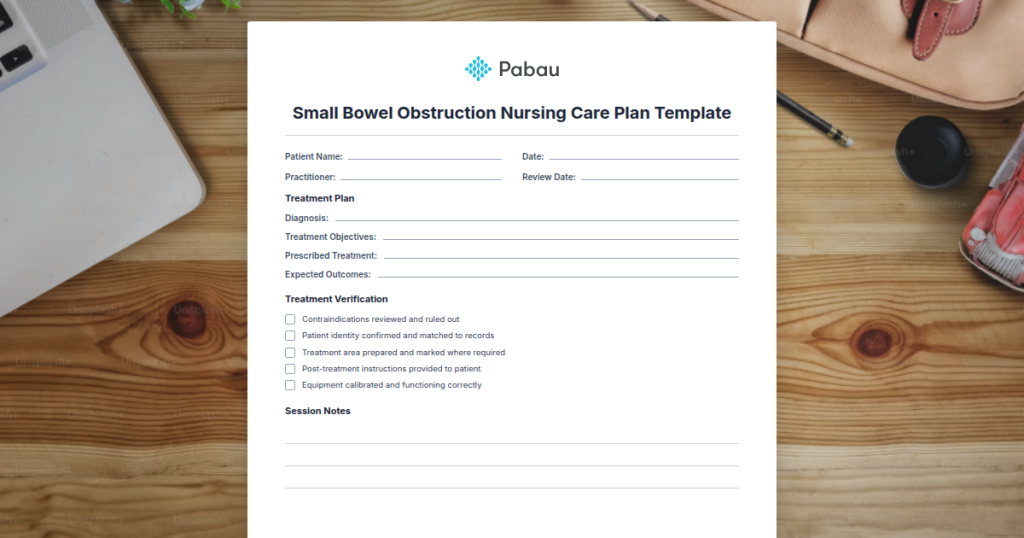
Small Bowel Obstruction Nursing Care Plan Template
A comprehensive small bowel obstruction nursing care plan template provides stru...

March 13, 2026

Discover free eBooks, guides and med spa templates on our new resources page


Buy now, pay later is now available in Pabau

Read case studies from our satisfied clients

Compare Pabau with alternative systems
 Integrations
 Measure Pabau savings
  Our security commitment
  About us
Learn why this holistic care and aesthetic medicine clinic chose Pabau to power patient care and performance.
Read more

Blood test consent captures patient authorisation, reducing liability risk
Templates must reference HIPAA, GDPR, and regional data protection rules
Informed consent requires clear explanation of test purpose and risks
Digital consent workflows integrate directly into patient records
A blood test consent form is a legally binding document that documents a patient’s informed agreement to undergo laboratory testing. For clinics offering blood work-whether routine health screening, diagnostic testing, or specialist investigations-a professionally structured consent form protects both the clinic and the patient by establishing clear understanding of the procedure, its risks, and how results will be handled. This guide explains what your clinic needs in a blood test consent form and how to implement it effectively into your clinical workflow.
A comprehensive informed consent form capturing patient details, testing authorisation, risk disclosures, data protection acknowledgment, and signature blocks for blood laboratory investigations.
Download templateA blood test consent form is a clinical document that formalises a patient’s informed agreement to undergo phlebotomy and laboratory analysis. It captures essential information: the specific tests being ordered, the clinical reason for testing, potential risks (needle-related discomfort, bruising, rarely, vasovagal reactions), and how patient data will be stored and protected under HIPAA and GDPR regulations.
The legal purpose of informed consent is threefold. First, it ensures patients understand what is happening to their body and why. Second, it creates a documented record that the clinic obtained consent before proceeding-essential protection in any dispute or complaint. Third, it demonstrates compliance with healthcare regulations in your jurisdiction, whether that’s CQC standards in the UK or state medical boards elsewhere.
Blood test consent forms differ from general medical consent because they address the specific risks of phlebotomy and laboratory testing. They acknowledge that results may reveal unexpected health findings, clarify who has access to results, and confirm the patient’s right to refuse testing without penalty. For clinics offering functional medicine, private GP services, wellness screening, or metabolic health assessments, a structured consent form is non-negotiable documentation.
Implementing a blood test consent form in your clinic involves a clear five-step workflow that integrates consent capture into your patient intake or pre-test appointment process.

Pabau's digital forms enable rapid consent capture with automatic patient record filing and compliance audit trails. Simplify your pre-test workflow.

Blood test consent forms apply across multiple healthcare settings wherever phlebotomy and laboratory analysis occur. Private GP practices and functional medicine clinics offering comprehensive wellness assessments rely on consent forms to document baseline investigations and metabolic testing. IV therapy clinics performing pre-infusion bloods or nutritional assessment labs need consent documentation. Aesthetic and longevity clinics conducting hormone level testing or micronutrient panels require informed consent before drawing blood.
Integrative medicine practitioners ordering advanced diagnostic panels-microbiome testing, organic acids analysis, hormone metabolites-must capture explicit consent because these tests fall outside routine clinical pathology. Mental health clinics may order blood work to rule out medical causes of psychiatric symptoms (thyroid dysfunction, nutritional deficiency, autoimmune conditions) and need consent documentation. Even occupational health clinics conducting pre-employment or workplace health screening bloods require documented consent.
The common thread across all these settings: any clinic drawing blood without documented informed consent exposes itself to complaints, regulatory findings, and potential litigation. A professional blood test consent form removes this risk.
Legal protection: A signed consent form is your primary defence against a patient claiming they did not authorise testing or did not understand the risks. If a complaint escalates to your regulator (CQC, state board, etc.), your consent documentation is the first evidence of your duty of care.
Regulatory compliance: HIPAA, GDPR, CQC guidance, and most state medical boards require documented informed consent before invasive procedures-and phlebotomy qualifies. A template ensures you meet these standards consistently. Without documented consent, inspectors will flag gaps in your documentation practices.
Clarity for patients: A well-written consent form explains the purpose of testing, what to expect, and the patient’s rights. Patients appreciate clarity. When they understand what is happening and why, compliance improves and anxiety decreases. This is patient safety, not bureaucracy.
Audit trail: Digital consent capture creates a timestamped record showing exactly when consent was obtained, by whom, and from which device. This audit trail is invaluable during investigations and demonstrates meticulous documentation.
Workflow integration: A consent form placed at the right step in your booking and appointment flow becomes automatic-clinicians do not forget it because the system prompts them. Integration prevents missed consent, which is a common compliance gap.
Flag your patient portal to require consent completion before the blood test appointment arrives on the schedule. Set a digital reminder 24 hours before the appointment if consent is still unsigned. This prevents awkward delays during clinic hours and reduces last-minute refusals due to incomplete information.
Every blood test consent form should include several legal and clinical elements to meet regulatory standards. The form must clearly state the specific tests being performed-not vague language like “blood work” but explicit test names (e.g. “full blood count, urea and electrolytes, liver function tests”). The clinical reason must be documented: why the tests are clinically necessary for this patient’s care.
Risk disclosure is essential. Patients must understand the physical risks of phlebotomy (needle discomfort, bruising, rare nerve damage if a nerve is struck, vasovagal syncope-especially important for anxious patients), and the incidental finding risk: the tests may reveal unexpected conditions requiring further investigation or referral. Some clinics add a statement about the limitations of the tests (a negative result does not exclude disease; results must be interpreted in clinical context).
Data protection statements must address how results will be stored, who has access, how long records will be retained, and whether data is shared with third parties. This satisfies both HIPAA (in the US) and GDPR (in the UK and EU). Include explicit consent to electronic storage if your system uses cloud platforms.
A statement confirming the patient’s right to refuse testing without penalty is legally and ethically necessary. Many clinics add language confirming the patient has had an opportunity to ask questions and understands the information provided. Finally, signature blocks must be dated and include the patient’s printed name. Witness signature may be required depending on your jurisdiction-check your local medical board or CQC guidance.
Paper consent forms remain legally valid and are still used by many clinics. However, they present workflow risks: forms are misplaced, signatures are illegible, filing is delayed, and audit trails are weak. A patient portal workflow where the form is completed electronically before the appointment solves these problems entirely.
Digital workflows also accommodate patients with accessibility needs-larger text, text-to-speech support-and allow patients to complete consent at their own pace before arriving at the clinic. The most effective implementations combine digital presentation (patient completes form on their phone or tablet) with automatic filing into the patient record system. When a patient completes digital consent, the timestamp, IP address, and device information are captured automatically-an audit trail that paper cannot match.
If you use a modern practice management system with integrated digital forms, you already have the infrastructure to move beyond paper. The setup involves importing or creating your blood test consent form template into the forms module, mapping it to a patient data field (so patient name, DOB, and clinic details auto-populate), and triggering it to appear in the patient’s pre-appointment flow.

Want to streamline your clinic’s form capture? Echo AI clinical documentation automatically structures consent information and reduces manual data entry.
Need a secure patient portal for consent delivery? Patient portal software enables patients to sign consent electronically before appointments.
Looking to automate compliance workflows? Compliance management features flag missing consent and audit trail gaps automatically.
A blood test consent form is not optional bureaucracy-it is a foundational clinical and legal requirement. It protects your clinic, clarifies expectations for patients, and creates an audit trail that demonstrates compliance with healthcare regulations. Using a professionally structured template ensures consistency and completeness. Digital consent capture further streamlines the process, removes paper-based delays, and creates stronger documentation.
Whether your clinic offers routine health screening, functional medicine assessments, or specialist testing, implementing a blood test consent form is an immediate step toward better compliance and patient safety. Start with the free template provided in this guide, customise it for your clinic, and integrate it into your patient intake workflow.
Yes. Informed consent before blood testing is required by HIPAA (in the US), GDPR (in the UK and EU), CQC standards (in the UK), and most state medical boards. A signed consent form is the documented proof of that consent. Without it, you are in breach of regulatory requirements.
The form must specify the tests being performed, the clinical reason for testing, risks of phlebotomy and potential incidental findings, data protection and storage practices, and the patient’s right to refuse. A signature and date complete the form.
Yes. Informed consent is always voluntary. Your form should explicitly state that patients can withdraw consent or refuse testing without penalty. However, you can document that the patient understood the clinical implications of refusal.
Requirements vary by jurisdiction. In the UK, witness signature is often recommended but not always mandatory unless the patient lacks mental capacity. Check your local CQC guidance or state medical board rules. When in doubt, having a witness sign adds legal strength.
Consent forms should be retained as part of the patient’s clinical record for the same duration you retain records-typically 7-10 years after the last patient contact in the UK, or as specified by your state’s medical board. Check local regulations.
No. Parents or legal guardians must provide consent for blood testing in minors (under 18 in most jurisdictions). Your consent form should include a separate section for parental/guardian signature when the patient is under 16-18 depending on your region.