










Key takeaways
A crisis management plan is a written document that says who responds to a serious disruption, what they decide, and who they tell.
Two documents share the name. One is the practice-level plan for outages and incidents, the other is the patient-level crisis plan a clinician writes with a patient.
Name five roles before you need them: incident lead, communications lead, clinical lead, IT lead, and documentation lead. Give every role a backup.
Reporting clocks differ by regulator. HIPAA breach notification runs to 60 days, while CQC Regulation 18 requires notification without delay.
Cloud records, automated patient messaging, and audit trails keep a practice running through a disruption and evidence what you did afterward.
Download your free crisis management plan template
A patient-facing crisis plan covering early warning signs, agreed coping strategies, the patient’s support network, and emergency contacts. It also has space for the follow-up steps your team takes once the crisis has passed.
Download templateA crisis management plan is a written document that sets out how your practice responds when something serious goes wrong. It names who takes charge, what they decide first, and who they have to tell. Without one, every decision gets invented under pressure.
Two different documents share that name, and search results tend to mix them up. One is the operational plan a practice writes for outages, breaches, staffing loss, and safety incidents. The other is the short crisis plan a clinician writes with an individual patient.
The template above is the patient-facing version. The six steps below build the operational one: risk assessment, team roles, scenario protocols, communication, resources, and testing. You will also get the reporting clocks for a breach or a serious incident. Those are the numbers teams usually look up mid-crisis.
What a crisis management plan covers
A crisis management plan covers five things: decision authority, communication routes, scenario procedures, fallback resources, and recovery.
- Defines roles and decision-making authority during a crisis
- Sets communication routes for staff, patients, media, and regulators
- Documents a response procedure for each priority scenario
- Lists the backup systems, emergency contacts, and reserves you can draw on
- Gives staff a tested procedure to follow instead of improvising
A business continuity plan is the sibling document. Continuity planning restores systems and operations once the event is over. Crisis management handles the event itself, so it deals with containment, safety, and what you say to whom. A practice needs both.
Practice-level plan or patient safety plan?
The patient-level version is short and personal. A clinician and a patient write it together, listing warning signs, coping steps, supportive people, and the numbers to call. It belongs to the patient and travels with them.
The practice-level version is operational and covers the whole site: staff, systems, records, and reputation. If you came here for the patient document, download the template and stop there. If you are writing the operational plan, keep reading.
Why healthcare practices need one
Healthcare practices carry risks that most small businesses do not. Patient safety is on the line, patient data is regulated, and one unplanned absence can disrupt a day of care and revenue. Regulators expect documented procedures, and CQC Regulation 12 is explicit about safe care and treatment in England.
A plan protects three things. It protects patient outcomes, because care continues safely while systems are down. It protects your legal standing, because you can show a regulator what you did and when. And it protects reputation, because someone has already decided what the practice says publicly.
- Patient safety: agreed protocols keep care and clinical decisions safe during an emergency or an outage
- Regulatory compliance: HIPAA-compliant systems and written procedures answer CQC, CMS, and GDPR expectations
- Data protection: good data protection habits limit how far a breach can spread before you contain it
- Staff protection: clear roles reduce decision fatigue and the strain a crisis puts on your team
- Business continuity: a planned response shortens downtime and the revenue you lose with it
Types of crises to prepare for
A data breach and a staff shortage need different first moves. Work down the table below and mark the rows that could realistically happen at your practice this year.
Use the table to rank the risks that actually apply to you. A mental health practice will put psychiatric emergencies at the top, while a surgery center starts with safety incidents and outages.
Reputational crises usually begin small. One complaint that nobody resolved becomes a review, then a regulator’s letter, so train the front desk on difficult patient conversations long before that point.
Step 1: Assess your risks
Start by answering two questions. Which crises are most likely to hit your practice, and which would do the most damage? Mapping likelihood against impact answers both.
- List the candidates. Sit down with your leads and name every plausible crisis, using the table above as a prompt. Add anything specific to your site or specialty.
- Score likelihood. Rate each one low, medium, or high, based on your own history and what happens locally. A practice in a flood zone rates natural disasters higher than one that is not.
- Score impact. Ask what the damage would be. Patient harm, lost revenue, a regulatory penalty, or a reputation hit all count. Score each one low, medium, or high.
- Plot the grid. Put likelihood against impact on a simple 3×3 grid. High and high is your priority corner. Low and low gets documented, not resourced.
- Spend where it counts. Write full protocols for the priority corner first. You cannot plan for everything, so start where the damage would be worst.
Redo this exercise once a year, and any time your staffing, systems, or premises change. New risks arrive quietly.
Step 2: Build your crisis team
During a crisis, someone has to decide and someone has to talk to staff. Someone else owns the clinical call, and someone keeps the record. Name those people now, while nobody is under pressure.
Team size follows practice size. A solo clinician will hold three of these roles at once, while a group practice can give each one its own name. Either way, write a backup next to every role.
Step 3: Write a protocol for each scenario
Generic guidance falls apart the moment a crisis starts. Each priority scenario needs its own numbered procedure. The example below covers a patient mental health emergency, the scenario psychiatry practices rehearse most, and the same shape works for the rest.
- Assessment: the patient shows acute suicidal ideation, self-harm, psychotic symptoms, or severe panic. The clinician judges whether there is immediate danger.
- Notification: the clinician tells the clinical supervisor and the incident lead straight away, and notes the time.
- Safety decision: the clinical lead decides whether the patient is safe on site, needs hospital care, or needs emergency services now.
- Action, if safe to stay: keep the patient in view and remove access to any means of harm. Then work through the coping steps in their own crisis plan.
- Action, if unsafe: call emergency services or the crisis line, contact the named emergency contact, and prepare a clean handover.
- Documentation: write up observations, decisions, and actions the same day. File the incident report and brief the medical director.
- Follow-up: book the next session within 24 to 48 hours, name the clinician who owns it, and tell the team what changes.
Running that sequence as an automated workflow means each step is prompted, ticked off, and time-stamped, so nothing depends on someone remembering the order.
Step 4: Set your communication and reporting rules
Most crises get worse in the hour after they start, and communication is usually why. Decide now who says what, to whom, and in which order. Practice management software like Pabau can send templated SMS and email campaigns to every affected patient at once. That matters when a whole day of appointments has to move.
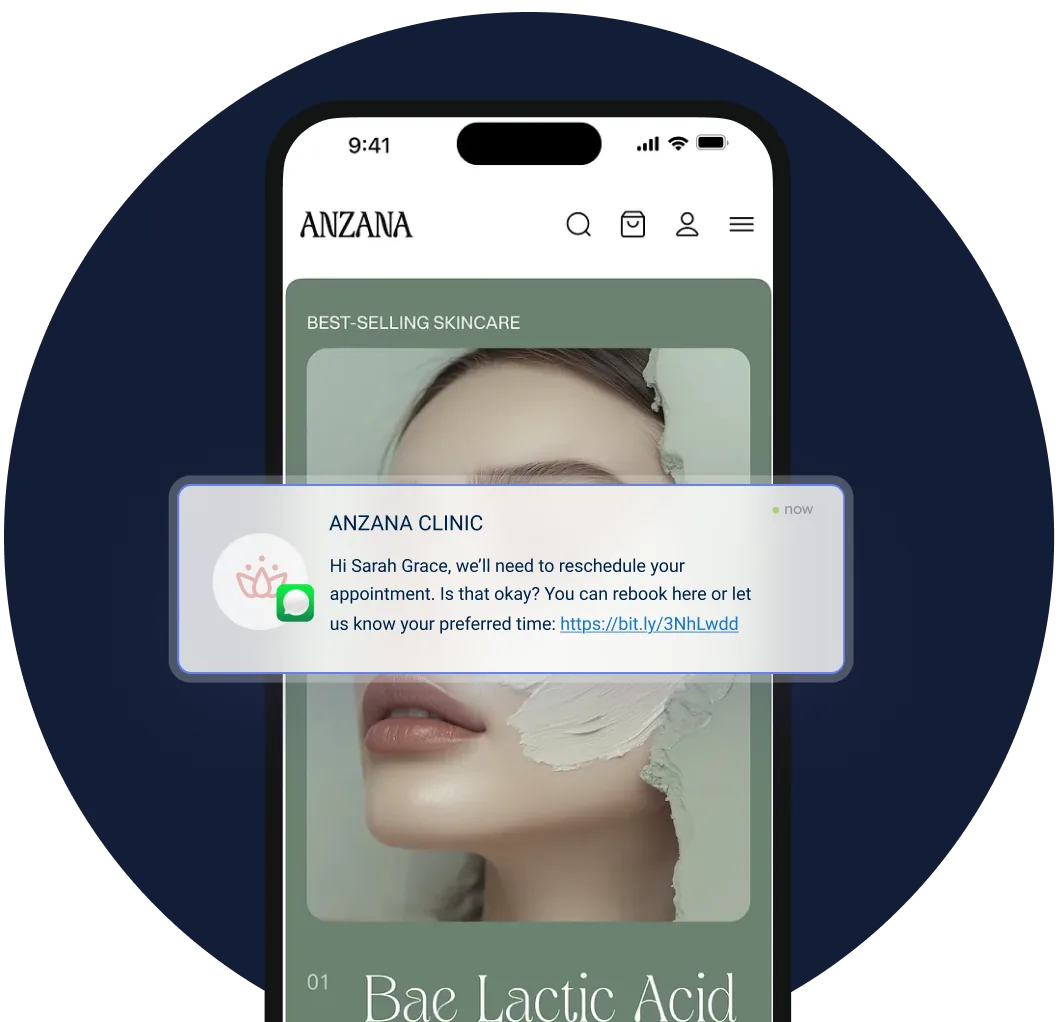
- Internal first: tell staff a crisis is live, name it plainly, and say what each person is doing. Use a group message or a call rather than email, and set an update cadence.
- Patients next: affected patients should hear from you before they hear anything else. A short holding message about a rescheduled appointment beats silence, and clear patient education messages keep the follow-up calm.
- Family and emergency contacts: for a safety incident, call the named contacts with the facts you have. Skip speculation and apology drafting, and say what you are doing next.
- Media and public: the communications lead is the only person who speaks publicly. A short holding statement buys you the time to prepare a full one.
Reporting clocks are the part teams look up mid-crisis, so write them into the plan instead. Two of them matter most to healthcare practices.
- HIPAA breach notification: the US Department of Health and Human Services requires notification of affected individuals without unreasonable delay. The outer limit is 60 days after discovery.
- CQC notifications: Regulation 18 sets no fixed number of days and requires notification without delay. Deaths, serious injuries, and abuse are notified the same day, with written follow-up within 24 hours.
Step 5: Line up resources and logistics
An outage is an inconvenience if you have paper workflows, offline access to the schedule, and a phone tree. It is a lost week if you have none of them.
- Backup systems: cloud records you can reach from another device, a manual scheduling procedure, backup power, and a mobile hotspot
- Emergency contacts: a printed list of vendors, emergency services, regulators, and insurers, refreshed every quarter
- Vendor agreements: the response times you are actually entitled to if records go down, plus how long a data restore takes
- Financial reserves: money set aside for emergency IT support, temporary staffing, a rented workspace, or mass messaging
- Staff continuity: cross-train people on critical tasks so one absence cannot stop the day, and write down the on-call rotation
The point of all five is the same. Your records, schedule, and billing should survive an event that takes out the building.
Step 6: Test, review, and update
A plan nobody has rehearsed will not hold up. Testing shows you what it is missing while the stakes are still low.
- Tabletop exercise, quarterly. Give your team a scenario, such as records going down at 2 PM on a Tuesday. Walk the plan out loud. Who calls whom first, and what goes out to patients?
- Full drill, yearly. Test the procedures rather than discussing them. Page the on-call team, send a test patient message, and time the switch to manual workflows.
- Debrief after any live incident. Run a written review within a week. Record what held, what did not, and what changes in the plan as a result.
- Annual review. Give one person ownership, usually the incident lead or compliance officer. Refresh contact lists, role names, and vendor terms, and revisit the plan after any regulatory update.
- Train new starters. Crisis roles belong in onboarding alongside HIPAA training, so a new hire knows who to call in their first week.
- Keep the evidence. Compliance audit trails record when the plan was reviewed, what was tested, and what changed. Regulators ask for exactly that.
Crisis management plan checklist
Run through this before you file the plan and call it done.
- Risk assessment finished, with the high-impact scenarios marked
- Five crisis roles named, each with a backup and a phone number
- A written protocol for every priority scenario, including the mental health emergency
- Communication plan set: internal, patient, family, and public messaging
- Reporting clocks written down, with the regulator and the deadline next to each one
- Backup systems ready: cloud records, backup internet, manual scheduling, emergency power
- Emergency contact list printed and stored somewhere you can reach it offline
- Every team member knows the crisis leads and how to raise an incident
- Tabletop exercise run in the last six months
- Full drill run in the last 12 months
- Plan reviewed this year, or after the last change to staffing, premises, or systems
- Evidence kept: test dates, review dates, and debrief notes
Print it, assign an owner to each line, and put a date against the ones that are still open.
How Pabau keeps a practice running through a disruption
During an outage, the fallback is usually paper. Someone reads the day’s appointments off a printout, and someone else phones patients one at a time. Notes written that afternoon get typed up days later. The response works, but nobody can show a regulator what happened when.
Pabau keeps records in the cloud instead. An authorized team member can open a client record from another device or another site, with appointments, notes, and consent forms exactly where they were. If the building is closed, the practice still has its records.
Communication runs from the same place. You can message every affected patient in one send, then see which confirmations and instructions went out from the client record itself. Every action carries a time stamp, so the debrief and any regulator request are already evidenced.
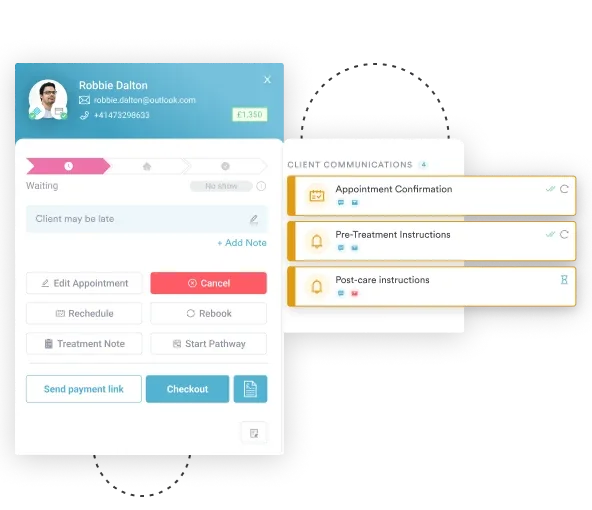

Keep records and messaging available under pressure
Pabau keeps patient records, scheduling, and messaging in one cloud platform, so your team can reach them from anywhere when the practice is disrupted. Every action is time-stamped for the debrief and for regulators.

Conclusion
Practices that come through a crisis intact are the ones that decided in advance who takes charge. That decision is most of the value in this document, and it costs you an afternoon.
So build the small version first. Name your five roles this week, write one protocol for your highest-risk scenario, and print the contact list. A one-page plan that exists will serve you better than a thorough one you never finish.
Rehearsal costs billable time, and that is the honest trade-off. A quarterly hour around a table still costs far less than a day of improvised decisions. Book a demo to see how Pabau keeps your records, patient messaging, and audit trail available when the practice is under pressure.

Continue your research
Worried about acute anxiety presentations in session? Panic disorder treatment sets out the clinical options behind the safety steps in your crisis protocol.
Could your team spot a cardiac event in the treatment room? Heart attack tests covers the assessments that decide how fast you escalate.
No front desk cover during a staff shortage? AI medical receptionist explains how calls and bookings keep moving when reception is short-staffed.
Need to clear the backlog after an outage? Patient flow shows where appointments stall and how to get a disrupted day back on schedule.
Want staff fluent in the system before it fails? EHR training covers the training that makes a switch to backup workflows quick rather than chaotic.
Frequently asked questions
What is a crisis management plan?
It is a written document setting out how your practice responds to a serious disruption. That could be a patient emergency, a system failure, or a staff shortage. It names the roles, the communication routes, the response procedures, and the resources you fall back on.
How often should the plan be reviewed?
Once a year at minimum, and immediately after any change to staffing, premises, systems, or regulation. Run a tabletop exercise every quarter so the team keeps the procedures fresh.
How does it differ from a business continuity plan?
Crisis management covers the event itself, so it deals with containment, safety, communication, and decisions made under pressure. Business continuity covers what comes after, restoring systems and normal operations. A practice needs both documents.
Which crises should a healthcare practice prepare for?
Run a risk assessment for your own site. The usual list is patient mental health emergencies, data breaches, system outages, staff shortages, patient safety incidents, natural disasters, and reputational crises. Rank them by likelihood and impact.
Who should be on a crisis management team?
Five roles: incident lead for decisions, communications lead for messaging, and clinical lead for patient safety. Add an IT and operations lead for systems, plus a documentation lead for the record. Give each role a named backup.
How long does it take to write one?
Allow four to six weeks for a thorough first version covering risk assessment, roles, communication, and three scenario protocols. Starting from the template above shortens that. A single-page draft written this week is better than nothing.