Healthcare workforce planning: a practical guide for practice leaders
Healthcare workforce planning is the structured process of matching clinical cap...

Last Updated: Oct 13, 2026

Patient flow is how patients move through your practice from arrival to discharge, and it drives revenue, satisfaction, and staff stress.
The three biggest bottlenecks in outpatient practices are scheduling accuracy, slow check-in, and unstructured discharge. All three are process problems you can fix.
Track five metrics: wait time, consultation-to-discharge time, no-show rate, room utilization, and patient throughput. They show you where the friction sits.
Digital intake forms are the fastest win. Sending them before arrival saves five to 10 minutes on every new patient appointment.
Practice management software like Pabau connects scheduling, forms, and reporting, so you can fix flow problems without adding admin headcount.
The symptoms show up before the diagnosis does. Appointments run late. Patients wait in the corridor. Staff spend their lunch break chasing discharge paperwork. A peer-reviewed study ties inefficient patient flow to longer length of stay and higher operating costs across healthcare settings.
This guide is for practice owners and managers who want a clear view of their patient flow. It covers what patient flow is, where it breaks down, how to measure it, and what to fix first. Whether you run a med spa, a physical therapy practice, or a primary care practice, the principles are the same.
Patient flow is the movement of a patient through your practice from arrival to discharge. It covers every touchpoint along the way, from booking and check-in through consultation, payment, and follow-up.
When each step hands off cleanly to the next, your practice runs at capacity. When one step stalls, the delay ripples forward through every appointment that follows.
For outpatient practices, patient care management depends on that movement being predictable. Take a practice seeing 40 patients a day. If each appointment leaks eight minutes to avoidable delay, that is more than five hours of productive time every day.
The business case is direct:
Most patient flow problems in outpatient settings come from three places: the front door, the treatment room, and the exit. Fixing the wrong one first wastes time and money, so here is where the friction usually lives.
Each of these is a process problem rather than a staffing problem. Adding people to a broken process only adds labor cost.
These five metrics give you a complete picture of patient flow health. The benchmarks below are general ranges for outpatient settings. Your own baseline will shift with specialty and appointment mix.
A reporting dashboard that surfaces these numbers daily removes the guesswork. The first honest wait-time audit usually lands well outside what the team assumed.
Flow improvement compounds. Each process change makes the next one easier to measure. Start with the area that causes the most downstream disruption, which is usually scheduling, then work forward through check-in and discharge.
Most scheduling problems are baked in before the day starts. Slot lengths that don’t match treatment durations, double-booked rooms, and no buffer between complex appointments are structural issues.
A three-room med spa running mixed filler and consultation appointments needs one kind of slot logic. A physical therapy practice with one-hour treatment blocks needs another.
Start with an audit of your last 30 days of appointment data. Compare booked slot length to completion time. If more than 20% of appointments overrun by five minutes or more, your template is too tight.
Scheduling patients effectively means building reality into the template rather than optimism. Set service-specific durations in your calendar management tool instead of one blanket slot length.
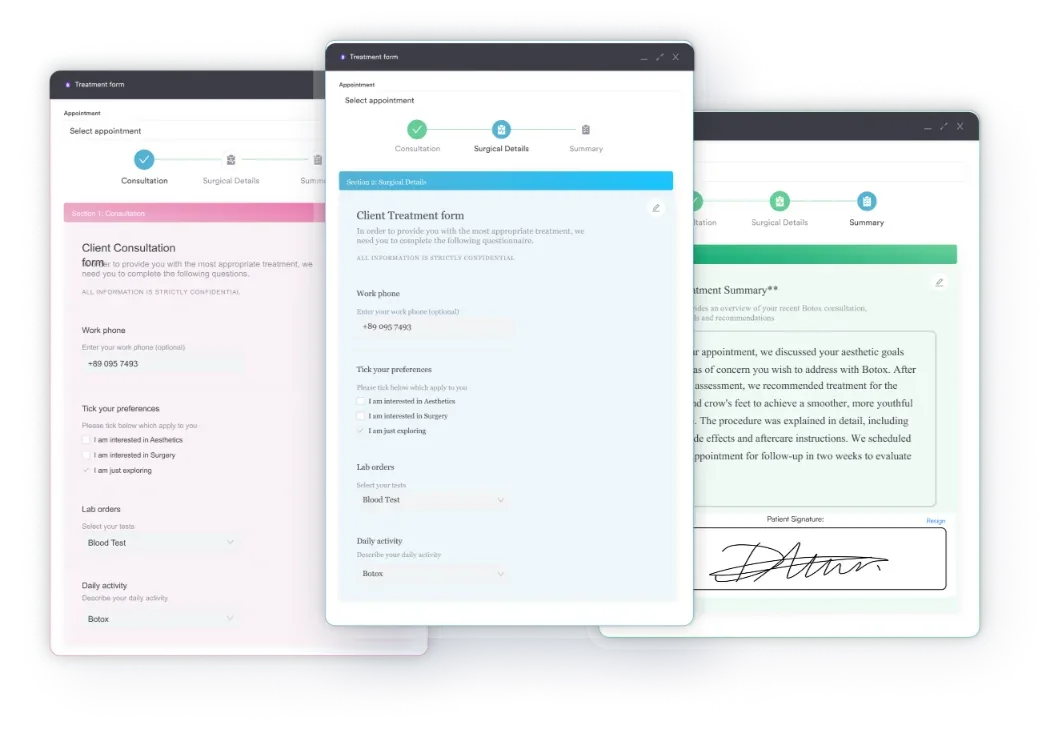
Paper forms at reception are the most consistent cause of check-in delays. A patient filling in a two-page intake form on a clipboard after arriving adds five to 10 minutes to every new patient appointment.
Sending digital intake forms 24 to 48 hours ahead removes that delay. The patient arrives pre-registered. Reception confirms identity, assigns the room, and the provider starts on time. That identity check runs against the master patient index, which links a returning patient’s visit to their existing record.
If you are rebuilding your paperwork, start from a ready-made layout. A massage intake form shows the fields most outpatient visits need, and you can trim it to fit. Streamlining appointment booking and check-in together typically saves six to eight minutes per new patient visit.
Discharge decides how the last 10 minutes of every appointment go. Where there is no set routine, someone at reception works out the invoice, the aftercare instructions, and the rebooking on the fly. Good teamwork in healthcare gives each of those steps a named owner, so none of them gets dropped at the desk.
A short case management note keeps that handoff consistent when a patient needs follow-up coordination.
A structured post-visit workflow changes this. Before the provider finishes the consultation, the system should have generated the invoice and queued the aftercare email. It should also have prompted the follow-up booking.
Automated pre- and aftercare emails cut the back-and-forth at the exit desk. Standard per-treatment documents help too. A set of laser hair removal aftercare instructions means reception sends a known file instead of writing one.
Audit your discharge workflow by timing 10 consecutive checkouts, from consultation end to the patient leaving the building. If the average exceeds eight minutes, you have a discharge design problem rather than a staffing problem. Map each step, find the manual handoffs, and automate the ones that repeat.
Verbal handoffs, paper lists, and memory all hold up until the day gets busy. Technology replaces the variable steps with consistent ones, which is what keeps flow steady on a full day.
The functions that matter most for outpatient flow:
Software options differ in how tightly they connect scheduling, clinical records, and patient communications. Our guide to practice management software covers what to compare before you commit to a platform.
Most published research on patient flow looks at hospitals: bed management, inpatient length of stay, and emergency department throughput. If you run an outpatient practice, those frameworks only partly apply. The constraints and the levers are different.
This matters when you evaluate advice and software. Hospital-grade platforms like Epic are built for bed management and multi-department coordination at scale. An outpatient practice with three to 10 providers needs something lighter.
What it needs is a set of tools that connect scheduling, clinical records, and patient communications without an IT department to run them.
Practices that make lasting improvements don’t overhaul everything at once. They follow a repeating cycle: measure, find the single biggest friction point, fix it, then measure again.
The American College of Healthcare Executives (ACHE) argues for end-to-end optimization, from admission through discharge. That whole-journey approach produces the most durable improvements at any size of organization.
For practices running more than one site, multi-location management adds another layer. Inconsistent processes across sites multiply flow problems instead of containing them.
Most outpatient teams run flow across several tools. Bookings live in one system and forms in another. The reporting turns up as a spreadsheet at the end of the month, long after the day it describes.
Practice management software like Pabau puts those pieces in one place. Online booking fills accurate slots and digital intake forms go out before the visit. Automated workflows then handle the aftercare email and the rebooking prompt. Providers can check consultations and confirm bookings between rooms using Pabau GO, our practice management app.
The reporting side closes the loop. Wait time, no-show rate, and throughput sit in the same system that records them. You can see on Wednesday what Monday cost you, while the week is still fixable.
The automated workflows feature sends post-visit messages without anyone on the team remembering to. For practices running several sites, the same configuration applies everywhere, so flow doesn’t drift between locations.
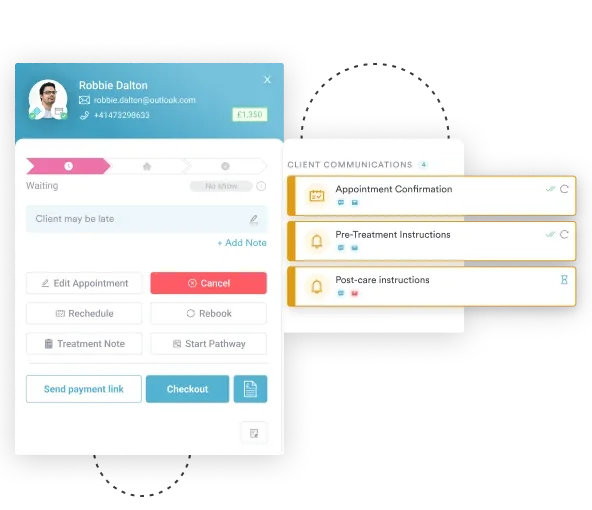

Pabau brings scheduling, digital intake forms, automated reminders, and live reporting into one platform. That covers every step that moves a patient through your practice, without the admin overhead.

Patient flow rewards sequencing more than effort. Fix the scheduling template before you touch check-in, and fix check-in before you rebuild discharge. Each change makes the next one easier to measure.
The trade-off worth remembering is that every fix costs attention now and pays it back in minutes later. A week of timing checkouts feels like wasted admin. It stops feeling that way once it hands you the eight minutes you were losing per patient.
Pick the one bottleneck causing the longest downstream wait, and work on that alone for 30 days. Pabau’s patient scheduling tools can take the scheduling half of the job off your desk. Book a demo to see how Pabau moves patients through your practice from booking to discharge.

Looking to tighten up your EHR workflows? EHR optimization guide benchmarks documentation time, wait times, and no-show rates against targets.
Want the full picture of running daily operations? Medical practice operations guide covers the workflow gaps that cost practices revenue.
Still deciding if you need new software at all? What is practice management software explains what it does and the features clinics rely on.
Comparing EHR options outside the US? Top EMR software in Australia compares platforms for Australian practices on pricing and Medicare integration.
Patient flow is the movement of patients through a healthcare facility, from arrival and check-in through consultation, treatment, and discharge. Efficient flow means each step hands off to the next with minimal delay. That maximizes the number of patients seen without cutting into care quality.
Efficient patient flow increases capacity, reduces staff stress, and improves satisfaction without extending hours or adding headcount. Practices with poor flow lose revenue to no-shows and overruns. They also score lower on patient experience surveys regardless of clinical quality.
The three most common bottlenecks are scheduling inaccuracies, slow check-in caused by paper intake forms, and unstructured discharge at checkout. Each is a process problem rather than a staffing one, so more people on shift rarely solves it.
The fastest win is moving intake forms online so patients complete them before arrival. That alone typically saves five to 10 minutes per new patient appointment. Pair it with accurate slot durations in your scheduling template and a structured discharge checklist.
The five core metrics are wait time from arrival to consultation, consultation-to-discharge time, no-show rate, room utilization rate, and patient throughput per provider. Track them weekly so you catch patterns before they become problems.
Patient flow describes the whole journey a patient takes through your practice, from booking to discharge. Patient throughput is one metric inside that journey. It counts how many patients you see in a given period, so improving flow is the goal and higher throughput is one of the outcomes.