Antipsychotic medication list
An antipsychotic medication list is a structured reference that organizes psychi...

2
Last Updated: Oct 13, 2026

Panic disorder treatment combines cognitive behavioral therapy (CBT) and medication, with CBT recognized as the gold-standard first-line psychotherapy.
SSRIs are the preferred first-line medication. Benzodiazepines relieve symptoms quickly but carry dependency risk and are not recommended long term.
Breathing exercises, mindfulness, and lifestyle changes work well as adjuncts, especially for patients who prefer to avoid medication.
Practice management software like Pabau helps teams structure care pathways, document treatment plans, and automate patient follow-up.
Around 2.7% of U.S. adults live with panic disorder in any given year, according to the National Institute of Mental Health. That makes it one of the most common anxiety conditions in primary care and specialist mental health settings. Yet many patients wait years for an accurate diagnosis or effective treatment.
This guide walks through the full range of treatment options — therapy, medication, non-drug approaches, and combinations of the three.
It also covers something the clinical research tends to gloss over: people with panic disorder often stop treatment early, which means the practical side of care — appointment scheduling, follow-up, staying connected between sessions, often determines whether any of it actually helps.
Panic disorder is defined by recurrent, unexpected panic attacks. The diagnosis also requires at least one month of persistent worry about future attacks, or a significant change in behavior.
DSM-5 criteria separate it from broader diagnoses such as unspecified anxiety disorder. The distinguishing features are the unpredictable timing of episodes and the anticipatory anxiety that follows them.
Panic attacks themselves peak within 10 minutes and typically resolve within 20-30 minutes. During an episode, patients commonly report four or more of the following symptoms:
✅ 4 or more of these during an episode meets DSM-5 diagnostic criteria for a panic attack
The AAFP puts panic disorder prevalence at 1 to 3 percent of the population. Agoraphobia develops as a comorbidity in a significant proportion of cases, as patients begin avoiding situations associated with previous attacks. Early, accurate diagnosis is the single most important factor in preventing that progression.
CBT is the most consistently supported psychotherapy for panic disorder across major clinical guidelines, including those from NIMH, APA, and the NHS. It works by targeting the cycle of catastrophic misinterpretation that sustains panic. A patient notices a physical sensation, reads it as dangerous, and the resulting anxiety intensifies the sensation.
Standard CBT for panic disorder runs over 12-16 weekly sessions and includes psychoeducation, cognitive restructuring, and systematic exposure. Therapists working in psychology practices typically structure sessions around three core components:
Research suggests that intensive CBT formats, which condense treatment into days or weeks rather than months, can be as effective as traditional weekly CBT. A 2025 APA review highlighted intensive outpatient CBT as promising for patients with limited time flexibility or long waits for a slot.
Intensive formats shorten the calendar duration of treatment without weakening outcomes. That changes how a practice books rooms, plans therapist time, and manages its waiting list, which is worth modeling before you offer the format.
Telehealth delivery of CBT has also expanded access considerably. Practices offering telehealth consultations can deliver structured CBT protocols to patients in rural or underserved areas who would otherwise go untreated.
Pharmacotherapy suits patients who prefer medication, whose symptoms impair functioning before therapy can take effect, or who have not responded adequately to CBT alone. SSRIs are the clear first-line choice, but prescribers should know the full medication ladder.
Benzodiazepines deserve a specific caution. They provide fast relief during an acute crisis. But all major guidelines, including NHS clinical guidance, advise against long-term use because of dependence and tolerance. Prescribers should frame them as a bridge to longer-term therapy rather than a standalone strategy.
For prescribers managing a large caseload, centralized prescription management reduces the work of tracking repeat prescriptions and flagging renewal dates.

Start SSRIs at the lowest available dose and titrate slowly for panic disorder patients. These patients are often hypersensitive to initial side effects, and may read early jitteriness as worsening anxiety. That misreading is a common cause of early discontinuation, so a slow uptitration schedule improves adherence.
A meaningful proportion of patients prefer to treat panic attacks without medication. The reasons include side effect concerns, pregnancy, personal values, and past experiences with pharmacotherapy. CBT alone achieves remission in a large proportion of these patients, and several adjunctive strategies improve outcomes further.
Controlled breathing is one of the best-supported in-the-moment interventions. Hyperventilation during a panic attack drops CO2 levels rapidly, which amplifies the physical symptoms. Diaphragmatic breathing at roughly four seconds in and six seconds out counteracts that.
Teach controlled breathing as a skill during the session rather than handing patients a leaflet, because guided practice improves technique and confidence. Harvard Health recommends pairing breathing exercises with progressive muscle relaxation in a broader self-management plan.
Structured resources between sessions improve engagement with these strategies far more than verbal advice alone. Automated follow-up messages prompt patients to practice between appointments rather than only during the session itself.
The evidence on combined treatment is mixed. Some studies show combination therapy outperforms either modality alone, particularly for severe presentations or significant functional impairment. Others find no clear advantage over CBT alone in mild-to-moderate cases. Combination treatment is most often preferred when:
When you combine modalities, coordination between prescriber and therapist matters. The psychiatric evaluation template should establish baseline severity, which guides whether to start both at once or sequence them. A validated measure such as the validated measure such as the DASS-21 makes that baseline reproducible across practitioners.
Clinicians at psychiatry practices using shared digital records work from the same clinical picture rather than in silos. Comorbid depression is common in this group, so coping skills for depression often belong in the same care plan.
Some patients do not respond to first-line CBT and SSRI treatment after an adequate trial, which is typically 8-12 weeks at therapeutic doses.
Escalation options include switching to a different SSRI or SNRI, augmenting with a low-dose TCA, or referring for specialist psychiatric review. Verify that the previous medication was taken as prescribed before you conclude treatment resistance.
Panic disorder in pregnancy requires a careful risk-benefit analysis. Untreated panic disorder carries its own risks, including stress on the pregnancy, while some medications carry fetal risks. The general approach is to prioritize CBT as the first-line intervention during pregnancy.
If medication is necessary, specialist review is required. Never make a definitive safety claim about a specific medication in pregnancy without current specialist guidance, and document every decision in the patient record.
Older patients bring extra considerations, starting with polypharmacy interactions and increased sensitivity to benzodiazepines, which carry a fall risk in this population. Presentations are also more likely to be atypical, and symptoms may be mistaken for cardiac or respiratory conditions.
CBT adapted for older adults, with slower pacing and attention to cognitive factors, is appropriate. Start SSRI doses below the standard adult dose and titrate more slowly than you would for a younger patient.
Crisis intervention protocols should be documented and accessible to the whole team. That matters most for patients presenting with severe attacks, who may need immediate clinical support alongside their longer-term treatment plan.
Effective panic disorder treatment rarely happens in isolation. Between-session support, consistent follow-up, and well-documented care plans matter as much as the clinical interventions themselves. For a practice carrying a mental health caseload, that is an operational problem as much as a clinical one.
Most practices run this on paper intake forms, a shared calendar, and whoever remembers to call the patient back.
Practice management software like Pabau replaces that with digital intake forms that capture symptom severity, treatment history, and comorbidities at the first appointment. Our new patient questionnaire is a starting point you can adapt for panic disorder.
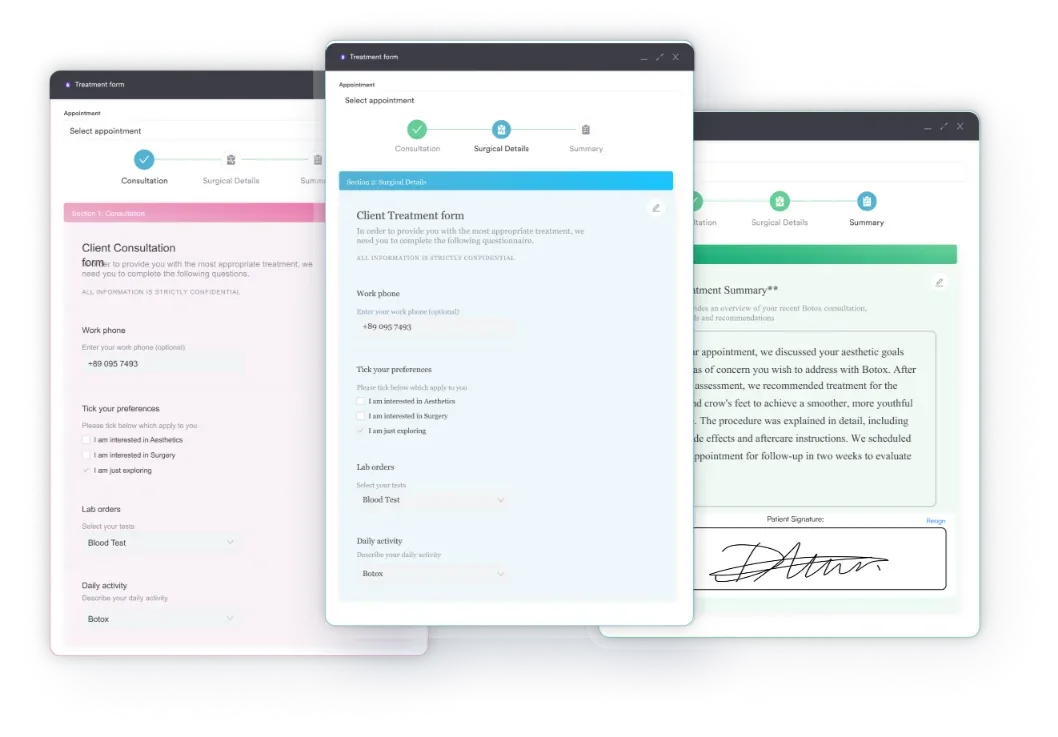
Follow-up is where practices lose traction. Patients who attend two or three appointments and then disengage face a significant relapse risk. Automated recall workflows prompt them to rebook at clinically appropriate intervals, which lifts continuity of care and takes work off the front desk.
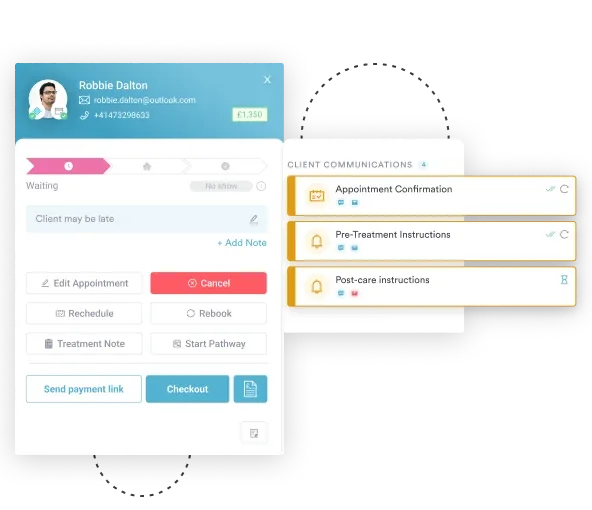
In multi-practitioner settings a patient may see both a prescriber and a therapist. Shared client records keep both on the same treatment plan, medication list, and session notes. That matters for panic disorder, where therapy and medication decisions feed directly into each other.
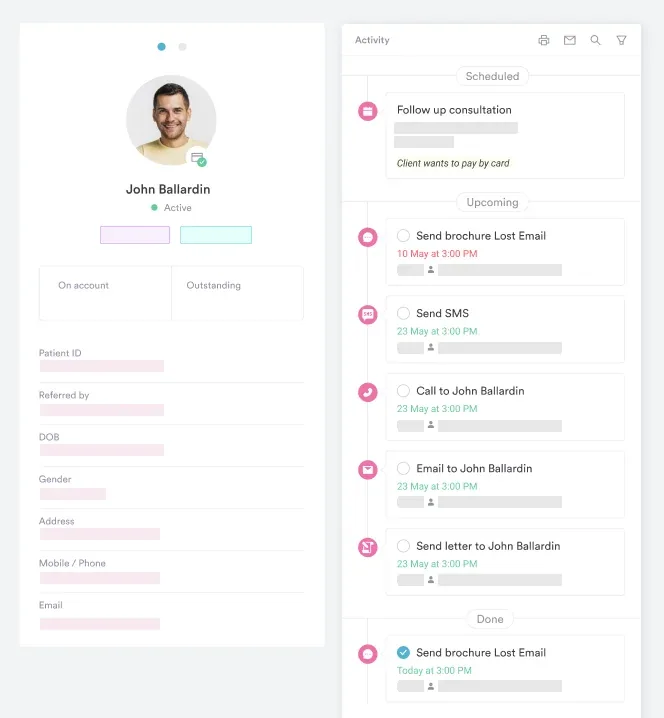
Reducing that administrative friction protects clinicians as well as patients. Therapist burnout runs higher in practices with heavy anxiety and trauma caseloads, and it shows up in the quality of care delivered.

Pabau helps therapy and psychiatry practices automate intake, track treatment progress, and coordinate care across practitioners. Clinicians spend their time on patients instead of admin.

Panic disorder is one of the more treatable anxiety conditions, and most patients improve substantially with CBT, medication, or both. What separates a practice that gets those results from one that does not is rarely clinical knowledge. It usually comes down to whether the patient is still in treatment at week 12.
So build the follow-up scaffolding before you grow the caseload. Structured intake, documented plans, and automated recall cost far less to set up than the relapses they prevent. Book a demo to see how Pabau handles the operational side of mental health practice.

Need a tool for the worry between attacks? Anticipatory anxiety worksheet gives patients a structure for the fear of the next episode.
Want to map what sets attacks off? Anxiety triggers worksheet helps patients record situations, sensations, and thoughts that precede an attack.
Looking for a quick severity measure? Zung self-rating anxiety scale scores symptom severity in a few minutes at intake or review.
Need patient education you can hand over? Anxiety fact sheet explains the condition in plain language for patients and their families.
Comparing therapy models for your team? Counseling theories chart sets CBT alongside the other major approaches in one reference.
Panic disorder treatment is the set of clinical interventions used to reduce panic attacks and the anticipatory anxiety that follows them. The two primary approaches are cognitive behavioral therapy (CBT) and medication, most commonly SSRIs. Research consistently supports CBT as the gold-standard first-line psychotherapy for most patients.
Cognitive behavioral therapy (CBT) is the most effective treatment for panic disorder, recognized as first-line by NIMH, APA, AAFP, and NHS guidelines. For patients with severe symptoms or a preference for medication, SSRIs are the first-line drug choice. Combined CBT and SSRI treatment may produce better outcomes in severe or complex presentations.
Yes. CBT alone achieves meaningful remission in a large proportion of patients with panic disorder. Structured breathing exercises, mindfulness, regular aerobic exercise, caffeine reduction, and lifestyle changes support recovery further. Medication is not required for every patient, and CBT is often preferred by those who wish to avoid it.
Standard CBT for panic disorder runs 12-16 weekly sessions, and many patients improve significantly within 8-10 sessions. Intensive CBT formats condense that into days or weeks. SSRI medication typically takes 2-6 weeks to produce noticeable relief, and a full therapeutic trial lasts at least 8-12 weeks before efficacy can be judged.
Panic disorder is triggered by a combination of biological vulnerability, psychological factors, and life stressors. Genetic predisposition plays a role, as does heightened sensitivity to physical sensations. Major life events, chronic stress, and a history of anxiety or trauma increase risk. Caffeine, stimulants, sleep deprivation, and certain medical conditions can also set off attacks.
The best-supported in-the-moment strategy is controlled diaphragmatic breathing at roughly four seconds in and six seconds out, which counteracts the hyperventilation that amplifies symptoms. Grounding techniques also help, such as naming five things you can see and four you can touch. Cognitive self-talk reduces intensity while the episode resolves on its own.