EHR ROI: How to calculate and maximize your return
EHR ROI is the financial return a practice earns on its electronic health record...

Last Updated: Oct 15, 2026

Solo practitioners keep more revenue per session but absorb every business cost themselves.
Group members share overhead and admin staff, and take a percentage of their session fees in return.
Administrative burden is the biggest operational difference, since solo owners handle billing, scheduling, hiring, and compliance alone.
Early-career clinicians usually do better in a group, while established practitioners often find a higher income ceiling on their own.
Practice management software like Pabau automates scheduling, billing, and reminders, so a solo owner can run at group-practice efficiency.
Most clinicians finish training without anyone walking them through the business decision that shapes the rest of their career. Solo or group? The difference between the two models can run to tens of thousands of dollars a year, depending on specialty, location, and how you structure overhead.
This guide compares group practice and private practice across the factors that decide it: income, administrative load, autonomy, work-life balance, and career stage. It is written for therapists finishing supervised hours, physicians weighing options after residency, and clinicians thinking about scaling. It also covers what happens later, when a full solo practice is ready to add its first associate.
Fewer than half of US physicians now work in private practice, according to the American Medical Association’s Physician Practice Benchmark Survey. Hospital and corporate owners absorbed most of the rest. That shift makes the decision more consequential than it was a decade ago.
The core difference is ownership. In a private (solo) practice, you own and operate the business, and every clinical and operational decision runs through you. You control fees, schedules, service mix, and patient selection. You also carry 100% of the costs.
In a group practice, several clinicians work under one business entity. Overhead, administrative staff, and infrastructure are shared. You trade some autonomy for built-in resources such as billing staff, a referral network, and colleagues down the hall.
Per session, the two models can look almost identical. The difference shows up once your calendar is full.
Solo practitioners keep a higher share of revenue per session. Charge $200 with overhead at 40% for rent, malpractice, software, and billing, and you net $120. A group practice collecting the same $200 might pay you 50% to 60%, or $100 to $120.
The divergence comes at scale. Once your solo practice is full, you capture 100% of the upside from a waitlist, evening slots, or a fee increase. Group members rarely benefit financially from practice-level growth beyond their own caseload.
Procedure-heavy specialties widen the spread further. A dermatology practice billing CPT code 11311 or CPT code 11103 several times a day generates more revenue per visit than a session-based practice. In solo ownership, that extra revenue lands with the owner.
Private practice ownership means full clinical and business autonomy. You decide which treatments to offer, which payers to accept, how long sessions run, and how your waiting room looks. Nothing needs committee approval.
Group practice clinicians keep substantial autonomy over individual patient decisions, but they work inside the practice’s framework. The owner or management team sets fee schedules, chooses which insurance panels the group joins, hires support staff, and shapes the patient experience.
Autonomy cuts both ways. Full control energizes clinicians who know exactly what they want to build. It exhausts the ones who would rather spend their non-clinical hours resting than running operations.
Running a solo practice means wearing every hat. That means billing, scheduling, credentialing, hiring, compliance, marketing, and the paperwork attached to each one. Private practice management is a second full-time job layered on a clinical one.
Group practices employ or outsource dedicated administrative staff for most of that work. As a group member, your non-clinical time goes mainly to documentation rather than operations. For a lot of clinicians, that alone decides it.
Solo owners spend meaningfully more of their week on work unrelated to patient care. The same pattern shows up in industry benchmarking, including MGMA’s data reports. In a group, most of that load sits with staff whose job it is.
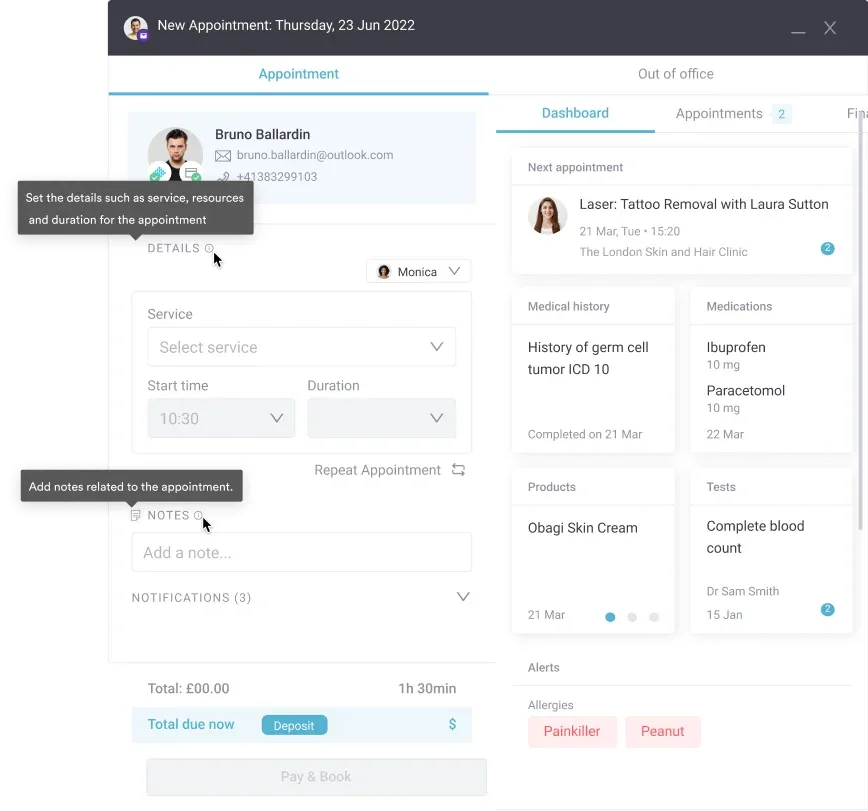
Technology has narrowed the administrative distance between solo and group practice. The right practice management software handles scheduling, automated reminders, billing workflows, digital intake forms, and reporting in one system.
Practice management software like Pabau runs those tasks automatically. Its automated workflows send recall campaigns, pre-appointment forms, and follow-up messages without anyone pressing send. A single-provider practice can reach group-practice efficiency this way.
A solo dermatologist seeing 20 patients a day does not need two admin hires. Good dermatology practice software automates the repetitive work those hires would do. The tasks worth automating are the manual, repeatable ones.
Solo practice offers scheduling flexibility that group settings rarely match. You can block Fridays, take August off, or move to evening hours without asking a practice manager. That matters for clinicians with caregiving duties or geographic constraints.
Isolation is the trade-off. Burnout in healthcare tracks closely with professional isolation and a lack of peer consultation. A solo practitioner can go weeks without a substantive clinical conversation with a colleague. Group practice supplies that peer contact by default.
Therapists in solo practice describe both sides of this. They rate control over their own schedule highly, and they feel the absence of colleagues more than group-practice peers do.
Both directions carry burnout risk. Group practitioners burn out from high-volume caseloads and limited control. Solo practitioners burn out from carrying clinical and business responsibility at the same time.
Schedule one peer consultation per week, even as a solo practitioner. Join a peer consultation group, a professional association listserv, or an informal network of clinicians in your specialty. Professional isolation is a manageable risk, but only if you actively counter it.
The built-in professional community is one of the strongest arguments for group practice. Warm referrals happen on their own. The psychologist down the hall sends over a patient who needs psychiatry, and the physical therapist refers to the occupational therapist in the same suite.
Solo practitioners have to build a referral network on purpose. That means relationships with primary care physicians, hospital discharge teams, specialists, and community providers. A structured patient referral program takes months to build and needs ongoing maintenance. In therapy practice management, the referral question often decides whether a new practice thrives in year one.
Group practice also gives you informal clinical consultation. With a complex case, you can walk across the hall instead of emailing a colleague you have not spoken to in months. Embedded support like that is hard to replicate solo, however strong your outside network is.
Credentialing is slow, tedious, and decisive. In a group, the practice entity holds payer contracts under a group National Provider Identifier, or NPI, and clinicians are credentialed under that umbrella. Someone joining an established group can often start seeing insured patients sooner, because the payer relationships already exist.
Solo practitioners apply for their own payer contracts. Depending on the payer and specialty, that can take three to six months, and some panels are closed to new solo providers in certain markets. Medicare’s own enrollment guidance sets out separate application tracks for individual practitioners and group practices.
The upside for solo owners is negotiation. Medicare’s fee schedule does not pay a large group more than a solo practice for a code like CPT code 11043, but commercial payers can. Build enough volume and leverage, and you may beat a large group’s standardized rates. That advantage usually arrives several years in.
Early-career clinicians usually fit a group. Established clinicians usually fit solo ownership. Career stage predicts the right model better than any other single factor. The choice is not permanent, but timing changes the odds.
Early career (0-3 years post-licensure): Group practice usually wins. You are still building clinical confidence, a professional network, and a reputation. A group supplies mentorship, a steady patient stream, and the administrative scaffolding that lets you focus on clinical skill. Going solo this early usually means spending your energy on logistics.
Mid-career (3-8 years): This is when the question gets serious. You have clinical confidence, a growing reputation, and a clear sense of the practice you want. Starting solo now means you are not learning to be a clinician and a business owner at once.
Established practitioners: Solo ownership gets more attractive every year. You likely have a loyal patient base, a working referral network, and reserves to cover setup costs and a slow first year. A group’s income ceiling starts to feel like a ceiling.
Plenty of solo practitioners end up asking a different version of the question. When should a full solo practice become a group? The triggers are operational rather than aspirational.
You are ready to scale when your waitlist runs four to six weeks and you turn away referrals most weeks. Your systems also have to carry another clinician. Starting a medical practice with employees adds a compliance and HR lift on top of the clinical one.
Adding a provider under your entity triggers group NPI requirements, updated payer contracts, employment or contractor agreements, and shared protocol documentation. A solid medical practice business plan maps all of that before you hire the first associate.
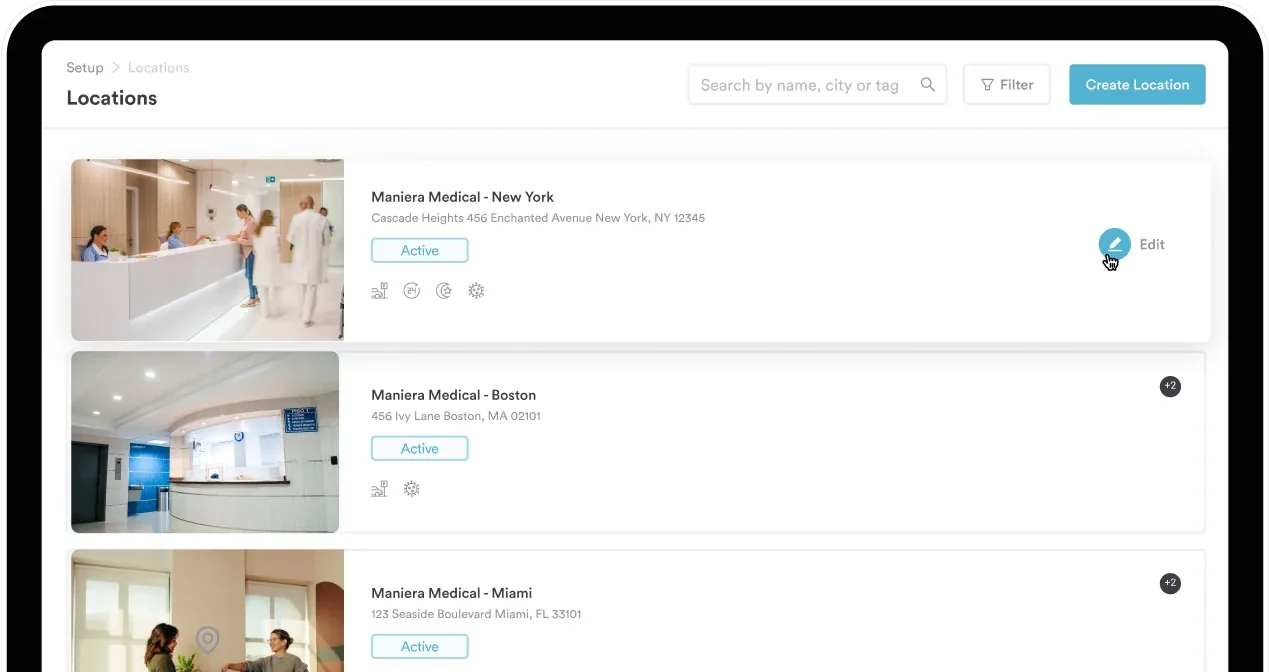
Technology decides how painful that is. An EHR chosen for solo practice often struggles once you add a second or third provider. You need multi-location management, provider-level scheduling and reporting, and per-clinician performance tracking without rebuilding from scratch.
Today, a solo owner’s non-clinical hours go to the same short list. That means confirming appointments by phone, retyping intake forms into the record, chasing deposits, and rebuilding the same recall list every month. A group hires someone to absorb that work.
Pabau does that work in one system instead. Online booking and reminders go out on their own, intake forms and consents land straight in the patient record, and payments reconcile against the invoice. Reporting covers the whole practice, not one calendar. Pabau GO puts that same system in your pocket, letting you capture consents and photos and take payments anywhere.
The same setup scales. Add a second provider and you add a calendar, a commission rule, and a reporting line. Every subscription includes every feature, so a one-user practice gets the same tools a ten-provider group does.
One US solo owner automated her emails and forms this way while building a five-star practice. That is the outcome to aim at. You get the administrative output of a group at solo overhead.

Pabau automates scheduling, reminders, billing, and digital forms in one system. Solo owners get the administrative output of a group without the group’s payroll.

Neither model wins outright. The decision turns on career stage, how much administrative ownership you want, and what you are optimizing for.
What changed over the last decade is the cost of going solo. Software now absorbs most of the administrative work that made solo ownership exhausting. That moves the break-even point earlier in a career than it used to sit.
So test the assumption before you act on it. If admin is the main reason you are leaning toward a group, find out what the right software removes first. Book a demo to see how Pabau handles scheduling, billing, and forms for a single-provider practice.

Comparing software before you go solo? Best EHR for solo practice compares seven systems on the features a single-provider practice actually uses.
Choosing a cloud-based EHR for your practice? SaaS EHR software compares six cloud-based platforms on pricing, standout features, and the practice types each fits.
Is your current EHR holding the practice back? Switching EHR systems walks through the transition process for practices ready to replace a broken EHR.
Already open and ready to grow? How to grow your private practice sets out the marketing, retention, and capacity moves that add revenue.
Need a business plan before you open the practice? Medical practice business plan template covers the executive summary, market analysis, financial projections, and healthcare compliance requirements.
A private practice is owned and operated by one clinician or a small partnership. The owner keeps all revenue and absorbs all costs. A group practice is a multi-provider entity where clinicians share overhead, staff, and payer contracts. In return they take a percentage of their session fees.
Solo practitioners keep a higher share of per-session revenue once overhead is covered. They also face no income ceiling as the practice grows. Group members receive a set percentage of fees, typically 50-60%, in exchange for lower financial risk and steadier volume. Solo practitioners pull further ahead once the practice runs at capacity.
For most early-career clinicians, joining a group is the better starting point. You gain mentorship, a built-in referral network, and administrative support while you build clinical confidence. Solo practice becomes more attractive once you have an established reputation, financial reserves, and a clear clinical niche. That usually takes five years or more.
Group practices hold payer contracts under a group NPI, so a clinician joining an established group can often start seeing insured patients sooner. Solo practitioners apply for individual payer contracts separately. That can take three to six months per payer, and some panels are closed in a given market. Medicare maintains separate enrollment tracks for individual and group NPI holders.
Group practices typically use platforms that support multiple providers, shared scheduling, provider-level reporting, and group billing. Solo practitioners often start with simpler tools but benefit from software that scales with them. Pabau supports both, with automated workflows, multi-location management, team scheduling, and integrated billing in one system.