










Key takeaways
CPT code 21820 describes closed treatment of a sternum fracture without manipulation, in the CPT thorax fracture range.
Bill it with ICD-10-CM code S22.20XA, S22.21XA, or S22.22XA to establish medical necessity.
The code carries 1.33 work RVUs and a 90-day global period that starts the day after the procedure.
Unrelated E/M visits inside that global window need modifier 24. Related follow-ups are bundled and cannot be billed separately.
Practice management software like Pabau flags coding errors before submission, so fracture claims go out clean.
CPT code 21820 covers closed treatment of a sternum fracture, meaning conservative management with no incision and no attempt to reduce the fracture. It carries 1.33 work RVUs and a 90-day global period. Blunt chest trauma from motor vehicle accidents and CPR compression injuries account for most of the fractures coded this way.
This reference covers the official code description, the ICD-10 codes that pair with it, and modifier guidance. It also walks through RVU values, Medicare reimbursement, global period rules, and the documentation CMS expects. Rates change annually, so verify current figures against your MAC’s fee schedule before you submit.
CPT code 21820: Definition and clinical context
CPT code 21820 is defined by the American Medical Association as “Closed treatment of sternum fracture.” It sits in the Musculoskeletal System chapter of the CPT manual. Within that chapter it falls under fracture and dislocation procedures on the thorax, alongside codes 21800 through 21825.
Two words define what this code covers. “Closed” means no surgical incision. “Without manipulation” means the treating physician is not repositioning fracture fragments.
Instead the physician provides non-operative management, usually pain control, activity modification, and clinical monitoring. If any manipulation of the fracture site takes place, CPT 21820 no longer applies.
Procedure description and clinical indications
The sternum, or breastbone, fractures most often from significant force to the front of the chest wall. Motor vehicle accidents are the leading cause, usually when a driver’s chest strikes the steering wheel. CPR-related sternal fractures are the second most common mechanism, especially in older patients with reduced bone density.
Presentation usually includes midline chest pain that worsens with movement, plus tenderness on palpation over the sternum. Larger injuries may show visible or palpable deformity. Chest X-ray or CT confirms the diagnosis. Most closed sternal fractures are treated conservatively, so CPT 21820 covers the large majority of cases.
Use CPT 21820 when all of the following conditions are met:
- The fracture is confirmed by imaging
- Treatment is non-operative (no incision)
- No manipulation of fracture fragments is performed
- The physician takes responsibility for fracture care management, including the global period
Do not use CPT 21820 for rib fractures (see CPT 21800 and 21810) or for open treatment of a sternal fracture (see CPT 21825). For thoracic spine fractures, refer to the spine fracture CPT code set, as those fall outside the thorax fracture range.
Coders in physical therapy practices and sports medicine meet these distinctions constantly when they treat post-trauma patients.
ICD-10 diagnosis codes for sternal fractures
Pairing CPT 21820 with the correct ICD-10-CM diagnosis code is what establishes medical necessity. The primary codes sit in category S22, which covers fractures of the ribs, sternum, and thoracic spine. Sternal fractures specifically fall under S22.2.
Use the CDC ICD-10-CM tool to check descriptions and encounter suffixes against the active code year.
For most initial emergency department or office encounters, S22.21XA is the most specific and commonly appropriate code. Defaulting to S22.20XA when the imaging report documents stability is a specificity error, and it can trigger medical necessity reviews.
Sequela codes carrying the S suffix apply only after the fracture has fully healed. The same suffix rules govern every S22 and S42 fracture code, including S42.463G for delayed healing.
Applicable modifiers and when each one applies
Modifier selection for CPT 21820 depends on the clinical circumstances and the billing scenario. The wrong modifier is a common trigger for claim denials and OIG audit flags in fracture care. The table below summarizes when each modifier applies.
RVU breakdown for CPT 21820
Relative Value Units (RVUs) form the basis of Medicare reimbursement under the Resource-Based Relative Value Scale (RBRVS).
The table below carries the 2026 national values published in the CMS Physician Fee Schedule. Values update every January, so check the current RVU lookup for your locality before you bill.
Reimbursement = Total RVU x Geographic Adjustment Factor (GAF) x Conversion Factor. For 2026 the conversion factor is $33.4009, which puts 21820 at roughly $169 in a facility and $180 in an office. Your MAC locality then adjusts the GAF for regional cost differences.
CMS classifies 21820 as major surgery, so the global package is wider than the 90 days most references quote. It also covers the day before the procedure and the day of the procedure itself. An E/M visit on either day is bundled, unless that visit is where the decision to treat was made. In that case, modifier 57 applies.
Medicare reimbursement rates by setting
Medicare reimbursement for CPT 21820 varies by setting and geographic location. The CMS fee schedule lookup gives locality-specific payment amounts and is updated each January. The ranges below bracket the 2026 national rates across MAC localities.
Commercial payer rates for CPT 21820 vary considerably and are negotiated separately from Medicare. They may be expressed as a percentage of the Medicare allowable, or as a flat fee schedule. Always check payer-specific contracts, and pull the current Medicare fee schedule from your MAC before projecting revenue.
Practices managing high volumes of fracture care billing benefit from a shorter path to payment. Catching a specificity error or a bad modifier before submission is what keeps the revenue cycle moving.
Global period and post-procedure billing
CPT 21820 carries a 90-day global period. It is a frequent source of both underbilling and inadvertent unbundling. The 90 days begin the day after the procedure date.
Inside the global period, routine follow-up care for the sternal fracture is already bundled into the 21820 payment. Billing a separate E/M code to assess healing progress will be denied, or recouped on audit. The CMS billing article A53322 sets out what the global period package includes.
- Bundled, cannot bill separately: Routine follow-up visits to assess healing, standard imaging ordered to monitor healing, and basic pain management instructions.
- Separately billable, with the correct modifier: An E/M visit for an unrelated condition takes modifier 24. A new injury or unrelated complication takes modifier 79. A staged or related procedure by the same physician takes modifier 58.
- Not covered by the 21820 global period: Concurrent care by another specialty for unrelated conditions, physical therapy, and other ancillary services.
Practices with robust HIPAA-compliant documentation handle global period billing more accurately. The clinical record makes it easy to tell a fracture-related visit from one addressing a separate problem.
Tracking the 90-day window by hand is error-prone, and a missed window can push a claim past its filing deadline. Software that flags the global period end date by CPT code takes that risk off your team.
Documentation requirements and medical necessity
CMS documentation standards for fracture care sit in billing article A53322. The record has to support both the diagnosis and the treatment method you chose. Incomplete documentation is the most common trigger for post-payment audits on fracture care codes.
The required documentation elements for CPT 21820 include:
- Confirmed fracture diagnosis: An X-ray or CT report confirming the sternal fracture, with the interpretation documented in the record.
- Mechanism of injury: How the injury occurred, whether a motor vehicle accident, CPR, or direct blunt trauma. This supports medical necessity for the imaging and treatment.
- Clinical rationale for conservative management: A statement explaining why non-surgical, non-manipulative treatment is right for this patient.
- Treatment plan: Instructions for pain management, activity restriction, and the follow-up schedule.
- Fracture stability classification: Whether the fracture is stable, unstable, or unspecified. This is what supports S22.21XA or S22.22XA.
- Physician signature and credentials: The treating physician signs every relevant note, with credentials.
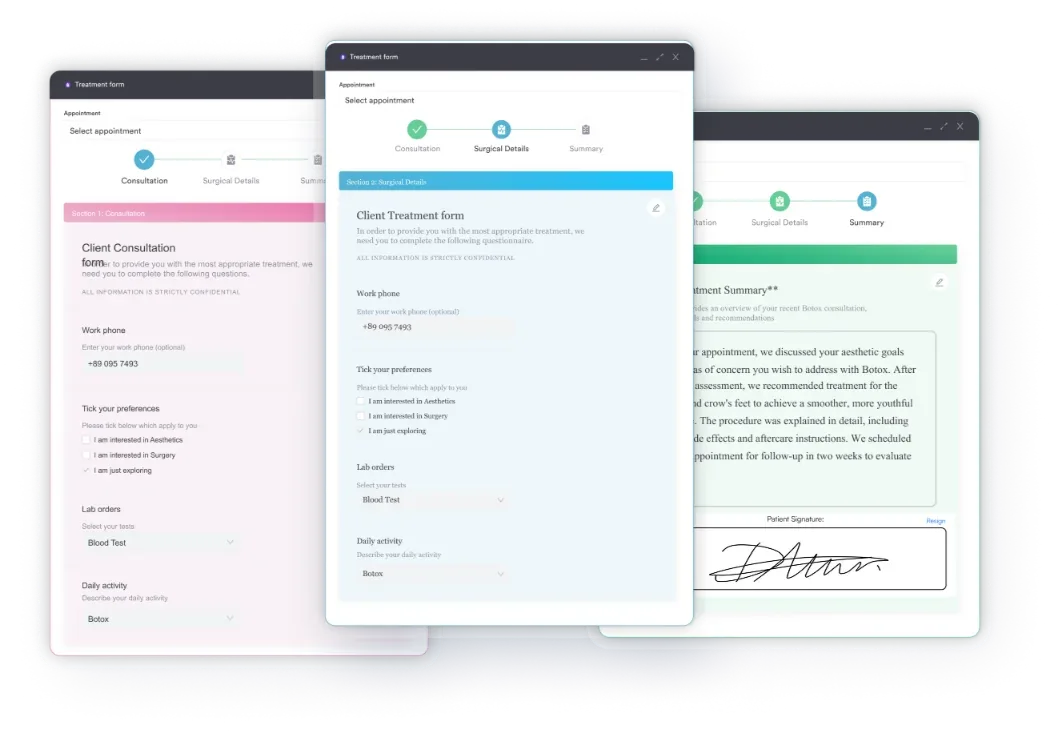
Practices that use digital intake forms miss fewer required elements. The workflow prompts the clinician to capture each one at the point of care, instead of reconstructing it from memory later. That habit is the foundation of billing compliance across every code family, not just fracture care.
Related CPT codes: 21800, 21810, and 21825
The thorax fracture code family is compact, but the clinical distinctions matter. Choosing the wrong sibling code is the most common upcoding error in this range, and a known OIG focus area. The table below clarifies when each code applies.
The most critical distinction in this family is 21820 vs. 21825. Both apply to the sternum, but 21825 requires an open surgical approach. Billing 21825 for a case managed conservatively is upcoding, however severe the fracture looked on imaging.
The code follows the treatment rendered rather than the injury’s severity. The same open-versus-closed logic runs through the rest of the musculoskeletal chapter, including 23650.
Common billing errors and audit risks
Knowing where 21820 claims most often go wrong lets you build safeguards up front. That beats reacting to denials and audit findings after the money has already gone out the door.
- Upcoding to CPT 21825: Billing 21825 for a case managed conservatively, with no surgical intervention. The documentation would not describe an incision, which makes this easy to detect on audit. It is the highest-risk error in the 21820 family.
- Missing ICD-10 specificity: Defaulting to S22.20XA when the imaging report documents a stable or unstable fracture. Payers increasingly review medical necessity when specificity was available but not used.
- Unbundling within the global period: Billing a standard E/M visit for a follow-up fracture check during the 90-day global window without an appropriate modifier. These claims will deny or trigger recoupment.
- Incorrect modifier 22 application: Using modifier 22 without a written report explaining why the service was substantially more complex than typical. Unsupported modifier 22 is a red flag in OIG work plans.
- Modifier 59 misuse: Appending modifier 59 to unbundle services that already sit inside the fracture care package. CMS has flagged modifier 59 as one of the highest-risk modifiers for improper billing.
Teams that manage billing compliance at scale lean on structured clinical forms. Capturing the right data at the point of care gives coders the specificity they need, without a second trip back to the physician.
How claims management software keeps 21820 claims clean
In most practices, fracture care coding lives in three places at once. The imaging report sits in one system, the treatment note in another, and the global period end date in a spreadsheet. By the time a coder needs to know whether a follow-up visit was related, the answer has to be reconstructed from memory.
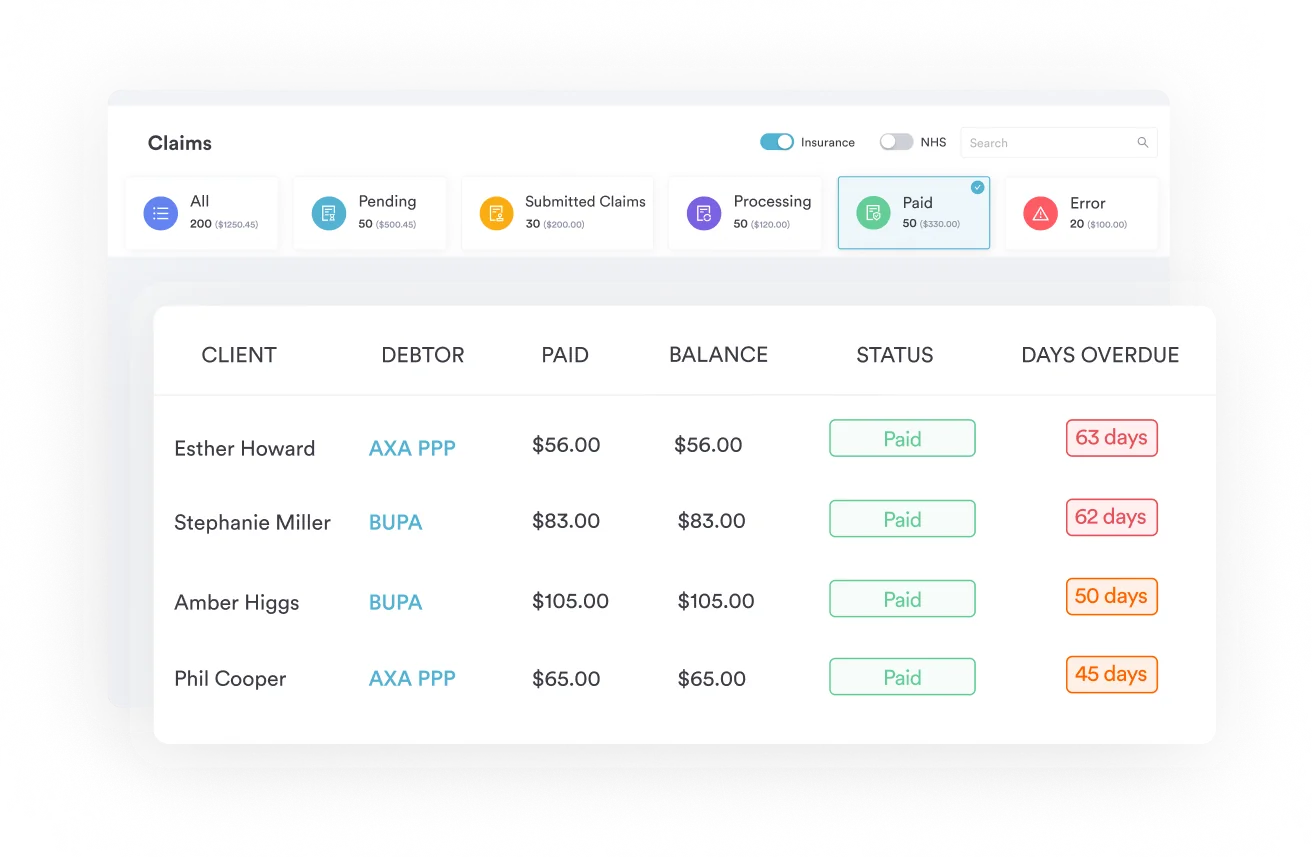
Practice management software like Pabau keeps all of it in one client record. The intake form, the mechanism of injury, the imaging interpretation, and every follow-up visit attach to that record. Pabau’s claims management tools then track each claim through pending, submitted, paid, and error. A denied 21820 lands in a queue instead of a report nobody opens.
The outcome is fewer specificity errors and fewer bundled E/M visits going out the door. Your coders spend their day on the cases that genuinely need judgment. They stop chasing physicians for notes that should have been captured at the visit.

Streamline fracture care billing with Pabau
Pabau’s claims management tools help orthopedic and emergency medicine teams reduce coding errors, track global periods, and submit cleaner claims. See how it works for your practice.

Conclusion
Sternal fractures are straightforward to diagnose and easy to miscode. One rule prevents most 21820 errors. The treatment you documented decides the code, not how severe the fracture looked on imaging.
That single rule closes off the two errors that cost the most. It stops 21825 creeping onto a conservatively managed case, and it keeps bundled follow-up visits out of your claims. Pair it with a note that states fracture stability, and your ICD-10 specificity takes care of itself.
The trade-off worth remembering is that 21820 pays once for 90 days of care. Accepting fracture care management means accepting that window, so track it deliberately. Book a demo to see how Pabau tracks global periods and flags coding errors before a claim goes out.

Continue your research
Want fewer denials on fracture care claims? Clean claim sets out what a payer needs on first submission so nothing bounces back.
Getting denials you did not expect? Denial management in healthcare covers how to work a denial queue instead of rebilling blind.
Not sure why a payment came in short? Electronic remittance advice explains how to read the remittance file and trace an adjustment to its cause.
Need approval before treatment starts? Prior authorization process walks through the steps that keep an authorization from holding up care.
Checking coverage before the patient arrives? Insurance eligibility verification shows how to confirm benefits early and avoid write-offs later.
Frequently asked questions
What does CPT code 21820 describe?
CPT code 21820 describes closed treatment of a sternum fracture without manipulation. It applies when a physician manages a sternal fracture non-surgically, with no attempt to reposition or reduce the fragments. Conservative care usually means pain management and activity restriction.
What ICD-10 codes are linked to CPT 21820?
Three initial-encounter codes pair with CPT 21820. S22.20XA is an unspecified sternum fracture, S22.21XA is a stable one, and S22.22XA is unstable. Subsequent encounters take the D suffix, and sequela codes take the S suffix. Use the most specific code your imaging findings support.
What is the global period for CPT code 21820?
The global period for CPT 21820 is 90 days, beginning the day after the procedure date. Routine follow-up visits related to the sternal fracture are bundled into this payment and cannot be billed separately. E/M visits for unrelated conditions during this window require modifier 24 to be billed separately.
Does CPT 21820 include manipulation of the sternum fracture?
No. CPT 21820 specifically excludes manipulation. The code description “closed treatment of sternum fracture” applies only when no manipulation or reduction attempt is performed. If the physician manipulates the fracture to improve alignment, CPT 21820 no longer applies. Use the code that reflects the service performed.
How does CPT 21820 differ from CPT 21825?
CPT 21825 covers open treatment of a sternum fracture, meaning a surgical incision is made and the fracture may be stabilized with hardware. CPT 21820 is for closed, non-surgical management only. The key determinant is the treatment rendered, not fracture severity. Billing 21825 for a conservatively managed case constitutes upcoding regardless of how severe the fracture is.
What is the Medicare reimbursement rate for CPT 21820?
Medicare pays about $169 for CPT 21820 in a facility and about $180 in an office, using 2026 national rates. Your MAC locality adjusts both figures up or down. Rates update every January with the CMS Physician Fee Schedule, so verify the current amount before you project revenue.
What are the common fracture care CPT codes for thorax injuries?
Four codes cover thorax fracture care. 21800 is closed treatment of a rib fracture, and 21810 covers rib fractures needing fixation. 21820 is closed treatment of a sternum fracture, and 21825 is open treatment of one. Code selection depends on the bone involved, whether treatment is open or closed, and whether manipulation was performed.