

ICD-10 code S61.201A: Open wound of left index finger without nail damage
ICD-10 code S61.201A covers a left index finger wound of unstated type ICD-10 co...

Last Updated: Oct 16, 2026
Billable Code Specific Code
S42.463G is the billable ICD-10-CM code for displaced fracture of medial condyle of unspecified humerus, subsequent encounter for fracture with delayed healing.
The 7th character is where this code slips. G means union is behind schedule but still moving. A fracture that has stopped uniting takes K instead, so the code becomes S42.463K.
Swap the two and the claim tells the payer the wrong story about the patient's recovery.
Let Pabau's smart automation suggest the right codes, reduce claim denials, and keep your practice compliant—effortlessly.
Automate repetitive tasks and focus on what matters most—your patients.
Reduce coding errors and ensure compliance with the latest regulations.
Clean claims, fewer denials, and faster reimbursements.
Powerful insights and reporting to help your practice thrive.
HIPAA compliant SOC 2 certified GDPR-compliant Trusted by 4,000+ clinics worldwide

S42.463G is the billable ICD-10-CM code for a displaced medial condyle humerus fracture seen at a subsequent encounter with delayed healing.
The 7th character G means union is running behind schedule. Nonunion is a different character, K, on a different code, S42.463K.
Character 6 carries displacement and laterality together. The 3 in S42.463G means displaced, with no side documented.
Use S42.463G only when the record never states a side. Right is S42.461G and left is S42.462G.
Practice management software like Pabau links code selection to the claim, so a 7th character is never carried over by habit.
S42.463G is a billable, specific ICD-10-CM code, valid for FY2026 and effective October 1, 2025. Nothing more specific sits below it, so it can go on a claim as it stands.
Two rows in that table cause most of the trouble. The 7th character sets the healing state, and the parent code S42.463 pays nothing without it.
S42.463G means three things at once. The medial condyle of the humerus is fractured, the fragments have shifted out of alignment, and the record never names a side. At this encounter the patient has returned, and union is running behind schedule.
The medial condyle sits on the inner side of the distal humerus and forms part of the elbow joint. Displaced means the fragments have moved off their anatomical position. A nondisplaced fracture cracks the cortex but keeps alignment, and it codes to S42.464 through S42.466 instead.
Character 6 is often read as a laterality digit, and that is where coders go wrong. It encodes displacement and side together. Values 1 to 3 cover displaced fractures on the right, the left, and an undocumented side. Digits 4 to 6 cover nondisplaced fractures in the same order.
Clinical notes describe this injury in several ways. Map any of the following to S42.463G when the side is missing and the physician has documented delayed healing.
G marks a follow-up visit where union is behind schedule but still under way. It is the riskiest character in the whole string, because six others sit right next to it in the same table. Every code in S42.4 draws from that one set.
A, B, D, G, K, P and S are the only encounter characters S42.4 allows. Gustilo-Anderson characters belong to the forearm, femur and lower leg categories. An open fracture in the shoulder block takes B at the initial encounter, as S42.143B shows.
Four characters describe four healing states, and none of them substitutes for another. D, G, K and P each tell the payer something specific about where the bone has got to.
Walk through one case and the line becomes obvious. A surgeon fixes a displaced medial condyle fracture in March. At the five-month visit, imaging shows thin callus, and the note records delayed union. That encounter codes to S42.463G. If the same note said the fracture had not united, the code becomes S42.463K. The clearinghouse validates structure before the payer validates content, which is why an electronic claim can fail twice. A small billing team benefits more from a documented billing process than from extra hours.
Delayed healing still describes a bone that is knitting. Nonunion describes one that has stopped. That single distinction separates S42.463G from S42.463K, and it drives most of the errors on this code.
Moving from D to G needs the physician to say so. Imaging that shows sparse callus at four months supports the change, but the note has to carry the diagnosis. Coders should not read delayed healing out of a radiology report on their own.
The same pattern runs through the rest of the shoulder and arm family. S42.442K shows what a nonunion note has to support after a displaced medial epicondyle fracture. S42.256P does the same job for malunion at the greater tuberosity.
Coding this well starts with the anatomy. The medial condyle carries the trochlea, the surface the ulna hinges against. A displaced fracture there disturbs the elbow articulation, so most cases go to surgical reduction and fixation.
These fractures turn up most often in children who fall onto an outstretched hand, though they happen at any age. Delayed healing appears more often after unstable fixation, poor blood supply to the fragment, or smoking.
The code sits seven characters deep, at the bottom of a five-step path. Walking that path is the fastest way to confirm you have landed on the most specific billable option.
Only the full seven-character code is billable. S42, S42.4 and S42.463 all reject for insufficient specificity. The AAPC code range lookup shows the same tabular path, and the CDC ICD-10-CM tool carries the official index entries.
Only character 6 changes across the six delayed-healing codes for a medial condyle fracture. Everything else in the string stays put. Check the record for a documented side before you default to the unspecified variant.
A parallel nonunion family sits alongside this one, and it is easy to grab by mistake. S42.461K, S42.462K, S42.463K and S42.466K describe the same fractures where union has stopped altogether. Reach for a K code only when the physician has documented nonunion, never for slow healing.
Orthopedic and sports medicine practices track these follow-ups across months. Sports medicine software keeps each encounter’s documentation next to the code chosen that day.
Make the 7th character a required field on your fracture follow-up template rather than a free-text note. Ask the clinician two questions at every delayed-healing visit. Is union still progressing, and which side is it? That pair of answers separates S42.463G from S42.463K and from S42.461G.
There is no clean single equivalent, because ICD-9-CM had no character for delayed healing. Legacy record conversions and historical claim reviews still reach for the old system, so the closest stand-ins are worth knowing.
ICD-9-CM recorded malunion at 733.81 and nonunion at 733.82, with nothing in between. Delayed healing had to be inferred from the aftercare code and the clinical note. The WHO ICD-10 browser sets out why the two architectures do not line up.
Use these mappings for record conversion and payer queries only. ICD-9-CM codes are not valid for FY2026 billing.
For inpatient coders, S42.463G groups to the aftercare DRGs rather than the acute fracture ones. That grouping reflects the nature of the encounter, which is continued management of a fracture already treated.
Which of the three applies depends on the secondary diagnoses on the claim. Osteoporosis, diabetes and other comorbidities can move the case up a tier.
A surgical procedure at the same encounter changes the picture again, because the procedure code drives grouping ahead of the diagnosis.
Grouping logic shifts with each IPPS final rule, so confirm the current assignment against the CMS ICD-10 resources and your Medicare Administrative Contractor. Do not attach dollar figures without checking your own payer contract.
Six elements have to appear in the record before S42.463G holds up. A missing one is what an auditor finds first.
Practices running fracture rehabilitation in a physical therapy EMR capture these elements more consistently. The template asks for each one at the point of care.
Digital intake forms that prompt for fracture laterality cut down on later coder queries. An unspecified-laterality code on an orthopedic follow-up invites payer questions, so recording the side serves the clinical record and the claim at once.
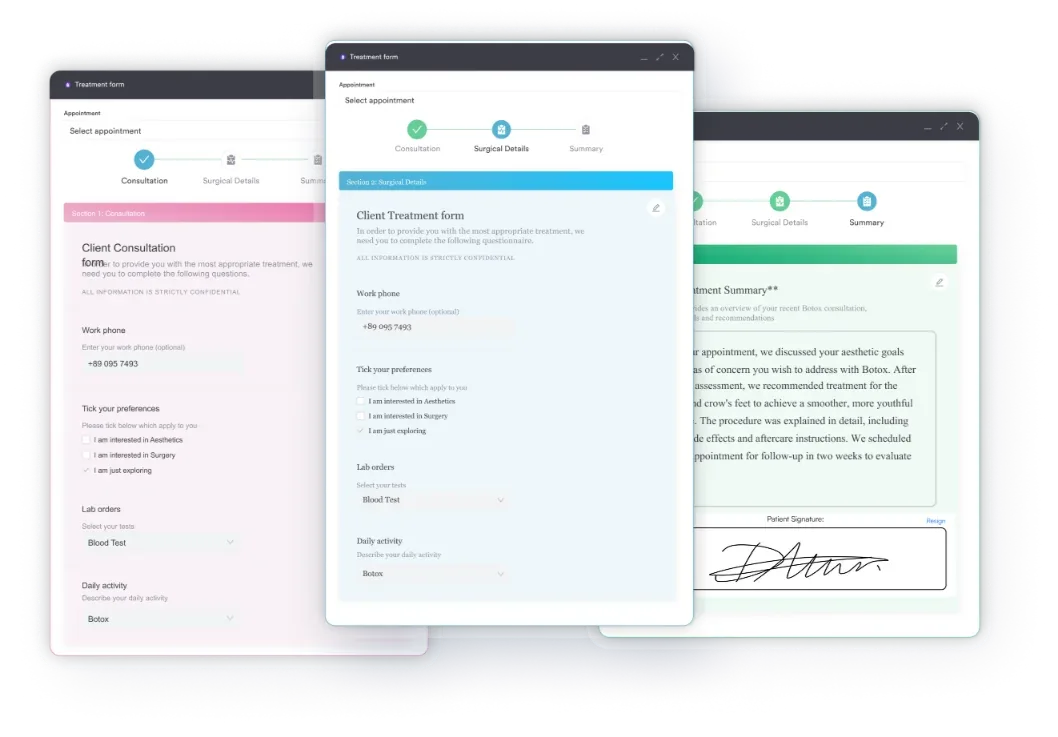
Build a standing query for delayed-healing follow-ups. Some notes say healing is slow, or that callus formation is delayed, with no diagnosis line. Ask the clinician to state delayed healing or nonunion outright. One sentence in the note is what makes G or K defensible on audit.
A delayed-healing claim passes through several hands before a payer sees it. The 7th character can drop out at any of them, so it helps to know the route.
Two steps stall delayed-healing claims more than the rest. Step two goes wrong when the coder carries forward last visit’s character out of habit. The other failure sits at step one, where the note describes slow healing without naming a diagnosis.
Five quick questions catch both problems before submission.
Five yes answers turn a coded encounter into a clean claim. One no answer is a query to the clinician, and that is far cheaper than an appeal.
Six mistakes account for most denials on this code. Each one is catchable before the claim goes out.
Practice management software with coding validation flags an incomplete string before submission. Where a denial has already landed, a structured denial management process tells you whether the character or the documentation caused it.
For unusual scenarios, the AHA Coding Clinic publishes rulings on fracture healing characters and sequelae.
Each of these changes one element of the picture: the bone, the healing state, or the encounter type.
A code lookup answers the question and stops there. The claim gets assembled afterwards, often by hand, and that hand-off is where a G quietly becomes a K.
Practice management software like Pabau closes that hand-off. Pabau’s claims management tools keep diagnosis coding inside the clinical encounter, so the note, the code and the invoice sit in one record. Nobody retypes a seven-character fracture code.
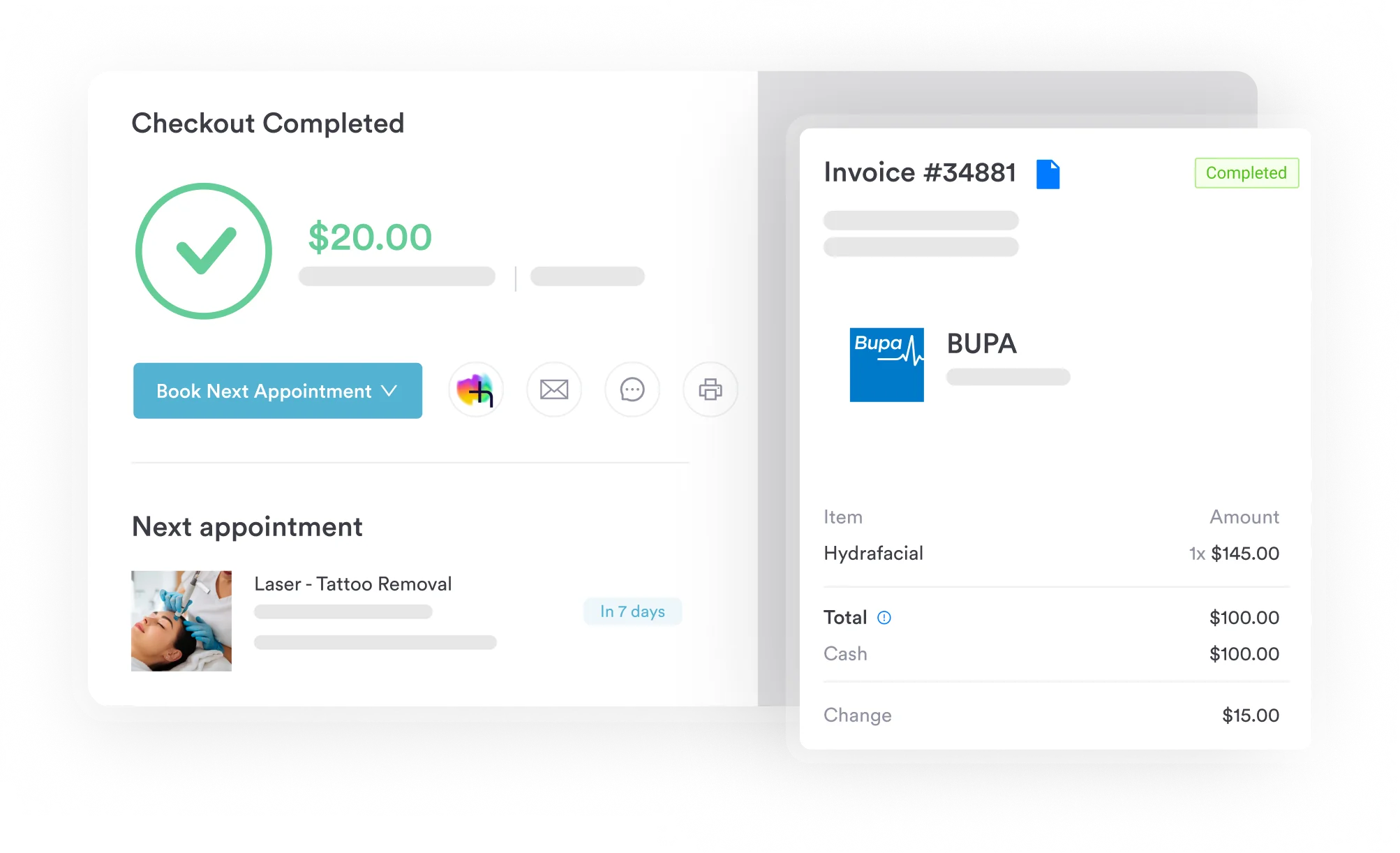
Fracture patients come back repeatedly on the same injury, and each visit may need a different 7th character. Pabau’s patient records show which character went out last time, so delayed healing is never copied forward out of habit.

Pabau’s claims management tools tie each ICD-10 code to the encounter that justifies it. That cuts lookup errors and helps orthopedic and physical therapy practices submit cleaner claims first time.

S42.463G is a documentation code before it is a billing code. Every element it asserts has to be readable in the note, from the fracture site to the healing state.
Get the 7th character right and the rest of the string usually follows. Treat G as a stand-in for nonunion and the claim tells the payer the wrong story about a patient who is still healing.
Fracture follow-ups create a lot of coding rework, and most of it starts with a code that was never tied to its note. Book a demo to see how Pabau keeps the note, the code and the claim in step.

Need the sequela character instead? S66.399S shows how S works once active treatment has finished.
Exploring an open wound at the same visit? CPT 20103 covers wound exploration billing for an extremity.
Documenting nonunion on a different bone? S02.651K sets out what a K character needs in the mandible.
Excising a benign lesion between 1.1 and 2.0 cm? CPT code 11402 excision guide covers a benign trunk, arm, or leg lesion excision measuring 1.1 to 2.0 cm.
Wondering what happens after you submit? Medical claims clearinghouse explains the scrubbing step every claim passes through.
No. ICD-10-CM guidelines direct you to code the injury itself with the right 7th character, rather than an aftercare Z code. S42.463G already tells the payer this is a follow-up visit.
Yes, if you report one. External cause codes carry their own 7th character, and a subsequent encounter takes D there. Those codes offer only A, D and S, so G is never an option.
ICD-10-CM sets no time limit. The physician’s judgment decides when union counts as delayed, and the record has to state it. Compare current imaging against the expected timeline for that fracture.
Yes. The 7th character reflects the phase of treatment, and which clinician delivers that treatment makes no difference. A surgeon seeing the patient for the first time at month five still codes a subsequent encounter.
Usually not. Medicare’s coverage policy for noninvasive osteogenic stimulators keys on documented nonunion, so a delayed-healing diagnosis alone rarely supports the device. Check your own payer policy first.



