










Key takeaways
ICD-10 code H46.3 is the billable diagnosis code for toxic optic neuropathy. It covers optic nerve damage caused by drugs, alcohol, tobacco, metals, and industrial chemicals.
H46.3 carries a code-first note. When the cause is a nonmedicinal toxic substance, the T51-T65 toxic effect code is sequenced before H46.3.
Drug-induced cases run the other way. Code H46.3 first, then the T36-T50 adverse effect code with 5th or 6th character 5.
H46.3 has no laterality subcodes, so right, left, and bilateral findings all map to the same code. Laterality still belongs in the note.
Practice management software like Pabau keeps the diagnosis, the causative agent, and the exposure history in one record. The claim is then built from what the clinician wrote.
ICD-10 code H46.3 is the billable diagnosis code for toxic optic neuropathy. It covers optic nerve damage from a drug, alcohol, tobacco, a metal, or an industrial chemical.
One tabular note does most of the work here. H46.3 carries a code-first instruction, so the code naming a nonmedicinal toxin sits ahead of it. Read that note backwards and the claim tells the payer a different story than the chart does.
Prescribed medications reverse the order, and that reversal is easy to miss. The cause documented in the chart decides what goes on line one, so start there.
ICD-10 code H46.3 is billable, and it carries one note
H46.3 is a billable, specific ICD-10-CM code, so you can report it on a claim.
The FY2026 edition took effect on October 1, 2025, according to the CDC/NCHS ICD-10-CM web tool. One tabular note applies. It says code first, not use additional code.
What toxic optic neuropathy is, and what causes it
Toxic optic neuropathy is damage to the optic nerve caused by a toxic substance. The injury usually hits the fibers that carry central vision and color. Vision loss is normally bilateral, and it can build slowly or arrive within hours.
The list of causes runs wide. Coders meet it most often in practices treating patients on long-term antimycobacterial therapy. Industrial and dietary exposures cause the same damage and carry the same code. What changes is the order the codes go in.
Substances documented in the literature include:
- Ethambutol: the most frequently cited drug cause, used in tuberculosis regimens
- Isoniazid: another tuberculosis drug linked to optic toxicity, mostly at high doses
- Methanol: acute ingestion can cause rapid, severe damage to both optic nerves
- Tobacco and alcohol: chronic combined exposure is a recognized cause, once called tobacco-alcohol amblyopia
- Heavy metals: lead, mercury, and thallium turn up in occupational and environmental exposures
- Amiodarone, linezolid, and chloramphenicol: further medications linked to optic toxicity in case reports
All of these route to H46.3, as long as the record confirms a toxic cause. An ischemic, inflammatory, or compressive mechanism points elsewhere. What separates the toxic cases from each other is the second code and its position.
The index reaches H46.3 through one path only
Before you assign the code, check how you got to it. The alphabetic index reaches H46.3 through a single entry: Neuritis, optic, toxic. Its approximate synonyms are all laterality variants of the same diagnosis.
- Right toxic optic neuropathy
- Left toxic optic neuropathy
- Bilateral toxic optic neuropathy
Those synonyms name a side, yet H46.3 has no laterality subcodes. Laterality belongs in the clinical note. It also matters for any procedure you bill alongside the diagnosis.
Two nearby terms do not lead here at all. The index sends toxic amblyopia NEC and tobacco amblyopia to H53.8, other visual disturbances.
So if the chart says amblyopia rather than optic neuritis or neuropathy, check the index first. Better still, ask the clinician to sharpen the wording.
Solid clinical documentation workflows settle that at the point of care instead of at the billing desk.
Where H46.3 sits in the H46 optic neuritis family
H46.3 sits inside the H46 category, optic neuritis, within the H46-H47 block for disorders of the optic nerve and visual pathways. Knowing the family prevents one common error: reaching for H46.9 when the record supports H46.3.
The neighboring H47 category covers optic nerve disorders that fall outside H46. H47.01 is the code most often confused with H46.3, and it is not billable on its own. It needs a 6th character: H47.011 right eye, H47.012 left eye, H47.013 bilateral, H47.019 unspecified eye.
Three causes, three sequencing orders for H46.3
The cause in the chart sets the order. H46.3 has three sequencing paths, and the record picks one of them. The code-first note covers nonmedicinal toxins only, while medicinal drugs follow two other guidelines.
Nonmedicinal toxins put the T code first
H46.3 carries one tabular instruction: code first (T51-T65, toxic effects of substances chiefly nonmedicinal as to source) to identify cause. The substance code goes ahead of H46.3, not after it. Coders often misread that as a use-additional-code note, which points the other way.
T51-T65 covers nonmedicinal substances only: alcohols, solvents, metals, carbon monoxide, and tobacco. Each toxic effect code also carries an intent character. Use 1 for accidental, 2 for intentional self-harm, 3 for assault, and 4 for undetermined. When the record says nothing about intent, the tabular note sends you to accidental.
A drug taken as prescribed puts H46.3 first
Medicinal drugs sit in a different range and follow a different rule. T36-T50 covers medicinal and biological substances, and H46.3 carries no note pointing there. The adverse-effect guideline takes over instead.
When a correctly prescribed, properly administered drug causes the neuropathy, code the manifestation first. That means H46.3, then the T36-T50 drug code with 5th or 6th character 5.
Take a patient on ethambutol for tuberculosis who reports fading color vision at four months. The workup confirms optic neuropathy and the physician names the drug. On the claim, H46.3 goes first, followed by T37.1X5A for the initial encounter. Reverse those two lines and the claim no longer matches the adverse-effect guideline.
A misused drug makes it a poisoning
The same guideline sets a third path. If the patient took the drug improperly, the event is a poisoning. That covers an overdose, the wrong substance, or the wrong route. Then the T36-T50 code with intent character 1 to 4 leads, and H46.3 follows as the manifestation.
That order is not just paperwork. On an electronic claim, the diagnosis pointers in the 837 file carry the sequence you chose. Change the order in your system and the payer sees a different primary diagnosis.
Where each common substance’s code sits
The substances that show up most often fall out of those three paths like this.
The 7th character is not optional
Every code in both ranges needs a 7th character to be complete. Use A for the initial encounter, D for a subsequent encounter, and S for a sequela. T37.1X5A is a full code, while T37.1 is only a category.
A 6 in the drug-character position means underdosing, so it has no place on an H46.3 claim. Taking less of a drug does not cause optic toxicity. The FY2026 ICD-10-CM coding guidelines set out all three paths in Section I.C.19.e.
Pro Tip
Audit your H46.3 claims for order, not just for content. Pull every claim carrying H46.3 and look at which code sits on the first line. A methanol or tobacco case should lead with the T51-T65 code. An ethambutol case should lead with H46.3, followed by T37.1X5 plus its 7th character. One diagnosis code, two correct patterns, and the chart tells you which one belongs.
H46 excludes two conditions, but you can still code both
Two notes and one piece of code history shape what else can go on the claim.
Both codes can ride the same claim
H46 carries two Type 2 excludes: ischemic optic neuropathy (H47.01-) and neuromyelitis optica, or Devic disease (G36.0). A Type 2 exclude means the excluded condition is not part of H46. Even so, a patient can have both at once, and both codes may appear on the same claim.
You do not need a separate external cause code
Chapter 7, H00-H59, opens with its own instruction. Use an external cause code after the eye condition code, where applicable, to identify the cause. Codes in T36-T65 already combine the substance and the intent, so you do not need a code from V00-Y99 alongside them.
The chapter also carries a Type 2 exclude for injury and poisoning, S00-T88. That is why the T code and H46.3 sit together rather than compete.
H46.3 has not changed since it launched
H46.3 entered ICD-10-CM with the first non-draft edition, effective October 1, 2015. Every annual edition since has carried it unchanged, FY2026 included. For inpatient reporting, H46.3 groups to MS-DRG 123, neurological eye disorders.
What the chart must say before H46.3 will hold up
Accurate coding starts with what the clinician writes down. A note that says only optic neuropathy will not hold up. For H46.3 to survive an audit, the record needs several specific details.
- The causative agent: the record names the substance, so ethambutol-associated optic neuropathy rather than toxic optic neuropathy of unknown cause
- The mechanism of exposure: a medication, an occupational or environmental toxin, or an ingestion. This detail decides which code goes first, so it cannot stay implicit
- Whether the drug was taken as prescribed: an adverse effect and a poisoning use different characters and opposite orders. Only the record separates them
- Exposure history: dose, duration, and route for drug cases. Occupational or environmental context for everything else
- Laterality: toxic cases are usually bilateral. H46.3 has no laterality subcodes, but a unilateral finding still belongs in the note
- Clinical findings: visual acuity, field defects, color vision loss, and any OCT or VEP results that support optic nerve involvement
- Clinician attestation: someone has to state the link between the exposure and the neuropathy. A coincidence in the timeline will not carry the code
Practices treating patients on ethambutol or linezolid should build a baseline visual assessment into the monitoring protocol. That baseline is what later turns a finding into a documented drug link. HIPAA-compliant clinical documentation also keeps that medication and exposure data secure.
H46.3 vs the codes it gets confused with
Several optic neuropathy codes share clinical features with H46.3. Telling them apart protects you from denials and audit exposure.
The most common differential error is coding H47.01- for a presentation that later proves drug-induced. When a patient on ethambutol develops vision loss, the working code is H46.3 while the toxicity workup runs.
H47.01- carries a vascular mechanism, and that has to be confirmed on its own. The AAPC ICD-10-CM code reference for the H46-H47 block sets out where each category stops.
Five mistakes that get H46.3 claims denied
Five mistakes come up again and again on H46.3 claims. Each one is avoidable before the claim leaves your desk.
- Sequencing the cause code after H46.3 on a nonmedicinal case: the code-first note puts T51-T65 ahead of H46.3. A methanol or carbon monoxide case that leads with H46.3 contradicts the tabular list
- Treating T36-T65 as one instruction: only T51-T65 is named at H46.3. Medicinal drugs in T36-T50 fall under the adverse-effect guideline, which reverses the order
- Using the wrong character on a drug code: a 5 marks an adverse effect. Characters 1 to 4 are poisoning intents, and 6 is underdosing
- Dropping the 7th character: T37.1X5 is incomplete without A, D, or S. A truncated T code is invalid wherever it sits
- Coding H46.9 when a toxic cause is documented: unspecified optic neuritis is for a genuinely undetermined cause. If the record names the agent, H46.3 is what the documentation supports
For patient care documentation, a structured approach to ophthalmology notes keeps these errors from surfacing weeks later. When the clinician records the agent and the exposure history, the coder has what the claim needs. Nobody has to chase the chart.
Run this check before you submit an H46.3 claim
Before the claim goes out, read it in the order the payer will read it. A 60-second pass catches almost everything.
- Does the first-listed code match the cause in the chart? A nonmedicinal toxin means the T code leads
- Does every T code carry its 7th character, A, D, or S?
- Is the drug character right? A 5 for an adverse effect, 1 to 4 for a poisoning
- Does the note name the substance, not just the diagnosis?
- Has the clinician stated the link between the exposure and the vision loss?
- Do the diagnosis pointers on each service line point where you meant them to?
Two things trip these claims up most often. One is a chart that names a drug without saying whether the patient took it as prescribed. The other is a T code that never picked up its 7th character.
If your front desk builds claims from a superbill, the diagnosis order has to be right on that form too. Run eligibility verification before the visit as well. A coverage problem bounces a correctly coded claim just as fast as a sequencing error.
A denial does not just cost you the rework. It also ages the claim, and aged claims are where revenue cycle management gets expensive.
How Pabau keeps the coding detail in the chart
The documentation problems behind H46.3 errors start at the point of care. Whoever writes the note has to capture the drug, the exposure history, and whether the patient took it as prescribed. Without those three, the coder cannot tell which sequencing path applies.
Practice management software like Pabau closes that distance. Its claims management software and structured patient records keep the diagnosis and its cause in the same place.
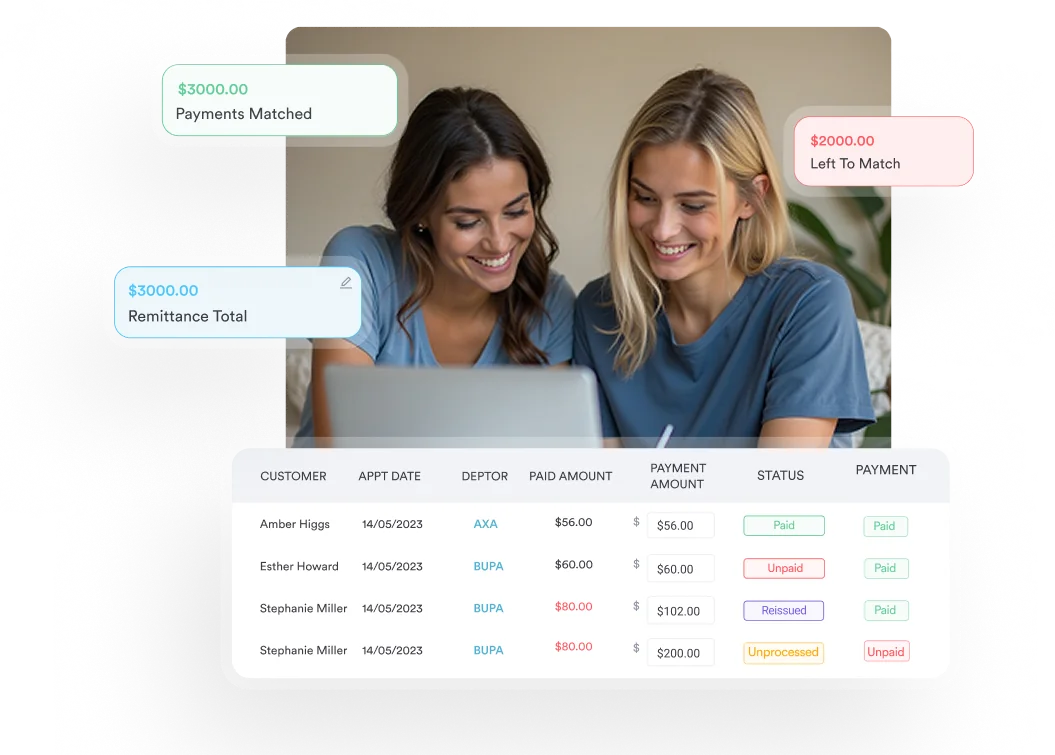
Four capabilities matter most for toxic optic neuropathy documentation:
- Structured clinical note fields: configurable templates prompt the clinician for the causative agent, the mechanism of exposure, and laterality during the visit
- ICD-10-CM and CPT lookup libraries: a coder can search H46.3 or T37.1X5A from inside the record, with no second reference to open
- Claim forms pre-filled from the record: diagnosis codes on the client’s problem list seed the claim form. Pabau validates the required fields before you send it. Sequencing stays your decision, so the order you choose is the order that goes out
- Audit trail and compliance documentation: every entry is timestamped and attributed, which supports the trail if a claim is reviewed
Pabau uses the same structured-note approach across specialties. A functional medicine clinic and an IV therapy service configure different fields from the same templates.
Practices moving off paper notes see the biggest gain here, because specialty-structured notes produce coding-ready records. Pabau’s EHR integration workflows then connect those records to downstream billing without re-keying data.
Pro Tip
Capture a baseline before ethambutol or linezolid therapy starts. Visual acuity, color vision, and a visual field at treatment start give you a documented reference point. If neuropathy appears months later, that baseline is what ties the drug to the finding in the record. That tie supports H46.3 over H46.9, and it points the coder to the adverse-effect path.

Keep every coding detail in the chart
Pabau’s structured patient records hold the causative agent, the exposure history, and the diagnosis in one place. Its claims tools then pre-fill the claim from that record before you submit.

Conclusion
H46.3 is a simple code with one decision attached to it. Read the chart for the cause before you build the claim. A nonmedicinal toxin puts a T51-T65 code ahead of H46.3.
A drug taken as prescribed puts a T36-T50 code with character 5 behind it. Misuse flips it again, and the poisoning code leads. Name the agent, pick the path, and the claim matches the record.
Pabau’s structured records and claims tools help ophthalmology teams capture that detail at the point of care. Book a demo to see how it fits your practice’s billing workflow.

Continue your research
Documenting permanent vision loss after the exposure? H54.8 covers legal blindness as ICD-10-CM defines it in the US, and the documentation payers expect.
Cause still undetermined after the workup? H05.9 shows what an unspecified orbit disorder costs you in specificity, and when a sharper code exists.
Want the compliance side of your billing checked? Medical billing compliance sets out the laws and violations that draw audits, with a checklist you can download.
Reading denials off the remittance file? Electronic remittance advice explains how an ERA reports a payment decision and what to do with the codes it carries.
Not sure how long you have to refile? Timely filing limits breaks down the windows for initial claims, corrected claims, and appeals by payer.
Frequently asked questions
Can you code H46.3 when the toxic cause is only suspected?
Not on an outpatient claim. Code the documented vision loss and findings instead, then update the claim once the workup names the agent. Inpatient rules do allow a suspected diagnosis at discharge, so check which setting you are billing.
How do you code a follow-up visit after the drug is stopped?
H46.3 stays on the claim while the neuropathy is still under treatment. Change the T code’s 7th character to D for a subsequent encounter. Once the damage is permanent, code the residual condition first, then the T code with S.
Which tests usually go on the claim with H46.3?
Visual acuity, color vision testing, visual fields, and optic nerve OCT carry most of the workup. Bill each one with the CPT code your payer recognizes, and make sure the note supports the test you performed.
Can a coder query the physician to reach H46.3?
Yes. A compliant query points to the missing or conflicting detail and asks the clinician to clarify it. Never suggest the answer, and never name the code you want.
What if the payer denies the claim as a sequencing error?
Fix the order and refile inside the payer’s correction window. Send the note that names the agent with the appeal, since the sequence follows the cause the clinician documented.