ICD-10 Code Y76.0: Diagnostic obstetric and gynecological devices
ICD-10 Code Y76.0: Definition and billable status ICD-10 Code Y76.0 is a valid, ...

Last Updated: Oct 23, 2026
Billable Code Specific Code
H54.8 is the billable ICD-10-CM code for legal blindness, as defined in USA.
The word USA is doing a lot of work in that description. H54.8 follows the American legal standard. Every other code in category H54 follows the World Health Organization severity scale, so mixing the two invites denials and audits.
Picking the code is the easy part, but proving it in the chart is where eye care practices lose money.
Let Pabau's smart automation suggest the right codes, reduce claim denials, and keep your practice compliant—effortlessly.
Automate repetitive tasks and focus on what matters most—your patients.
Reduce coding errors and ensure compliance with the latest regulations.
Clean claims, fewer denials, and faster reimbursements.
Powerful insights and reporting to help your practice thrive.
HIPAA compliant SOC 2 certified GDPR-compliant Trusted by 4,000+ clinics worldwide

ICD-10 code H54.8 covers legal blindness as defined in USA, and it has been effective since October 1, 2015 (FY2016).
A patient qualifies at 20/200 or less in the better corrected eye, or at a visual field of 20 degrees.
Denials usually come from the record rather than the code, so document best-corrected acuity and any perimetry results.
Sequence the underlying eye disease first, then add H54.8 to show how severe the vision loss is.
Practice management software like Pabau keeps acuity readings and exam notes in structured fields, so the evidence is there at billing.
H54.8 is a specific, billable ICD-10-CM code. It has no children, so nothing extra is needed to make it valid on a claim.
The code first took effect on October 1, 2015, with the FY2016 ICD-10-CM code set. Its wording has not changed since, and it remains valid in the FY2026 code set published by CMS.
Where does it sit in the book? Chapter H00-H59 covers diseases of the eye and adnexa. Inside that chapter, H54.8 belongs to the H53-H54 block and to category H54.
Laterality is the one place H54.8 breaks from its siblings. Codes H54.0 through H54.7 tell the payer which eye is affected. H54.8 reports a legal status instead, so no eye is named.
Paired organs raise the same reporting question in imaging. A complete retroperitoneal ultrasound coded as 76770 covers both kidneys in one study, and it is billed once rather than per side.
The tabular list accepts two other wordings for the same code. One is legal blindness, USA. The other is blindness NOS, meaning not otherwise specified, according to the USA definition.
If the chart uses neither phrase, read the exam again before defaulting to H54.8. A more specific H54 code may describe the finding better.
Legal blindness under H54.8 comes down to acuity or field, and either measurement qualifies on its own. Both thresholds come from the Social Security Administration definition that ICD-10-CM follows here.
Best correction is where coders lose claims. Say a patient reads 20/400 uncorrected and 20/100 with glasses. That patient does not meet the threshold, because the corrected figure governs.
The field criterion stands on its own terms. A 15-degree field qualifies even when central acuity sits at a comfortable 20/40.
Why a study was ordered can matter as much as what it shows. A first-trimester fetal scan reported as 76813 is screening, and its coverage rules differ from a diagnostic scan’s.
They do not line up, and the mismatch is deliberate. H54.8 states the US legal standard, while the WHO ICD-10 classification sorts vision loss into numbered severity categories.
A patient can therefore meet WHO blindness criteria without meeting the US definition. Coding H54.8 from WHO language alone is the miscode that draws audits.
The field rules in that table are easy to miss. A field of 10 degrees or less places the patient in category 3. A field of 5 degrees or less places them in category 4, even with normal central acuity.
So reach for H54.8 when a US patient’s chart documents the 20/200 or 20-degree finding. When the record only speaks in WHO severity terms, stay inside the H54.0 to H54.7 range. Pick the code that matches the documented severity and eye.
Category H54 spans everything from mild low vision to no light perception. H54.8 is the only member that applies the US legal standard.
The rest follow the WHO scale. Most are parent codes, so they need a subcode for laterality or severity before a claim will pass. The CDC ICD-10-CM tool holds the official tabular list if you want to check a description.
When the exam cannot establish a severity category, H54.3 and H54.7 exist for that situation. Neither is a substitute for H54.8 when the US thresholds are documented.
The category also carries one Excludes1 note worth memorizing. Amaurosis fugax is coded to G45.3 and never to an H54 code.
Sequencing follows the category’s code-first instruction. Put the underlying cause of the blindness ahead of H54.8. Glaucoma, diabetic retinopathy, and optic neuritis under optic neuritis under H46.9 all belong in that first position.
Diabetes is a common route to legal blindness, so metabolic health practices meet this pairing often. The retinopathy code carries the diagnosis, and H54.8 carries the functional severity.
A severity code in a secondary position never establishes medical necessity by itself. On a limited retroperitoneal ultrasound billed as 76775, the renal or aortic indication has to occupy the first slot.
Patients often meet the criteria for H54.8 and for an underlying eye disease at the same visit, such as nonexudative macular degeneration under H35.31. Code the underlying condition first, then add H54.8 as an additional code for the functional severity. Reversing that order is the fastest way to a diagnosis denial.
Most H54.8 denials trace back to a thin record rather than a wrong code. The chart has to show the number, the method, and the eye.
Before the claim leaves, walk the record once. Five questions catch almost everything.
Structured digital intake forms turn that list into fields the provider fills during the exam. Nothing then gets retyped from memory at billing.
Report content decides payment for imaging codes too. A detailed fetal anatomy scan billed as 76811 requires the report to name each anatomic structure examined. An incomplete report puts the code selection at risk.
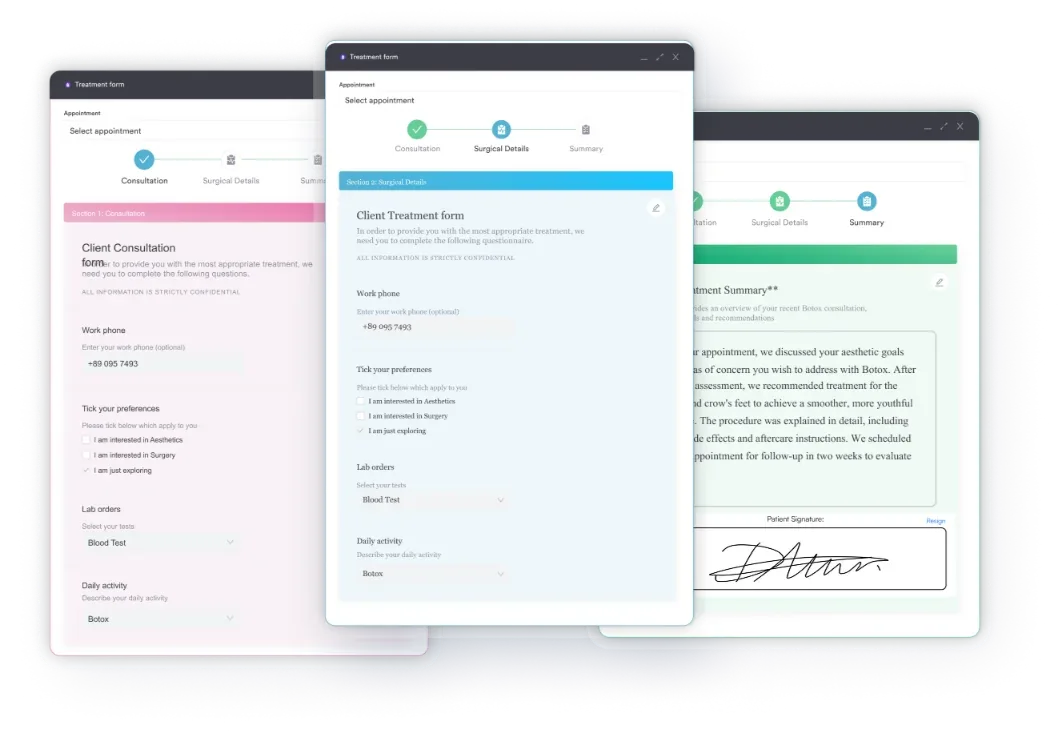
The code is one line on the claim. Knowing the path it travels makes the denials much easier to read.
Three things stall that path in practice, and none of them are coding errors.
Two habits keep the rest moving. Run eligibility verification before a low-vision visit, and diary the payer’s filing deadline the day an appeal opens.
When denials cluster on the same diagnosis, read it as a pattern rather than bad luck. Structured denial management turns that pattern into a fix you can apply at the point of care.
Line-level rules cause a second cluster of denials. A limited abdominal ultrasound reported as 76705 stands as one unit for the session. A complete study of the same anatomy is not separately payable.
Pull a month of H54.8 claims and check which diagnosis position the code landed in. If it appears first on more than a few, your exam template is prompting for severity before cause. That ordering is worth changing before the next audit.
H54.8 does two jobs once the exam is over. It justifies low-vision services to payers, and it backs a disability file at the Social Security Administration.
Medicare does not pay for routine eyeglasses or contact lenses. What H54.8 can support is medical necessity for low-vision rehabilitation and the ophthalmologic evaluations around it.
That includes orthoptic and pleoptic training under CPT 92065, plus evaluation codes such as 92002. Lens supplies carry their own HCPCS codes, such as V2100.
Coverage for specific devices still turns on the Local Coverage Determination, or LCD, in your Medicare Administrative Contractor’s jurisdiction. Read the LCD first, then confirm whether the service needs prior authorization.
Approval requirements travel with the procedure code, not the diagnosis. A practice scheduling saline infusion sonohysterography under 76831 reads the plan’s imaging policy before the appointment.
Low-vision rehabilitation itself often runs through occupational therapy. Practices on occupational therapy software can log the functional goals that make a referral defensible.
The SSA uses the same 20/200 and 20-degree thresholds that define H54.8. The code on a claim supports a determination, but it never decides one.
The agency wants the measurement from a licensed ophthalmologist or optometrist. It may also ask for records well beyond a single claim, so a signed disclosure authorization in the file saves days of chasing.
Functional detail helps as well. A functional status questionnaire records what the patient can and cannot do at home, which is the language disability reviewers read.
Tell patients plainly what the code does. H54.8 documents that they meet the threshold. It does not approve benefits.
Most eye care practices already collect everything H54.8 needs. The trouble is where it lands. Acuity sits in one template, the perimetry printout in a scanned folder, and the diagnosis gets typed again at billing.
Practice management software like Pabau keeps those pieces together. Custom exam forms hold dedicated fields for best-corrected acuity, correction method, better eye, and field results. Whatever the provider enters flows into the patient’s client records, so the coder reads the note the clinician actually wrote. Practices treating medical billing as a back-office task find errors at the front desk instead. A code lookup that lives beside the desk gets used; one buried in a shared drive does not.
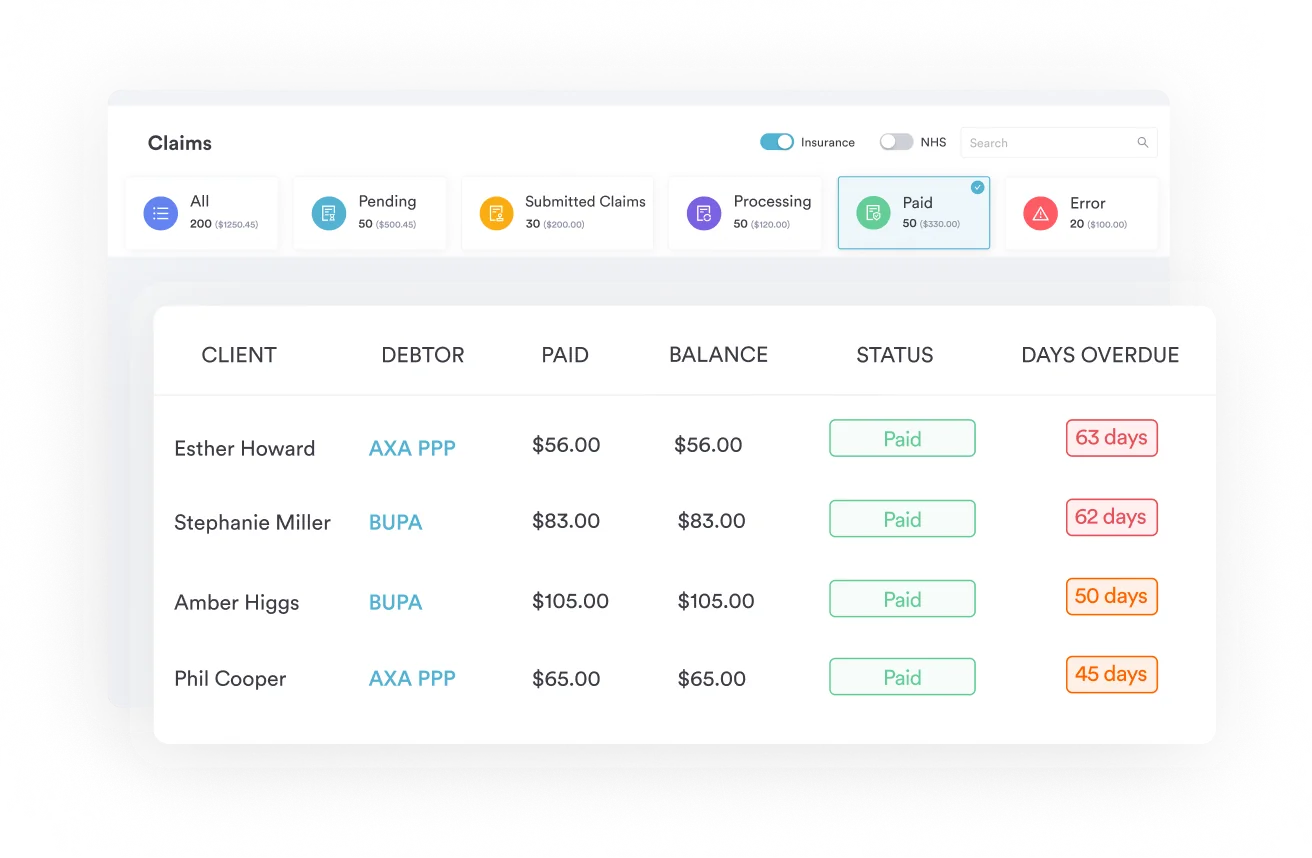
On the billing side, Pabau’s claims management pre-fills the claim form from that record. Diagnosis codes come from the patient’s recorded problem list, and Pabau checks the required fields before a claim can go out. The sequencing call stays with your coder, where it belongs.
Every subscription includes every feature, so a solo optometrist gets the same forms and code libraries as a multi-site group. Onboarding is structured rather than self-serve, which matters when you are rebuilding an exam template around a coding rule.

Pabau holds acuity readings, exam notes, and diagnosis codes in one patient record. The evidence behind a legal blindness claim is never more than a click away.

H54.8 is one of the easier codes to pick and one of the harder ones to defend. Selection takes a second. The evidence takes a workflow.
So build the workflow once. Put the acuity, the correction method, the better eye, and the field result into fields nobody can skip. Sequence the cause ahead of the severity, and H54.8 stops being a denial risk.
Want the acuity fields, the code library, and the claim record in one place? Book a demo and we will show you how Pabau handles H54.8 documentation for eye care practices.

Documenting double vision rather than vision loss? H53.2 walks through the diplopia code and the exam detail payers expect to see.
Stuck with an unspecified eye diagnosis? H57.9 shows what a vague code costs you once the claim reaches review.
Coding a conjunctiva finding that isn’t specific? ICD-10 code H11.9 guide covers when a conjunctival finding doesn’t meet a more specific H11 subcategory.
Coding a sclera finding without more detail? ICD-10 code H15.9 guide covers the billable code for an unspecified disorder of the sclera.
Coding a keratitis case that’s hard to classify? ICD-10 code H16.8 guide covers keratitis presentations that don’t fit any specific H16 subcategory.
No. H54.8 first took effect on October 1, 2015, with the FY2016 code set, and its wording has not changed since. FY2026 is simply the current cycle in which it stays valid.
No. The US definition rests on the better-seeing eye, so H54.8 never carries laterality. For one blind eye, use H54.1 or H54.4 depending on what the other eye can see.
Yes. The code has no age limit, and the same two thresholds apply. Document the testing method, since pediatric acuity is often measured with picture or matching charts rather than letters.
Yes. Every payer bound by HIPAA transaction rules accepts valid ICD-10-CM codes, and H54.8 is one. Coverage policy is a separate question, so check the plan’s rules for the service you are billing.
The code itself does not expire. Payers can still ask for a current measurement, especially with progressive disease. Refresh the acuity or field reading at each qualifying exam, and date it clearly.