

Primary & Preventive Care Wellness
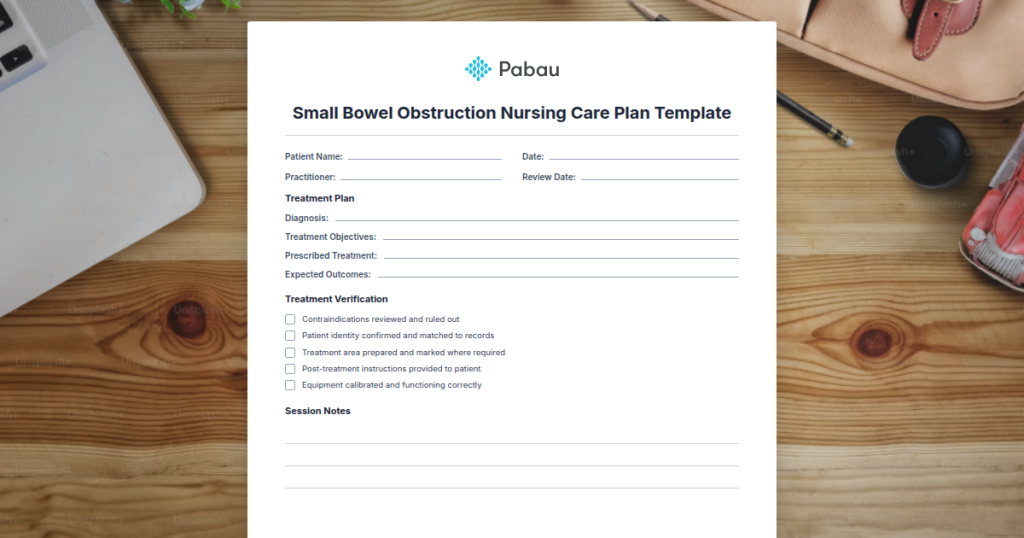
Small Bowel Obstruction Nursing Care Plan Template
A comprehensive small bowel obstruction nursing care plan template provides stru...

March 13, 2026

Discover free eBooks, guides and med spa templates on our new resources page


Buy now, pay later is now available in Pabau

Read case studies from our satisfied clients

Compare Pabau with alternative systems
 Integrations
 Measure Pabau savings
  Our security commitment
  About us
Learn why this holistic care and aesthetic medicine clinic chose Pabau to power patient care and performance.
Read more

Structured framework for cognitive and learning assessment
Evidence-based intervention planning for educational outcomes
Designed for mental health, psychology, and ADHD professionals
Streamlines clinical documentation and therapy planning
The ATI Active Learning Template is a comprehensive assessment and intervention tool designed to support healthcare professionals in evaluating learning difficulties and implementing targeted therapeutic strategies. This free downloadable resource helps clinicians structure cognitive assessments, document learning patterns, and create evidence-based treatment plans that directly improve patient outcomes. Whether you work in psychology, mental health, ADHD assessment, or educational therapy, this template streamlines your clinical process and ensures consistent, thorough documentation.
A ready-to-use cognitive assessment form covering learning history, cognitive strengths and challenges, intervention targets, evidence-based strategy recommendations, and progress tracking indicators.
Download templateAn ATI Active Learning Template is a structured assessment instrument that helps clinicians evaluate how patients learn, process information, and respond to therapeutic intervention. The template combines cognitive evaluation with active learning strategies, allowing practitioners to identify specific learning strengths and barriers. This approach is rooted in educational psychology research demonstrating that personalised learning strategies significantly improve engagement and treatment adherence. The template documents baseline cognitive functioning, learning preferences, and targets specific areas for therapeutic focus, creating a clear roadmap for intervention.
Healthcare professionals use this template across multiple specialities: psychologists conducting ADHD assessments, therapists working with learning difficulties, coaches supporting cognitive development, and occupational therapists planning rehabilitation strategies. The framework ensures that treatment plans are individualised rather than generic, aligning with evidence-based practice standards. Documentation in the template also supports continuity of care when multiple providers are involved in a patient’s treatment.
Using the ATI Active Learning Template involves five key operational steps that mirror your clinical workflow. Each step builds on the previous one to create a comprehensive assessment and intervention plan tailored to the individual.
The template’s structure supports digital intake forms and automated clinical workflows, allowing you to populate initial sections during the intake appointment and complete assessment sections during your first full clinical evaluation.
This template is valuable across healthcare and educational settings. Psychologists conducting ADHD or learning disability evaluations rely on it to systematically document cognitive patterns and guide medication or therapy decisions. Mental health therapists use active learning frameworks when treating cognitive distortions or building coping skills-teaching patients to actively engage with strategies rather than passively receiving advice improves outcomes. Educational therapists and tutors apply this approach when working with students who have processing difficulties, creating individualised learning paths based on documented strengths.
Occupational therapists use the template when assessing cognitive retraining post-stroke or traumatic brain injury, and coaches employ active learning strategies to help clients develop self-awareness and sustain behavioural change. The framework is equally relevant in primary care settings where mental health support increasingly involves brief cognitive interventions.
Structured assessment templates reduce cognitive load during clinical sessions and ensure nothing is overlooked. When you use a standardised framework, documentation becomes faster and more consistent, allowing you to focus on clinical conversation rather than scrambling to remember what to document. The template also creates an objective record: rather than vague notes about learning difficulty, you have documented baseline assessments and specific targets, which supports treatment justification to insurers and regulatory bodies.
Patient outcomes improve when learning strategies are personalised. The template’s systematic evaluation of cognitive strengths prevents clinicians from applying one-size-fits-all interventions and instead promotes individualised planning. This evidence-based approach strengthens treatment adherence because patients understand why specific strategies were chosen for their profile rather than receiving generic suggestions.
From a compliance perspective, the template provides a clear audit trail documenting assessment, clinical reasoning, and treatment planning-essential for regulatory bodies, quality assurance reviews, and malpractice protection. Multi-disciplinary teams benefit from standardised language and shared understanding of the patient’s learning profile, improving care coordination.
Audit your current intake and assessment process: are you documenting learning history, cognitive strengths, intervention rationale, and progress metrics consistently? If any of these elements are missing or inconsistent across patients, the template fills that gap and strengthens both clinical outcomes and compliance.
The ATI Active Learning Template aligns with modern clinical documentation standards that prioritise functional assessment over symptom lists. Rather than recording only what is wrong, the template requires clinicians to document what is right-cognitive strengths that become the foundation for intervention. This shift in focus has measurable benefits: research in educational psychology shows that strength-based interventions reduce therapy dropout and improve patient engagement.
Clinical teams using AI-powered clinical documentation tools can accelerate template completion during sessions. Real-time documentation reduces post-appointment administrative burden, allowing clinicians to spend more time on direct patient care and less time on paperwork.
Cognitive behavioural therapists use the template when treating anxiety or depression, applying active learning strategies to help patients challenge unhelpful thought patterns and build behavioural experiments. Rather than lecturing about cognitive distortions, therapists guide patients through discovery-based learning experiences. The template documents which strategies-Socratic questioning, thought records, behavioural activation-work best for each individual.
Life coaches and health coaches apply active learning principles when supporting behaviour change. The template helps coaches identify the patient’s preferred learning modality (discussion-based, written reflections, visual planning, action-based learning) and select coaching techniques accordingly. Patients who learn through active engagement rather than passive advice show higher rates of sustained behaviour change.
Speech therapists use active learning frameworks when treating language or communication disorders, creating opportunities for patients to apply new skills in progressively challenging contexts rather than drilling isolated skills in isolation.
One of the template’s most valuable functions is creating treatment fidelity-consistency between what you plan to do and what you actually do in sessions. By documenting specific strategies and reviewing them at each session, you and the patient stay aligned on the treatment approach. This reduces drift where interventions gradually change without intentional clinical decision-making.
The template also supports accountability to regulatory bodies. If a patient questions why a particular intervention was chosen or if your work is reviewed during a compliance audit, the documented rationale in the template provides clear evidence of clinical reasoning. This protection applies whether you work in private practice, agency settings, or institutional environments.

Need structured assessment documentation? Psychiatric Evaluation Template provides a comprehensive framework for mental health assessments that complements active learning planning.
Want to streamline clinical note-taking? AI Clinical Dictation accelerates documentation so you spend less time on paperwork and more time on patient care.
Looking to improve patient engagement? Psychology Practice Management Software integrates templates, treatment planning, and progress tracking in one platform.
The ATI Active Learning Template is a practical tool that transforms how you conduct assessments and plan interventions. By systematically documenting learning history, cognitive strengths, intervention targets, and evidence-based strategies, you create personalised treatment plans that improve outcomes and reduce clinician burden. Whether you work in psychology, therapy, coaching, or occupational therapy, this template ensures consistent, evidence-based documentation that supports both patient care and regulatory compliance. Download it today and integrate active learning principles into your clinical workflow.
A standard intake form captures demographics and basic history. The ATI Active Learning Template goes further by systematically assessing cognitive strengths, learning preferences, and designing evidence-based intervention strategies matched to the individual’s learning profile. It moves beyond data collection toward active treatment planning.
Yes. The template is designed for any healthcare professional working with learning, cognitive, or developmental concerns. Therapists, coaches, occupational therapists, speech therapists, and educators all use active learning frameworks to personalise interventions.
Complete the initial assessment during your first full clinical evaluation. Review and update the template every 4-6 weeks to assess strategy effectiveness and adjust targets or techniques as needed. This ensures the intervention plan remains responsive to the patient’s progress.
The template supports best-practice documentation standards and provides clear clinical reasoning documentation. Always verify that your use of the template aligns with your local regulatory requirements, professional licensing board standards, and organisational policies.
Yes. The template is designed as a foundation. Clinicians commonly adapt sections, add fields relevant to their speciality, or integrate it into their existing client record system. Customisation is encouraged as long as core assessment and planning elements remain.