Chronic kidney disease nursing care plan
A chronic kidney disease nursing care plan is a structured document that guides ...

1
Last Updated: Oct 14, 2026

DBT distress tolerance skills are split into two categories: crisis survival and reality acceptance.
TIPP, ACCEPTS, and IMPROVE are the primary crisis survival skill sets clinicians teach in DBT programmes.
Radical acceptance is a reality acceptance skill, not a crisis survival technique.
NICE recommends DBT as a treatment option for Borderline Personality Disorder under guideline CG78.
Consistent documentation of skill use across sessions is essential for tracking client progress in DBT.
Most therapy models work to change how a client feels. Distress tolerance takes a different position: it equips clients to survive intense emotional experiences without making things worse.
That difference matters most for the clients at greatest risk. An estimated 1.4% of U.S. adults live with borderline personality disorder, a group for whom distress-tolerance deficits are often central to the clinical presentation, according to the National Institute of Mental Health.
Developed by Marsha Linehan at the University of Washington, Dialectical Behaviour Therapy treats distress tolerance as a foundational competency built before higher-order change work becomes viable. Within a DBT programme it sits alongside emotion regulation, mindfulness, and interpersonal effectiveness, and how these skills fit together shapes the way clinicians sequence and document treatment.
The distress tolerance module divides into two distinct categories, and conflating them is one of the more common errors in DBT delivery. Crisis survival skills help clients get through an acute emotional crisis without engaging in destructive behaviour. Reality acceptance skills address the longer-term work of accepting painful circumstances that cannot be immediately changed.
Crisis survival skills include TIPP, ACCEPTS, IMPROVE the Moment, self-soothe techniques, pros and cons analysis, and the DBT STOP skill. Reality acceptance skills include radical acceptance, turning the mind, and willingness versus wilfulness. The clinical significance of this distinction is timing: a client in acute distress is not in a position to practise radical acceptance. Trying to teach reality acceptance during a crisis often intensifies the emotional response. Clinicians need to be clear with clients about which category a skill belongs to and when it is appropriate to use it.
According to the National Institute for Health and Care Excellence (NICE) guideline CG78, DBT is recommended as a treatment option for people with Borderline Personality Disorder – a population for whom distress tolerance deficits are often central to the clinical presentation. That recommendation has driven significant interest in structured DBT delivery across both NHS services and private mental health practices.
A therapist running a DBT skills group needs to sequence content carefully. Introducing radical acceptance in the first few sessions – before clients have practised any crisis survival techniques – is a sequencing error that can generate resistance and dropout. Skills group facilitators working in psychology practices and community mental health settings consistently report that clients engage more readily with reality acceptance work once they have had several weeks of practising TIPP and ACCEPTS.
The difference also matters for documentation. Session notes that record which category of skill was practised, how the client responded, and whether generalisation to daily life occurred provide a much clearer clinical picture than generic entries noting that “distress tolerance work was completed.” This level of specificity is what allows a supervising clinician or a locum covering sessions to understand treatment trajectory.
Three acronyms form the backbone of crisis survival work within distress tolerance training. Each targets a different mechanism, and each has specific implementation considerations that influence how clinicians teach and document them.
TIPP stands for Temperature, Intense exercise, Paced breathing, and Paired muscle relaxation. These are the most biologically grounded skills in the module. They work by directly interrupting the physiological arousal state that accompanies emotional crisis – reducing heart rate, activating the parasympathetic nervous system, and making cognitive processing more accessible.
The Temperature component is one of the more counterintuitive techniques in DBT: clients are taught to submerge their face in cold water or hold ice, which triggers the mammalian dive reflex and rapidly reduces heart rate. Clinicians should assess for cardiovascular conditions before recommending this technique, and session documentation should reflect that assessment. Intense exercise functions differently – it metabolises stress hormones rather than interrupting the arousal cycle directly. Even 20 minutes of vigorous activity can meaningfully reduce the intensity of an emotional crisis for many clients.
Paced breathing and paired muscle relaxation are slower-acting but more broadly applicable. Paced breathing, specifically slowing the exhale to be longer than the inhale, activates the vagal brake and reduces sympathetic nervous system activity. These techniques translate well to between-session homework and can be tracked as skill practice entries in client records over time.
ACCEPTS covers Activities, Contributing, Comparisons, Emotions, Pushing away, Thoughts, and Sensations. Where TIPP works on the body, ACCEPTS works on attention. The goal is to redirect cognitive focus away from the distressing stimulus long enough for emotional intensity to decrease naturally.
Activities and Contributing are often the most accessible entry points. Engaging in a structured task – particularly one that requires concentration – occupies the cognitive resources that would otherwise feed rumination. Contributing (helping others) is particularly effective for clients whose distress is coupled with shame, because it shifts the self-focused attention that shame thrives on. Clients who struggle to disengage from an urge often benefit from first using the STOP skill to create a pause before distraction techniques can take hold.
The Pushing away component is frequently misunderstood. It is not suppression or avoidance as a long-term strategy – it is a temporary technique for creating enough psychological distance from a crisis to avoid impulsive action. Clinicians teaching this skill need to be explicit about that distinction, because clients with histories of avoidance-based coping may need additional framing to engage with it appropriately. The Thoughts component similarly requires careful teaching: clients are taught to replace crisis-driven thoughts with neutral or grounding cognitions, which is distinct from cognitive restructuring.
IMPROVE stands for Imagery, Meaning, Prayer, Relaxation, One thing in the moment, Vacation, and Encouragement. This is the most personally customisable of the three main crisis survival skill sets. Where TIPP and ACCEPTS have fairly standardised techniques, IMPROVE the Moment works best when clinicians help clients identify which components resonate with their values and temperament.
Meaning is worth particular clinical attention. For clients who can identify a sense of purpose or significance in what they are going through – even retrospectively – the skill has the potential to reduce suffering without requiring the crisis to resolve. One thing in the moment functions similarly to mindfulness practice but is framed explicitly as a crisis tool: attending fully to a single sensory or behavioural experience to interrupt crisis-level cognitive activity. Vacation in this context means brief mental or physical breaks from the stressor, not avoidance – a client might take 15 minutes away from a difficult conversation rather than walking out permanently.
Document which IMPROVE components each client identifies as personally resonant during skills training. Over time, this creates an individualised crisis toolkit in the client record – far more useful in a subsequent crisis than a generic handout. Practices using structured note templates can build this directly into DBT progress notes.
Self-soothe through the five senses – vision, hearing, smell, taste, and touch – occupies a distinct position among the distress tolerance skills. It is less cognitively demanding than ACCEPTS and less physiologically intense than TIPP, which makes it particularly well-suited for clients who are moderately dysregulated rather than in acute crisis.
The clinical skill in teaching self-soothe lies in personalisation. A client who finds textured fabrics grounding will not benefit from being given a generic list of soothing touch activities. Spending time in session identifying which specific sensory inputs each client finds genuinely calming – as opposed to ones they intellectually expect should work – pays dividends when the skill needs to function under real distress conditions.
Self-soothe also connects well to homework compliance. The activities involved are typically low-barrier, do not require special equipment, and can be practised in ordinary daily environments. For clients who struggle with between-session skill use, self-soothe often serves as a more accessible starting point than the more demanding TIPP components. Pre- and post-session care instructions sent automatically through practice management systems can include self-soothe reminders, reinforcing skill use outside the therapy room.

Pabau helps mental health practitioners document DBT skill use, manage group therapy schedules, and track client progress across sessions – all within a single practice management platform designed for clinical settings.

Radical acceptance is categorised under reality acceptance skills, not crisis survival skills – a distinction that matters considerably in clinical practice. It refers to the full and complete acceptance of a situation as it is, without fighting against it or demanding that reality be different. This is not approval of the situation, nor resignation to it. It is the recognition that resisting an unchangeable reality creates suffering beyond the suffering the situation itself generates.
Clinically, radical acceptance is one of the most challenging DBT skills to teach and one of the most frequently misapplied. Clients often hear “acceptance” and interpret it as being asked to agree that something painful or unjust is acceptable. The distinction between acceptance as a cognitive stance and approval as a moral judgement requires careful, repeated psychoeducation. Many therapists find that framing radical acceptance as “accepting what you cannot change in this moment” – rather than what you cannot change ever – makes it more approachable for clients who are early in treatment.
Two related reality acceptance skills support radical acceptance in practice: turning the mind and willingness. Turning the mind acknowledges that acceptance is not a one-time decision but an ongoing choice that may need to be made repeatedly – sometimes many times within a single day. Clinicians can teach this as a behavioural commitment: noticing when the mind has moved back into resistance, and deliberately redirecting toward acceptance.
Willingness, contrasted with wilfulness, addresses how a client engages with life circumstances rather than whether they accept them. A wilful stance involves refusing to do what is needed, demanding that circumstances change before engaging. Willingness means participating fully in whatever the current situation requires, even when it is painful or unfair. For clients with complex trauma histories, willingness work often connects to themes of agency and self-efficacy that extend well beyond the distress tolerance module. The crisis intervention strategies that support this work require thoughtful integration across the full treatment plan. Some practices layer in an adjunct trauma therapy, such as accelerated resolution therapy, once a client has a working foundation in distress tolerance skills.
Half-smiling and willing hands are the somatic expressions of willingness practice. They are sometimes perceived as trivial by clients until the mechanism is explained: deliberately adopting a body posture associated with acceptance can shift emotional state through proprioceptive feedback, a process grounded in the same principles as behavioural activation in CBT.
Review client session notes at the six-week mark specifically for radical acceptance language. If notes show repeated crisis survival skill use with no progression toward reality acceptance work, this signals a sequencing gap worth addressing in supervision. Audit skill-use homework records to identify which clients are practising only one category of distress tolerance skills.
Individual therapy and DBT skills groups operate on different timelines and with different teaching demands. In a standard DBT programme, skills training typically runs in a group format with individual therapy running concurrently. The skills group is not a process group – it is a psychoeducational session where specific techniques are taught, practised, and reviewed as homework. Many facilitators open this psychoeducational work with a simple handout such as a printable feelings wheel, giving clients a clearer vocabulary for the emotional states they are learning to tolerate.
For practices running DBT skills groups, the logistical demands are significant. Group scheduling needs to accommodate clients who are also receiving individual therapy, which often means careful coordination across practitioner calendars. Attendance records matter clinically: missed sessions in the distress tolerance module may leave specific skill gaps that a client then arrives in individual therapy without. Practices using group session management tools can track attendance and connect it to individual client records, giving therapists visibility across both treatment components.

Homework review is a structural element of every skills group session, not an optional add-on. The research base for DBT is built on the assumption that skill use generalises from session to daily life – without consistent homework, that generalisation does not occur. Clinicians who find clients consistently not completing homework need to treat this as a clinical problem requiring analysis, not an administrative inconvenience. Behavioural chain analysis of homework non-completion often reveals that the skill was not adequately personalised or that the client lacks the environmental supports to practise it. Automated pre- and post-care communication can prompt clients to complete that homework between sessions instead of leaving it to memory.
Outcome measurement in DBT is more structured than in many other therapeutic modalities. The Difficulties in Emotion Regulation Scale (DERS) and the DBT Ways of Coping Checklist are among the tools commonly used to track progress across modules. For distress tolerance specifically, tracking the frequency and severity of crisis episodes over time provides a practical outcome measure that does not require validated questionnaire administration. Where relationship difficulties are also part of the clinical picture, some clinicians add another measure. A tool such as the Relationship Scales Questionnaire can track how interpersonal patterns shift over treatment.
Practices that have moved to digital clinical forms can build structured skill-use tracking directly into session documentation workflows. This creates longitudinal data across a client’s treatment episode, making it possible to review whether specific skills are being used, which techniques are proving effective for individual clients, and where skill deficits persist. For supervisors reviewing therapist caseloads, this kind of structured documentation is considerably more informative than narrative notes alone. Applying clinical analytics to that longitudinal data can surface caseload-wide patterns that a single client’s notes would not reveal.
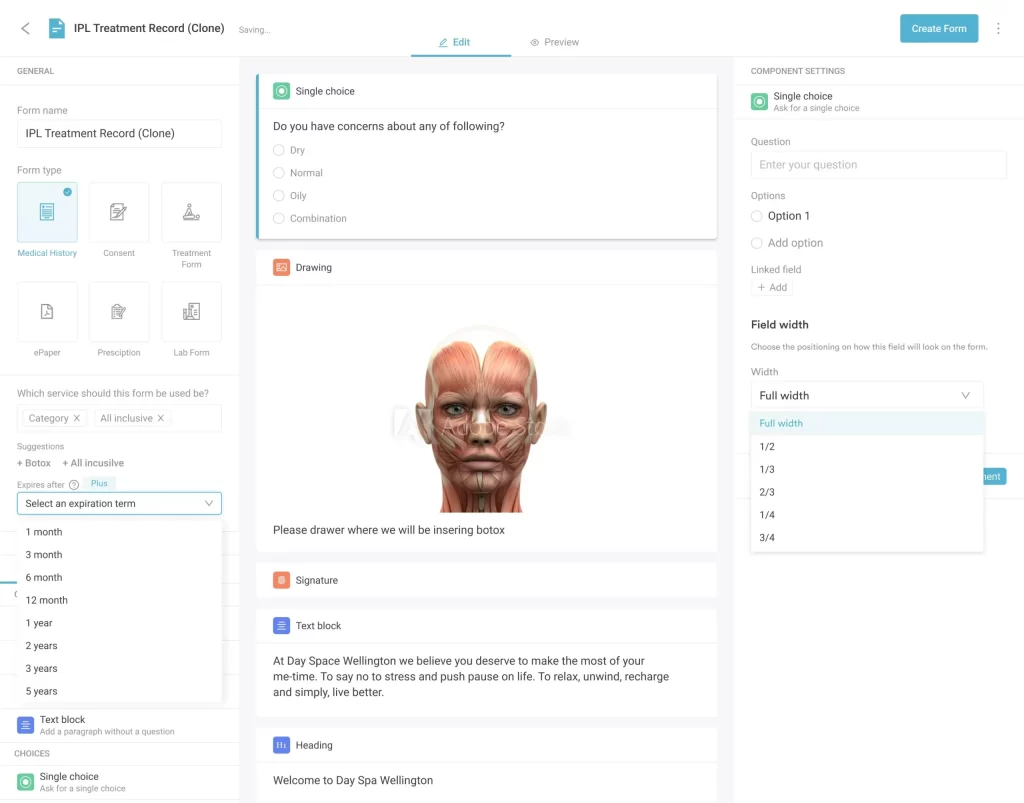
The therapy practice management infrastructure that supports this level of documentation needs to integrate scheduling, group attendance, homework tracking, and clinical note templates in a way that does not create an administrative burden that pulls clinicians away from direct client contact. That balance – clinical rigour without administrative overhead – is the core operational challenge for practices committed to delivering evidence-based DBT.
Delivering DBT well depends as much on operational infrastructure as on clinical skill with the techniques themselves. Attendance tracking, homework review, structured progress documentation, and coordination between group and individual therapy all shape whether skills generalise from the session into daily life.
The practices that see the strongest outcomes treat these systems as part of the clinical model rather than an administrative afterthought, freeing clinicians to focus on the work only they can do.
Book a demo with Pabau to see how structured documentation, group scheduling, and progress tracking support evidence-based DBT delivery without pulling clinicians away from direct client contact.

Need structured guidance for crisis presentations in your practice? Crisis Intervention Strategies for Clinicians covers clinical frameworks for managing acute distress across different treatment settings.
Looking to improve mental health documentation workflows? Mental Health EMR outlines how practice management tools support structured clinical record-keeping for therapy practices.
Want to understand how therapy practices handle burnout and sustainability? Therapist Burnout: Signs, Causes and Prevention addresses the operational and clinical factors that affect practitioner wellbeing in high-intensity therapy work.
Need a framework for client intake? Psychiatric Evaluation Template This guide walks through every component of a comprehensive psychiatric evaluation, from patient intake onward.
DBT comprises four skills modules: distress tolerance, emotion regulation, mindfulness, and interpersonal effectiveness. Distress tolerance is typically introduced early in treatment because it provides the crisis survival tools clients need before deeper change work becomes viable. Each module builds on the others, and most structured DBT programmes cycle through all four.
TIPP stands for Temperature, Intense exercise, Paced breathing, and Paired muscle relaxation. These are physiologically based DBT distress tolerance skills that work by directly interrupting the arousal state accompanying emotional crisis. The Temperature component – typically cold water immersion of the face – triggers the mammalian dive reflex, which rapidly reduces heart rate. Clinicians should assess for cardiovascular contraindications before recommending this technique.
Radical acceptance is a reality acceptance skill – not a crisis survival technique – that involves fully accepting a situation as it is without fighting against it. It does not mean approving of the situation or resigning to it indefinitely. Clinicians often find clients confuse acceptance with agreement, so psychoeducation about the distinction is a routine part of teaching this skill. It is most effective after clients have already developed a foundation in crisis survival skills.
ACCEPTS is an acronym for Activities, Contributing, Comparisons, Emotions, Pushing away, Thoughts, and Sensations. It is a set of cognitive distraction techniques within DBT distress tolerance skills training. The goal is to redirect attention away from the distressing stimulus long enough for emotional intensity to decrease naturally. The Pushing away component is a temporary technique, not a long-term avoidance strategy – a distinction clinicians need to make explicit when teaching it.
Distress tolerance skills are designed to help clients survive crises and accept painful realities without making the situation worse. Emotion regulation skills, by contrast, focus on reducing emotional vulnerability over time and changing the emotional response itself. Distress tolerance is for when change is not immediately possible; emotion regulation is the longer-term work of shifting emotional patterns. Both modules are necessary components of a full DBT programme.
DBT distress tolerance skills are typically taught in a psychoeducational group format alongside concurrent individual therapy. Each session involves teaching specific techniques, practising them, and reviewing homework from the previous week. Clinicians personalise skill selection based on client temperament, living circumstances, and clinical presentation. Documentation of which skills are being practised – and whether generalisation to daily life is occurring – is an important component of evidence-based DBT delivery.