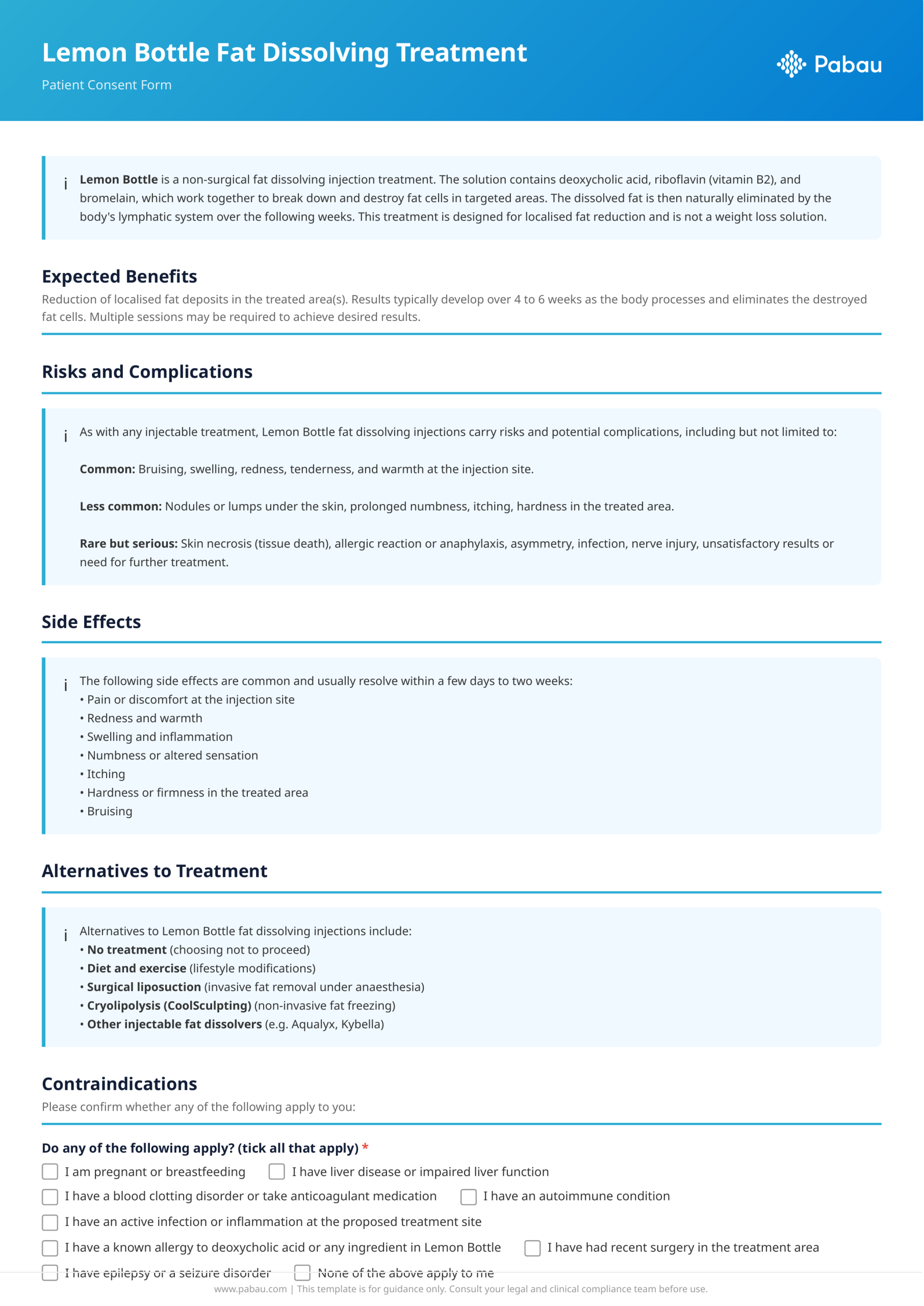
Aesthetics & Beauty Medspa
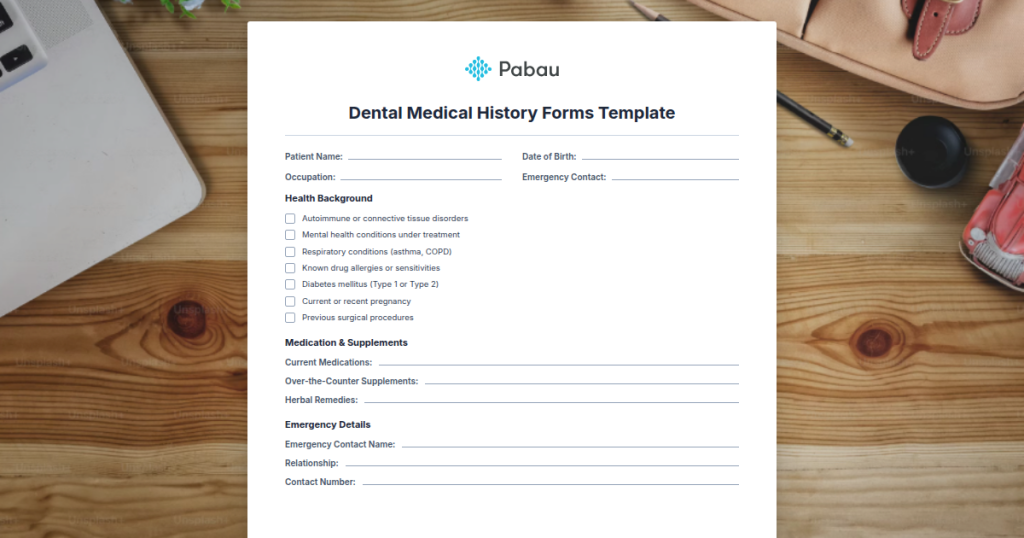
Dental Medical History Forms Template
A dental medical history form template is a standardised patient intake document...

March 16, 2026


Buy now, pay later is now available in Pabau

A Lemon Bottle consent form must be treatment-specific, covering the unique risks, ingredients, and contraindications of fat-dissolving injections rather than using a generic template.
Essential sections include patient information, treatment area selection, medical history screening, risk disclosure, alternatives (including no treatment), aftercare responsibilities, and signatures from both patient and clinician.
Lemon Bottle contains riboflavin, bromelain, and lecithin. Patients must be screened for allergies to these ingredients and for contraindications such as pregnancy, liver disease, and autoimmune conditions.
The treatment is not FDA-approved and has limited long-term safety data. This must be explicitly stated on the consent form.
Digital consent forms eliminate legibility issues, integrate with patient records, and create audit-ready documentation for CQC and GMC compliance.
Free Download
A comprehensive, treatment-specific consent form for Lemon Bottle fat-dissolving injections. Includes medical history screening, risk disclosure, aftercare instructions, and patient declarations. Ready to customise for your clinic.
Lemon Bottle is a fat-dissolving injectable treatment that has gained significant popularity in aesthetic clinics across the UK. Unlike surgical liposuction, it uses a blend of riboflavin, bromelain, and lecithin to break down localised fat deposits through subcutaneous injections. However, as with any injectable procedure, proper informed consent is essential before treatment begins.
A lemon bottle consent form protects both your clinic and your patients by documenting that risks, contraindications, and treatment expectations were clearly communicated. Generic consent forms miss critical details specific to fat-dissolving injections. This guide provides a free downloadable template, explains every section your form needs, and covers the regulatory requirements for UK aesthetic clinics.
A Lemon Bottle consent form is a clinical document that records a patient’s informed agreement to undergo fat-dissolving injection treatment using the Lemon Bottle solution. It outlines the nature of the procedure, its ingredients, potential risks and side effects, contraindications, and expected outcomes. The patient’s signature confirms they understand and agree to proceed.
This form is distinct from a general consultation form. Whilst a consultation form gathers patient information and medical history, a consent form establishes a legal agreement. It documents that the practitioner disclosed all material risks and that the patient accepted those risks before treatment.
Informed consent is a legal and ethical requirement for all injectable aesthetic treatments in the UK. The General Medical Council (GMC) requires that patients receive enough information to make an informed decision, including the risks, benefits, and alternatives. The Care Quality Commission (CQC) also expects clinics to maintain documented evidence of informed consent during inspections. Operating without proper consent documentation exposes your clinic to regulatory action, insurance claim denials, and medico-legal liability.
A blanket consent form for “injectable treatments” is not sufficient for Lemon Bottle procedures. Treatment-specific consent is necessary for several reasons.
Lemon Bottle contains three active ingredients: riboflavin (vitamin B2), bromelain (a pineapple-derived enzyme), and lecithin (a phospholipid). Each carries specific allergy risks. Bromelain allergies are particularly relevant for patients with pineapple sensitivity. A generic injectable consent form would not screen for these ingredient-specific reactions.
Lemon Bottle is not FDA-approved, does not hold MHRA approval or CE marking, and is not classified as a prescription medicine in the UK. It is categorised as a cosmetic product rather than a medical device or pharmaceutical. Long-term safety data remains limited compared to established fat-dissolving agents such as deoxycholic acid (Aqualyx, Kybella). Your consent form must explicitly state this regulatory status so patients can make a fully informed decision.
Fat-dissolving injections carry risks distinct from other injectables like dermal fillers or botulinum toxin. These include irregular fat loss, tissue necrosis, prolonged swelling lasting weeks, and nodule formation. A dermal filler consent form would not cover these fat-dissolving-specific complications.
Both the CQC and GMC expect treatment-specific informed consent rather than generic blanket forms. During inspections, auditors look for evidence that consent documentation matches the actual procedure performed. A Lemon Bottle-specific form demonstrates your clinic meets this standard.
Create a separate consent form for each injectable treatment you offer. Lemon Bottle, dermal fillers, and botulinum toxin each carry different risk profiles. Treatment-specific forms are stronger legally and demonstrate clinical rigour during CQC inspections.
A comprehensive Lemon Bottle consent form must capture the following sections. Each serves a specific legal, regulatory, or safety purpose.
Collect the patient’s full name, date of birth, phone number, email address, GP details, and emergency contact. This links the consent record to the correct client record in your practice management system and ensures you can reach the patient or their emergency contact if complications arise.
Document exactly what the patient is consenting to. Include a plain-language description of Lemon Bottle (fat-dissolving injectable containing riboflavin, bromelain, and lecithin), the treatment area(s) selected, the session number, and the number of vials used. Specifying treatment areas prevents disputes about what was agreed.
This is your primary safety screening section. Ask about pregnancy or breastfeeding, liver or kidney disease, autoimmune conditions, blood-thinning medications, diabetes, active skin infections in the treatment area, recent injectable treatments (past 4 weeks), allergies to bromelain, lecithin, or riboflavin, current medications, keloid scarring history, and thyroid conditions.
Each of these is a contraindication or risk factor for Lemon Bottle treatment. Liver disease is particularly critical because the body processes dissolved fat through the liver. Failing to screen for these conditions creates significant patient safety risk and legal liability.
State the realistic expected benefits: reduction of localised fat deposits, improved body contouring, and gradual results over 2-5 sessions. Always include that results vary between individuals and are not guaranteed. Overpromising outcomes is a common source of patient complaints and legal disputes.
Explicitly list all potential risks in three categories:
Common side effects (expected in most patients): swelling, redness, bruising, tenderness, warmth, and itching at the injection site. These typically resolve within 3-7 days.
Less common side effects: nodules or lumps under the skin, numbness, skin discolouration, and prolonged swelling beyond one week.
Rare but serious complications: infection, tissue necrosis (skin damage), nerve injury, irregular fat loss or asymmetry, severe allergic reaction, and scarring.
Legal informed consent requires disclosing all material risks that a reasonable person would want to know before deciding to proceed. Fat-dissolving injections carry risks of permanent complications, so these must be stated clearly.
List all reasonable alternatives, including surgical liposuction, cryolipolysis (fat freezing), radiofrequency body contouring, deoxycholic acid injections (Aqualyx, Kybella), diet and exercise modifications, and the option of no treatment at all. The GMC requires that patients understand their alternatives before consent is valid.
–
Document the aftercare instructions the patient agrees to follow: avoid alcohol for 48 hours, avoid strenuous exercise for 48 hours, do not massage or apply pressure to the treated area for 72 hours, stay well hydrated (minimum 2 litres daily), attend follow-up appointments, and contact the clinic immediately if they experience severe pain, prolonged swelling, signs of infection, or skin discolouration.
Non-compliance with aftercare is a leading cause of complications. Documenting these requirements protects you legally if the patient does not follow them.
Include explicit acknowledgement checkboxes: the patient has read and understood the information, disclosed all medical history, understands the risks, has been informed of alternatives, had the opportunity to ask questions, consents to before-and-after photographs, understands results are not guaranteed, and gives informed consent to proceed.
Both the patient and clinician must sign and date the form. The clinician’s signature confirms they reviewed the medical history, discussed risks, and answered questions. Include the clinician’s name and qualifications for accountability.
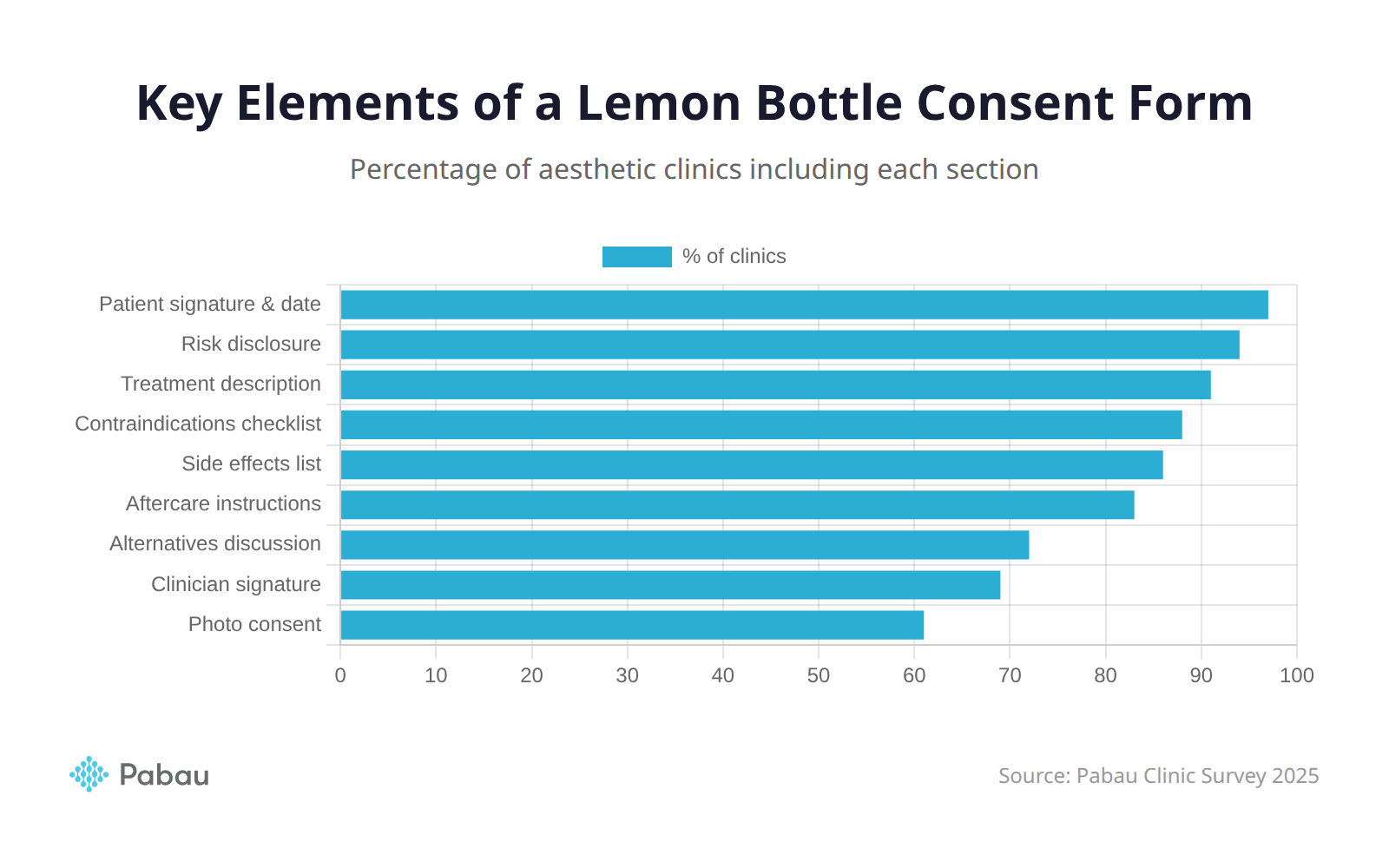
Getting the contraindications and risk sections right is critical. Incomplete disclosure is the most common reason consent forms fail to provide legal protection.
Your Lemon Bottle consent form should screen for all of the following contraindications:
Common side effects are part of the body’s normal inflammatory response to the treatment. Swelling, bruising, and tenderness indicate the solution is working to break down fat cells. These effects resolve on their own and do not require medical intervention in most cases.
Rare complications such as infection and tissue necrosis are typically linked to improper injection technique, non-sterile equipment, or treatment of inappropriate candidates. This is why practitioner qualifications and thorough pre-treatment screening are essential.
The limited regulatory status of Lemon Bottle deserves special attention on your consent form. Unlike deoxycholic acid (the active ingredient in FDA-approved Kybella), Lemon Bottle has not undergone the same level of clinical testing. Patients must understand this distinction to give truly informed consent.
Include the specific batch number and expiry date of the Lemon Bottle product used on the treatment record attached to the consent form. This creates a complete audit trail and is invaluable if a product recall occurs.
Most aesthetic clinics have transitioned to digital consent forms, but understanding the comparison helps you make the right choice for your practice.
| Feature | Paper forms | Digital forms |
|---|---|---|
| Pre-appointment completion | Must complete in clinic | Complete from home before arrival |
| Legibility | Handwriting often illegible | Always typed and readable |
| Storage | Physical filing cabinets | Cloud storage, instantly searchable |
| Audit trail | Limited to physical signatures | Timestamped access, edits, and signatures |
| Integration | Manual data entry into records | Auto-populates patient management system |
| CQC readiness | Requires organised physical filing | Instantly retrievable during inspections |
| Version control | Reprint all forms when content changes | Update template once, applies to all future forms |
| Patient experience | Clipboard at check-in | Convenient completion before appointment |
Digital consent forms through platforms like Pabau’s digital consent forms eliminate legibility issues, reduce no-show rates (patients who complete forms in advance are more committed to attending), and create stronger documentation for regulatory compliance. Every signature, view, and edit is timestamped and logged in the patient’s client portal.
Follow these five steps to integrate the Lemon Bottle consent form effectively:
Step 1: Send in advance. Email or text the form 24-48 hours before the appointment. Patients should review the risk disclosures, contraindications, and aftercare instructions thoroughly at home without the pressure of a waiting room.
Step 2: Patient completes their sections. The patient fills out personal information, medical history, and contraindication screening. Digital forms auto-save progress, so patients can complete sections across multiple sittings.
Step 3: Review together at consultation. Walk through the medical history responses, confirm there are no contraindications, discuss the treatment areas, and explain risks specific to the patient’s situation. Answer all questions before proceeding.
Step 4: Obtain signatures. Both patient and clinician sign and date the form. Electronic signatures with timestamps provide the strongest legal documentation.
Step 5: Store securely. File in the patient’s medical record immediately. Digital forms integrate directly with your practice management system. Retain consent forms for a minimum of 7-10 years per UK medical record retention guidelines. For patients under 18, retain until they reach adulthood plus the standard retention period.
Customise the template with your clinic logo, contact details, and any additional screening questions relevant to your practice.
–
Avoid these errors that create liability exposure and weaken your compliance position:
Using a generic injectable consent form. Lemon Bottle has a unique ingredient profile (riboflavin, bromelain, lecithin), specific contraindications, and a distinct regulatory status. A form designed for dermal fillers or botulinum toxin does not adequately cover fat-dissolving injection risks.
Not disclosing regulatory status. Failing to state that Lemon Bottle is not FDA-approved and has limited long-term data undermines the validity of informed consent. Patients cannot make an informed decision without this information.
Rushing consent at check-in. Handing patients a form at reception five minutes before treatment does not constitute informed consent. Courts and regulators expect patients had adequate time to read, consider, and ask questions. Send forms in advance.
Missing clinician signature. Both patient and clinician must sign. The clinician’s signature confirms they reviewed the screening, discussed risks, and answered questions. A patient-only signature is insufficient for regulatory compliance.
Not screening for ingredient-specific allergies. Generic allergy questions miss bromelain sensitivity (linked to pineapple allergy) and lecithin reactions. Always ask about these specific ingredients.
Omitting alternatives. The GMC requires that patients are informed of alternatives, including the option of no treatment. Skipping this section invalidates the informed consent process.

Dermal Filler Consent Form Template Compare consent form structures across different injectable treatments.
Hyperhidrosis Consent Form See how another injectable treatment handles informed consent and risk disclosure.
Spa Intake Form Template Complement your consent process with a comprehensive intake form that captures lifestyle and medical history.
“Going digital with our consent forms changed everything. Patients complete the forms before their appointment, which gives them proper time to read through the risks and ask questions at consultation. Our documentation is now fully audit-ready and retrievable in seconds.”

Pabau’s digital forms integrate consent collection directly into your booking workflow. Patients complete Lemon Bottle consent forms before arriving, signatures are captured electronically, and everything auto-populates into their medical record. No more clipboards, no more lost paperwork, no more compliance headaches.
A comprehensive Lemon Bottle consent form should include patient information, treatment description and area selection, medical history and contraindication screening (including allergies to bromelain, lecithin, and riboflavin), expected benefits, detailed risk disclosure (common, uncommon, and rare side effects), alternatives to treatment (including no treatment), aftercare responsibilities, patient declaration checkboxes, and signatures from both patient and clinician with dates.
No, Lemon Bottle is not FDA-approved and is not classified as a prescription medicine in the UK. It has not undergone the same level of clinical testing as established fat-dissolving agents such as deoxycholic acid (Kybella/Aqualyx). This regulatory status must be explicitly disclosed on your consent form so patients can make a fully informed decision about proceeding with treatment.
Lemon Bottle treatment typically requires 2-5 sessions spaced 1-2 weeks apart, depending on the treatment area and the amount of localised fat. Some patients see noticeable results after 1-2 sessions, whilst others may need the full course. Your consent form should document the session number and note that results vary between individuals.
Best practice is to obtain updated consent for each session, particularly if there is a gap of more than 4 weeks between treatments. At minimum, confirm that the patient’s medical history has not changed and document the specific treatment areas and number of vials for each session. If the patient’s health status changes between sessions, a fully updated consent form is required.
The main contraindications for Lemon Bottle include pregnancy or breastfeeding, liver or kidney disease, autoimmune conditions, blood clotting disorders, active skin infections at the treatment site, allergy to bromelain (pineapple), lecithin, or riboflavin, diabetes, recent injectable treatments in the same area (past 4 weeks), and a history of keloid scarring. A thorough screening checklist should be part of every consent form.
No, a generic fat-dissolving consent form is not sufficient. Lemon Bottle has a unique ingredient profile (riboflavin, bromelain, and lecithin) that differs from deoxycholic acid-based products. It also has a different regulatory status and risk profile. Treatment-specific consent is required by the GMC and CQC to demonstrate that patients were informed about the exact procedure they received, including its specific ingredients, risks, and limitations.
–
–
A treatment-specific Lemon Bottle consent form is essential for any aesthetic clinic offering fat-dissolving injections. Generic consent forms miss the ingredient-specific allergy screening, unique contraindications, and regulatory disclosures that make informed consent legally valid and clinically robust.
Download the free template provided above and customise it with your clinic branding, contact details, and any additional screening questions relevant to your patient population. The eight essential sections (patient information, treatment description, medical history, expected benefits, risk disclosure, alternatives, aftercare, and signatures) work together to create comprehensive protection for both your practice and your patients.
Consider transitioning to digital consent forms to streamline the process, create audit-ready records, and improve the patient experience. With Pabau’s online booking and form integration, patients can complete their Lemon Bottle consent form before they arrive, saving chair time and ensuring thorough review of all risk disclosures.
Ready to digitise your consent workflow? Watch a free demo and discover how Pabau can simplify compliance whilst improving patient safety and satisfaction.
Last clinically reviewed: February 2026