









Key takeaways
HCPCS code H0009 covers alcohol and/or drug services for acute detoxification in a hospital inpatient setting, billed per diem.
H0009 is a Medicaid code, not a Medicare one. Traditional Medicare pays inpatient detox through DRGs instead.
H0009 claims need ASAM Level 4 medical necessity, daily nursing notes, physician orders, and the right revenue code on the UB-04.
On the UB-04, the type of bill and revenue code identify the inpatient setting. Place-of-service codes belong to professional claims.
Practice management software with a HCPCS code library and structured daily forms, like Pabau, keeps the chart and the claim in step.
HCPCS code H0009 covers alcohol and/or drug services for acute detoxification in a hospital inpatient setting. State Medicaid programs pay it per diem, one unit for each day the patient occupies the bed.
Keeping the paperwork level with each billed day is where the money leaks out. A missing authorization day, a nursing note that repeats yesterday’s, or a revenue code your state doesn’t recognize will each stop payment.
Denials in acute detox cluster around three things: the authorization, the daily record, and how the claim is assembled on the UB-04. Sort those out and most H0009 claims pay on the first pass.
HCPCS code H0009 pays for acute inpatient detox, by the day
H0009 is the CMS HCPCS Level II code for alcohol and/or drug services in the acute detoxification, hospital inpatient setting. It sits in the H-series of behavioral health codes and bills per diem. The code is active and valid for current Medicaid billing.
The H-series designation drives the coding decision. These are HCPCS Level II codes that state Medicaid agencies use for services with no CPT equivalent. Medicare fee-for-service doesn’t use them, which matters the moment a patient changes payers.
Where a CPT code describes a single therapy session, H0009 covers a whole day of medically supervised withdrawal management. Room, board, nursing, and physician oversight sit inside that one unit.
What H0009 covers, and where it stops
H0009 applies to medically managed withdrawal from alcohol, opioids, benzodiazepines, and other substances when the presentation needs acute hospital care.
Severity is the threshold. The patient needs 24-hour nursing coverage and direct physician oversight, which a social-model or monitored setting can’t provide.
The ASAM criteria call this Level 4.0, medically managed intensive inpatient treatment. Level 4 fits when withdrawal risk is too severe for a less restrictive setting. It also fits when a co-occurring medical or psychiatric condition needs hospital-level treatment at the same time.
- Covered substance classes: alcohol, opioids, benzodiazepines, sedative-hypnotics, stimulants, and combinations of those
- Required clinical oversight: 24-hour nursing care and physician availability
- Qualifying ASAM level: Level 4.0, medically managed intensive inpatient, the acuity H0009 was written for
- Co-occurring conditions that support placement: seizure risk, cardiovascular instability, or a psychiatric crisis needing inpatient stabilization during withdrawal
- Outside the code: outpatient detox, residential or social-model withdrawal management, and sub-acute inpatient detox, which belongs to H0008
Only Medicaid-enrolled inpatient facilities can bill H0009
Facility type and Medicaid enrollment decide who can bill this code. Requirements vary by state, so check with your state Medicaid agency before the first claim goes out.
An eligibility check at admission also tells you whether the patient sits in fee-for-service or managed care.
- Eligible facility types: acute care hospitals and licensed freestanding detox facilities that meet the state’s inpatient requirements. Psychiatric hospitals with a medical unit able to manage acute withdrawal also qualify
- Medicaid enrollment: the billing entity has to be enrolled as a Medicaid provider in the state where care is delivered
- Who submits: the facility bills H0009. Physician services during the stay go on a separate CMS-1500 under the appropriate evaluation and management codes
- State-specific licensing: some states want a substance use disorder (SUD) license or certification on top of the general hospital license
- Claim format: H0009 goes out on the UB-04, where the type of bill and revenue code identify the inpatient setting. Place-of-service codes belong to professional claims, so there is no POS field to complete here
Medical necessity rests on ASAM Level 4, dimension by dimension
Medical necessity is the most contested ground in H0009 denials. Managed care organizations review inpatient detox authorizations before payment, then audit again after discharge. Your record has to show the patient needed acute inpatient care on the day of admission, not that the stay helped.
ASAM Level 4 criteria are the framework most Medicaid payers accept. Document each dimension on its own. A summary line saying the patient requires inpatient detox gives a reviewer nothing to approve.
Every billed day needs documentation of its own
Thin documentation is the quickest route to a recouped H0009 claim. Each inpatient day has to stand up on the record written that date. One admission note will never justify five days of per-diem billing.
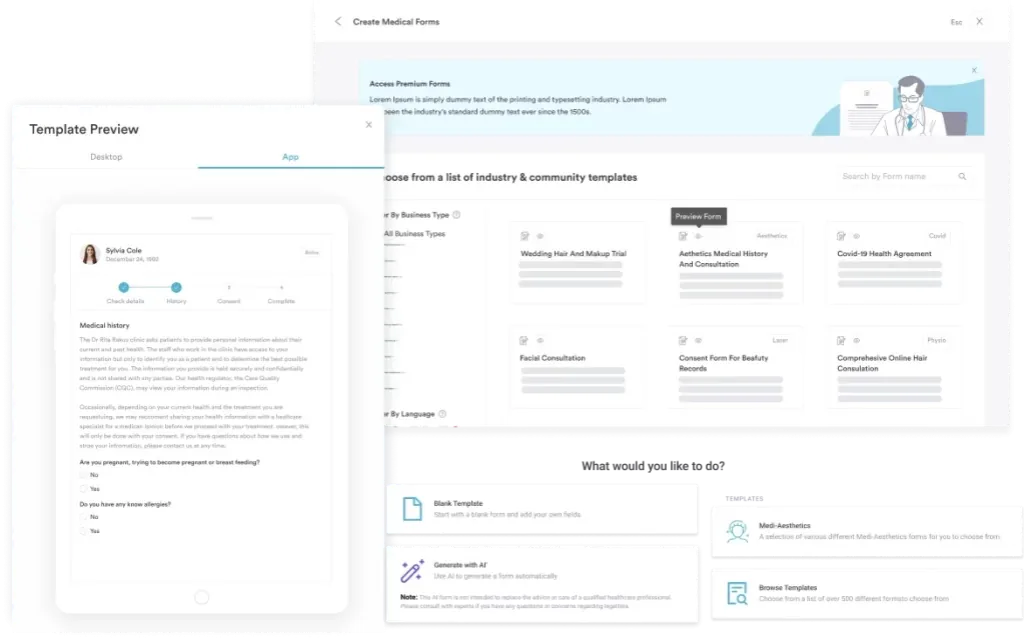
Digital clinical forms beat free-text nursing notes here, because every shift captures the same fields in the same order. Reviewers follow that consistency far more easily than a narrative.
- Admission assessment: biopsychosocial evaluation, ASAM placement across all six dimensions, and a withdrawal severity score (CIWA-Ar or COWS). Add ICD-10-CM diagnoses for the SUD and any co-occurring conditions
- Physician orders: the admission order naming the detox protocol, medication orders such as a benzodiazepine taper or buprenorphine induction, and monitoring frequency
- Daily nursing notes: withdrawal scores each shift, vital signs, medications given, and behavioral observations, with every day standing on its own
- Medication administration record: every dose given during the stay
- Concurrent service notes: counseling, group therapy, and social work documented separately from the per-diem claim
- Discharge summary: progress, withdrawal resolution, the continuing care plan, and the referral to the next level of care
- UB-04 specifics: H0009 in the HCPCS field, one unit per inpatient day, an accommodation revenue code, and the authorization number where the state requires one
Detox room and board sits in the 0100 series of revenue codes. A final digit of 6 marks detoxification, and the digit before it tells the payer what kind of room the patient occupied.
- 0116, private room
- 0126, semi-private with two beds
- 0136, semi-private with three or four beds
- 0146, deluxe private room
- 0156, ward
Every UB-04 revenue code is four digits and falls below 1000. A 1000-series code on a detox claim is a keying error rather than a state variation. Confirm the code your state expects in its Medicaid billing manual.
SUD treatment records also carry extra federal protection under 42 CFR Part 2, which limits disclosure beyond what HIPAA requires. Billing records for H0009 can fall inside that framework, depending on how your program is set up.
Talk to your compliance officer before releasing records to a Medicaid auditor or any other third party. Keeping clinical documentation and claim data structured separately makes that line easier to hold, and HIPAA-compliant records are the baseline underneath it.
How an H0009 claim moves from admission to payment
The claim follows the same six steps every time. Skip one and you have created a denial that nobody in the building can fix quickly.
- Get the authorization first. Most state Medicaid programs and managed care plans require prior authorization for acute inpatient detox. Submit the documentation supporting ASAM Level 4 before or at admission, because retro-authorizations are often refused.
- Assign the ICD-10-CM diagnoses. Code the primary SUD diagnosis, for example F10.239 for alcohol dependence with withdrawal, unspecified. Add the co-occurring conditions you are treating, since auditors check both against the chart.
- Build the UB-04. H0009 belongs on the institutional claim, never the CMS-1500. It goes in field 44 with one unit per inpatient day. Electronic submitters send the same data in the 837I format.
- Pick the revenue code. The revenue code travels with H0009 on the claim, and the wrong one fails on edit before a human reads anything. Check the current code in your state billing manual.
- Add any required modifiers. States use HF for a substance abuse program, HH for an integrated program, and U1 through U9 as their own population identifiers. Requirements change, so confirm them each time.
- Submit, then track. File electronically through your clearinghouse and match every remittance against the authorization number and the expected per-diem rate. Watch the timely filing limits, which are shorter than most billers assume.
Pro Tip
Ask for the concurrent review date at the same time you get the initial authorization. Acute detox is often authorized two or three days at a time, and the extension has to be requested while the patient is still admitted. A day billed past the authorized period denies on edit rather than on clinical review, so nobody reads your notes before it fails.
Per-diem rates are set state by state
Each state Medicaid agency sets its own H0009 rate, and the spread between states is wide. Managed care contracts can differ again from the published fee-for-service rate.
Read the examples below as a guide to how states publish rates, then verify your own before forecasting revenue.
Managed care changes the math. If the patient is enrolled in a Medicaid managed care plan, you bill the plan at your contracted rate rather than the state fee-for-service schedule. Authorization and submission both run through that plan’s portal.
H0009 vs. H0008: Acuity decides which code you bill
H0008 and H0009 describe the same setting at two different acuity levels, and both bill per diem to Medicaid. Billing H0009 for a stay that only met the H0008 threshold is a claim accuracy problem, and audits pick it up.
One naming trap is worth knowing. ASAM renamed several levels in the fourth edition of its criteria, so 3.7 appears as medically managed residential treatment in newer documents.
Level 3.5, clinically managed high-intensity residential, is a different level and supports neither code.
The practical trigger for H0009 over H0008 is anything that needs continuous physician management. That includes a history of withdrawal seizures, a CIWA-Ar score above 15, delirium tremens risk, or an acute medical condition being treated during withdrawal.
Where withdrawal risk is moderate and none of that applies, H0008 is the better fit.
Where H0009 ends and the neighboring H codes begin
The H-series descriptors differ by a word or two, which is why misassignment is so common in SUD billing. The table below sets out the codes nearest to H0009 and what separates them.
Six mistakes that sink H0009 claims
H0009 claims fail for predictable reasons, and a short internal review catches nearly all of them. These are the six that show up most in behavioral health billing:
- No authorization on file: the leading cause of inpatient detox denials. Secure authorization before admission, or on the day of admission for an emergency, then carry the number on every claim day.
- Thin ASAM documentation: reviewers look for each dimension by name. A note saying the patient has alcohol dependence and needs detox will not clear medical necessity.
- Treating it as a professional claim: place-of-service codes and CMS-1500 fields don’t apply to H0009. If the type of bill and revenue code fail to describe an inpatient stay, the claim dies on edit.
- Missing a required modifier: where a state mandates HF or a U-series modifier, a claim without it rejects. Re-check the manual whenever your state updates it.
- Billing per admission instead of per day: H0009 is a per-diem code, so a five-day stay is five units.
- Unbundling what the per diem covers: check what your state’s rate already includes before billing counseling or nursing separately.
Before you submit: The 60-second check
- Authorization number is on the claim, and the approved days match the days billed
- Each ASAM dimension is documented at admission, with a dated note for every day after
- Type of bill and revenue code both describe an inpatient detox stay
- Unit count equals the number of inpatient days
- Modifiers match the current state billing manual, not last year’s
- Diagnoses on the claim match the diagnoses in the chart
Medicare won’t pay H0009, so bill the stay as a DRG
H0009 is not payable under traditional Medicare fee-for-service. H-series codes exist so state Medicaid agencies can report SUD services that sit outside the CPT set, and Medicare fee-for-service doesn’t recognize them for payment.
Medicare pays inpatient detox through the DRG system instead, usually the alcohol and drug abuse and dependence group covering DRGs 894 to 897.
That payment covers the whole stay, whatever the substance or the protocol. For a Medicare beneficiary admitted for acute detox, the hospital bills the stay rather than H0009.
Medicare Advantage is the exception worth checking. Some Part C plans contract on coding frameworks closer to Medicaid, and a small number recognize H-series codes under their benefit structure.
Confirm it with the plan before you submit, every time.
How practice management software keeps detox claims audit-ready
Acute detox billing is admin-heavy. A single stay carries daily per-diem units, a multi-day authorization, state modifiers, ASAM documentation, and a claim that has to agree with all of it. Run that across paper notes and a spreadsheet and rework becomes someone’s full-time job.
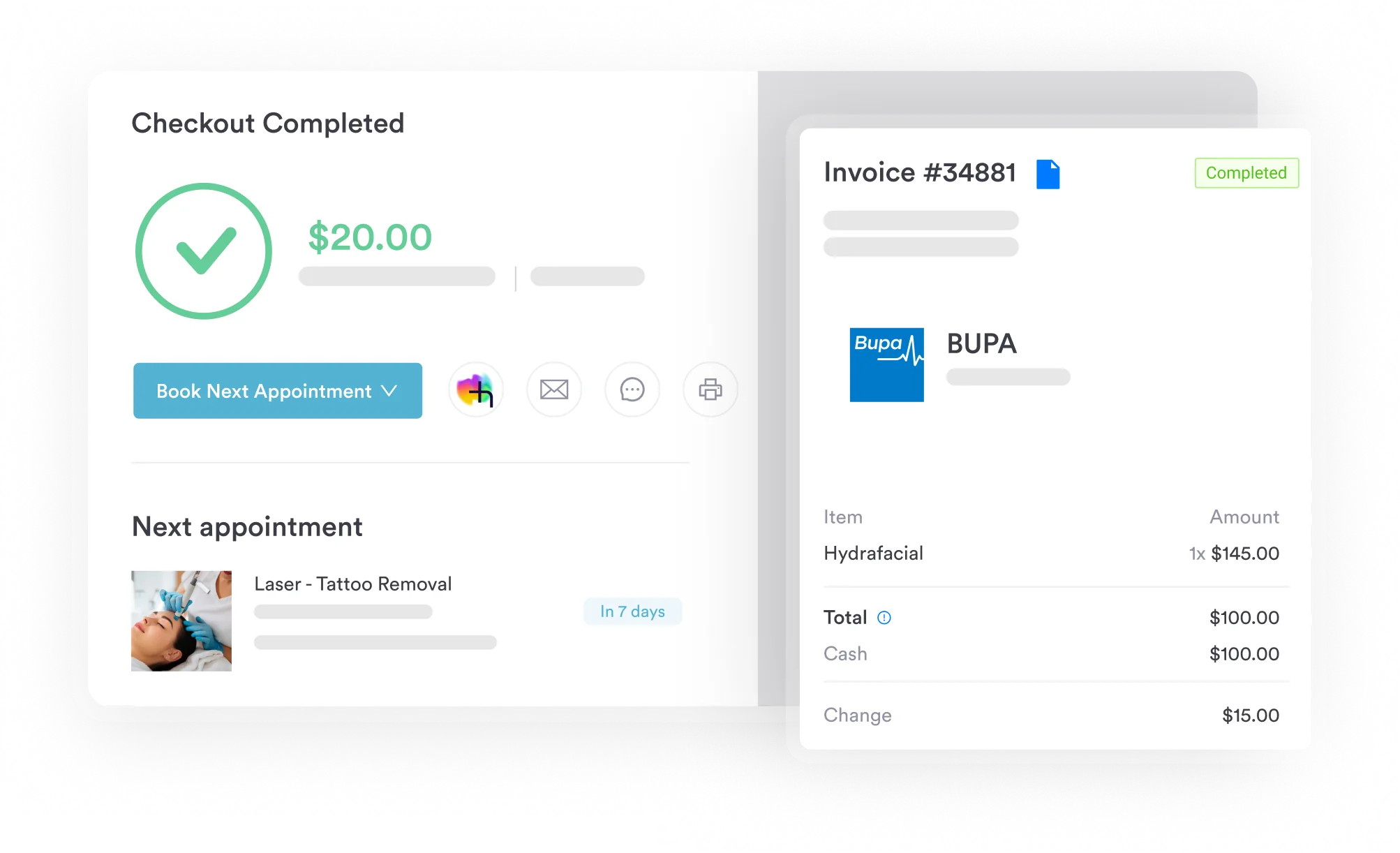
Practice management software like Pabau won’t file your Medicaid claim for you, and no platform removes the state-by-state homework. What it does is hold the daily documentation and the billing data in one client record. The day you billed and the note behind it never live in separate systems.
For programs already running a behavioral health EMR, the parts that reduce denials are unremarkable and easy to miss.
- Structured daily forms: build the withdrawal assessment once, then have staff complete it each shift so every billed day carries an equivalent record
- Code lookup libraries: search ICD-10-CM and HCPCS entries inside the record instead of opening a separate reference tab
- Required-field checks: claims management pre-fills the claim from the record and holds it until the payer’s required fields are complete
- Task reminders: automated workflows prompt the team when a day’s assessment or consent is still outstanding
- One record per stay: notes, forms, and consents sit with the appointment history, which is exactly what an auditor asks to see
None of that replaces your state billing manual. It does mean a missing day’s note surfaces while the patient is still admitted, rather than six months later in a recoupment letter.
Multi-specialty groups get the same benefit from psychiatry EMR software that runs alongside their other programs in one platform.

Keep detox documentation and billing in one record
Pabau’s digital forms capture each day of a stay, and its claims management pre-fills payer claims from that same record. Your team spots a missing assessment before the claim goes out.

Conclusion
H0009 denials trace back to three things: the authorization, the daily record, and the way the claim is assembled. All three sit inside your control before the claim leaves the building, which makes them the cheapest revenue you will ever recover.
The work that pays off is unglamorous. Give authorization extensions a named owner. Use one daily assessment form that every shift completes the same way. Then check the type of bill, revenue code, and unit count against the authorization before anything is submitted.
Get those habits in place and per-diem billing stops being a monthly scramble. Book a demo to see how Pabau keeps detox documentation and payer claims in one record for your team.

Continue your research
Still working through Medicaid enrollment? How to get credentialed with insurance companies walks through the paperwork that has to clear before any H-series claim can be paid.
Worried about how an audit would go? Medical billing compliance covers the controls that keep documentation and claims defensible.
Want the wider view of the money? What is revenue cycle management shows where per-diem claims sit between admission and payment.
Choosing where to send the claims? Claim.MD vs Office Ally compares two clearinghouses behavioral health billers use.
Tracking progress after discharge? Outcome Questionnaire-45 gives you a scored measure for the continuing care phase.
Frequently asked questions
How many days of H0009 can you bill in one stay?
There is no national day limit. The authorized period sets the ceiling, and most Medicaid payers issue a short initial authorization, then extend it through concurrent review. Bill only the days covered by both an authorization and a dated clinical note.
Does a step-down from H0009 to H0008 need a new authorization?
Usually yes. A change in level of care is a fresh authorization request in most states and managed care plans. Bill each code for its own dates of service, and make sure that day’s note explains why the acuity changed.
Can the facility and the physician both bill for the same day?
Yes. The facility bills H0009 for the day on the UB-04, while the attending physician bills their evaluation and management service on a professional claim. Two claims reach the payer, and each one needs its own documentation.
How do you bill the day a patient leaves against medical advice?
Bill the days that carry documented care, then follow your state’s rule on the discharge day. Record the departure, the clinical status at that point, and the referral you offered. Auditors look for that sequence when a stay ends early.
How long should H0009 records be kept for an audit?
Retention periods are set by state, and five to ten years is the common range for Medicaid records. Keep the ASAM documentation, daily notes, and medication records together for the whole stay. Disclosure of any of it is governed by 42 CFR Part 2.